In a field that evolves daily, staying ahead means staying informed. Explore in-depth articles designed to help you solve complex challenges, maximize your machine’s ROI. Stay ahead in a competitive market.
News |
Understanding the CO2 Laser Cutter: Technology, Applications, and Key Considerations
Introduction:
A CO2 laser cutter CO2激光切割机is a versatile and widely adopted industrial tool that utilizes a carbon dioxide gas mixture as the active laser medium to generate an infrared light beam for precise cutting and engraving of non-metallic materials. Its popularity stems from its excellent absorption characteristics by organic materials, making it indispensable in sectors like textiles, signage, packaging, and custom fabrication.
Core Technology and Components
核心技术及部件
The heart of the system is the CO2 laser source, typically a sealed glass tube or a more durable and consistent RF (Radio Frequency) excited metal tube. This source produces a laser beam with a wavelength of 10.6 micrometers. The beam is then directed by mirrors and focused through a lens onto the material’s surface. The intense, concentrated heat of the focused beam vaporizes or melts a narrow path, resulting in a clean cut. Key mechanical components include a stable motion system (often using servo motors with gear rack or belt transmission) and a work table, which can be a flatbed honeycomb surface, a conveyor for roll-to-roll processing, or a specialized shuttle system for non-stop production.
Primary Materials and Applications
主要材料及应用
The CO2 laser cutter CO2激光切割机 excels at processing a vast array of non-metals. Common materials include fabrics (from delicate textiles to heavy-duty X-Pac), leather, paper, wood, acrylic, plastics, foam, and rubber. In the textile industry, it enables fast, sealed-edge cutting for apparel, sportswear, and technical fabrics. For solid materials, it produces intricate parts from wood and acrylic for signage, models, and retail displays. Advanced vision-equipped models can automatically recognize printed patterns or contours on fabrics, eliminating the need for pre-programmed cut files and enabling highly flexible production runs.
Technical Advantages and Performance Metrics
技术优势和性能指标
Modern industrial CO2 laser cutters offer significant advantages over traditional cutting methods. They provide non-contact processing, which minimizes material distortion and allows for extremely intricate designs. Key performance metrics include laser power (ranging from 60W for thin materials to 600W+ for thick acrylic or dense wood), cutting speed (up to 600mm/s or more depending on material), and positioning precision (as fine as 0.1mm). Furthermore, their operation is highly efficient; intelligent software optimizes cutting paths to save time and material, and features like automatic feeding allow for extended unattended operation.
Critical Selection and Operational Considerations
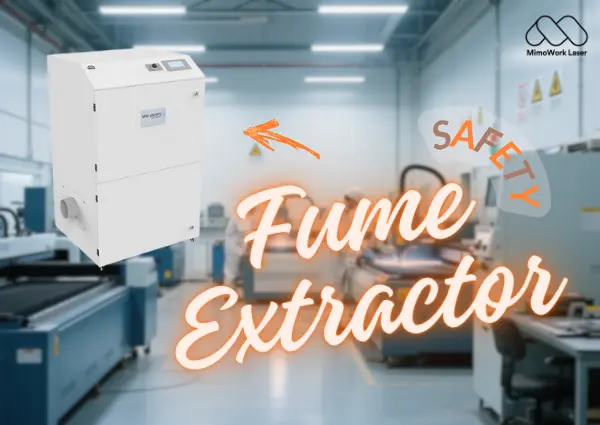
Choosing the right CO2 laser cutter CO2激光切割机 requires evaluating your specific workflow. Key considerations are the maximum material size and thickness, which dictate the required worktable dimensions and laser power. For high-volume production, options like dual independent laser heads can increase throughput by 30-50%. Crucially, an integrated fume extraction system is mandatory for safety and equipment maintenance, as the cutting process generates smoke and particulates that must be effectively removed. Proper cooling, typically via an industrial water chiller, is also essential for maintaining consistent laser power and tube longevity.
FAQ
常见问题解答 Q: What types of materials can a CO2 laser cutter *not* process?
问:什么类型的材料CO2激光切割机*不能*加工?
A: A standard CO2 laser cutter is not suitable for cutting most pure metals, as the 10.6μm wavelength is highly reflective and not well-absorbed. It is primarily designed for non-metallic materials such as wood, acrylic, fabric, leather, paper, and plastics.
Q: What is the difference between a CO2 laser cutter and a CNC router for materials like acrylic?
问:对于亚克力等材料,CO2激光切割机和CNC切割机有什么区别?
A: While both are computer-controlled, a CO2 laser cutter uses a focused heat beam for non-contact cutting, resulting in a polished, sealed edge on acrylic with no tool wear. A CNC router is a mechanical cutting tool that contacts the material, which can cause chipping or require post-processing, but it can handle much thicker solid blocks.
Q: Why is fume extraction so important when operating a CO2 laser cutter?
问:在操作CO2激光切割机时,为什么排烟如此重要?
A: The cutting process vaporizes material, producing smoke, fumes, and fine particulates. Without proper extraction, these byproducts can coat the machine’s optics (lenses and mirrors), reducing cut quality and damaging components. More importantly, they pose a health risk to operators and can create a fire hazard.
Q: Can a CO2 laser cutter be customized for very large materials?
问:CO2激光切割机可以定制非常大的材料吗?
A: Yes, unlike standard off-the-shelf machines, fully customizable solutions are available. Worktables can be engineered to exceed standard sizes, with experience in building systems to handle large-format industrial applications, such as those needed for sailcloth, tarps, or oversized textiles.CO2激光切割机是一种用途广泛的工业工具,它利用二氧化碳气体混合物作为有效激光介质,产生红外光束,用于非金属材料的精确切割和雕刻。它的受欢迎程度源于其对有机材料的优异吸收特性,使其在纺织、标牌、包装和定制制造等领域不可或缺。