Blog
In a field that evolves daily, staying ahead means staying informed.
Explore in-depth articles designed to help you solve complex challenges,
maximize your machine’s ROI.
Stay ahead in a competitive market.


In a field that evolves daily, staying ahead means staying informed.
Explore in-depth articles designed to help you solve complex challenges,
maximize your machine’s ROI.
Stay ahead in a competitive market.
News | Mar-16-2026
The transition from traditional manual cutting or die-cutting to cutting fabric with laser cutter represents a significant technological leap for the apparel, sportswear, and soft goods industries. This method offers unparalleled precision, automation, and a unique physical transformation of the material edge, fundamentally improving product quality and manufacturing efficiency.
The Core Advantage: The Sealed, Fray-Free Edge
The most distinctive benefit of cutting fabric with laser cutter technology is the thermal sealing of the cut edge. As the focused CO2 laser beam vaporizes the material, it simultaneously melts and fuses the synthetic fibers (like polyester, nylon, or spandex) along the cut line. This creates a clean, sealed edge that prevents fraying, unravelling, and reduces fabric waste, eliminating the need for additional hemming or sealing processes in many applications. This is particularly crucial for technical apparel, outdoor gear, and high-volume production where edge integrity is paramount.
Enabling Automation and High-Volume Throughput
Modern laser systems for fabric are engineered for production environments. Key features like automatic roll-to-roll feeding systems, conveyor working tables, and integrated vacuum systems allow for continuous, unattended operation. This automation translates directly to higher throughput, lower labor costs, and faster response times to orders, as the machine can process long batches with minimal operator intervention.
Vision-Guided Precision for Printed Fabrics
For businesses working with pre-printed or sublimated fabrics, advanced vision laser cutters solve the critical challenge of alignment. These systems, like the C160-L, use an HD industrial camera to automatically recognize printed patterns or registration marks. The software then intelligently aligns the laser cutting path perfectly to the graphic contours, ensuring each cut piece matches the print flawlessly. This eliminates manual tracing, reduces material waste from misalignment, and is ideal for cutting fabric with laser cutter for sportswear, flags, and custom apparel.
System Considerations for Optimal Results
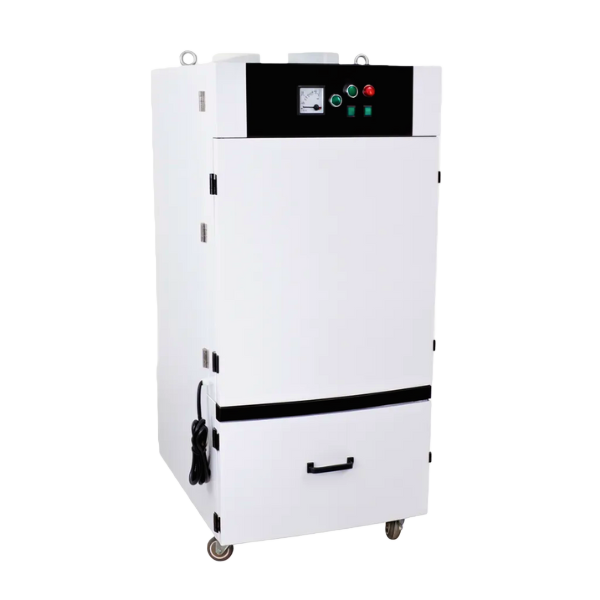
Successful cutting fabric with laser cutter relies on a complete system, not just the laser source. A high-pressure, focused air assist system is critical to blow away debris and prevent thermal discoloration or burn marks on delicate fabrics. Furthermore, a robust fume extraction system is mandatory to remove the smoke and particulates generated during processing, protecting both the machine’s optics and ensuring a safe workshop environment.
MimoWork Solutions for Diverse Fabric Cutting Needs
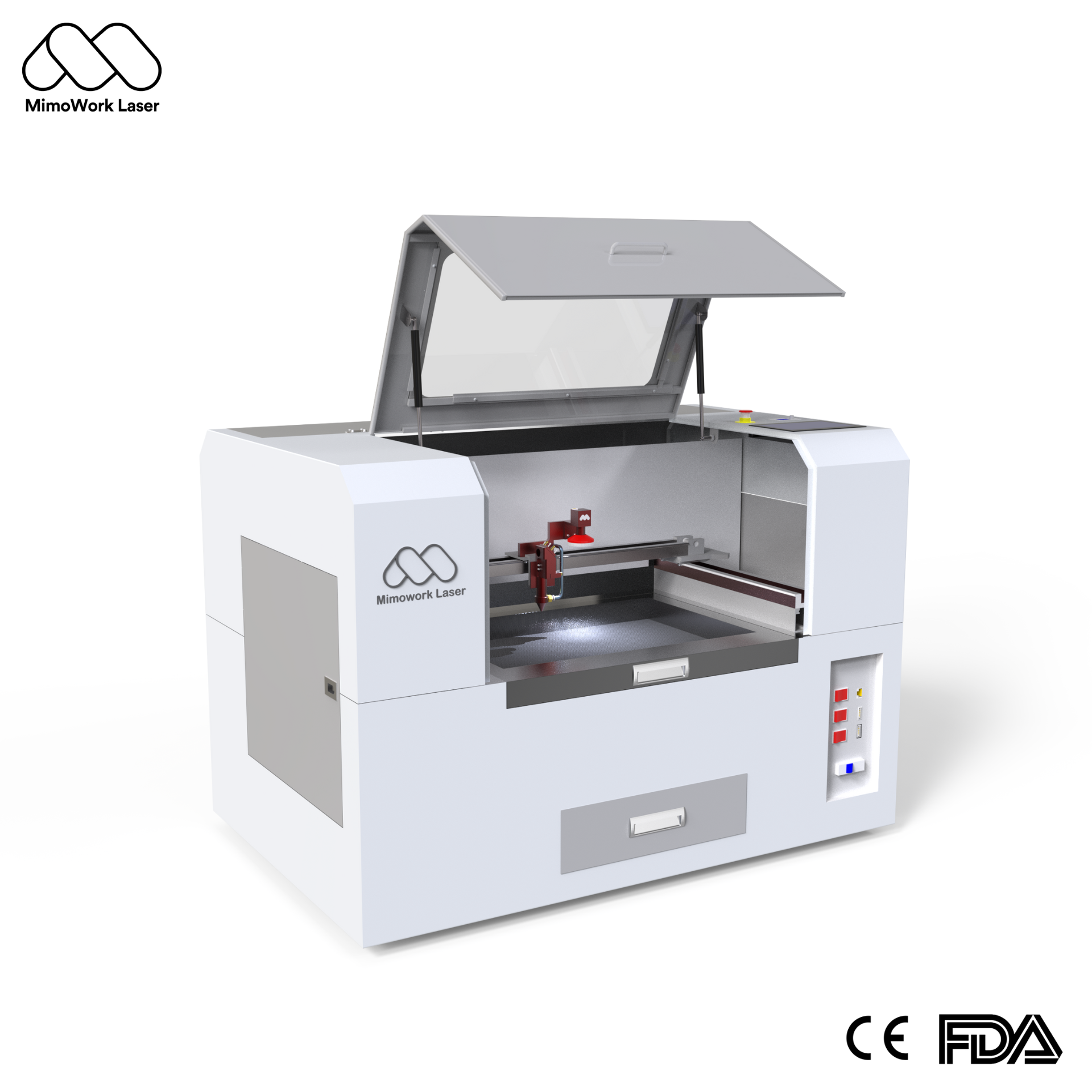
MimoWork offers a range of laser cutters designed specifically for textile applications. The F160 model is engineered as a robust entry-point for continuous fabric cutting, featuring an integrated conveyor and vacuum table ideal for apparel production. For industrial-scale processing of heavy materials like Cordura or technical textiles, the F180-L provides a heavy-duty solution with a large format and high-power compatibility. Ultimately, cutting fabric with laser cutter technology provides a scalable, precise, and efficient pathway to modernize textile manufacturing, from small workshops to large-scale industrial production.
FAQ
Q: What laser power is best for cutting fabric?A: The optimal power depends on fabric type, thickness, and desired speed. For most single-ply textiles like polyester, cotton, or nylon, a 100W-150W CO2 laser is highly effective. For thicker materials, multiple layers, or faster throughput, powers up to 300W or 600W may be recommended.
Q: Can a laser cutter handle stretchy or delicate fabrics without distortion?A: Yes, with the correct setup. Integrated systems use a vacuum table to hold the material perfectly flat and prevent shifting or puckering during the cut. For roll goods, features like pneumatic clamping bars and automatic edge guidance on unwinders ensure smooth, tension-controlled feeding of delicate or stretchy materials like spandex.
Q: How does laser cutting compare to traditional die-cutting for fabric?A: Laser cutting offers significant advantages: no costly physical dies needed, allowing for rapid design changes and customization. It provides superior precision for intricate patterns, creates a sealed edge, and enables easier automation for continuous processing. While die-cutting can be faster for simple, high-volume shapes, laser cutting excels in flexibility, precision, and setup speed.