Blog
In a field that evolves daily, staying ahead means staying informed.
Explore in-depth articles designed to help you solve complex challenges,
maximize your machine’s ROI.
Stay ahead in a competitive market.


In a field that evolves daily, staying ahead means staying informed.
Explore in-depth articles designed to help you solve complex challenges,
maximize your machine’s ROI.
Stay ahead in a competitive market.
News | Mar-17-2026
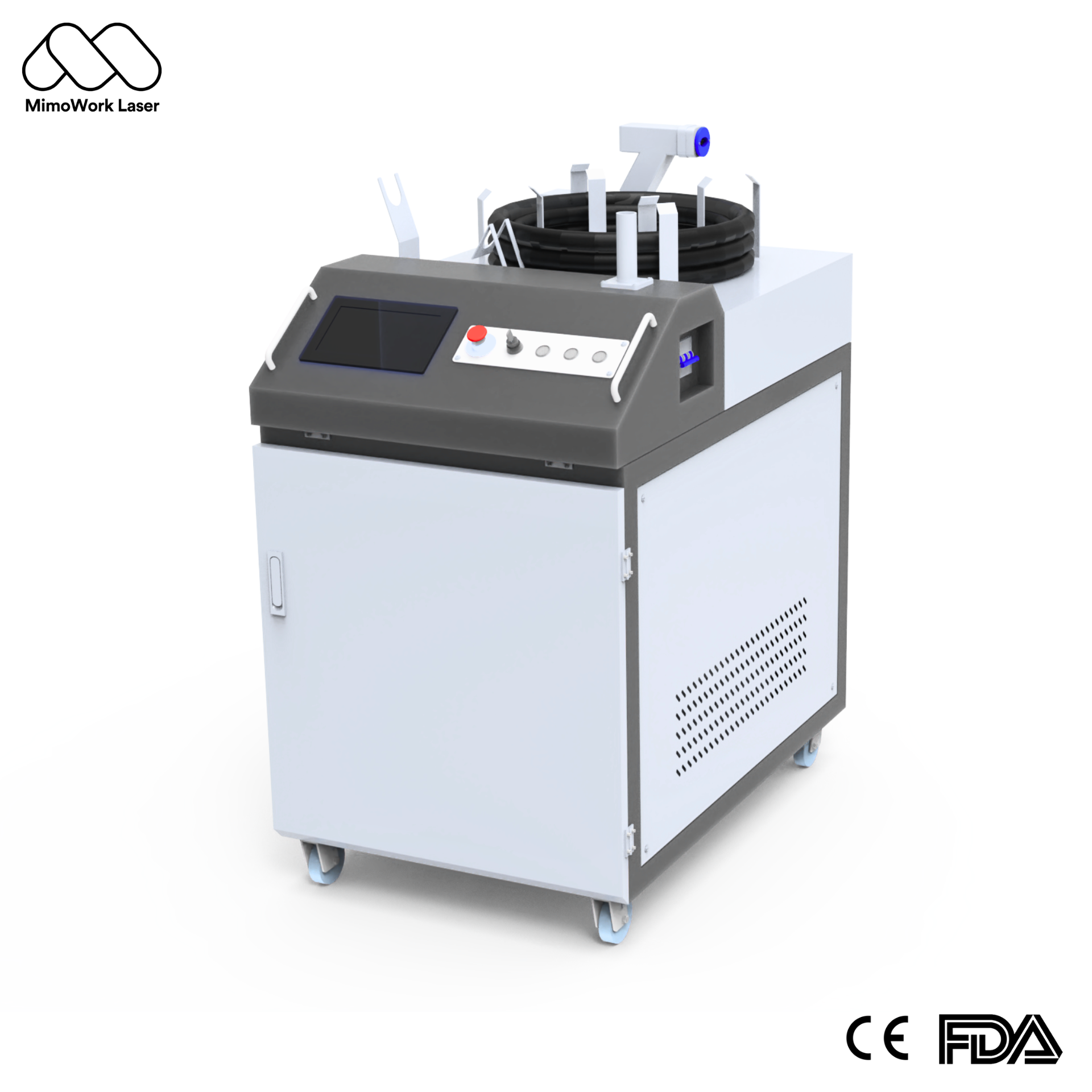
The Handheld Laser Welding Machine represents a significant leap forward in welding technology, bringing the precision and quality of laser welding out of fixed work cells and directly into the operator’s hands. This portable system is engineered for versatility, enabling strong, clean welds on a wide array of metals including steel, aluminum, and copper alloys directly on the shop floor or in the field. It is the definitive solution for applications where components are too large to move or require urgent repairs, such as in automotive body shops, structural maintenance, and on-site manufacturing fixes.
Core Technology and Specifications
At the heart of this system is a fiber laser source, typically operating at a wavelength of 1064nm. These machines commonly offer laser power ranging from 1000W to 1500W, delivered in either continuous or modulated wave modes to suit different material and joint requirements. The system employs efficient water cooling to maintain optimal operating temperature and ensure consistent performance during extended use. This core technology package is what empowers the handheld laser welding machine to perform deep penetration welds with remarkable control.
Key Components for Operator-Centric Design
The system’s design prioritizes usability and results. It centers on an ergonomic handheld welding gun, which is lightweight and integrates safety triggers, a viewfinder, and a connection for filler wire. This gun is fed by an integrated wire feeder system that automatically supplies filler material to build up welds, fill gaps, and improve bead appearance. The portable laser generator and a compact cooling unit complete the mobile setup, allowing the entire system to be positioned as needed for the task at hand.
Operational Advantages Over Traditional Methods
Compared to conventional arc or gas welding, the primary advantage of a handheld laser welding machine is its minimal heat input. This characteristic drastically reduces thermal distortion and the heat-affected zone in the workpiece, leading to stronger joints with less material warping. The result is high-quality welds that often require significantly less post-processing like grinding or straightening, saving substantial time and labor. Furthermore, its capability to weld various metals increases shop flexibility without needing multiple dedicated machines.
Ideal Application Scenarios
This tool excels in repair, maintenance, and light fabrication scenarios where mobility is key. It is perfectly suited for patching, seam welding, and spot welding on large, immobile structures like machinery frames, vehicle panels, or metal furniture. The ability to perform a handheld laser welding machine operation directly on the assembly floor eliminates the need to disassemble or transport large components to a fixed welding station, dramatically improving workflow efficiency and turnaround time for repair jobs.
FAQ
A: The required power depends on your primary material thickness and desired welding speed. A 1000W-1500W machine is a versatile range suitable for many common repair and fabrication tasks on light to medium gauge metals, offering a good balance of capability and portability.
A: These machines are compatible with a wide range of metals, including various grades of steel (carbon, stainless), aluminum alloys, and copper alloys. The material compatibility table indicates suitability for these and other alloys like titanium and nickel-based metals.
A: While the fundamental operation is designed for user-friendliness, proper training is essential for achieving optimal, safe results. Training covers software navigation, parameter settings for different materials, and correct welding techniques to ensure quality and operator safety.
A: Beyond standard welding personal protective equipment (PPE), laser safety is paramount. This always includes using appropriate laser safety eyewear for the 1064nm wavelength. Furthermore, implementing fume extraction is highly recommended to protect the operator from airborne particulates and meet workshop air quality standards.