Blog
In a field that evolves daily, staying ahead means staying informed.
Explore in-depth articles designed to help you solve complex challenges,
maximize your machine’s ROI.
Stay ahead in a competitive market.


In a field that evolves daily, staying ahead means staying informed.
Explore in-depth articles designed to help you solve complex challenges,
maximize your machine’s ROI.
Stay ahead in a competitive market.
News | Mar-20-2026
UV laser marking represents a pinnacle of precision in the industrial marking world, utilizing a 355nm wavelength beam for high-accuracy, low-thermal-impact processing. This technology is specifically engineered for “cold marking” on sensitive and highly reflective materials where the heat from traditional lasers would cause damage, such as melting, discoloration, or micro-cracks. The process is indispensable for industries requiring flawless, permanent marks on delicate components, from electronics to medical devices.
How It Works: The “Cold” Ablation Advantage
The exceptional performance of a UV laser marking system stems from its photochemical interaction with materials. Unlike infrared lasers that rely on thermal energy to melt or vaporize a surface, the short-wavelength ultraviolet light from a UV laser marking machine breaks molecular bonds directly. This “cold ablation” process removes material at a microscopic level with minimal heat transfer to the surrounding area, enabling extremely fine detailing and high-contrast marks without compromising the material’s structural integrity.
Core Components of a UV System
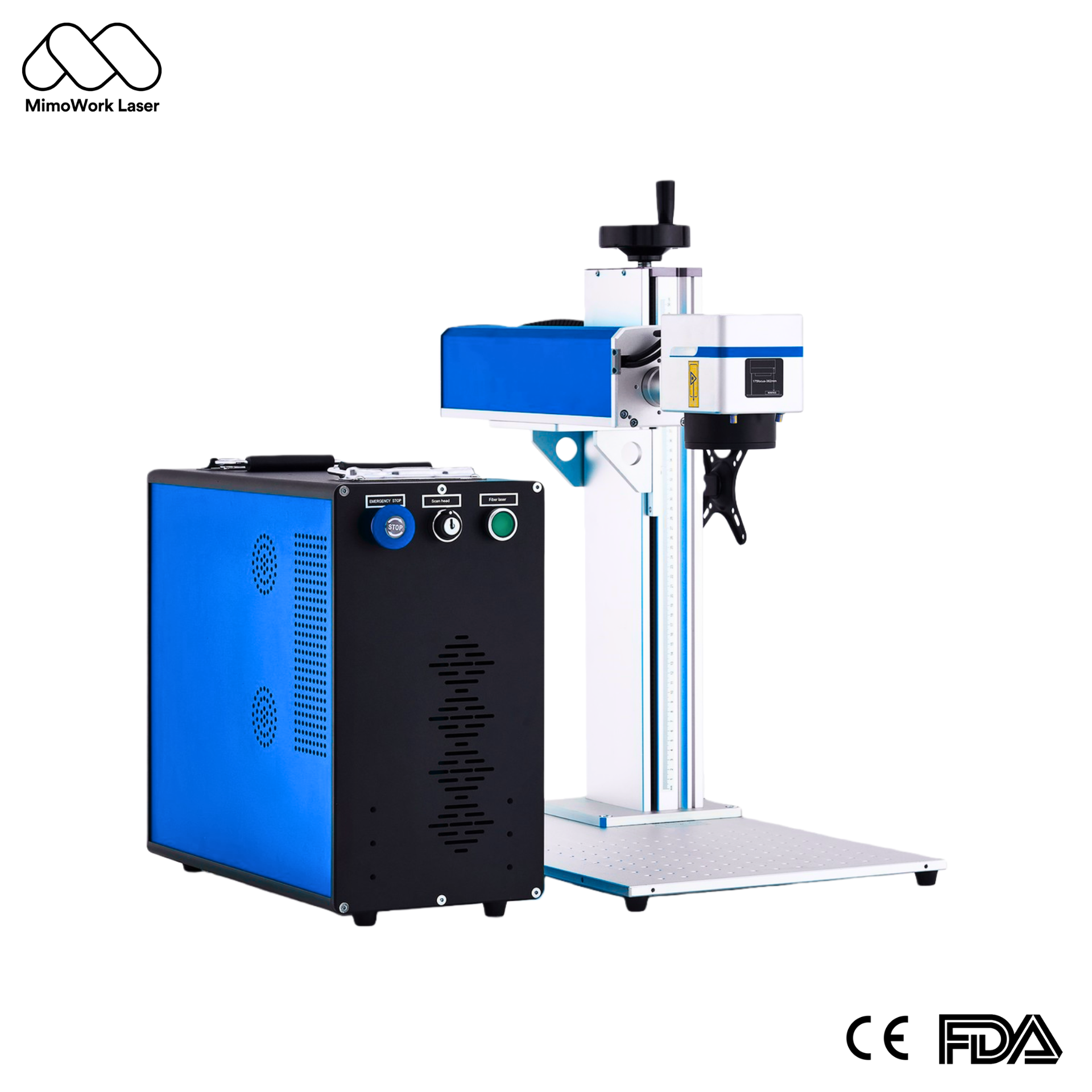
A robust UV laser marking setup is built around several key components. The heart of the system is the UV DPSS Laser Source (Nd:YVO4), which generates the stable 355nm beam. This beam is directed by a High-Precision Galvo Scanner, which allows for the fast, accurate positioning required for intricate graphics and small text. The focused beam passes through a specialized UV-Specific F-Theta Lens, crafted from materials that efficiently transmit the UV wavelength for consistent spot quality across the entire work area. Typically, an integrated Air-Cooling System maintains optimal operating temperature for reliable, continuous operation.
Technical Specifications and Material Suitability
The versatility of UV laser marking is reflected in its technical parameters and broad material compatibility. Standard systems offer working areas from 100² mm to 180² mm and high marking speeds up to 15,000mm/s, powered by laser sources ranging from 3W to 10W. This makes the UV laser marking machine particularly suitable for non-metal materials, including a wide array of plastics (like PVC, PET, and polycarbonate), glass, ceramics, and silicon wafers. It is the preferred choice for marking circuit boards (PCBs), medical devices, glass containers, and consumer packaging where precision and a lack of thermal stress are critical.
Upgrades for Enhanced Performance
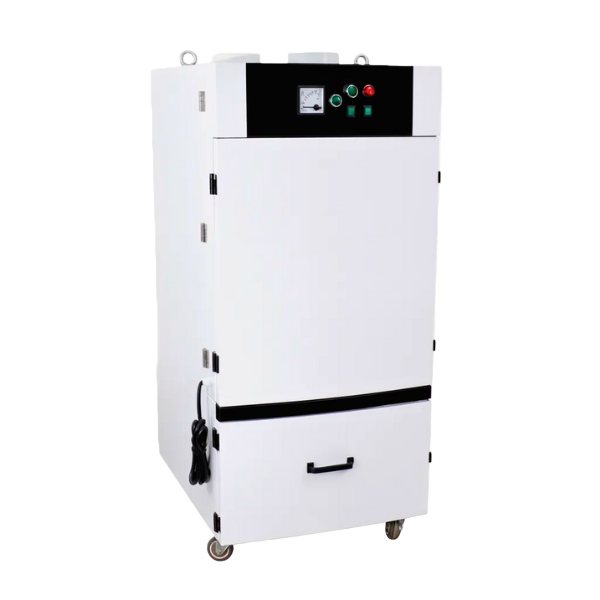
To meet specific industrial demands, the core UV laser marking platform can be enhanced with several upgrades. A Safety Enclosure System with integrated fume extraction ensures operator safety and a clean work environment. For higher-power applications or extended production runs, an industrial Cooling System Upgrade (water chiller) provides maximum laser stability. Furthermore, systems can be fully reconfigured for In-Line Production Integration, featuring automated vision systems for high-volume, automated manufacturing lines. This adaptability ensures that UV laser marking technology can be tailored for both laboratory precision and hardened factory-floor duty.
FAQ
Q: What exactly is a UV laser marking machine?
A: A UV laser marking machine is an industrial system that uses a 355nm ultraviolet laser beam to create high-precision, permanent marks on materials. Its key advantage is “cold processing,” which minimizes heat damage, making it ideal for sensitive plastics, glass, and electronics.
Q: Why is UV laser marking called a “cold” process?
A: It is termed “cold” because the short-wavelength UV light interacts with materials primarily through photochemical ablation, breaking molecular bonds directly rather than relying on intense heat to melt or vaporize the surface. This results in minimal thermal stress on the surrounding material.
Q: What materials are best suited for UV laser marking?
A: UV laser marking excels on non-metal materials that are sensitive to heat. This includes a wide range of plastics (e.g., PVC, PET), glass, ceramics, silicon, and coated metals. It is especially critical in electronics for PCBs and in medical device manufacturing.
Q: How does UV laser marking differ from standard fiber laser marking?
A: The core difference is the wavelength and interaction mechanism. Fiber lasers typically use a 1064nm infrared wavelength that marks via thermal effect, making them excellent for metals. UV lasers use a 355nm wavelength for cold ablation, which is superior for plastics and delicate materials where heat is a concern.
Q: Can a UV laser marking machine mark metals?
A: While primarily designed for non-metals, UV lasers can effectively mark certain metals, especially those that are highly reflective or have special coatings, due to the high photon energy of the UV beam which is well-absorbed. However, for deep engraving or annealing marks on bare metals, a fiber laser is generally more efficient.