Blog
In a field that evolves daily, staying ahead means staying informed.
Explore in-depth articles designed to help you solve complex challenges,
maximize your machine’s ROI.
Stay ahead in a competitive market.


In a field that evolves daily, staying ahead means staying informed.
Explore in-depth articles designed to help you solve complex challenges,
maximize your machine’s ROI.
Stay ahead in a competitive market.
News | Mar-23-2026
For modern woodworkers, cabinet makers, and sign fabricators, integrating a woodworking laser cutter into the workshop represents a leap in capability, precision, and efficiency. Unlike subtractive methods that rely on physical contact, laser cutting uses a focused beam of light to vaporize material, enabling intricate designs, sealed edges, and complex joinery that are difficult or impossible to achieve with traditional tools.
Understanding the Laser-Wood Interaction
A CO2 laser, with a wavelength of 10.6 micrometers, is highly absorbed by organic materials like wood, making it exceptionally effective for cutting and engraving. The beam’s energy rapidly heats the wood, causing it to vaporize and creating a kerf. The resulting cut edge is typically darkened (showing some charring) but is also sealed and smooth, which is a distinct advantage for many projects as it prevents fraying and can be aesthetically desirable. The precision of the beam allows for incredibly fine details, from delicate fretwork to precise inlays, which is a core strength of a dedicated woodworking laser cutter.
Key Equipment Selection Criteria
Choosing the right laser system is critical for professional results. The first consideration is work area size. For hobbyists or small item production, a compact machine like a 600x400mm model may suffice. For signage, furniture components, or panel processing, larger beds such as 1300x900mm or even full-sheet systems (e.g., 1300x2500mm) are necessary to handle standard panel sizes and maximize material utilization. Laser power directly influences cutting speed and capable material thickness. While 60W-100W can cut thinner woods and plywoods, powers of 150W and above are recommended for efficiently processing thicker hardwoods or dense plywoods, with some industrial systems offering up to 600W for high-throughput applications. Furthermore, the mechanical structure is paramount for precision; a rigid frame and a reliable drive system (like a gear and rack) ensure consistent accuracy and repeatability over long production runs, which is non-negotiable for a professional woodworking laser cutter.
Applications and Workflow Optimization
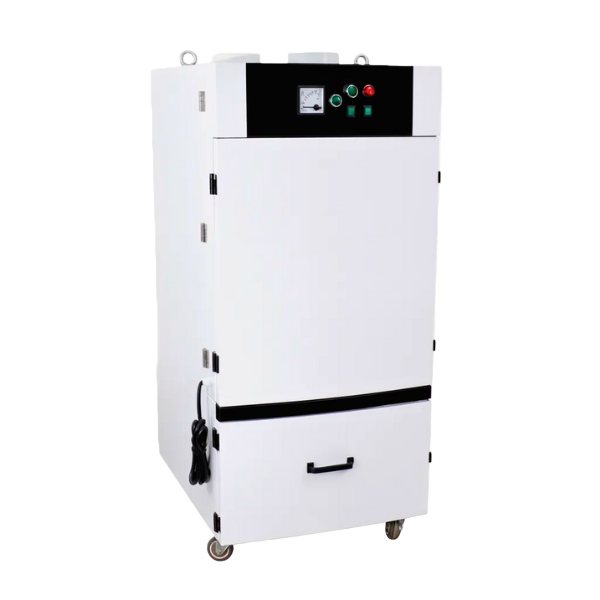
The applications for a laser in woodworking are vast. Beyond cutting shapes, it excels at engraving detailed graphics, serial numbers, or branding onto finished pieces. It can produce perfect joinery such as finger joints or living hinges in plywood. To optimize the workflow, features like a pass-through design allow for processing materials longer than the machine bed, and integrated ball transfer units facilitate the easy loading of heavy, full-sized sheets by a single operator. Using a knife-blade or honeycomb worktable minimizes back-side marking and reduces the risk of harmful laser reflection. Crucially, an effective fume extraction system is mandatory to maintain a safe workshop environment and protect the machine’s optics from wood smoke and particulates. Implementing these considerations transforms a standard laser into a highly efficient woodworking laser cutter production cell.
Conclusion
Adopting laser technology fundamentally expands the creative and production potential of a woodworking business. By understanding the technical parameters—from power and bed size to structural integrity and safety features—craftsmen can select a system that aligns with their specific project needs and scale. The precision, versatility, and clean operation offered by a well-chosen laser cutter make it an indispensable tool for the modern woodshop, enabling the creation of high-value, intricate products with remarkable efficiency.
FAQ
Q: What thickness of wood can a typical woodworking laser cutter handle?
A: The maximum thickness depends on the laser power, wood density, and desired cut quality. A 100W-150W laser can typically cut through 10-15mm (approx. 3/8″ to 5/8″) of plywood or softer woods cleanly. Higher power lasers (300W-600W) can process even thicker materials, but it’s essential to consult machine specifications and conduct material tests.
Q: How does cutting speed affect the finish on wood?
A: Speed is inversely related to cut depth and edge appearance. A slower speed allows the laser to deliver more energy, enabling deeper cuts through thicker material but may increase charring. Faster speeds produce cleaner, lighter edges on thinner materials but may not cut through completely. Finding the optimal balance of power, speed, and air assist for each material is key to a quality finish.
Q: What are the primary safety considerations when operating a laser cutter for wood?
A: The top safety priorities are fire prevention and fume management. Wood is combustible, so never leave the machine unattended during operation and ensure a clean work area. A dedicated fume extractor is essential to remove smoke and particulates, protecting both operator health and the machine’s internal optics. Always use the machine’s enclosure and appropriate personal protective equipment.
Q: What file formats are used to drive a woodworking laser cutter?
A: Laser cutters typically use vector file formats such as DXF, AI, SVG, or PLT to define cut paths. For engraving raster images, formats like BMP, PNG, or JPG are common. The control software, such as LightBurn, imports these files and translates them into machine commands for execution.
News | Mar-19-2026
News | Mar-20-2026
News | Mar-23-2026