Blog
In a field that evolves daily, staying ahead means staying informed.
Explore in-depth articles designed to help you solve complex challenges,
maximize your machine’s ROI.
Stay ahead in a competitive market.


In a field that evolves daily, staying ahead means staying informed.
Explore in-depth articles designed to help you solve complex challenges,
maximize your machine’s ROI.
Stay ahead in a competitive market.
News | Mar-24-2026
In the diverse ecosystem of industrial lasers, the 20W fiber laser occupies a critical niche, offering a precise balance of power, precision, and operational efficiency. As a solid-state laser that generates its beam within a doped optical fiber, this technology is renowned for its exceptional beam quality, reliability, and low maintenance requirements.
Core Advantages and Operational Principles
The fundamental strength of a 20w fiber laser lies in its superb beam quality (high brightness and low M² factor). This allows the laser energy to be focused to an extremely fine spot, enabling high-contrast marking, fine engraving, and precise micro-processing with minimal heat-affected zones. The architecture is inherently robust, as the laser light is generated and delivered within a flexible fiber cable, making it resistant to misalignment from environmental vibrations compared to traditional laser designs. This reliability translates to consistent performance and high uptime in industrial settings.
Primary Applications and Material Compatibility
This laser power level is exceptionally versatile. The 20w fiber laser is predominantly deployed for permanent marking and engraving on metals and engineered plastics. Its capabilities include creating durable serial numbers, data matrix codes, logos, and alphanumeric text on materials such as steel, aluminum, anodized aluminum, and many plastics, which is essential for traceability, branding, and part identification. Furthermore, it is suitable for precision cleaning tasks where controlled removal of thin coatings or oxides is required without damaging the underlying substrate.
Technical Specifications and Performance Metrics
Evaluating a system based on a 20w fiber laser requires scrutiny of its complete technical data. Key parameters include the marking speed, which can reach up to 8,000mm/s for vector-based marking, and the standard working area, which typically ranges from 70x70mm to 200x200mm, defined by the galvanometer scanner and f-theta lens combination. The wavelength is consistently 1064nm, which is highly absorbed by most metals and many polymers. Cooling is efficiently handled by integrated air-cooling systems, eliminating the need for complex external chillers in standard configurations.
System Components and Integration
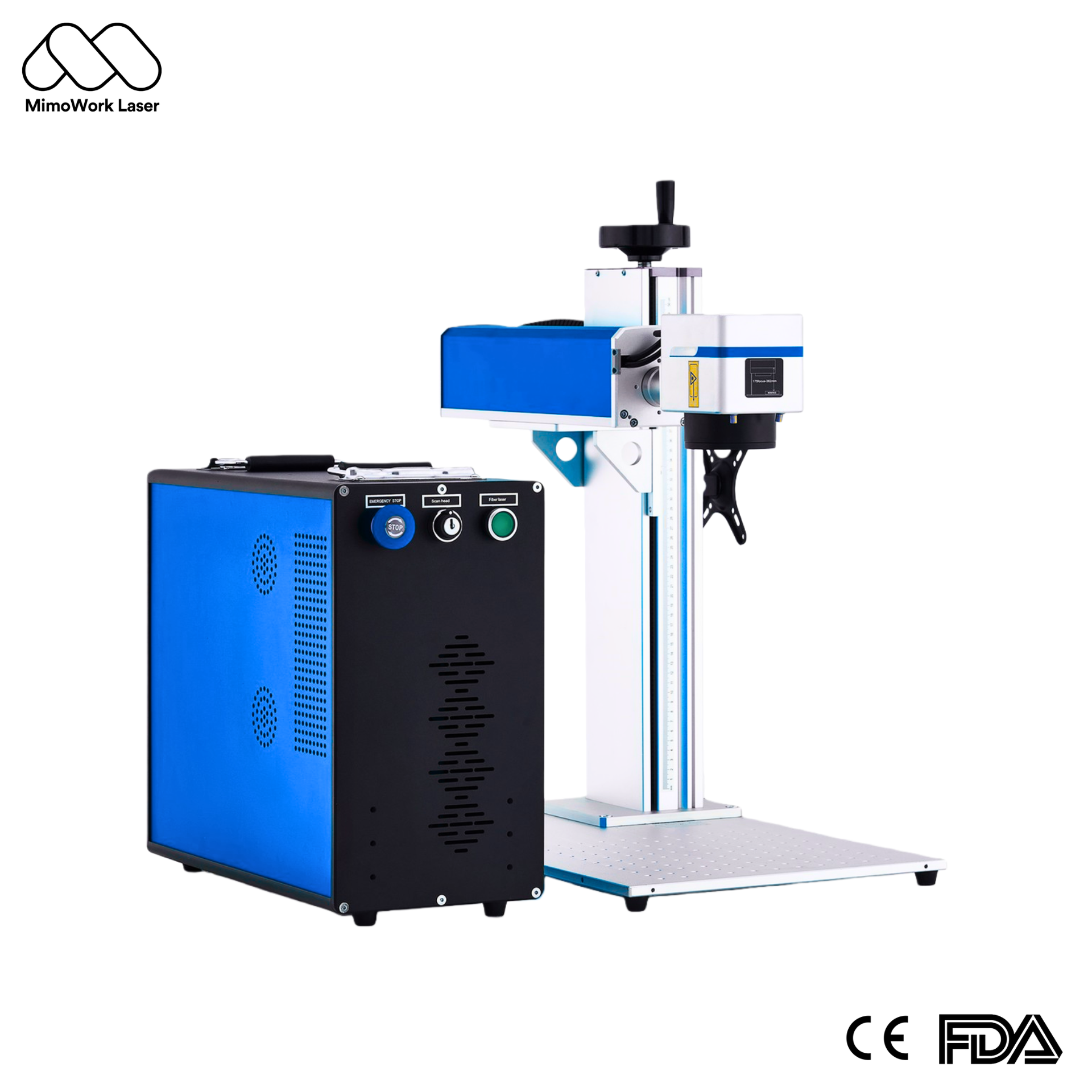
A complete 20w fiber laser marking system comprises several integrated components beyond the source itself. The core is the air-cooled fiber laser source, valued for its stability. Beam steering is accomplished via a high-speed galvanometer scanner, while a standard field lens (F-Theta) ensures a flat focal plane across the entire marking field. The system is governed by dedicated software for designing marks and controlling laser parameters like power, speed, and frequency. For enhanced flexibility, this platform can be upgraded with options like a handheld marking head connected via fiber optic cable for portability.
Upgrades and Configuration for Specialized Tasks
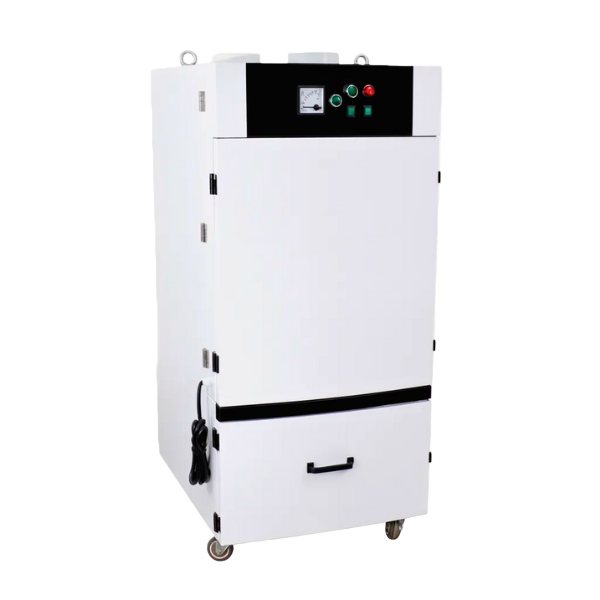
While the standard 20W configuration is powerful, specific challenges may require enhanced capabilities. For marking on uneven surfaces or larger 3D contours, a dynamic focus solution or a 3D galvanometer system can be integrated. For environments demanding maximum cleanliness and operator safety, integrating a dedicated fume extraction system with HEPA and carbon filtration is crucial to capture particulates and fumes at the source. These upgrades ensure the 20w fiber laser system can be tailored to meet precise application needs within a production line.
FAQ
Q: Is a 20W fiber laser powerful enough for deep metal engraving?
A: A 20W fiber laser is excellent for surface marking, annealing, and light to moderate engraving on metals. For very deep engraving (e.g., >0.5mm) in hardened steels, a higher-power laser (e.g., 50W or more) would be more time-efficient. However, for most industrial data matrix codes, serial numbers, and logos, 20W provides more than sufficient power and speed.
Q: What materials can a 20W fiber laser *not* process effectively?
A: This wavelength (1064nm) is poorly absorbed by transparent materials like clear glass or acrylic and many untreated, non-conductive plastics. It is also not designed for cutting metal sheets. For non-metal marking (wood, glass, plastics), a CO2 or UV laser source is typically the appropriate choice.
Q: How does the marking speed of a 20W fiber laser compare to other technologies?
A: Fiber lasers, including 20W models, offer exceptionally high marking speeds, often measured in meters per second, far surpassing traditional methods like dot peen or inkjet. The speed is highly dependent on the mark’s complexity and required depth, but for standard alphanumeric text and codes, it is extremely fast and efficient for production lines.
Q: What is the primary maintenance requirement for a 20W fiber laser system?
A: The primary maintenance is keeping the optical path (protective cover slide on the output head) clean from dust and debris. The fiber laser source itself is solid-state and typically requires no routine maintenance, contributing to its low total cost of ownership and high reliability over many years of operation.
News | Mar-20-2026