Blog
In a field that evolves daily, staying ahead means staying informed.
Explore in-depth articles designed to help you solve complex challenges,
maximize your machine’s ROI.
Stay ahead in a competitive market.


In a field that evolves daily, staying ahead means staying informed.
Explore in-depth articles designed to help you solve complex challenges,
maximize your machine’s ROI.
Stay ahead in a competitive market.
News | Apr-3-2026
The decision to invest in industrial laser cleaning technology is a significant one, driven by the need for efficiency, quality, and a strong return on investment. A critical factor in this decision is understanding the laser cleaning machine price. This price is not a random figure but a direct reflection of the core technologies, build specifications, and application capabilities engineered into the system.
Core Technology and Price Determinants: Laser Source Type
The heart of any system is its laser source, and this choice is the primary driver of both capability and laser cleaning machine price. There are two main technological paths, each with distinct cost structures and use cases. The first is the Continuous Wave (CW) Fiber Laser, which delivers a constant, high-power beam (e.g., 1000-3000W) optimized for fast, large-area removal of heavy rust, paint, and mill scale from metal surfaces. The high-power laser diodes and robust cooling systems required for this continuous operation contribute significantly to its cost. The second path is the Pulsed Fiber Laser, which emits ultra-short, high-peak-power pulses. This technology is designed for precision work, such as removing delicate coatings, cleaning weld seams, or restoring sensitive artifacts without substrate damage. The sophisticated electronics needed to generate and control these precise pulses influence its laser cleaning machine price, positioning it for applications where surface integrity is paramount over raw speed.
Motion and Automation: The Framework Cost
Beyond the laser source, the degree of automation and movement complexity forms another major cost layer. A basic handheld or stationary system offers a lower entry point. However, for complex three-dimensional components, a 5-Axis Gantry system becomes necessary. This system integrates a robotic gantry that provides precise linear and rotational movement (X, Y, Z, A, C axes), allowing the laser head to maintain the optimal angle and distance on contoured surfaces like turbine blades or intricate castings. The inclusion of a multi-axis CNC motion system, high-precision drives, and advanced path-planning software substantially increases the machine’s capability and, consequently, its price, but it is essential for automating difficult, large-scale cleaning tasks.
Configuration, Components, and Customization
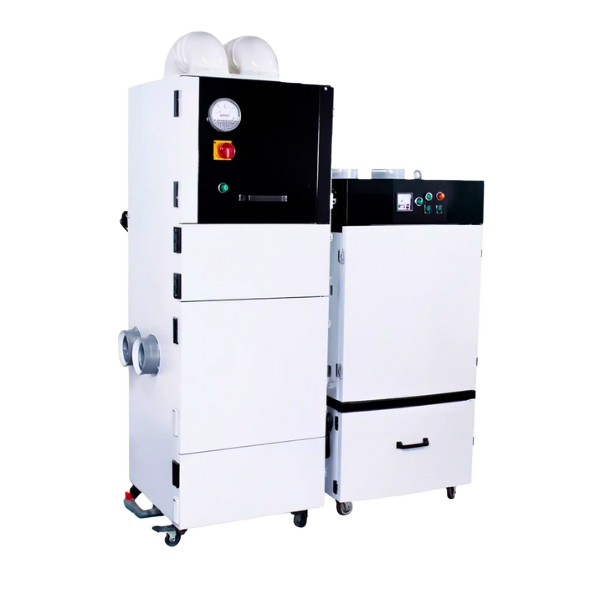
The base laser cleaning machine price is further defined by its standard configuration, which includes critical components like the industrial chiller (water-cooling is standard for high-power applications), optical cleaning head, and control software. However, optional upgrades can tailor the machine to specific operational needs. For instance, integrating a high-performance Fume Extraction & Filter Unit is vital for capturing the dense smoke and particulates generated during cleaning to protect operator health and meet safety standards, adding to the overall system cost. Other upgrades like automated scanning kits or modular heads for multi-process functionality (cleaning, welding) also impact the final investment. Therefore, evaluating the laser cleaning machine price requires a clear understanding of both standard and optional components needed for your specific workshop environment and material processing goals.
Evaluating Price vs. Total Value
Ultimately, the laser cleaning machine price should be evaluated as an investment in productivity, quality, and operational cost savings. A higher initial price for a system with the correct laser technology (CW vs. Pulsed), appropriate power, and necessary automation often leads to lower cost-per-part cleaned, reduced consumable expenses (no abrasives or chemicals), and minimal secondary waste. By aligning the technical specifications—laser source type, power, cooling method, and motion system—with your specific application requirements (e.g., surface rust removal vs. precision coating removal), you can accurately assess the price bracket for a solution that delivers long-term economic and technical value.
FAQ
Q: What is the typical price range for an industrial laser cleaning machine?
A: There is no single price, as it varies dramatically based on core technology. A lower-power pulsed system for precision work starts in a different range than a high-power Continuous Wave system for heavy rust removal. The most accurate way to determine price is to define your primary application, material, and desired cleaning speed.
Q: What are the main technical factors that cause the laser cleaning machine price to differ?
A: The three primary factors are: 1) Laser Source & Power: Continuous Wave vs. Pulsed technology and the wattage (e.g., 300W vs. 3000W). 2) Motion System: A simple handheld setup is less expensive than a fully automated 5-axis gantry robot. 3) Configuration & Cooling: Standard water-cooling and component quality versus advanced options like integrated fume extraction or scanning automation.
Q: Can I get a customized machine, and how does that affect the price?
A: Yes, laser solutions can be tailored. Customization may involve specific laser source integration, unique work area dimensions, or specialized software. This naturally affects the price, as it moves from a standard configuration to a purpose-built solution. A detailed consultation is needed to scope requirements and provide an accurate quote.
Q: Are there significant ongoing costs beyond the initial laser cleaning machine price?
A: Operational costs are relatively low compared to traditional methods. The main consumables are electricity and cooling water (for chillers). Protective windows on the cleaning head may require periodic replacement. The most critical ancillary cost is for a proper fume extraction system to maintain air quality and safety, which can be an integrated upgrade or a separate unit.