Blog
In a field that evolves daily, staying ahead means staying informed.
Explore in-depth articles designed to help you solve complex challenges,
maximize your machine’s ROI.
Stay ahead in a competitive market.


In a field that evolves daily, staying ahead means staying informed.
Explore in-depth articles designed to help you solve complex challenges,
maximize your machine’s ROI.
Stay ahead in a competitive market.
News | Apr-7-2026
The Heart of the System: Multi-Stage Filtration
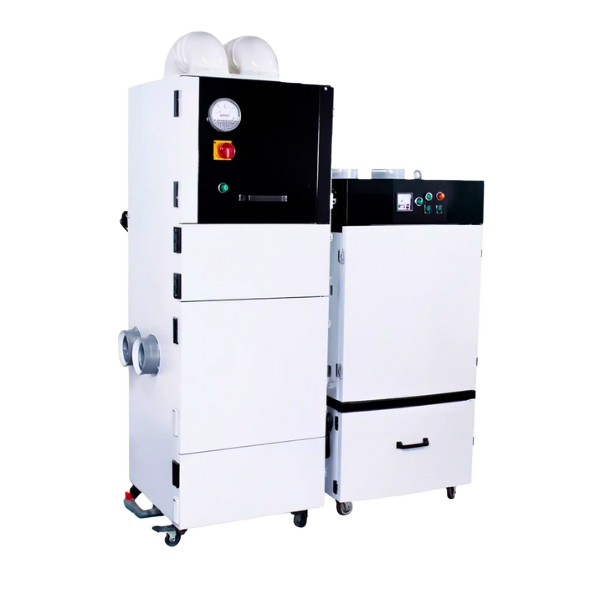
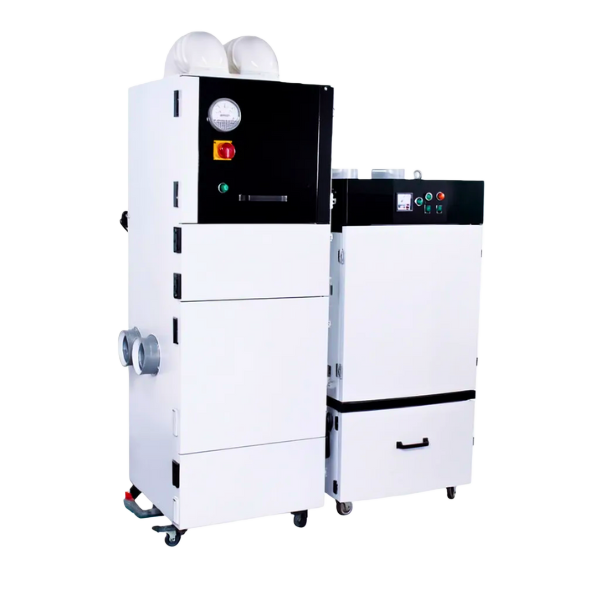
The core efficacy of any industrial dust collector lies in its filtration technology. Modern systems employ a multi-stage approach to handle diverse contaminant profiles. For heavy, abrasive metallic dust from fiber laser cutting, a primary spark arrestor pre-filter captures larger hot particles, while a heavy-duty HEPA/ULPA final filter traps sub-micron particulate. For smoke and sticky residues from CO2 laser processing of organics, a combination of a pre-filter, a specialized main filter, and an optional activated carbon module for odors is essential. This tailored filtration ensures that hazardous materials are effectively removed from the air stream before it is recirculated or exhausted.
Application-Specific Design: A Collector for Every Process
A one-size-fits-all approach fails in industrial settings. Effective fume extraction requires solutions engineered for specific challenges. For instance, a collector designed for metal cutting (F-Series) prioritizes high static pressure to pull heavy dust through dense HEPA filters and often includes an automatic pulse-cleaning system to maintain airflow. Conversely, a system for pinpoint welding and cleaning (W-Series) features an articulated extraction arm for localized capture right at the source, crucial for managing intense, localized fume plumes. Selecting the correct industrial dust collector is therefore a strategic decision based on the primary contaminant type and the specific application geometry.
Beyond Airflow: Key Performance Metrics
When specifying an industrial dust collector, several technical parameters are vital. Air volume (m³/h) and static pressure (Pa) determine the system’s ability to overcome duct resistance and capture fumes effectively. Filtration efficiency, typically 99.9% for particles down to 0.3-0.5μm, is non-negotiable for health protection. Furthermore, construction quality, such as a heavy-gauge steel enclosure with thermal insulation, ensures durability and safety in harsh plant environments. These metrics collectively define the performance and reliability of the air cleaning solution.
Ensuring Longevity: Maintenance & Upgrade Strategies
To maintain peak performance, a robust industrial dust collector incorporates features for sustainable operation. An automatic filter cleaning pulse system dislodges caked-on dust from cartridges, dramatically extending their service life and maintaining consistent suction. Furthermore, strategic upgrades can enhance functionality. Adding a Variable Frequency Drive (VFD) allows precise control of fan speed to match suction power to the task, saving energy. For odor control in sublimation or plastic processing, an activated carbon filter module is an essential upgrade. These features transform the collector from a passive filter into an intelligent, adaptable component of the production ecosystem.
FAQ
Q: How do I choose the right industrial dust collector for my laser machine?
A: The selection depends primarily on your laser process and material. For fiber laser cutting of metals, a high-static pressure system with HEPA filtration (like the F-Series) is required to capture fine, abrasive metallic dust. For CO2 laser cutting of wood or acrylic, a system designed for smoke and sticky residues (like the C-Series) with optional carbon filtration for odors is ideal. Key factors are the type of fume (particulate vs. gaseous), particle size, and required airflow.
Q: What is the importance of a HEPA filter in a dust collector?
A: A High-Efficiency Particulate Air (HEPA) filter is critical for capturing sub-micron particles that pose the greatest health risk and can damage sensitive equipment optics and electronics. It traps 99.97% of particles as small as 0.3 microns, ensuring that the air returned to the workspace or exhausted meets strict air quality and safety standards.
Q: How often do the filters need to be replaced, and is maintenance complex?
A: Filter life varies based on usage and contaminant load. Systems with an automatic pulse-cleaning mechanism can extend main filter cartridge life significantly. Primary pre-filters and collection drawers require more frequent checking and cleaning or replacement. Many modern collectors include filter saturation indicators to eliminate guesswork, making maintenance predictable and straightforward.