Blog
In a field that evolves daily, staying ahead means staying informed.
Explore in-depth articles designed to help you solve complex challenges,
maximize your machine’s ROI.
Stay ahead in a competitive market.


In a field that evolves daily, staying ahead means staying informed.
Explore in-depth articles designed to help you solve complex challenges,
maximize your machine’s ROI.
Stay ahead in a competitive market.
News | Apr-14-2026
System Architecture and Performance
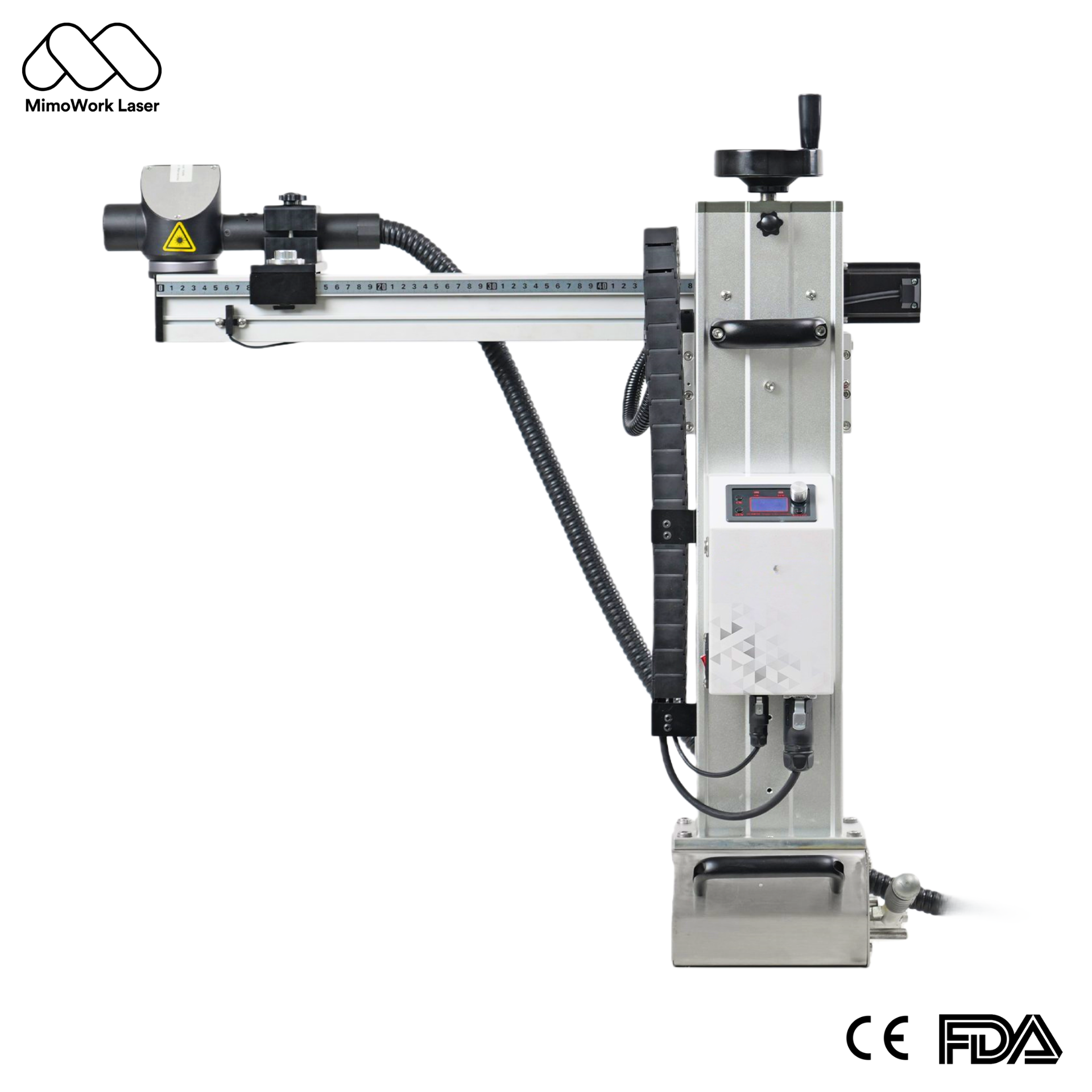
A complete Mopa fiber laser engraver integrates several high-performance subsystems to leverage its advanced laser source fully. The beam is directed by an ultra-high-speed galvanometer scanner, engineered for both rapid marking cycles and precise, detailed work. This is paired with a high-resolution F-Theta lens to maintain a consistent, fine spot size across the entire working area, which for a standard model is 175mm x 175mm. With a typical laser power of 60W and marking speeds up to 7,000mm/s, this system is built for efficient, high-quality production on metals.
Signature Application: Color Marking on Metals
The most celebrated capability of a Mopa fiber laser engraver is its ability to produce permanent, vibrant colors on metals like stainless steel and anodized aluminum without inks or dyes. This process involves using specific pulse settings to manipulate the thin oxide layer on the metal surface, creating interference effects that result in colors such as black, gold, red, and blue. This makes the technology indispensable for high-end product branding, medical devices, and consumer electronics where aesthetic appeal and durability are paramount.
Operational Considerations and Enhancements
For optimal performance and safety, integrating a Mopa fiber laser engraver into a production line requires attention to ancillary systems. Modern MOPA sources are highly efficient and typically air-cooled, eliminating the need for external water chillers in most configurations. However, for processing materials like certain plastics (e.g., PVC, PTFE) that generate hazardous fumes, a high-efficiency fume extraction system with HEPA filtration is mandatory to protect both operators and equipment optics. Furthermore, system upgrades such as industrial water chillers for high-duty-cycle operation, safety enclosures, or integration kits for automated in-line production can be configured to meet specific operational demands.
FAQ
Q: What is the primary advantage of a Mopa fiber laser engraver over a standard fiber laser marker?
A: The core advantage is the independent control over laser pulse parameters (width and frequency). This tunability allows a single Mopa machine to perform a vastly wider range of applications, from delicate color marking and annealing on metals to clean marking on sensitive plastics, which are often challenging for fixed-pulse lasers.
Q: Can a Mopa laser create color marks on any type of metal?
A: The color marking effect is most prominent and reliable on specific metals, primarily stainless steel and anodized aluminum. The process works by creating a controlled oxide layer on the surface. While effects can be achieved on other metals like titanium, the color range and process consistency are optimal for stainless steel and anodized surfaces.
Q: Is specialized software required to operate a Mopa fiber laser engraver?
A: Yes, unlocking the full potential of a Mopa system requires advanced pulse-tuning software. This software goes beyond standard design and layout tools to provide intuitive, precise controls for adjusting pulse width, frequency, and power. This interface is essential for operators to dial in the exact parameters needed for different materials and desired mark effects.
Q: Does the Mopa laser’s versatility come at the cost of marking speed or depth?
A: Not necessarily. A well-configured Mopa fiber laser engraver is engineered for high performance across its range. It utilizes an ultra-high-speed galvo scanner capable of marking at speeds up to 7,000mm/s. For deep engraving, adjusting the pulse parameters to high peak power settings allows for significant material removal, demonstrating that its versatility complements, rather than compromises, its speed and power capabilities.