Blog
In a field that evolves daily, staying ahead means staying informed.
Explore in-depth articles designed to help you solve complex challenges,
maximize your machine’s ROI.
Stay ahead in a competitive market.


In a field that evolves daily, staying ahead means staying informed.
Explore in-depth articles designed to help you solve complex challenges,
maximize your machine’s ROI.
Stay ahead in a competitive market.
News | Apr-17-2026
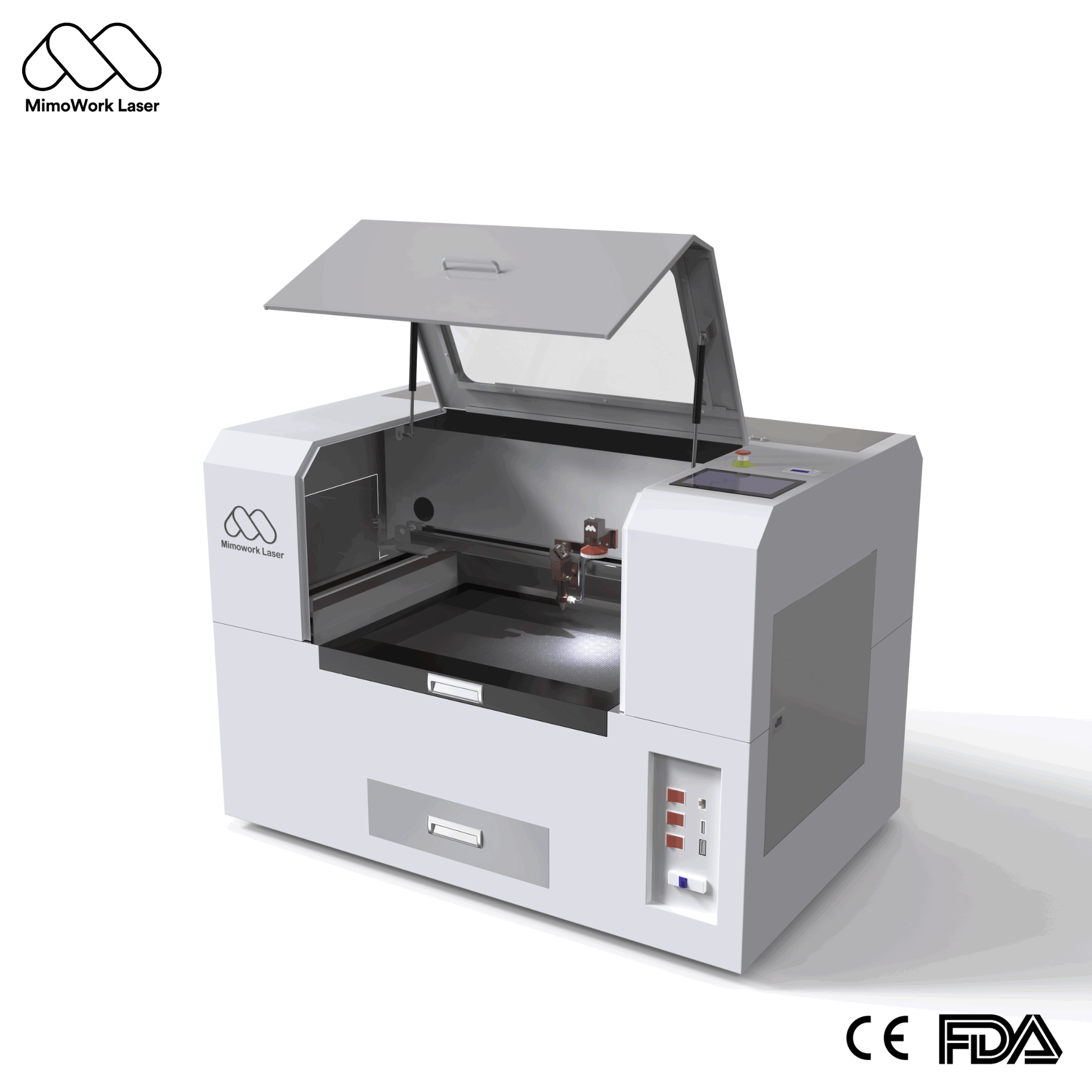
A 50W CO2 laser is one of the most popular entry-level laser systems for small businesses, makers, workshops, and educational environments that require reliable cutting and engraving performance without investing in a high-power industrial machine.
Using a CO2 laser source with a wavelength of approximately 10.6 μm, a 50W CO2 laser is especially effective for processing non-metal materials such as wood, acrylic, leather, fabric, paper, and plastics. It provides a practical balance between precision, versatility, operating cost, and productivity.
However, choosing the right laser power depends on your specific applications. Many users wonder:
This guide explains the capabilities, applications, limitations, and key considerations of a 50W CO2 laser to help you determine whether it is the right solution for your cutting and engraving needs.
A 50W CO2 laser is a laser cutting and engraving system powered by a carbon dioxide gas laser tube. Inside the tube, a mixture of carbon dioxide, nitrogen, and helium gases is excited by electrical discharge to generate a laser beam.
Unlike fiber lasers, which are primarily designed for metal processing, CO2 lasers operate at a longer wavelength that is highly absorbed by organic and non-metal materials. This makes them ideal for applications requiring precise cutting, engraving, and surface marking on materials such as acrylic, wood, leather, fabric, and plastics.
A 50W CO2 laser is generally considered an entry-level but capable power range. It provides enough power for detailed engraving and cutting common sheet materials while maintaining lower operating costs compared with higher-power industrial laser systems.
The exact specifications vary depending on the machine design, but a typical 50W CO2 laser system includes the following features:
| Feature | Typical Specification |
| Laser Power | 50W |
| Laser Source | CO2 Glass Laser Tube |
| Working Area | Around 600 × 400mm |
| Laser Wavelength | 10.6 μm |
| Materials | Wood, acrylic, leather, fabric, paper, plastics |
| Cooling System | Water chiller |
| Cutting Type | Non-contact thermal cutting |
| Control Software | LightBurn or compatible laser software |
| Best Applications | Engraving, prototypes, customized products, small-batch production |
A compact working area combined with 50W power makes this type of machine suitable for workshops, studios, and businesses producing customized products.
A 50W CO2 laser performs well on a wide range of non-metal materials. Because the laser beam cuts through thermal energy without physical contact, it produces clean edges while minimizing material deformation.
Common materials include:
| Material | Typical Applications | Cutting Capability |
| Acrylic | Signs, displays, decorations | Suitable for thin to medium sheets |
| Plywood | Crafts, models, furniture parts | Suitable for common plywood thicknesses |
| MDF | Prototypes, decorations, panels | Suitable for thin and medium-density boards |
| Leather | Wallets, accessories, fashion products | Excellent cutting performance |
| Fabric | Apparel, textiles, appliques | Clean and precise cutting |
| Paper & Cardboard | Packaging, models, crafts | Fast and detailed cutting |
| Plastic Sheets | Custom parts, panels | Suitable for many laser-compatible plastics |
The actual cutting thickness depends on several factors, including material density, cutting speed, lens configuration, machine structure, and the quality of the laser tube.
A 50W CO2 laser is designed mainly for thin to medium-thickness materials.
Typical examples:
For thicker materials or higher production requirements, a higher-power CO2 laser such as an 80W or 100W model may provide faster processing and fewer passes.
Beyond cutting, engraving is one of the major strengths of a 50W CO2 laser.
The long wavelength of CO2 lasers is highly absorbed by organic materials, allowing users to create detailed and high-contrast marks.
Common engraving applications include:
Because laser engraving is a non-contact process, it avoids mechanical pressure on the material surface. This makes it suitable for delicate products where traditional engraving tools may cause deformation or damage.
A 50W CO2 laser is widely used by small businesses producing customized items, including:
Its combination of precision and flexibility allows businesses to handle different orders without requiring multiple machines.
CO2 lasers are widely used in textile processing because they provide clean, accurate, and contact-free cutting.
Applications include:
Compared with manual cutting methods, laser cutting improves consistency and reduces material waste.
Due to its manageable power level and versatility, a 50W CO2 laser is also suitable for schools, universities, and creative workshops.
Students and makers can use it for:
Design experiments
Engineering prototypes
Architectural models
Creative projects
Laser power directly affects cutting speed, maximum material thickness, and production efficiency.
| Laser Power | Best For | Main Advantages |
| 50W CO2 Laser | Small businesses, makers, engraving projects | Affordable, precise, suitable for common materials |
| 80W CO2 Laser | Small production and frequent cutting | Faster processing and improved cutting ability |
| 100W CO2 Laser | Commercial production | Higher efficiency and ability to process thicker materials |
A 50W CO2 laser is a good choice when your main focus is:
If your business requires continuous production or thicker material processing, upgrading to a higher-power CO2 laser may improve efficiency.
The main strength of a 50W CO2 laser is processing non-metal materials.
Suitable materials include:
However, a standard 50W CO2 laser is not designed for cutting metals.
Metal processing usually requires fiber laser technology because metals reflect CO2 laser wavelengths and require a different laser source.
Understanding this limitation helps users select the right laser technology for their applications.
The working area determines the maximum product size that can be processed.
A 600 × 400mm workspace is suitable for many customized products, crafts, and small production jobs. Businesses producing larger items may require a larger cutting bed
A stable cooling system is essential for CO2 laser operation.
Laser tubes generate heat during use, and proper cooling helps maintain:
Most 50W CO2 laser systems require a water chiller to maintain the correct operating temperature.
Laser cutting and engraving produce smoke, fumes, and fine particles.
A suitable fume extraction system helps:
Proper ventilation is especially important when processing materials that generate more smoke.
Regular maintenance helps maintain cutting accuracy and extend machine lifespan.
Important maintenance tasks include:
Keeping the working area clean
Cleaning laser lenses and mirrors
Checking cooling water quality
Maintaining exhaust systems
Inspecting laser tube performance
Although 50W CO2 lasers are widely used in workshops and small businesses, proper safety practices are essential.
Important safety measures include:
Following correct operating procedures helps ensure safe and reliable laser processing.
A 50W CO2 laser can cut and engrave many non-metal materials, including acrylic, wood, plywood, MDF, leather, fabric, paper, cardboard, and certain plastics. It is especially effective for detailed engraving and small-to-medium cutting projects.
A 50W CO2 laser can typically cut several millimeters of common materials. For example, it can process approximately 6–10mm acrylic and 5–8mm plywood depending on material properties and machine settings.
No. Standard 50W CO2 lasers are mainly designed for non-metal materials. Metal cutting and marking generally require fiber laser technology.
Yes. A 50W CO2 laser is suitable for small businesses producing customized products, signs, crafts, gifts, and prototypes. For higher-volume production, a more powerful CO2 laser may provide better efficiency.
Many CO2 laser systems support professional laser software such as LightBurn and other compatible control programs. Common file formats include AI, DXF, BMP, and PLT.
A 50W CO2 laser provides an excellent balance of affordability, versatility, and performance for small businesses, workshops, and creative professionals.
With the ability to cut and engrave materials such as wood, acrylic, leather, fabric, and plastics, it is a practical solution for customized products, prototypes, and small-batch manufacturing.
Before choosing a 50W CO2 laser, consider your material requirements, production volume, workspace, cooling system, and future expansion needs. Selecting the right configuration will help maximize efficiency and ensure long-term value from your laser investment.
News | Jul-30-2026
News | Jul-28-2026
News | Jul-1-2026