Blog
In a field that evolves daily, staying ahead means staying informed.
Explore in-depth articles designed to help you solve complex challenges,
maximize your machine’s ROI.
Stay ahead in a competitive market.


In a field that evolves daily, staying ahead means staying informed.
Explore in-depth articles designed to help you solve complex challenges,
maximize your machine’s ROI.
Stay ahead in a competitive market.
News | Apr-20-2026
Key Components and Subsystems
A robust industrial laser metal cleaning machine is more than just a laser source. Its performance and reliability are ensured by several integrated subsystems. The Laser Source (CW or Pulsed Fiber) is the core generator of the cleaning beam, typically operating at wavelengths of 1064nm or 1070nm for optimal metal absorption. The Cleaning Head contains the optical assembly (collimator, focus lens, and often a scanning galvanometer for pulsed systems) that shapes and delivers the beam to the workpiece. A High-Capacity Industrial Chiller is essential for thermal management, maintaining the laser’s optimal operating temperature during extended use. For automated systems like the 5-axis gantry, the CNC Motion System and Control Software are critical for programming and executing complex 3D cleaning paths.
Selection and Integration Guidelines
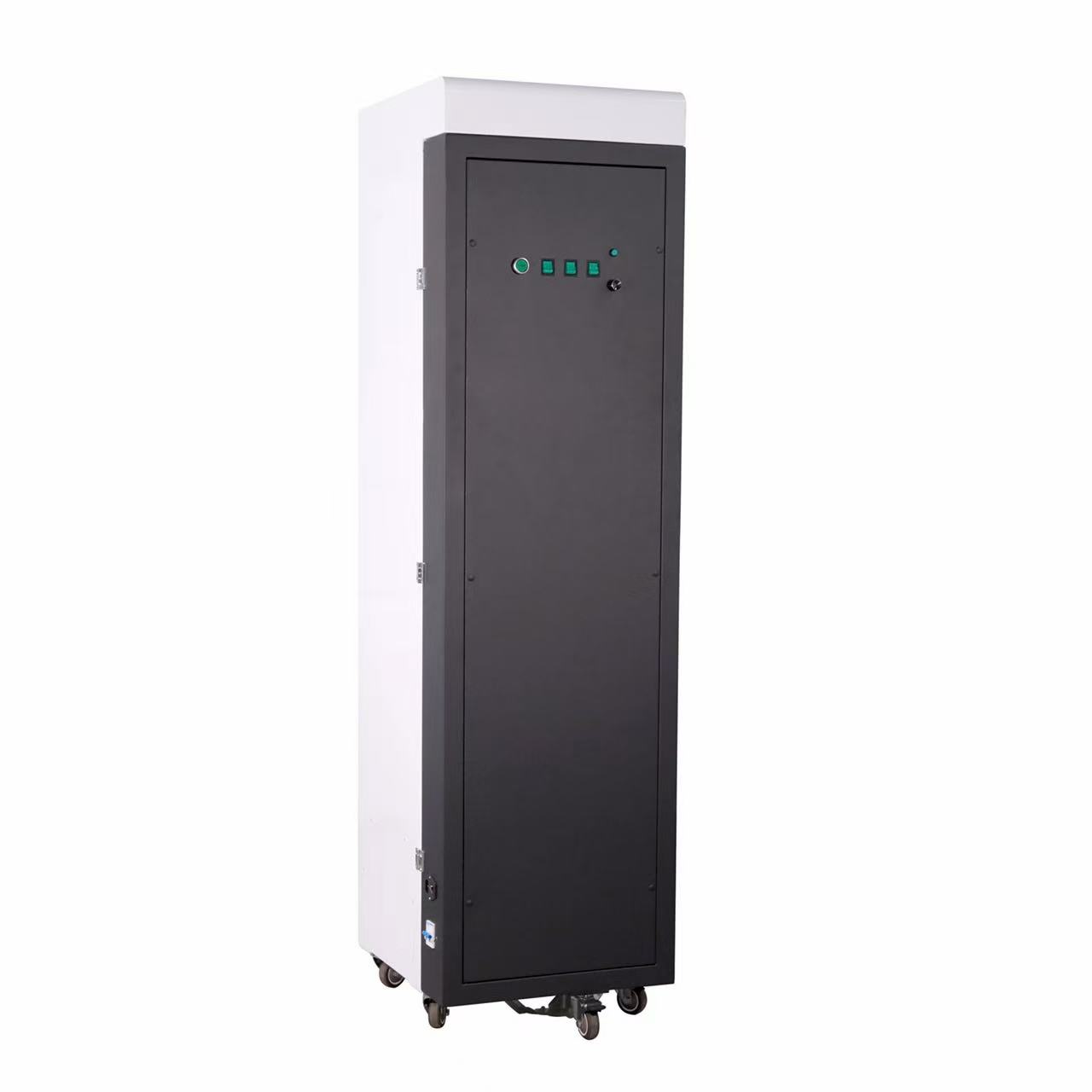
Selecting the appropriate laser metal cleaning machine requires a clear analysis of the production goal. For high-throughput stripping of uniform coatings from large, flat or gently curved surfaces, a CW system is most effective. For precision cleaning where substrate integrity is non-negotiable, a pulsed laser cleaner is the necessary tool. For automating the cleaning of complex 3D parts in high-mix manufacturing, the 5-axis gantry machine provides the required versatility and consistency. Furthermore, integrating a high-performance Fume Extraction System is not optional but a vital requirement for operator safety and equipment protection, as the process generates airborne particulates and fumes that must be captured at the source.
FAQ
Q: What is the most important factor when choosing a dust fume extractor?
A: The most critical factor is matching the extractor to the specific contaminant type and volume generated by your process. Using a system designed for wood smoke on a metal cutting job will lead to rapid filter failure and poor performance, as the filters are not engineered for abrasive metallic dust.
Q: How often do the filters in a dust fume extractor need to be replaced?
A: Filter life depends entirely on usage hours and the amount of particulate being captured. Systems are typically equipped with pressure gauges or indicator lights. A significant increase in system pressure or a drop in suction power usually signals that the main filters require replacement or cleaning.
Q: Can one central dust fume extractor serve multiple machines?
A: Yes, but it requires careful system design. The ductwork must be properly sized to maintain adequate suction at each pickup point, and the extractor itself must have sufficient total airflow (m³/h) and static pressure capability to handle the combined load. It is often more straightforward to use dedicated extractors for individual high-production machines.