Blog
In a field that evolves daily, staying ahead means staying informed.
Explore in-depth articles designed to help you solve complex challenges,
maximize your machine’s ROI.
Stay ahead in a competitive market.

In a field that evolves daily, staying ahead means staying informed.
Explore in-depth articles designed to help you solve complex challenges,
maximize your machine’s ROI.
Stay ahead in a competitive market.
News | Aug-20-2026
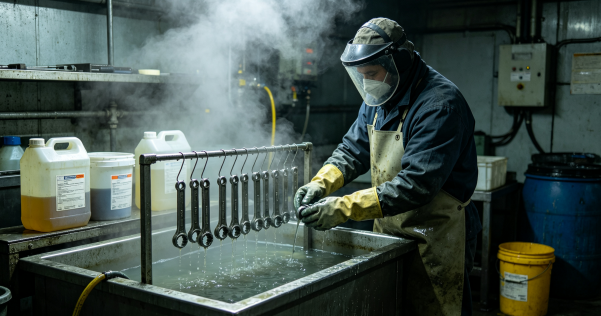
If you’re still using sandblasting, chemicals, or manual scraping to clean metal parts, you’re likely paying more than the cleaning process itself. Every bag of abrasive media, every container of chemical stripper, every hour your team spends on cleanup, and every minute of equipment downtime adds to your operating costs.
A modern laser cleaning machine provides a more precise and efficient alternative for removing rust, paint, oil, oxides, coatings, and other surface contaminants.
But choosing the right machine is not simply about buying the highest-power laser. The ideal system depends on your material, contaminant, cleaning area, required speed, and production environment.
This guide will help you understand the key factors to consider when comparing laser cleaning machines for sale, so you can choose a system that fits your actual business needs.
Before exploring laser cleaning, it is important to understand why traditional surface preparation can become expensive and inefficient.
The main challenges include:
These costs extend beyond consumables. Labor, cleanup, waste management, and production downtime can all affect the total cost of surface preparation.
A laser cleaning machine offers a non-contact alternative that can reduce many of these operating challenges while providing precise control over the cleaning process.
Laser cleaning uses a focused beam of light to interact with unwanted material on a surface. By selecting appropriate laser parameters, contaminants such as rust, paint, oxides, oil, grease, and coatings can be removed while minimizing the impact on the underlying substrate.
For industrial users, the main advantages include:
Laser cleaning can be applied to materials such as carbon steel, stainless steel, aluminum, and other metals. Certain non-metal applications may also be possible, depending on the material and cleaning requirements.
For businesses evaluating laser cleaning machines for sale, the key question is not simply whether laser cleaning works, but which laser configuration is appropriate for the job.
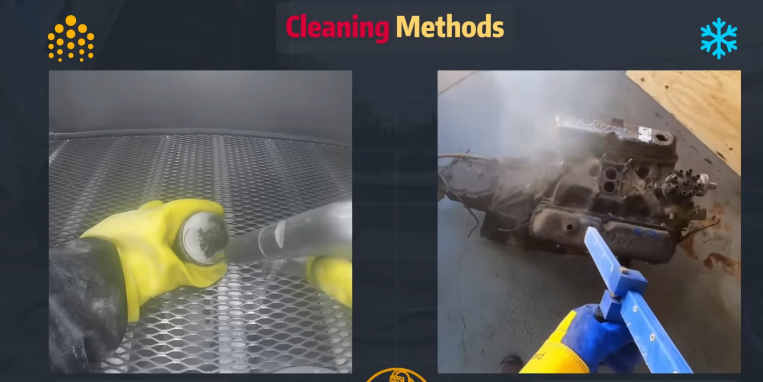
Different cleaning applications require different combinations of laser power, laser source, scanning parameters, and machine configuration.
MimoWork provides several laser cleaning machine solutions designed for different levels of precision, cleaning speed, and automation.
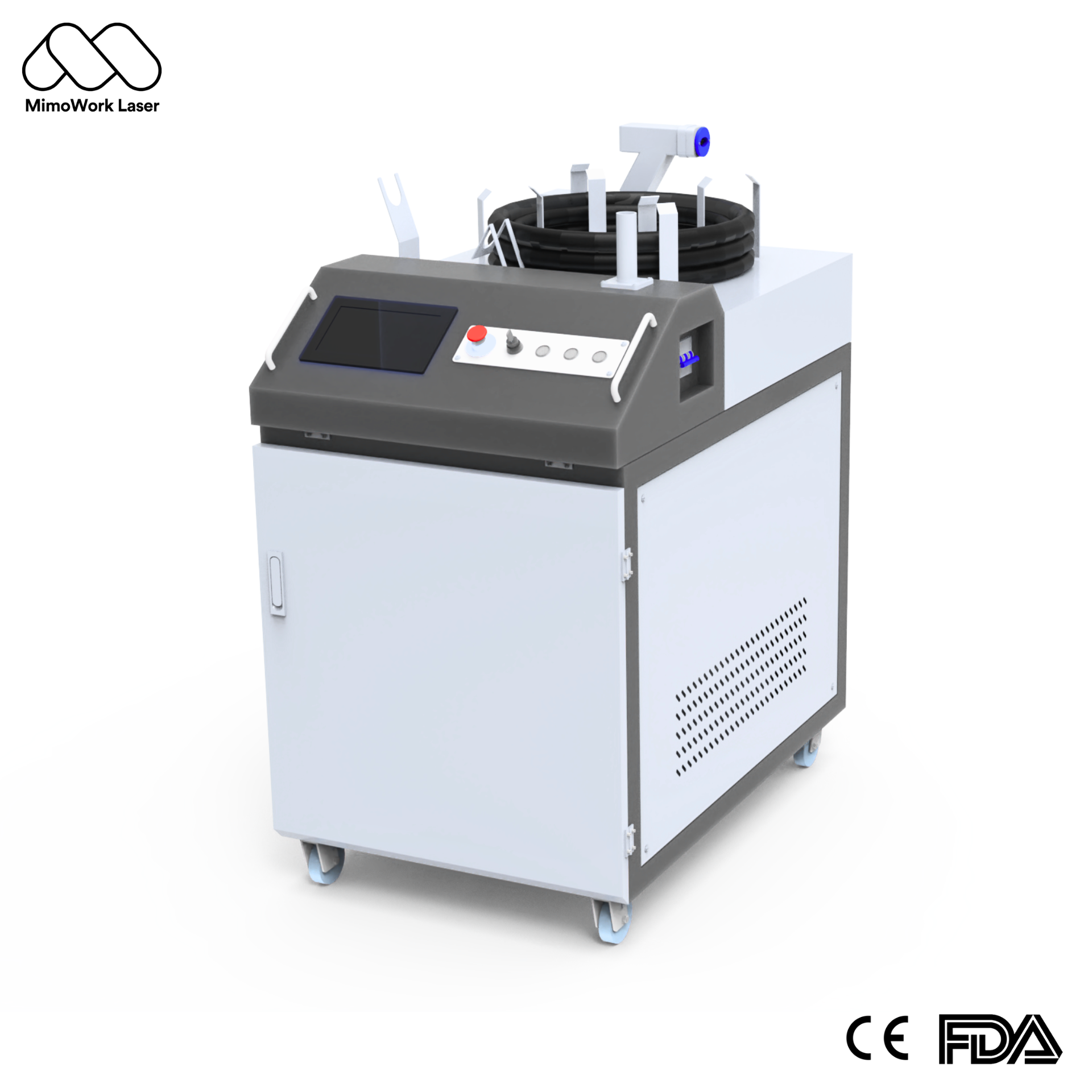
The Pulsed Laser Cleaning Machine is available from 100W to 500W and is designed for applications where controlled material removal and low heat input are important. It is suitable for precision cleaning tasks such as molds, tooling, paint, oxide, oil, and other surface contaminants.
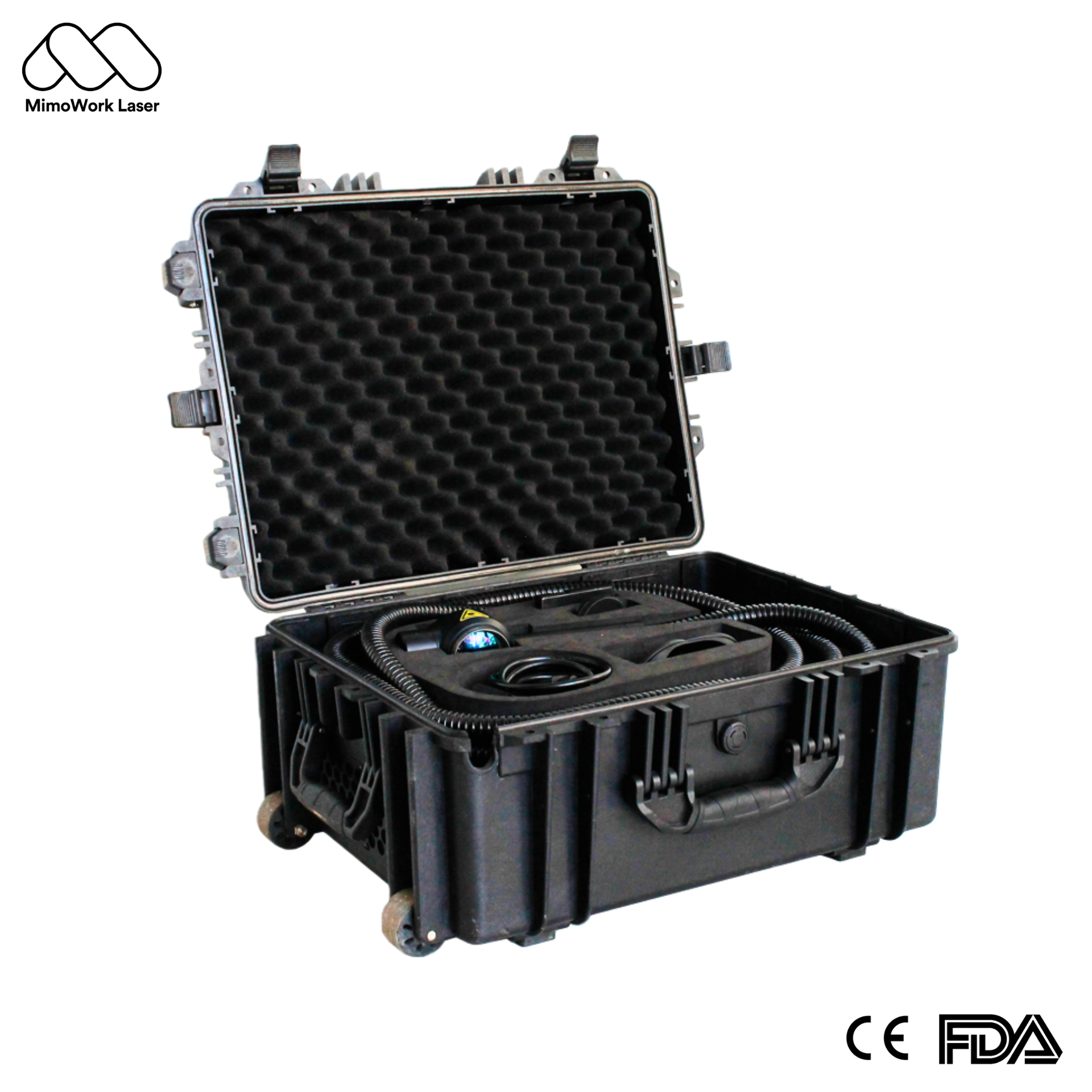
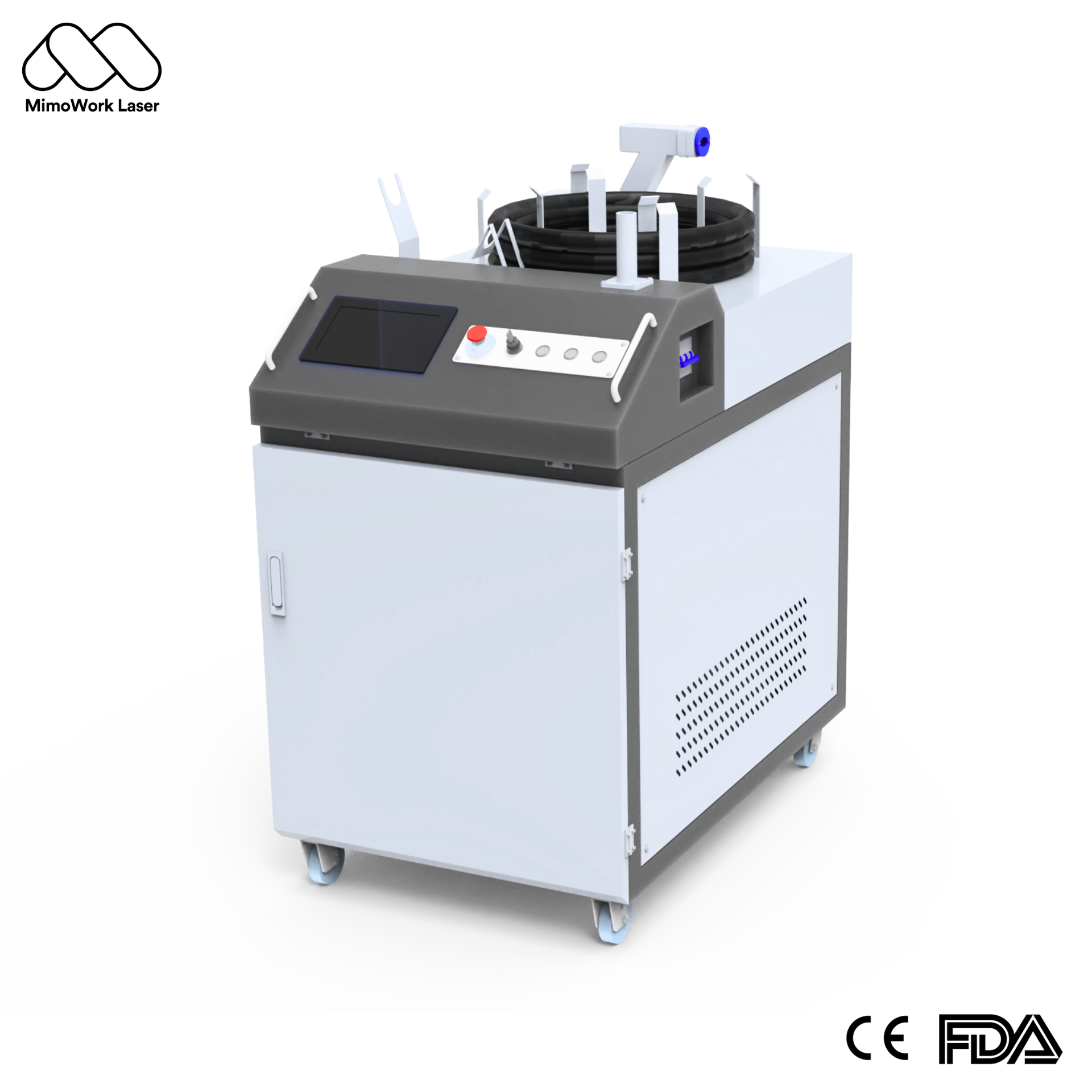
For heavier rust, paint, and large-area metal cleaning, MimoWork’s Continuous Wave Laser Cleaning Machine ranges from 1000W to 3000W. The higher-power CW configuration is designed for demanding industrial applications where cleaning productivity is a major consideration.
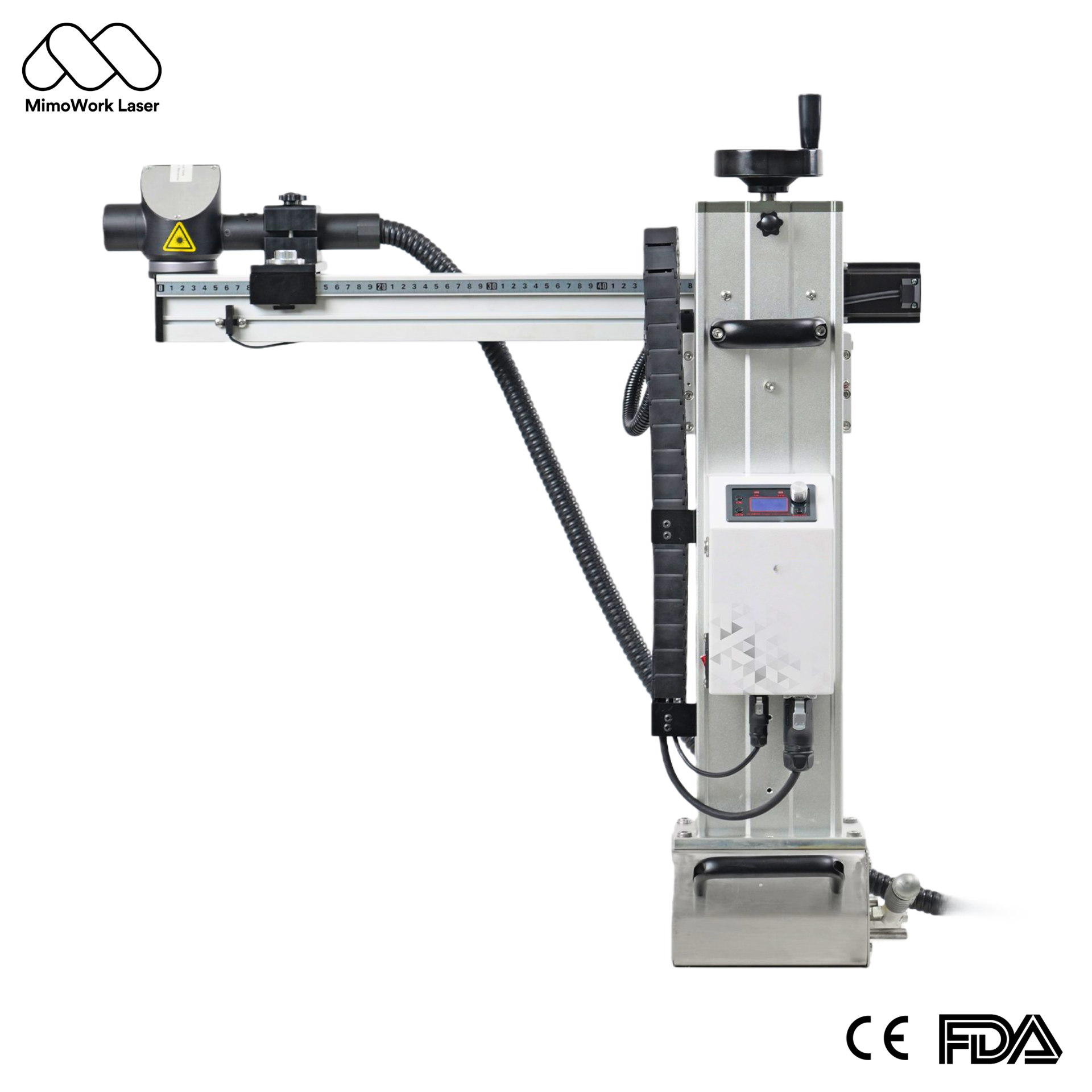
For manufacturers handling complex components or repetitive cleaning processes, the 5-Axis Gantry Laser Cleaning Machine combines a 300W pulsed fiber laser with CNC-controlled multi-axis movement. This allows the system to follow complex 3D surfaces and provides a more repeatable cleaning process.
| MimoWork Laser Cleaning Solution | Power | Recommended Applications |
| Pulsed Laser Cleaning Machine | 100W–500W | Precision cleaning, molds, tooling, paint and oxide removal |
| Continuous Wave Laser Cleaning Machine | 1000W–3000W | Heavy rust, paint, mill scale, and large metal surfaces |
| 5-Axis Gantry Laser Cleaning Machine | 300W | Complex 3D components and automated cleaning |
This range allows businesses to select a laser cleaning machine for sale according to their actual application instead of choosing a system based solely on laser power.
Depending on the application, MimoWork can also integrate options such as fume extraction, safety enclosures, automated scanning, and 3D vision to create a more complete cleaning solution.
The value of a laser cleaning system becomes clearer when it is matched to a specific industrial requirement.
Rust and oxide layers can interfere with welding, painting, and coating adhesion.
A laser rust remover machine can selectively remove surface contamination before subsequent processing. For fabrication shops working with heavy steel components, higher-power CW laser cleaning can provide the productivity needed for larger cleaning areas.
MimoWork’s 1000W–3000W Continuous Wave Laser Cleaning Machine is designed for heavy-duty applications involving rust, paint, oxides, and other contaminants on large metal surfaces.
Removing old paint or coatings without unnecessarily affecting the underlying material is an important requirement in restoration and maintenance.
A laser paint stripper provides a non-contact approach that allows operators to control the cleaning area and process parameters more precisely than conventional mechanical methods.
For applications requiring greater control over heat input, MimoWork’s 100W–500W Pulsed Laser Cleaning Machine can be a suitable solution for precision coating and contaminant removal.
Large equipment, pipelines, machinery, and structural components are not always practical to move into a dedicated cleaning facility.
A portable laser cleaner allows operators to bring the cleaning process directly to the workpiece. This can be particularly useful for maintenance, repair, and on-site surface preparation.
MimoWork’s handheld laser cleaning configurations can be used where mobility and access to large or irregular workpieces are important considerations.
Not every cleaning application is suitable for manual operation.
When components have complex curves, multiple surfaces, or repeatable cleaning requirements, automated movement can improve consistency and reduce operator workload.
MimoWork’s 5-Axis Gantry Laser Cleaning Machine uses CNC-controlled multi-axis movement to process complex 3D components. This configuration is particularly useful when manufacturers need repeatable cleaning paths rather than relying entirely on manual movement.
When comparing laser cleaning machines for sale, consider the following questions before making a purchase:
Rust, paint, oil, oxide, grease, and thick coatings may require different laser parameters and power levels.
Steel, stainless steel, aluminum, and other substrates respond differently to laser energy. Application testing is important when the substrate is sensitive or valuable.
Small components may benefit from a precision pulsed system, while large steel structures may require a higher-power CW system.
For occasional maintenance, portability may be more important than maximum power. For continuous production, cleaning speed and automation may have a greater impact on ROI.
Handheld systems provide flexibility, while automated systems can provide greater consistency for repetitive production.
These questions are often more useful than simply asking, “What is the most powerful laser cleaning machine?”
Once the laser type and power are selected, consider the features that affect daily operation.
Adjustable scan width allows operators to balance precision and coverage according to the size of the cleaning area.
A user-friendly control interface and preset parameters can simplify operation and help operators establish repeatable cleaning results.
Laser cleaning removes contaminants from the workpiece, so the resulting particles and fumes still need to be properly captured and filtered.
A suitable fume extraction system should therefore be considered part of the overall laser cleaning setup rather than an optional afterthought.
Industrial laser cleaning systems require appropriate safety measures. Depending on the machine configuration, safety features may include protective enclosures, interlocks, emergency stops, grounding systems, and controlled operating areas.
Safety requirements should always be evaluated together with the machine rather than after installation.
The cost of a laser cleaning machine should be evaluated against the total cost of your existing cleaning process.
Potential savings can come from:
However, there is no universal payback period.
A company cleaning hundreds of components every day may achieve a very different ROI from a workshop that uses a laser cleaner only for occasional maintenance.
Instead of relying on a fixed “payback period,” calculate your current cleaning cost per part or per hour and compare it with the expected operating cost and productivity of a laser cleaning system.
This gives you a more realistic basis for evaluating your investment.
The payback period depends on your current cleaning method, labor costs, consumable usage, production volume, and machine utilization. Businesses with high cleaning volumes and significant abrasive or chemical costs may achieve a faster return than low-volume users.
A pulsed laser cleaner is generally better suited to precision applications where controlled material removal and lower heat input are important. A CW laser cleaning machine is typically better suited to high-productivity cleaning of heavy rust, coatings, and large metal surfaces.
A portable laser cleaner can be a good option when the workshop handles different types of parts or needs to clean large and irregular workpieces. Mobility allows operators to bring the cleaning system to the workpiece rather than moving the workpiece to a fixed cleaning station.
Laser cleaning can selectively remove coatings while minimizing the effect on the substrate when the laser parameters are correctly matched to the material and coating. However, no laser system should be assumed to be damage-free for every material. Testing and parameter optimization are important for sensitive or high-value components.
Operators need appropriate laser safety training and should understand the machine’s operating procedures. Modern systems can simplify daily operation through touchscreen controls, preset parameters, and automated functions, but proper training remains essential.
The best laser cleaning machine is not necessarily the most powerful or the most expensive system. It is the one that matches your contaminant, substrate, cleaning area, production volume, and required level of precision.
For precision applications, a 100W–500W pulsed laser cleaner can provide controlled surface treatment. For heavy rust and large metal surfaces, a 1000W–3000W CW laser cleaning machine can provide the higher productivity required for demanding industrial work. For complex components and repetitive production, a 5-axis automated laser cleaning system can provide greater consistency and process control.
MimoWork offers these different configurations so businesses can choose a laser cleaning solution based on the actual application rather than simply comparing machine wattage.
If you’re currently comparing laser cleaning machines for sale, start by identifying the material, contaminant, cleaning area, and production requirements. Testing your actual workpiece is also one of the most reliable ways to determine which laser source and machine configuration will deliver the results you need.
News | Aug-6-2026
News | Jul-22-2026