Blog
In a field that evolves daily, staying ahead means staying informed.
Explore in-depth articles designed to help you solve complex challenges,
maximize your machine’s ROI.
Stay ahead in a competitive market.


In a field that evolves daily, staying ahead means staying informed.
Explore in-depth articles designed to help you solve complex challenges,
maximize your machine’s ROI.
Stay ahead in a competitive market.
News | Jun-15-2026
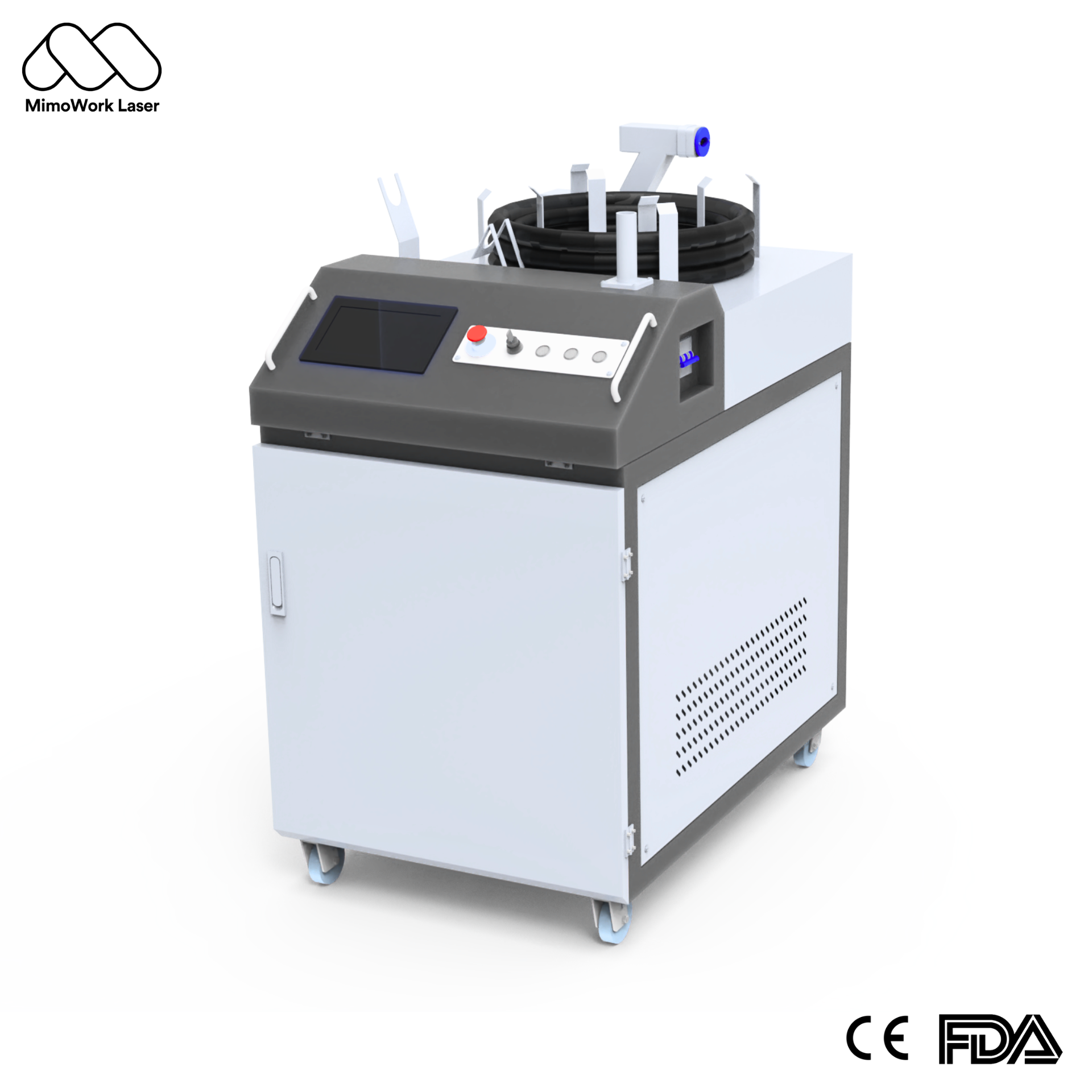
For ages, industrial surface cleaning has basically relied on a few old-school methods: sandblasting, chemical cleaning, and dry ice blasting. These work, sure—but they’re a hassle: tons of consumables, messy waste to deal with, and high labor costs. Then laser cleaning came along and changed the game. It uses high-energy lasers to blast away rust, coatings, and oxides directly, no extra stuff like chemicals or media needed, and leaves minimal residue captured by extraction systems. We’ll go over how it works in this article—what kinds of machines there are, and what to look for when choosing one—so you can see if it’s right for you.
People reach for sandblasting, chemical stripping, or dry ice cleaning out of habit, not because those methods are better. Here’s how they stack up against laser cleaning in practice:
Laser cleaning works through a process called selective ablation. The fiber laser beam (wavelength: 1064nm for pulsed, 1070nm for CW) is absorbed by the contaminant layer — rust, paint, oxide, or carbon deposits — while the substrate absorbs less energy controlled parameters, leaving it structurally intact.
The contaminant vaporizes or is ejected as fine particles, leaving the substrate clean and structurally intact. This selectivity is why laser cleaning is widely used in applications where minimal surface impact is required — mold cavities, aerospace alloys, and historical conservation.
These two laser types handle very different jobs. Getting this wrong is the most common purchasing mistake.
In short: pulsed for precision, CW for throughput.
Both pulsed and CW systems handle a wide range of common metal cleaning tasks, depending on the material type and coating thickness. Based on the material compatibility data across the product line:
Note: Glass and ceramics are generally not suitable for laser cleaning. Carbon fiber is conditional and carries a risk of fiber damage — verify with a material test before committing.
If you run tire molds, plastic injection molds, or composite tooling, you know they pick up all kinds of gunk over time — rubber residue, release agents, carbon deposits. The usual way to clean them? You have to let the mold cool down first, then pull it out of the line. That takes time and kills productivity.
Laser cleaning is increasingly used as a surface prep step before welding — removing oxides, oils, and mill scale that would otherwise contaminate the weld pool — and after welding to clean spatter and heat discoloration from the seam area. The result is a cleaner, more consistent bond with no risk of abrasive contamination introduced by sandblasting.
Once you’ve got the machine set up, electricity is the primary ongoing cost, with minimal consumables such as filter replacements. You don’t have to buy more abrasive media, track chemical supplies, or get hit with hazardous waste disposal fees. If you’re doing a lot of cleaning jobs throughout the day, those savings add up — your per-unit cost starts dropping noticeably over time.
Regulations on chemical cleaning solvents and abrasive waste disposal are tightening across the EU, North America, and parts of Asia. Laser cleaning produces only vaporized contaminants and fine particulates — captured at the source by a fume extraction system (HEPA + carbon filtration). This puts operations in a much cleaner compliance position for audits and export certifications.
The current product lineup supports different levels of automation integration across three machine configurations:
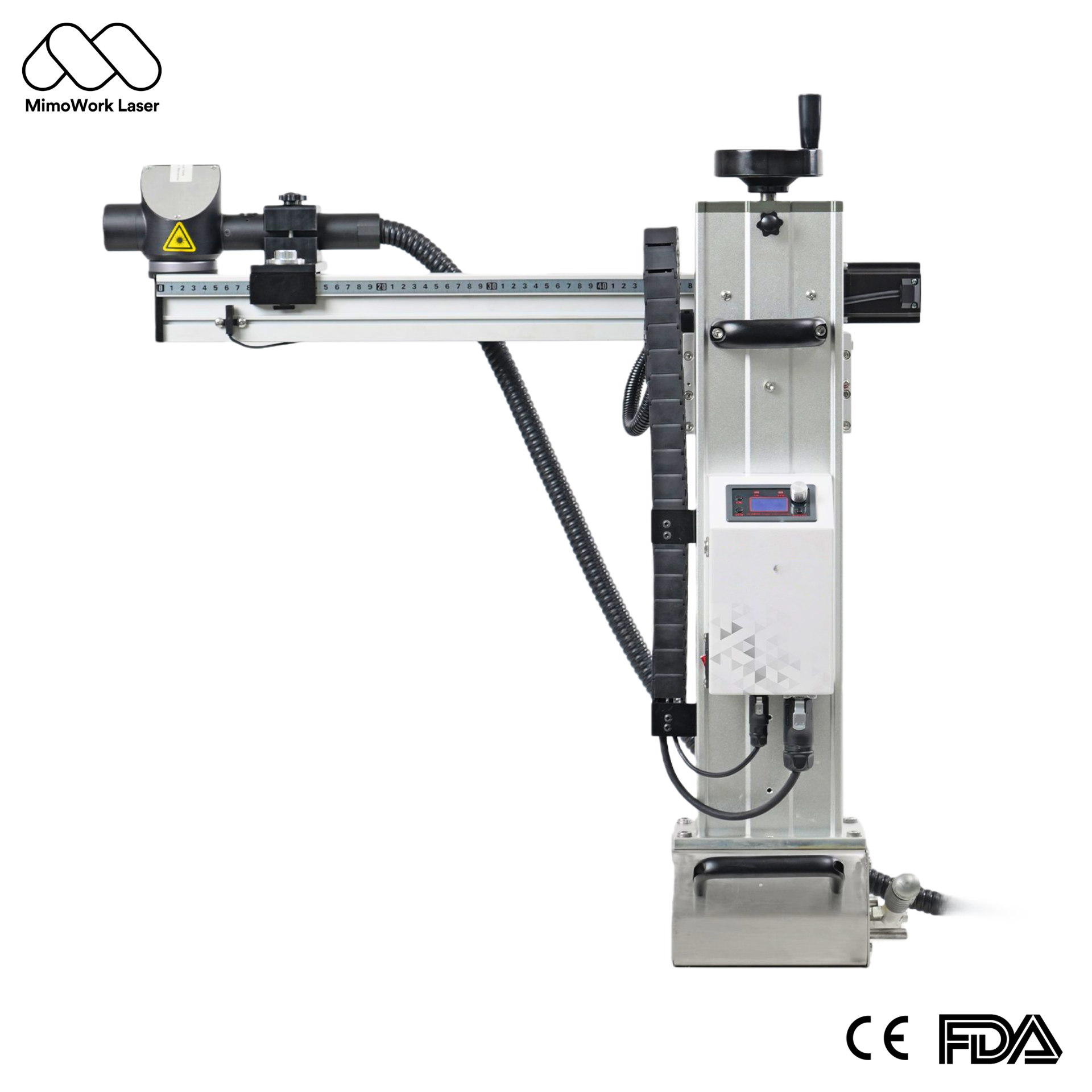
An optional 3D Vision & Auto-Programming upgrade scans parts and generates cleaning paths automatically, enabling fast job changeovers in high-mix production environments
Handheld Pulsed Laser Cleaning Machine
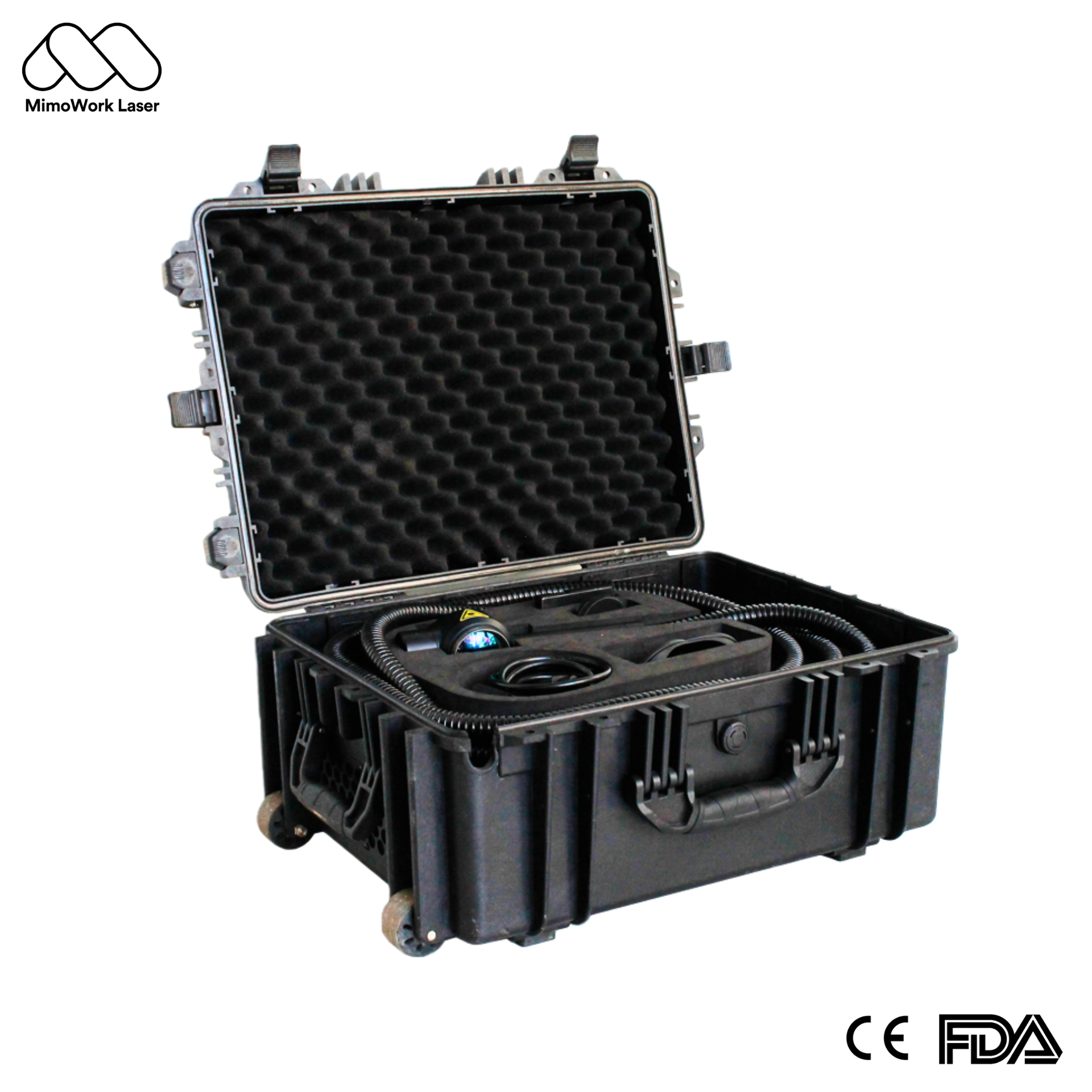
Best for: Precision cleaning, heat-sensitive materials, restoration jobs, and keeping mold clean.
Here’s what makes the pulsed system stand out — the heat-affected zone is minimal. It fires ultra-short, high-power bursts that strip away contaminants layer by layer, but the base material underneath never gets hot enough to cause thermal stress. A quick look at the specs:
Optional upgrade: Backpack Portable System — air-cooled, battery-powered, with a flexible handheld head for field work and hard-to-reach areas.
Best for: Big jobs like large-scale rust and coating removal, shipbuilding, structural steel, and heavy refurbishment work.
Think of the CW system as a high-powered pressure washer — but without any abrasives. It runs constantly, so you can cover large areas much faster than with a pulsed system. The trade-off? It puts more heat into the material. Here’s what it looks like on paper:
Also available as a 3-in-1 unit with a quick-change modular head for cleaning, welding, and cutting from a single machine.
Best for: Complex 3D geometries, turbine blades, large castings, automated production lines.
Minimal operator intervention is required — it’s fully automated and hands-free, reducing human error on complex geometry that would be inconsistent or hazardous to clean manually. The 5-axis CNC gantry moves the laser head with an X/Y/Z stroke of 800×300×300 mm, keeping the angle and distance just right, even on curved or uneven surfaces. Here are the specs:
Used on car bodies, chassis, engine parts, brake discs, and welded joints — removes rust, old paint, and coatings without damaging the metal underneath. Ideal for both production lines and restoration work.
Removes oxide layers, heat tint, and corrosion from aluminum, titanium, and stainless steel. Suitable for aircraft fuselages, turbine blades, ship hulls, and deck equipment — a safe alternative to sandblasting or chemicals.
Cleans rubber residue, release agents, and carbon deposits from tire molds, plastic injection molds, and composite tooling. In many cases, cleaning can be performed without cooling the mold or taking it offline — reducing downtime and extending mold life.
Picking the right machine is only half the battle. How you set it up matters just as much.
Start low and work your way up. Too much power too fast can discolor or roughen the surface.
Don’t try to blast through thick paint in one pass. Try this instead:
Test on a sample piece first. A few minutes of testing saves hours of rework.
The fiber laser source is really the heart of the whole machine. How stable it is and how good its beam quality is — those two things pretty much decide how consistent your cleaning will be and how long the machine lasts. So when you’re comparing different machines, don’t just look at the power rating. Ask which brand the laser source comes from. The well-known brands will give you actual performance data and proper support. The no-name ones? Usually, they won’t.
Higher power means faster area coverage but also higher heat input and running costs. Here’s a simple way to look at it:
Here’s the thing — if the parts you’re working with vary widely in sensitivity and size, you’re better off with a pulsed system. Why? Because you can adjust the parameters. That gives you way more flexibility than a fixed-output CW machine.
Let’s be clear about safety — these industrial fiber laser cleaning machines run at power levels that can hurt you right away. We’re talking eye damage and skin burns if you’re not wearing the right protection. When evaluating a system, confirm:
The results you get from laser cleaning can vary a lot — it all depends on the type of contaminant, how thick the coating is, and what the base material is. So don’t finalize your configuration before you run a material test with your actual workpieces. That’s the only reliable way to confirm you have the right power setting, pulse parameters, and cleaning head for your application.
When parameters are set correctly, the fiber laser beam is selectively absorbed by the contaminant — not the base metal. Pulsed systems are particularly effective at this because the short pulse duration limits heat buildup between each burst. That said, improper settings (too high a power level, too slow a scanning speed) can cause surface discoloration or micro-roughening on sensitive alloys. Material testing before production use is strongly recommended— Mimowork offers free sample testing specifically for this reason, so you can lock in the right parameters before committing to a configuration.
The core difference is thermal behavior. Pulsed lasers fire in short bursts, giving the material time to cool between pulses — this is what makes them safe for heat-sensitive substrates and precision components. CW lasers maintain a constant beam, which is faster across large areas but generates more sustained heat. Choose pulsed for anything delicate or precision-critical; choose CW for heavy-duty, large-area industrial cleaning.
Contact Mimowork directly through the laser cleaning page with your material type, contaminant description, and approximate part dimensions. The applications team can advise on machine configuration and arrange sample testing before you buy.
The right laser cleaning machine cuts downtime, lowers operating costs, and keeps your compliance clean.
MimoWork builds industrial-grade systems for real production environments. Whether you’re buying your first machine or upgrading, we can help you figure out what fits.
Contact MimoWork for a quote or a sample test.
News | Apr-22-2026
News | Apr-22-2026