Blog
In a field that evolves daily, staying ahead means staying informed.
Explore in-depth articles designed to help you solve complex challenges,
maximize your machine’s ROI.
Stay ahead in a competitive market.


In a field that evolves daily, staying ahead means staying informed.
Explore in-depth articles designed to help you solve complex challenges,
maximize your machine’s ROI.
Stay ahead in a competitive market.
News | Feb-7-2025
Wood is a very common material in our daily life. It is especially widely used in construction, decoration, furniture and other fields. Long-term storage will accumulate dust, dirt, paint, coatings and other debris on the surface. Cleaning it up is relatively troublesome, labor-intensive and time-consuming.
Have you ever wondered if there is a more efficient way to clean wood surfaces?
The development of laser technology has provided an innovative solution for cleaning wood.
This article explores the effectiveness and efficiency of laser wood cleaning and takes you deeper into this technology.
Laser wood cleaning is an advanced technique that uses high-energy laser beams to remove contaminants, stains, paint, or other coatings from the surface of wood. By interacting with the surface, the laser energy heats and vaporizes the unwanted material, effectively cleaning the wood without causing damage. This innovative technique offers a non-invasive, chemical-free, and highly effective solution for restoring the natural beauty of wood.
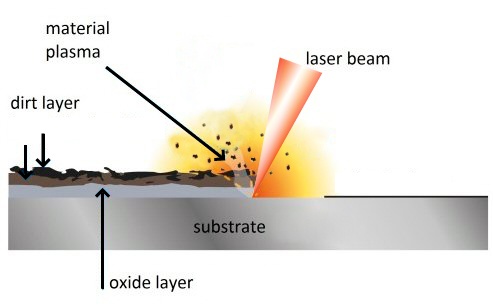
Principle of Laser Cleaning
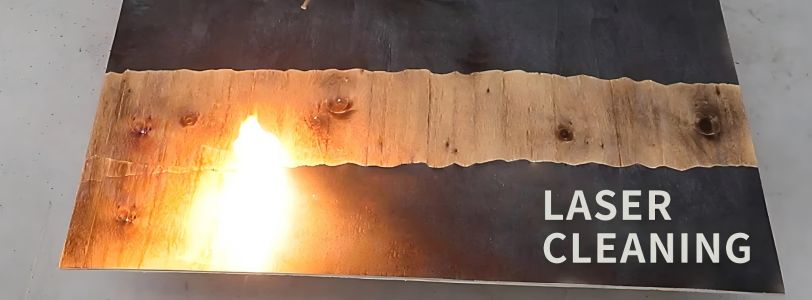
Laser Cleaning Wood
While laser cleaning is highly effective for removing surface contaminants, paints, and oils, it may not be suitable for large-scale cleaning of heavily contaminated surfaces or deep-seated stains. For example, laser cleaning may not be the best choice for extensively dirty wood surfaces.
Prolonged use of the laser on the same area can lead to heat accumulation, which, if not controlled, can cause wood charring or even ignition. Although most laser cleaning devices are equipped with cooling systems, care must be taken when using them on sensitive wood surfaces.
Operating a laser cleaning device requires a certain level of technical knowledge and training. Improper use can result in suboptimal cleaning or damage to the wood.
Laser cleaner for wood offer versatility for a variety of restoration needs.
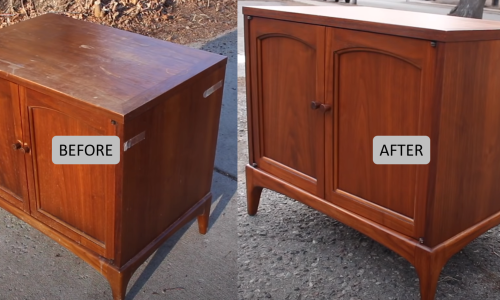
Laser Cleaning Applications in Furniture Restoration
Laser cleaner for wood excels in furniture restoration.
It effectively removes stains, old finishes, and coatings while preserving the natural grain of the wood.
Whether it’s antique or modern furniture, laser cleaning can restore the wood surface without causing damage.
This makes it an ideal choice for high-value items.
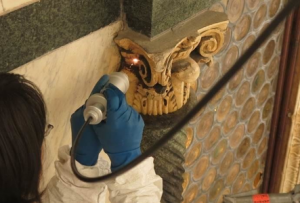
Laser Cleaning Applications in Building and Decorative Restoration
For architectural woodwork or decorative panels, laser wood cleaners can precisely remove weathering, dirt, or old varnish.
This restores the appearance without causing damage.
This makes laser cleaning suitable for restoring architectural details and fine woodwork.

Laser Cleaning Applications in Art and Antique Restoration
Laser cleaners are often used in restoring wooden artifacts, sculptures, or antique items.
The precise, controlled cleaning allows conservators to gently remove dirt and aged coatings while keeping the original details intact.
Which is crucial for preserving historical value.
While wood laser cleaner provide many benefits, it’s essential to understand how they stack up against other methods.
Chemical cleaning can be effective but often produces hazardous waste and requires extensive safety precautions.
Laser cleaning is chemical-free, eco-friendly, and safer for operators. Additionally, lasers avoid the risk of chemical absorption into the wood, which can cause long-term damage.
Sanding and scraping are common but can be labor-intensive and abrasive to the wood. These methods may lead to uneven surfaces or even gouges.
Laser cleaning, offers a consistent, non-abrasive solution that preserves the wood surface’s natural integrity and reduces the risk of accidental damage.
By comparing laser wood cleaners to traditional methods, you can make a more informed decision and choose the method that is best for your specific application.
The power of a laser affects its ability to remove different types of coatings. Higher-powered lasers are more effective for thicker, harder coatings. Lower-powered lasers may be adequate for removing thinner, more delicate coatings.
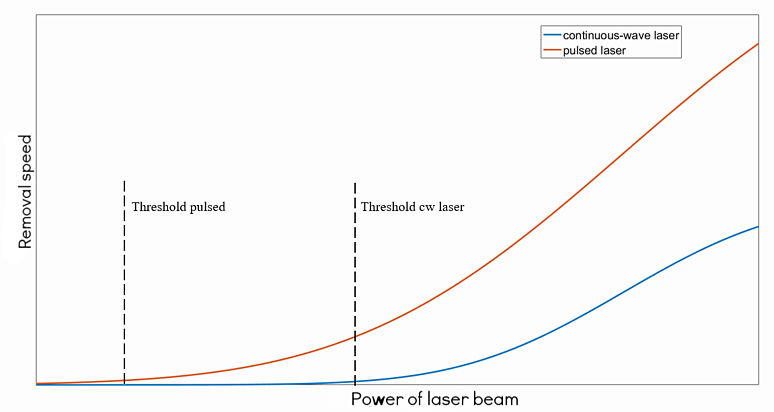
Relationship between Laser Beam Power and Removal Speed
If you need to move easily between locations, a portable system, such as a backpack or handheld, may be a better fit for you.
If your project requires constant work in a workshop, you may want to choose a larger, more stationary unit.
Look for a system that offers adjustable power, speed, and focus settings.
This versatility allows you to fine-tune the laser for different types of wood and coatings.
Make sure the laser system includes the necessary safety features to protect the operator. Include goggles to protect your eyes from laser exposure.
Pulsed Fiber Laser Cleaner with a Higher Cleaning Quality
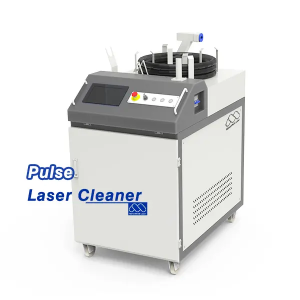
The pulsed fiber laser featuring high precision and no heat affection area usually can reach an excellent cleaning effect even if under a low power supply.
Due to the noncontinuous laser output and high peak laser power, the pulsed laser cleaner is more energy-saving and suitable for fine parts cleaning.
The fiber laser source has premium stability and reliability, with the adjustable pulsed laser, is flexible and serviceable in rust removal, paint removal, stripping coating, and eliminating oxide and other contaminants.
Cultural Heritage Preservation: Laser cleaning is increasingly used for restoring delicate wooden artifacts and historical structures, offering non-abrasive solutions for soot and biological growth removal.
AI Integration: Smart laser systems with AI and real-time feedback optimize precision, adapting to wood type and contamination for non-invasive cleaning.
Hybrid Lasers: Multi-wavelength systems (UV, infrared) enable tailored cleaning for specific contaminants like paint or mold, enhancing versatility.
Sustainability Focus: Aligning with global eco-friendly goals, laser cleaning eliminates chemical solvents and supports circular economy practices.
Composite Wood Applications: Laser cleaning is being adapted for engineered wood products, treating adhesives and coatings without damaging structural integrity.
Laser stripping wood has many benefits. It is precise, quick, and good for the environment. It has changed industries like car making and woodworking. Lasers are cleaner and faster than old ways. As technology gets better, lasers will be used more in woodworking. Many people see its value and think more will use it soon. Using lasers boosts work speed and helps the planet. Trying out this new tool can make woodwork better and greener, leading to a smarter future.
If you enjoyed this video, why not consider subscribing to our Youtube Channel?