Blog
In a field that evolves daily, staying ahead means staying informed.
Explore in-depth articles designed to help you solve complex challenges,
maximize your machine’s ROI.
Stay ahead in a competitive market.


In a field that evolves daily, staying ahead means staying informed.
Explore in-depth articles designed to help you solve complex challenges,
maximize your machine’s ROI.
Stay ahead in a competitive market.
News | Apr-22-2026
Applications and Material Considerations
The applications for metal laser marking are vast. A fiber laser marking machine for metal is indispensable for direct part marking (DPM) of serial numbers and 2D codes on tools, automotive parts, and machinery for lifetime traceability. The MOPA laser expands possibilities into high-end branding and decorative fields, such as adding colored logos to consumer electronics or medical devices. Material compatibility is excellent across most metals, including stainless steel, aluminum, titanium, copper, and coated metals. It is crucial to note that processing certain materials like PVC or PTFE with any laser can generate hazardous fumes, mandating the use of appropriate fume extraction systems to ensure a safe working environment.
Choosing the Right System for Your Needs
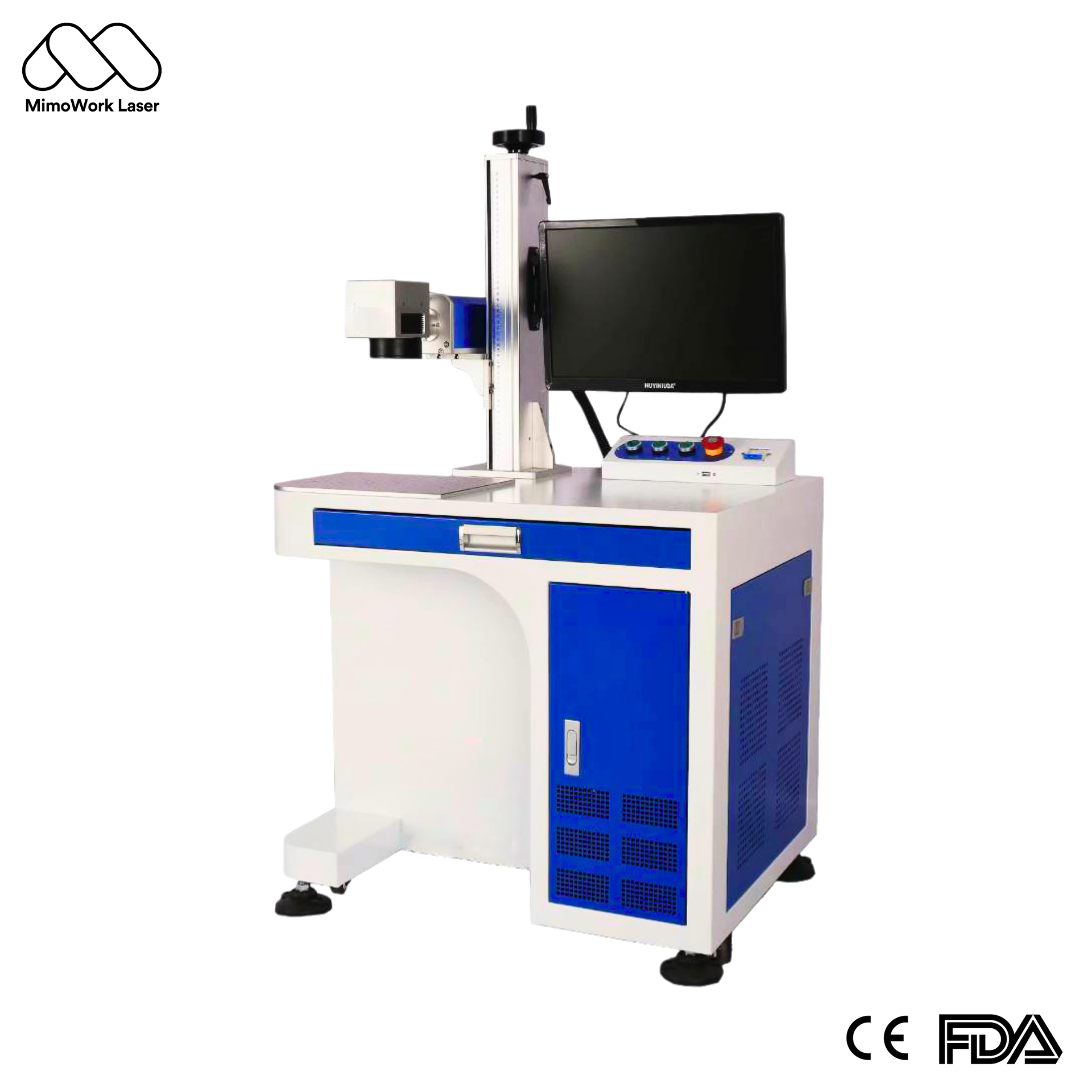
Selecting the optimal laser marking machine for metal requires a clear analysis of your requirements. Key decision factors include the primary metal types, the desired mark contrast (e.g., annealed, engraved, or colored), required marking speed for throughput, and part size. For high-volume, black-and-white marking on common metals, a standard fiber laser is often the most efficient choice. If color marking, special surface finishes, or exceptional control over mark depth on sensitive alloys are needed, a MOPA laser is the necessary investment. Always consider the production environment; for instance, high-volume metal marking generates particulates, making an integrated fume extraction solution like a dedicated F-Series extractor a critical component for equipment protection and operator safety.
FAQ
Q: What is the main difference between a Fiber and a MOPA laser marking machine for metal?
A: Both use fiber laser sources, but a MOPA (Master Oscillator Power Amplifier) laser provides independent control over pulse width and frequency. This allows for advanced effects like color marking on stainless steel and finer control over heat input, which is not possible with a standard fixed-pulse fiber laser.
Q: How do I choose the right laser power for marking metals?
A: Laser power (e.g., 20W, 30W, 50W) correlates with marking speed and depth. Higher power allows for faster throughput or deeper engraving. For most surface marking and annealing applications on metals like steel and aluminum, a 20W or 30W laser is sufficient. Higher powers (50W+) are beneficial for deep engraving or very high-speed production lines.
Q: Can a laser marking machine for metal also mark plastics or other materials?
A: While optimized for metals, many fiber and MOPA lasers can also mark certain engineered plastics. However, for optimal results on non-metals like standard plastics, wood, or acrylic, a CO2 laser marking machine is specifically designed for those materials and is generally the recommended choice.
Q: Is a fume extraction system necessary when operating a laser marker for metals?
A: Yes, it is highly recommended. Laser processing of metals creates fine smoke and hazardous metal dust that can affect mark quality, damage the machine’s optics, and pose health risks. An efficient fume extraction system is essential for maintaining a clean, safe, and stable working environment.