Blog
In a field that evolves daily, staying ahead means staying informed.
Explore in-depth articles designed to help you solve complex challenges,
maximize your machine’s ROI.
Stay ahead in a competitive market.


In a field that evolves daily, staying ahead means staying informed.
Explore in-depth articles designed to help you solve complex challenges,
maximize your machine’s ROI.
Stay ahead in a competitive market.
News | Apr-21-2026
TKey Applications and Industry Use Cases
The unique capabilities of the 60w mopa fiber laser open doors to specialized markets. It is extensively used for permanent serialization, branding, and decorative marking on stainless steel surgical tools, aerospace components, and luxury items requiring color logos. The technology also excels at deep black marking on aluminum and precisely removing color from anodized layers for contrast. Furthermore, its gentle processing mode is suitable for marking sensitive plastics and coated surfaces without melting or burning, making it valuable in the electronics and automotive sectors.
System Components and Essential Upgrades
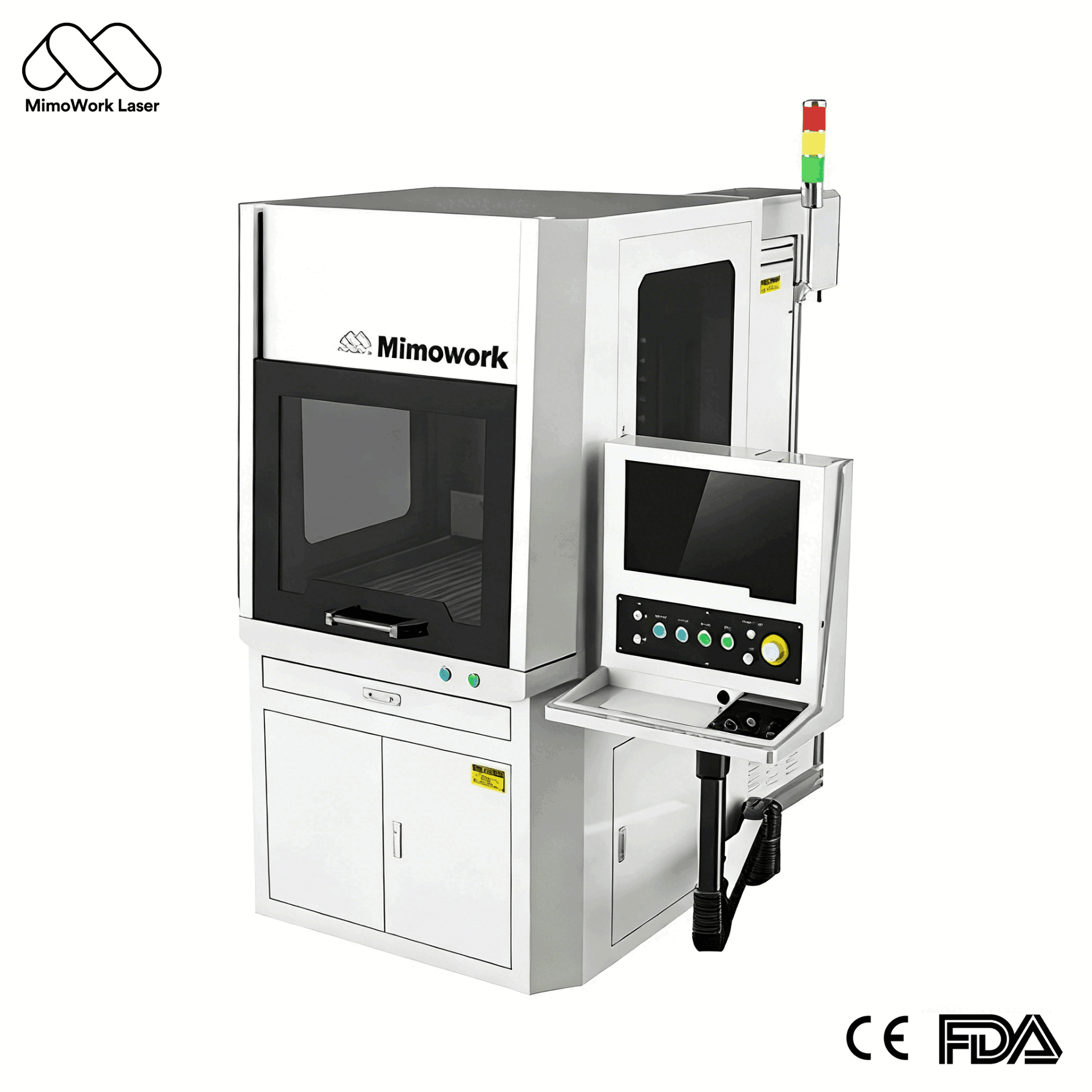
A complete MOPA marking station is built around the laser source and includes an ultra-high-speed galvo scanner and a high-resolution F-Theta lens to maintain spot quality across the work field. Advanced pulse-tuning software is crucial for unlocking the system’s potential, providing intuitive controls over pulse parameters. For enhanced operation, key upgrades include a safety enclosure with integrated fume extraction and an industrial water chiller for supporting higher-duty cycles or more demanding continuous operation. For production environments, the system can be reconfigured for in-line integration with automated vision systems.
FAQ
Q: What is the main difference between a MOPA fiber laser and a standard fiber laser for marking?
A: The core difference is pulse control. A standard Q-switched fiber laser has a fixed pulse structure, while a MOPA fiber laser allows independent adjustment of pulse width and frequency. This independent control enables specialized applications like color marking on metals and fine-tuning the heat input for different materials, which is not possible with a standard laser.
Q: Is 60W of power sufficient for industrial metal marking applications?
A: Yes, a 60W MOPA laser is a powerful and versatile choice for most industrial marking tasks. It provides ample energy for high-speed deep engraving, annealing, and color marking on a wide range of metals, including stainless steel, aluminum, and titanium. The power is effectively utilized through its tunable pulses to achieve various effects without requiring a higher-wattage source.
Q: What materials can a 60w mopa fiber laser mark?
A: It is primarily suitable for metals, including stainless steel, aluminum, titanium, and copper. It can also mark many plastics like ABS, acrylic, and nylon. However, caution is required with materials like PVC or PTFE, which generate hazardous fumes and require mandatory use of appropriate PPE and a high-efficiency fume extraction system.
Q: Does a 60w mopa fiber laser system require a water chiller?
A: In its standard configuration, modern MOPA fiber laser sources are highly efficient and typically use integrated air cooling (fan-based), eliminating the need for an external water chiller. However, an industrial water chiller is available as an upgrade to support maximum stability during longer continuous operation or in environments with high ambient temperatures.
Q: How is color achieved on metal with this laser?
A: Color marking is achieved without inks or dyes. The tunable pulses of the MOPA laser precisely control the heat input to grow a thin oxide layer on the metal surface (like stainless steel). By varying parameters like pulse width and frequency, the thickness of this oxide layer changes, which in turn affects how light interferes with it, producing different permanent colors such as black, gold, red, or blue.