
Choosing a fabric laser cutter sounds simple at first. You may think the main question is: “How powerful should the laser be?” or “Which machine has the largest working area?”
The real question is:
Can this laser cutter handle my fabrics, my production schedule, and the way my team works every day?
A clothing manufacturer producing different garment patterns, a sportswear company cutting sublimation fabrics, and an industrial textile supplier all work with fabric, but their production challenges can be completely different.
That is why many manufacturers searching for the best laser cutter for fabric eventually realize that the best choice is not a universal machine. It is the machine that matches their materials, workflow, and future growth plans.
This guide will walk you through the key factors to consider before investing in a fabric laser cutter, including laser technology, automation features, material compatibility, and how different solutions from MimoWork can support textile production.
What Should You Look for When Buying a Fabric Laser Cutter?
When manufacturers start looking for a fabric laser cutter, they often focus first on visible specifications such as laser power or machine size.
However, experienced textile producers usually look at different questions:
- What fabrics will the machine process?
- How many meters of material need to be cut every day?
- Does the production involve printed fabrics?
- How much manual work can be reduced?
- Does the machine need to support future production growth?
A machine that works well for one factory may not be the right choice for another.
A company producing custom apparel may prioritize flexibility and quick design changes, while a manufacturer handling large fabric rolls may need continuous feeding and higher automation.
Before choosing a machine, it is important to understand how laser cutting fits into the entire production process.
How Does a Fabric Laser Cutter Work?
A fabric laser cutter uses a focused laser beam to cut textile materials based on a digital design file. Unlike traditional cutting tools that physically contact the fabric, laser cutting uses controlled heat energy to achieve precise cutting paths.
The process is straightforward:
- A digital pattern or design file is prepared.
- The fabric is placed on the cutting area or fed through the machine.
- The laser head follows the programmed path.
- The finished pieces are removed and prepared for the next production step.
The biggest difference is that the cutting process does not rely on blades or mechanical pressure.
This matters because fabrics are flexible materials. They can stretch, move, or shift during cutting, especially when dealing with lightweight textiles or complex patterns.
A laser system helps manufacturers maintain more consistent results while reducing issues caused by tool wear or material movement.
Why CO₂ Laser Technology Is Commonly Used for Fabric Cutting
If you have researched textile laser machines, you have probably seen many discussions about laser types. For fabric applications, CO₂ laser technology is one of the most widely used solutions because many textile materials respond well to this wavelength.
A CO2 laser cutter for fabric is commonly selected because it can process a wide range of materials, including:
- Cotton
- Polyester
- Nylon
- Felt
- Wool
- Leather and composite textiles
But choosing the right laser is not only about the laser source itself.
The cutting result also depends on:
- Fabric thickness
- Fiber structure
- Production speed requirements
- Cutting pattern complexity
- Required edge quality
For synthetic fabrics such as polyester and nylon, the heat generated during laser cutting can help create cleaner edges by reducing fraying.
For natural fabrics such as cotton and linen, proper settings allow manufacturers to achieve accurate cutting while maintaining material quality.
The key is finding the right balance between speed, power, and material characteristics.
CNC vs Laser: Which Cutting Method Makes More Sense for Fabric
Many manufacturers compare traditional mechanical cutting systems with laser technology before making an investment decision.
The discussion of cnc vs laser is not about which technology is universally better. It is about which method better fits the production requirements.
For fabric processing, laser cutting offers several differences:
| Feature | CNC Cutting | Laser Cutting |
| Cutting method | Physical tool contact with the material | Non-contact laser processing |
| Material impact | Mechanical force may affect flexible fabrics | Minimal physical stress on materials |
| Complex patterns | May depend on tooling limitations | Suitable for intricate and detailed designs |
| Maintenance requirements | Cutting tools require regular inspection and replacement | Requires maintenance of laser components and consumables |
| Edge quality | Results may vary depending on tools and materials | Can provide clean, precise edges on suitable fabrics |
For manufacturers producing frequently changing designs, customized products, or detailed textile patterns, laser cutting provides greater flexibility.
However, the final decision should always consider your materials, production volume, and workflow.
What Fabrics Can a Fabric Laser Cutter Process?
Let’s take a closer look at how CO₂ laser cutting performs on different fabric categories🤩👉🏻
One of the reasons textile manufacturers choose laser cutting is its ability to handle many different fabric categories.
The important point is not simply whether a material can be cut, but whether it can be processed efficiently while maintaining the quality required for the final product.
Natural Fabrics: Cotton, Linen, Wool, and Felt
Natural fabrics remain widely used in apparel, home textiles, accessories, and specialty products.
A fabric laser cutter can process materials such as:
- Cotton
- Linen
- Wool
- Felt
For manufacturers working with natural fabrics, laser cutting provides advantages when producing detailed shapes or customized designs.
Because the process is digitally controlled, changing from one pattern to another does not require creating new physical cutting tools.
Synthetic Fabrics: Polyester, Nylon, and Spandex
Synthetic materials are widely used in modern textile manufacturing, especially in sportswear and performance products.
Common examples include:
- Polyester
- Nylon
- Spandex
These materials often require precise cutting because they are lightweight and flexible.
Laser cutting is especially useful when manufacturers need:
- Repeated accuracy
- Clean edges
- Fast design changes
- Automated production workflows
Technical Textiles and Composite Materials
Beyond traditional clothing, laser cutting is also used for technical textile applications.
Examples include:
- Industrial fabrics
- Protective materials
- Automotive textiles
- Composite textile products
These applications often require more than simple cutting. They require consistent quality across repeated production cycles.
This is where a properly configured textile laser system can provide long-term production value.
How to Choose the Right Fabric Laser Cutter for Your Production?
“What problems do I need this machine to solve?”
Here are the key factors to evaluate.
1. What Types of Fabric Will You Process?
Start with your materials.
A machine cutting lightweight apparel fabric may require different settings from one processing thick industrial textiles.
Consider:
- Material thickness
- Fabric composition
- Roll or sheet materials
- Single-layer or multi-layer cutting
Understanding your materials is the first step toward selecting the right configuration.
2. How Much Fabric Do You Need to Process Every Day?
Production volume directly affects machine selection.
For occasional cutting, a standard setup may be enough.
For continuous textile manufacturing, features such as:
- Conveyor working tables
- Automatic feeding systems
- Larger working areas
become much more important.
A machine should support your current production while leaving room for future growth.
3. Do You Need Vision Recognition for Printed Fabrics?
Printed fabrics create a special challenge.
The machine must not only cut the shape — it must recognize the printed pattern and follow the correct cutting position.
For companies producing:
- Sportswear
- Customized apparel
- Sublimation textiles
a vision system can significantly improve accuracy.
A laser cutter for sublimation fabric is designed to solve this exact challenge by combining image recognition with precise laser cutting.
Automated Features That Improve Textile Production
Automation does not mean removing every operator from the process.
In textile manufacturing, automation is about reducing repetitive work and creating a more stable workflow.
Important features include:
Automatic Feeding System
For roll fabrics, automatic feeding helps reduce repeated manual positioning.
Benefits include:
- More consistent material movement
- Reduced operator workload
- Better production continuity
Vision Cutting System
For printed materials, vision systems help identify patterns and adjust cutting paths automatically.
Larger Working Area
For large textile pieces, a suitable working area reduces repositioning and improves efficiency.
These features are especially valuable for manufacturers moving toward more consistent and scalable production.
MimoWork Fabric Laser Cutter Solutions for Different Production Needs
Different textile businesses have different priorities. A garment producer, a printed fabric manufacturer, and an industrial textile supplier may require different machine configurations.
MimoWork provides fabric laser cutting solutions designed around different production scenarios.
| Model | Best For | Key Features | Recommended Applications |
| C160-L Vision Laser Cutter | Printed & patterned fabrics | Vision camera automatically recognizes printed contours for precise cutting | Sublimation sportswear, printed apparel, custom garments |
| F160 / F180-L Fabric Laser Cutter | High-volume fabric production | Conveyor system, vacuum table, and higher laser power options for continuous processing | Apparel, technical textiles, nylon, canvas, industrial fabrics |
| Custom Fabric Laser Cutting System | Specialized production requirements | Customizable working area, automation modules, and production line integration | Automotive textiles, large-format fabrics, unique industrial applications |
F160 Fabric Laser Cutter: Flexible Solution for Apparel and Textile Production
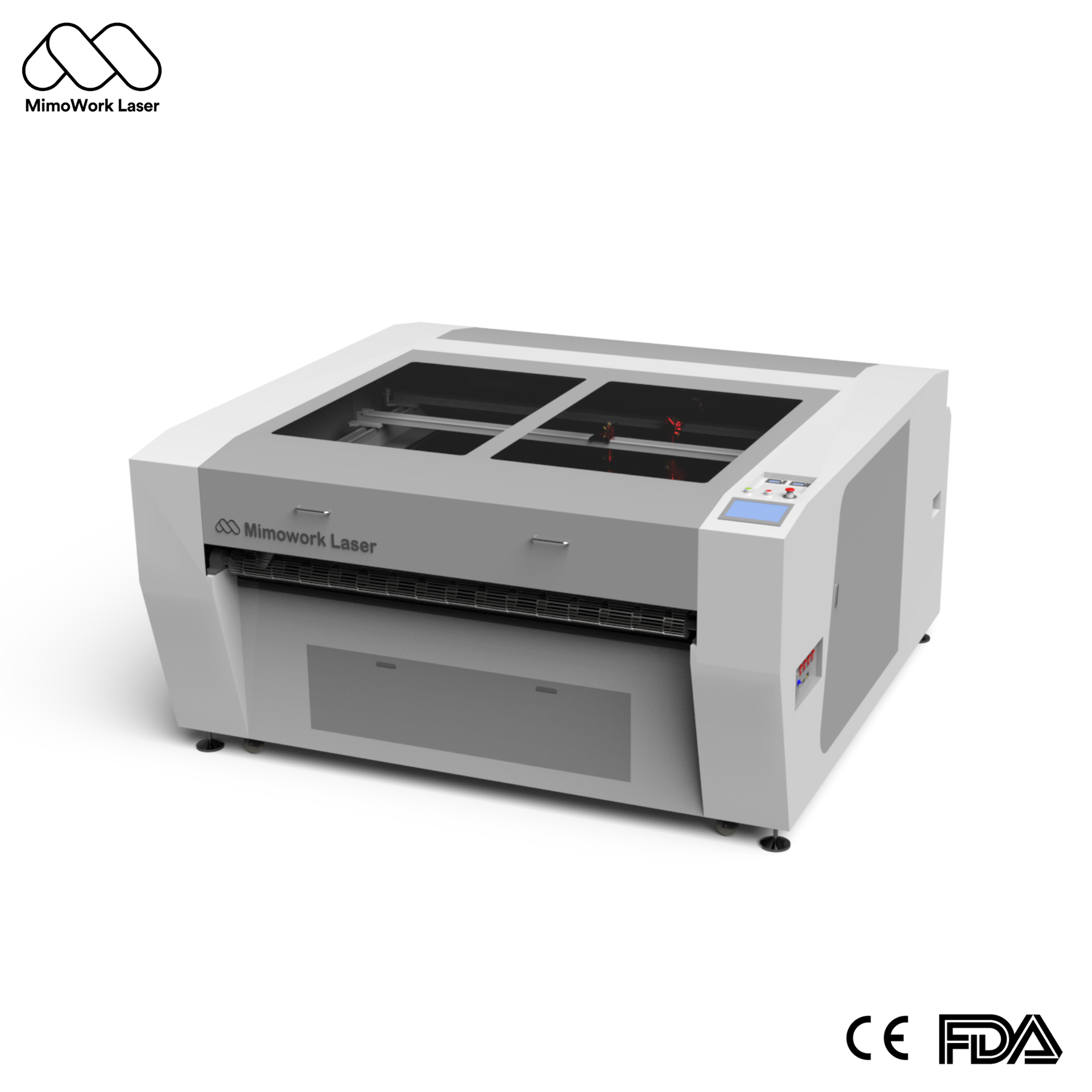
- Working Area: 1600 x 1000mm
- Laser Power: 100W–300W
For manufacturers working with different fabrics and changing production requirements, the F160 Fabric Laser Cutter provides a flexible cutting solution.
It is suitable for applications such as:
- Apparel production
- Textile processing
- Soft material cutting
Its design focuses on helping manufacturers achieve reliable cutting performance while maintaining flexibility for different materials and designs.
C160-L Vision Laser Cutter: Precision Cutting for Printed Fabrics
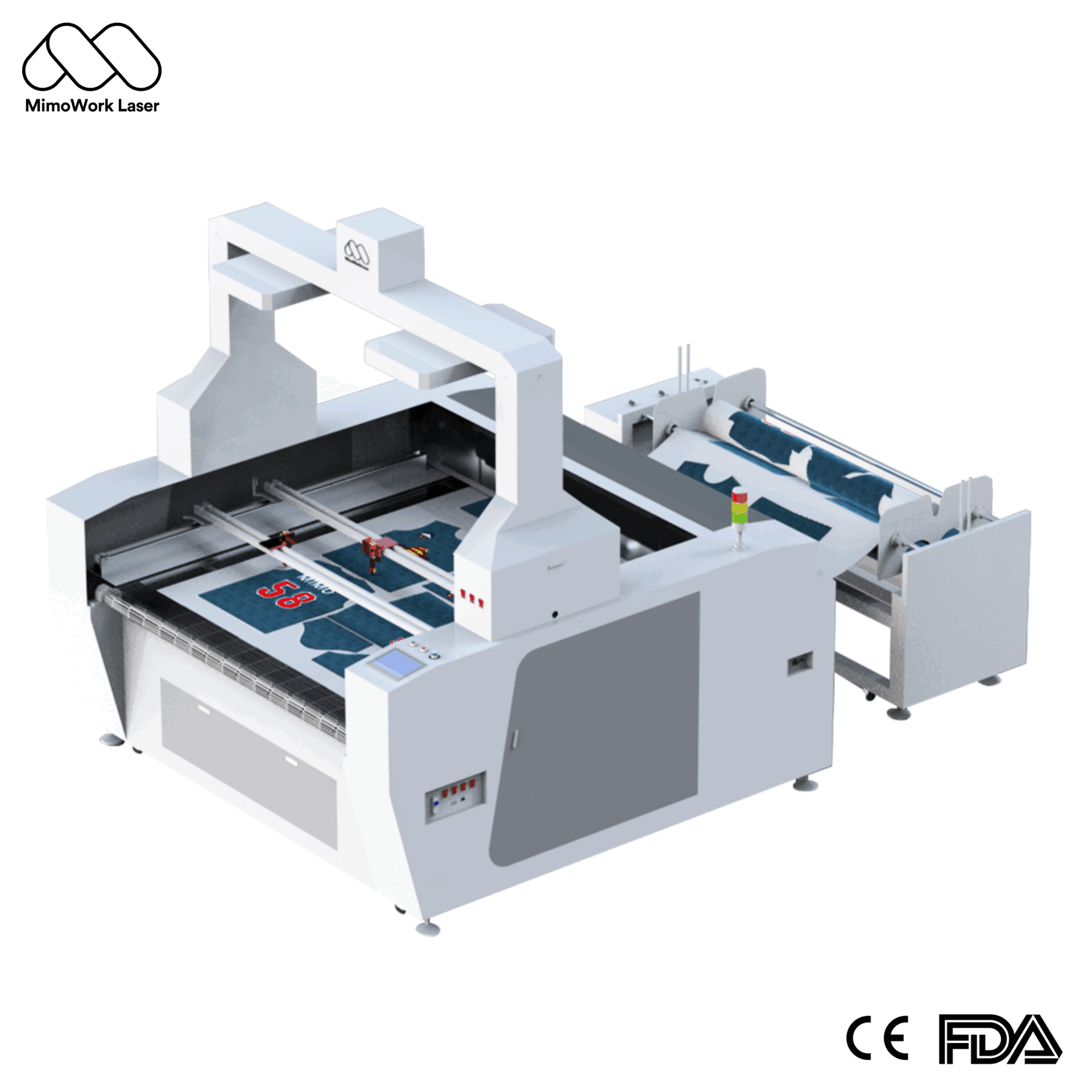
- Working Area: 1600 x 1200mm
- Laser Power: 100w, 150w
When working with printed fabrics, accuracy becomes the biggest concern.
A small cutting deviation can affect the final appearance of garments or textile products.
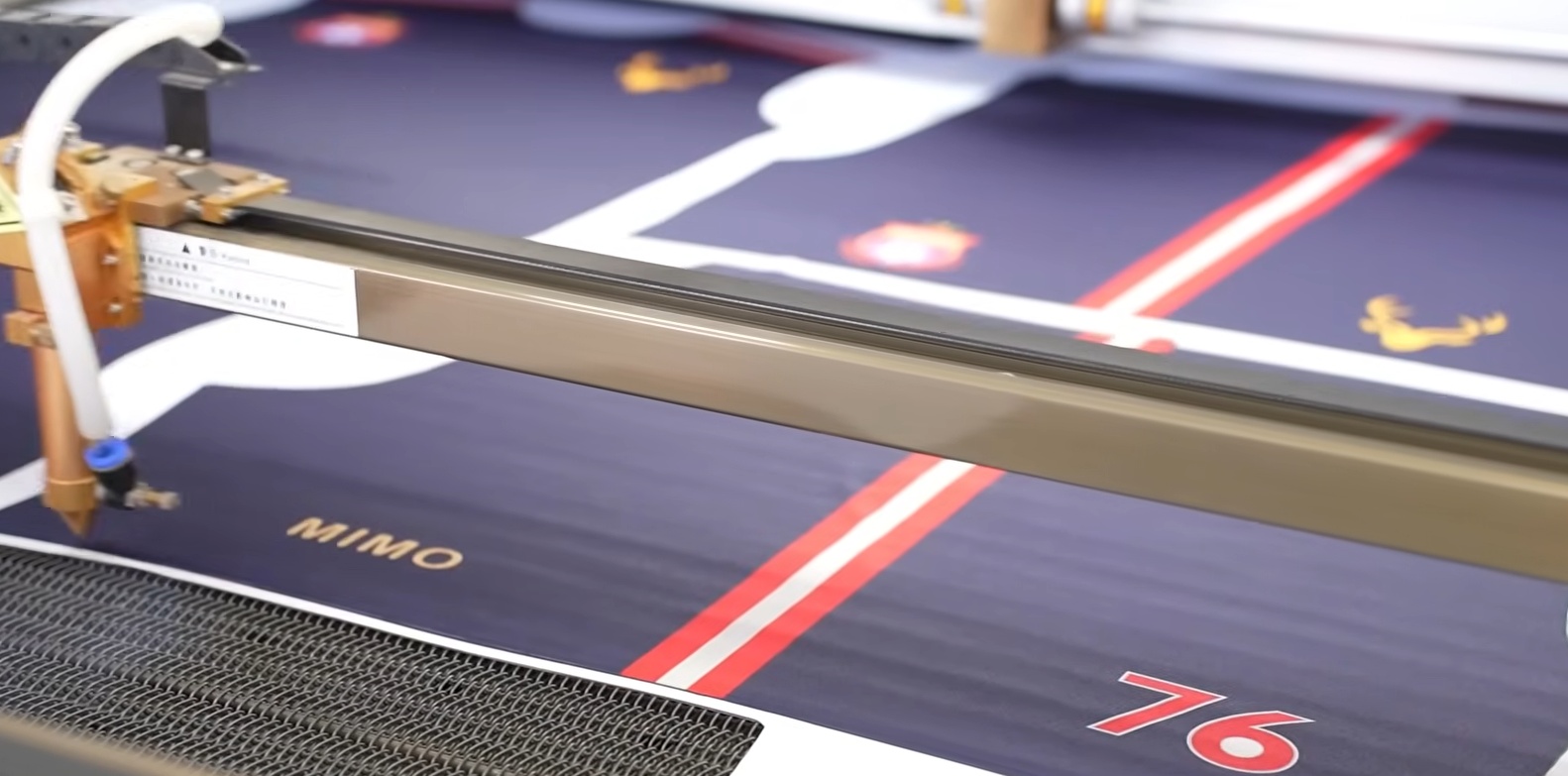
The C160-L Vision Laser Cutter uses a vision recognition system to automatically detect printed patterns and guide the laser along the cutting path, helping manufacturers achieve accurate contour cutting for printed fabrics.
For manufacturers producing sublimation textiles, sportswear, or customized fabrics, a laser cutter for sublimation fabric can help maintain consistent alignment between printed designs and cutting paths.
F180-L Industrial Textile Laser Cutter: Designed for High-Volume Production
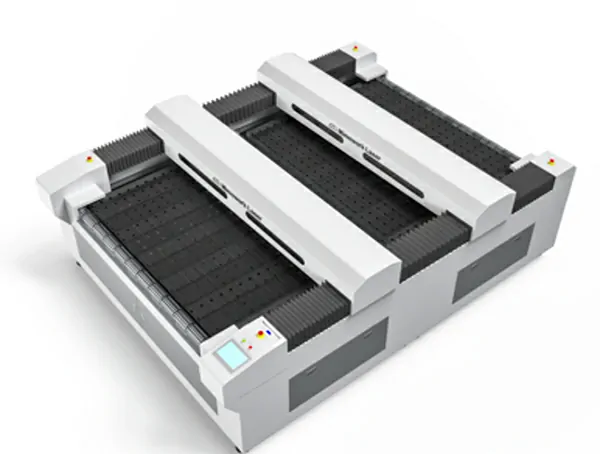
- Working Area: 1800 x 1300mm(70.8″ * 51.1″)
- Laser Power: 150w, 300w, 600w
For companies handling larger production requirements, an industrial fabric laser cutter needs to provide more than accurate cutting.
It needs to support:
- Continuous operation
- Larger fabric formats
- Efficient material handling
- Stable production performance
The F180-L Industrial Textile Laser Cutter is built for manufacturers handling high-volume textile production, heavy-duty fabrics, and demanding industrial cutting applications.
Frequently Asked Questions
What is the best laser cutter for fabric?
For most textile applications, a CO₂ laser cutter is the preferred choice because it provides precise cutting, supports various fabrics, and works well with automated production systems.
Can a laser cutter cut sublimation fabric?
Yes. Laser cutters can process sublimation fabrics, especially polyester materials used for sportswear, banners, and custom textiles. They provide clean edges and help reduce fabric deformation during cutting.
What laser power is needed to cut fabric?
The required laser power depends on the fabric type, thickness, and production needs. For most textile applications, CO₂ laser cutters with 80W–150W power are commonly used.
Is laser cutting better than CNC cutting for textiles?
For many textile applications, laser cutting offers advantages such as non-contact processing, high precision, and cleaner edges. It is especially suitable for detailed patterns and automated production.
Final Thoughts
The right laser cutting system should fit into your existing process and help you improve efficiency over time — from reducing manual adjustments to handling more complex designs with greater flexibility.
Not sure which fabric laser cutter is right for your production? Feel free to contact MimoWork’s laser experts and get a customized recommendation based on your materials, workflow, and cutting requirements.