Blog
In a field that evolves daily, staying ahead means staying informed.
Explore in-depth articles designed to help you solve complex challenges,
maximize your machine’s ROI.
Stay ahead in a competitive market.


In a field that evolves daily, staying ahead means staying informed.
Explore in-depth articles designed to help you solve complex challenges,
maximize your machine’s ROI.
Stay ahead in a competitive market.
News | Mar-25-2026
The 100w co2 laser represents a pivotal point in the spectrum of laser processing tools, offering an optimal equilibrium between sufficient power for rapid cutting and the fine control necessary for detailed engraving. This specific power rating has become a standard for small to medium-sized enterprises and workshops tackling a diverse range of non-metal materials. Its versatility stems from the CO2 laser’s characteristic wavelength of around 10.6 micrometers, which is highly absorbed by organic materials and polymers, making it exceptionally effective for processing wood, acrylic, fabric, leather, paper, and many plastics.
Optimal Power Range for Diverse Tasks
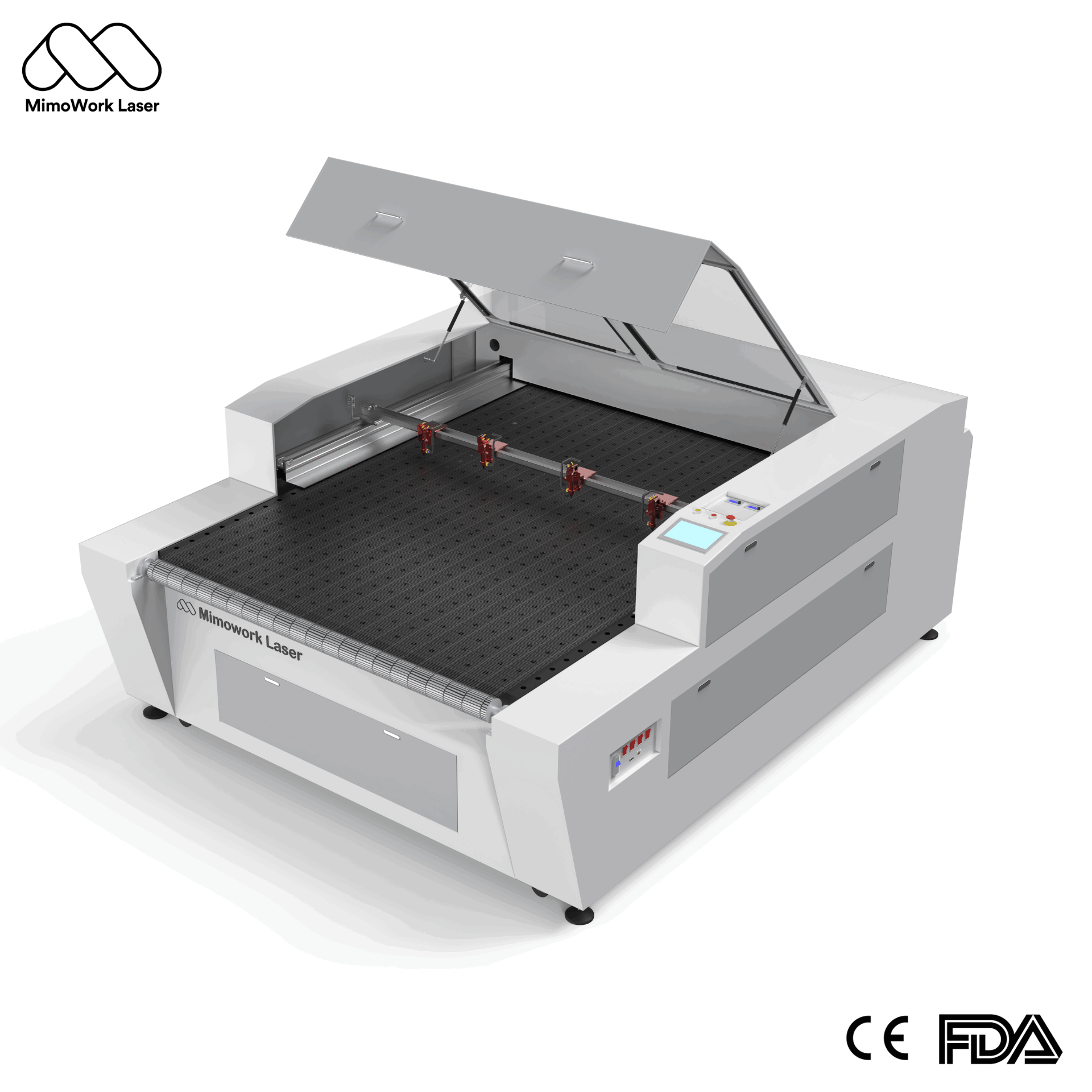
A 100w co2 laser provides a robust energy output that significantly expands processing capabilities compared to lower-power models. This power level is capable of cutting through materials like acrylic, plywood, and fabric at practical speeds while simultaneously being refined enough for high-contrast marking and intricate engraving. It is a common configuration found in various machine formats, from standard flatbed cutters with working areas like 1300x900mm to larger format and contour laser systems designed for roll-to-roll processing of textiles. This balance makes it a highly efficient choice for job shops and manufacturers that handle mixed batches of cutting and engraving work.
Laser Source and System Considerations
The performance of a 100w co2 laser system is heavily influenced by the type of laser source and the accompanying mechanics. Machines can be equipped with either traditional glass laser tubes or more advanced, longer-life CO2 RF metal laser tubes. The metal tube option offers greater stability and consistency for demanding production schedules. Furthermore, the system’s precision is governed by its mechanical control system—such as servo motor drives with belt or gear rack transmission—and a reliable industrial water chiller is essential for maintaining optimal operating temperature and consistent power output.
Selecting the Right Machine Platform
When considering a system built around a 40w co2 laser source, the machine’s mechanical platform is as important as the laser itself. For flat sheet materials, a gantry-style machine with a stationary bed is common. For continuous processing of rolled goods like fabrics or labels, a conveyor-based (roll-to-roll) system with automatic feeding dramatically increases productivity for high-volume orders. The choice between a standard glass laser tube and a more durable, longer-life RF metal laser tube is another critical decision that affects maintenance cycles and long-term consistency.
Primary Applications and Material Compatibility
The application range for a machine centered on a 100w co2 laser is extensive. In the fashion and textile industry, it is used for precision cutting of fabrics, leather, and appliques, as well as producing labels and patches. For signage, awards, and custom products, it expertly cuts and engraves wood, acrylic, and plastics. It is also the technology of choice for kiss-cutting heat-transfer films and marking on packaging materials, where its wavelength produces sharp, high-contrast marks on surfaces like coated papers and certain plastics.
Achieving High Precision and Speed
A well-engineered system utilizing a 100w co2 laser can achieve remarkable precision, with cutting accuracy often reaching 0.1mm to 0.15mm. Cutting and engraving speeds are highly material-dependent but can reach up to 600mm/s or more in capable systems with high-performance motion components. For operations requiring alignment, such as cutting pre-printed fabrics, optional HD camera recognition systems can be integrated to automate the process and ensure perfect registration without the need for manual file adjustment.
FAQ
Q: What materials can a 100W CO2 laser effectively process?
A: A 100W CO2 laser is highly effective on a wide array of non-metallic materials. This includes various fabrics, leather, paper, wood, acrylic, ABS, plastics, foam, and coated materials like certain films. It is ideal for applications in garment making, signage, model making, promotional items, and packaging.
Q: What is the difference between a glass laser tube and an RF metal laser tube for a 100W system?
A: The primary differences lie in lifetime, stability, and maintenance. A standard glass tube has a shorter operational lifespan and may experience gradual power decay. An RF metal laser tube offers a significantly longer lifetime, more consistent power output, and requires minimal maintenance, making it better suited for intensive, multi-shift industrial production environments.
Q: Is a fume extraction system necessary when operating a 100W CO2 laser?
A: Yes, it is essential. The process of cutting and engraving materials with a CO2 laser generates smoke, fumes, and particulates. An efficient fume extraction system is crucial to protect the machine’s optics from contamination, ensure a safe working environment for operators by removing hazardous airborne substances, and maintain consistent processing quality.
Q: Can the work area size of a 100W CO2 laser machine be customized?
A: Absolutely. While standard bed sizes are common, manufacturers like MimoWork offer fully customizable solutions. This includes engineering laser cutters with extended work areas, such as long-format beds for roll materials or larger flatbeds for big panels, to meet specific industrial application needs.
News | Mar-23-2026