Blog
In a field that evolves daily, staying ahead means staying informed.
Explore in-depth articles designed to help you solve complex challenges,
maximize your machine’s ROI.
Stay ahead in a competitive market.


In a field that evolves daily, staying ahead means staying informed.
Explore in-depth articles designed to help you solve complex challenges,
maximize your machine’s ROI.
Stay ahead in a competitive market.
News | Mar-31-2026
Introduction
A CO2 laser etching machine is a specialized industrial tool designed for creating permanent, high-contrast marks on the surface of various materials. Utilizing a carbon dioxide laser source that emits a long-wavelength infrared beam, this technology is exceptionally effective for processing organic and non-metallic substrates. The core principle involves the focused laser beam interacting with the material surface, causing localized heating that either vaporizes the top layer or induces a color change to create a visible, precise mark without physical contact. This makes the CO2 laser etching machine a cornerstone technology for applications ranging from product serialization to intricate decorative engraving.
Technical Advantages and Core Components
The effectiveness of a modern CO2 laser etching machine stems from its key technical advantages and robust construction. These systems typically employ a 3D galvanometer for beam delivery, enabling extremely fast marking speeds—often up to 10,000mm/s—which is crucial for high-volume production lines. At the heart of the machine is the RF metal laser tube, known for its long lifetime, minimal maintenance, and consistent power output, which is essential for maintaining mark quality over demanding production schedules. Furthermore, a dedicated air or water-cooling system is integral, as it maintains the laser tube at a precise operating temperature to ensure consistent performance and maximize the component’s lifespan. This combination of speed, reliability, and thermal management allows a CO2 laser etching machine to deliver clean, sharp marks efficiently.
Primary Applications and Industries
The versatility of the CO2 laser etching machine is demonstrated by its wide adoption across multiple sectors. Its ability to cleanly process plastics, wood, acrylic, glass, leather, paper, and ceramics makes it ideal for consumer goods packaging, food and pharmaceutical packaging, textiles, and promotional items. Common tasks include etching serial numbers, barcodes, logos, and complex decorative graphics. For operations requiring maximum throughput, advanced configurations like a shuttle table system can be integrated. This system features dual work platforms, allowing operators to load and unload one platform while the other is actively being processed by the CO2 laser etching machine, effectively eliminating idle time and enabling continuous 24/7 operation.
Material Compatibility and Industrial Applications
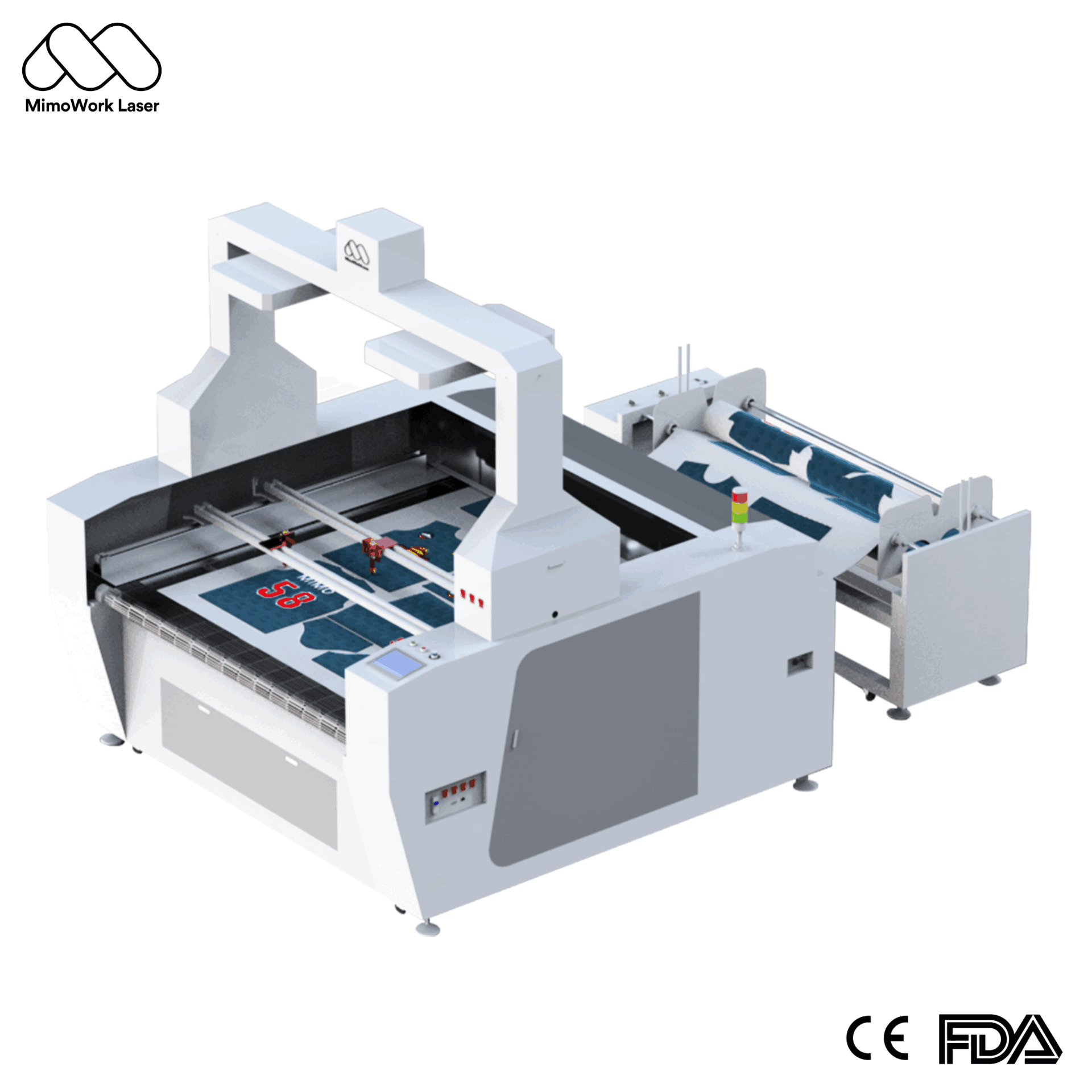
The versatility of a CO2 laser cutting machine is demonstrated by its wide material compatibility. It excels at cutting and engraving acrylic, wood, plywood, MDF, leather, fabric, paper, cardboard, and many plastics. In industrial settings, this translates to diverse applications: creating intricate patterns for apparel and sportswear from fabrics, producing precise gaskets from rubber or foam, fabricating detailed architectural models from wood and acrylic, and cutting components for electronics from specialized plastics. For textile production, advanced models feature vision systems for automatic contour cutting of printed fabrics and automated roll-to-roll feeding for continuous operation.
Material Compatibility and Safety Considerations
Understanding material interaction is critical when operating a CO2 laser etching machine. The technology excels on the aforementioned non-metals, producing high-quality marks on everything from engineered wood (MDF) and natural leather to anodized aluminum and plastics containing laser additives. However, caution is required when processing materials like PVC or PTFE (Teflon), as the etching process can generate hazardous fumes. Therefore, pairing the etching machine with an efficient fume extraction system is not just recommended but often mandatory to ensure a safe working environment, protect the machine’s optics, and maintain clean air quality. Proper safety enclosures and personal protective equipment (PPE) are also essential components of a responsible setup.
FAQ
A: The primary difference lies in the laser wavelength and optimal material compatibility. A CO2 laser etching machine uses a long-wavelength infrared beam (typically 10.6µm) that is highly absorbed by organic and non-metallic materials like wood, acrylic, plastic, and glass, making it ideal for etching these substrates. In contrast, fiber lasers have a shorter wavelength better absorbed by metals, making them the standard for direct metal marking.
A: While a CO2 laser etching machine is excellent for many plastics such as acrylic (PMMA), ABS, and polycarbonate, it is not suitable for all. Processing PVC or PTFE-based materials is strongly discouraged due to the generation of toxic chlorine or fluorine-based fumes. Always verify material safety data sheets and conduct tests when working with unfamiliar polymers.
A: Fume extraction is vital for three main reasons: operator safety, equipment protection, and mark quality. The etching process generates smoke, fumes, and particulates that can be harmful if inhaled. These byproducts can also contaminate and damage the machine’s sensitive galvanometer lenses and mirrors. An effective extraction system removes these contaminants at the source, ensuring a clean, safe, and stable working environment for both people and the CO2 laser etching machine.
News | Mar-27-2026