Blog
In a field that evolves daily, staying ahead means staying informed.
Explore in-depth articles designed to help you solve complex challenges,
maximize your machine’s ROI.
Stay ahead in a competitive market.


In a field that evolves daily, staying ahead means staying informed.
Explore in-depth articles designed to help you solve complex challenges,
maximize your machine’s ROI.
Stay ahead in a competitive market.
News | Mar-27-2026
Selecting the best laser engraver for wood requires understanding how different laser technologies interact with this organic material to produce high-quality, detailed, and profitable results. Wood’s varied grain, density, and resin content present unique challenges that the right laser system can master for applications ranging from personalized gifts to intricate signage. This guide breaks down the critical technical factors to consider.
Laser Type and Wavelength: The Foundation for Quality
The most critical factor is the laser source. For wood, a CO2 laser is overwhelmingly considered the optimal and best laser engraver for wood for most applications. The long wavelength of a CO2 laser (around 10.6 micrometers) is highly absorbed by the cellulose and lignin in wood, allowing for efficient material removal through vaporization. This results in clean, high-contrast engraving with crisp details and the ability to create varying depths for a true 3D effect. While fiber lasers can mark wood, they interact with the surface differently and are typically better suited for metals.
Power, Speed, and Precision: Balancing Throughput and Detail
Laser power, measured in watts, directly influences capability. For engraving fine details and photos on woods like maple or cherry, a 40W-60W CO2 laser is often sufficient. However, if your goal includes cutting thicker plywood or basswood efficiently, or achieving deeper engraving for dramatic relief, higher power (100W and above) is necessary. Speed and precision are equally important; a machine with high acceleration and a fine beam spot can produce intricate details quickly. Some systems feature bidirectional engraving technology, which can effectively double engraving speed by emitting the laser on both forward and reverse passes, a significant advantage for production.
Work Area, Software, and Usability
The size of the laser’s work bed determines the maximum project dimensions. Benchtop models are perfect for smaller crafts, while larger flatbed systems handle full sheets for signage. User-friendly, industry-standard software like LightBurn is crucial for a seamless workflow, offering powerful tools for design and machine control. Furthermore, an integrated air assist system is vital when working with wood, as it blows away smoke and debris during engraving to prevent scorching and keep the cut or engraved area clean.
Essential Safety and Support Considerations
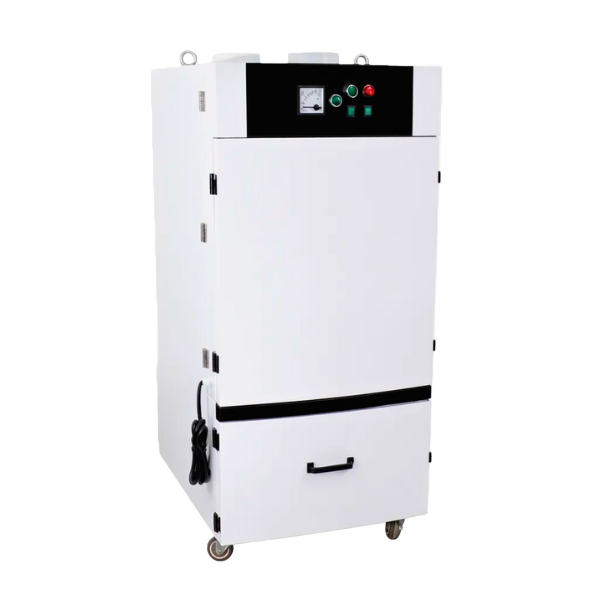
A best laser engraver for wood must be operated safely. Laser processing wood generates smoke and particulates. A robust fume extraction system is non-optional; it protects the machine’s optics from residue, ensures consistent engraving quality, and safeguards operator health by removing harmful airborne byproducts. Always verify the electrical requirements of your chosen machine and ensure your workspace has adequate ventilation and safety protocols in place.
Ultimately, the best laser engraver for wood for your workshop balances wavelength compatibility, sufficient power for your target materials and thicknesses, a reliable mechanical system for precision, and integrated safety features. By prioritizing these technical aspects, you can choose a tool that transforms raw wood into finely crafted, high-value products with efficiency and stunning detail.
FAQ
Q: I’m a beginner interested in wood engraving. What is a good starting point?
A: For newcomers, a desktop CO2 laser like the 60W-class models offers a low barrier to entry, fits in a home workshop, and provides all the capability needed to learn and create a wide variety of wood projects. It allows you to master the fundamentals of design, settings, and material handling before scaling up.
Q: How much laser power do I really need for cutting wood?
A: Power needs depend on thickness and desired speed. While lower power (40W-60W) can cut thin woods, a 100W or higher laser is recommended for reliably and quickly cutting through materials like 11mm plywood with clean edges, making it more suitable for production work.
Q: Can the same laser engrave wood and cut acrylic?
A: Absolutely. A CO2 laser is exceptionally versatile and is the ideal tool for both sharp, detailed engraving on wood and cutting/engraving acrylic with polished edges. This material versatility is a key advantage for makers and small businesses.
Q: What is the most important safety accessory for laser engraving wood?
A: A high-quality fume extractor is critical. Engraving and cutting wood produces significant smoke that can stain your workpiece, damage the machine’s lens, and pose a health risk. An extractor designed for non-metal fumes keeps the work area clean and safe.
News | Mar-25-2026
News | Mar-25-2026