Blog
In a field that evolves daily, staying ahead means staying informed.
Explore in-depth articles designed to help you solve complex challenges,
maximize your machine’s ROI.
Stay ahead in a competitive market.


In a field that evolves daily, staying ahead means staying informed.
Explore in-depth articles designed to help you solve complex challenges,
maximize your machine’s ROI.
Stay ahead in a competitive market.
News | Apr-8-2026
A fiber laser welder represents a significant advancement in joining technology, utilizing a high-intensity beam of coherent light generated within a fiber optic medium to create strong, precise, and low-distortion welds. This technology is distinguished by its excellent beam quality, high energy efficiency, and robust design, making it suitable for a vast range of industrial applications, from delicate jewelry repair to the assembly of large automotive frames. The core of the system is a fiber laser source, typically operating at a 1064nm wavelength, which delivers consistent, focused energy through a flexible fiber optic cable to the welding head. This method offers superior control over heat input compared to traditional welding, minimizing thermal distortion and enabling joins on heat-sensitive components and dissimilar materials.
Handheld Fiber Laser Welder for Mobility and Repair
For applications requiring maximum flexibility, the handheld fiber laser welder is a transformative tool. This portable system brings the power of laser welding directly to the workpiece, ideal for on-site repairs, maintenance, and light fabrication where parts are too large or cumbersome to move. It typically features a water-cooled laser source with power ranging from 1000W to 1500W and an ergonomic welding gun with an integrated viewfinder and wire feeder. This configuration allows operators to perform clean, strong welds on various metals, including steel, aluminum, and copper alloys, directly on the shop floor, significantly reducing downtime associated with disassembly and transport.
Automated Precision with Gantry and Robotic Systems
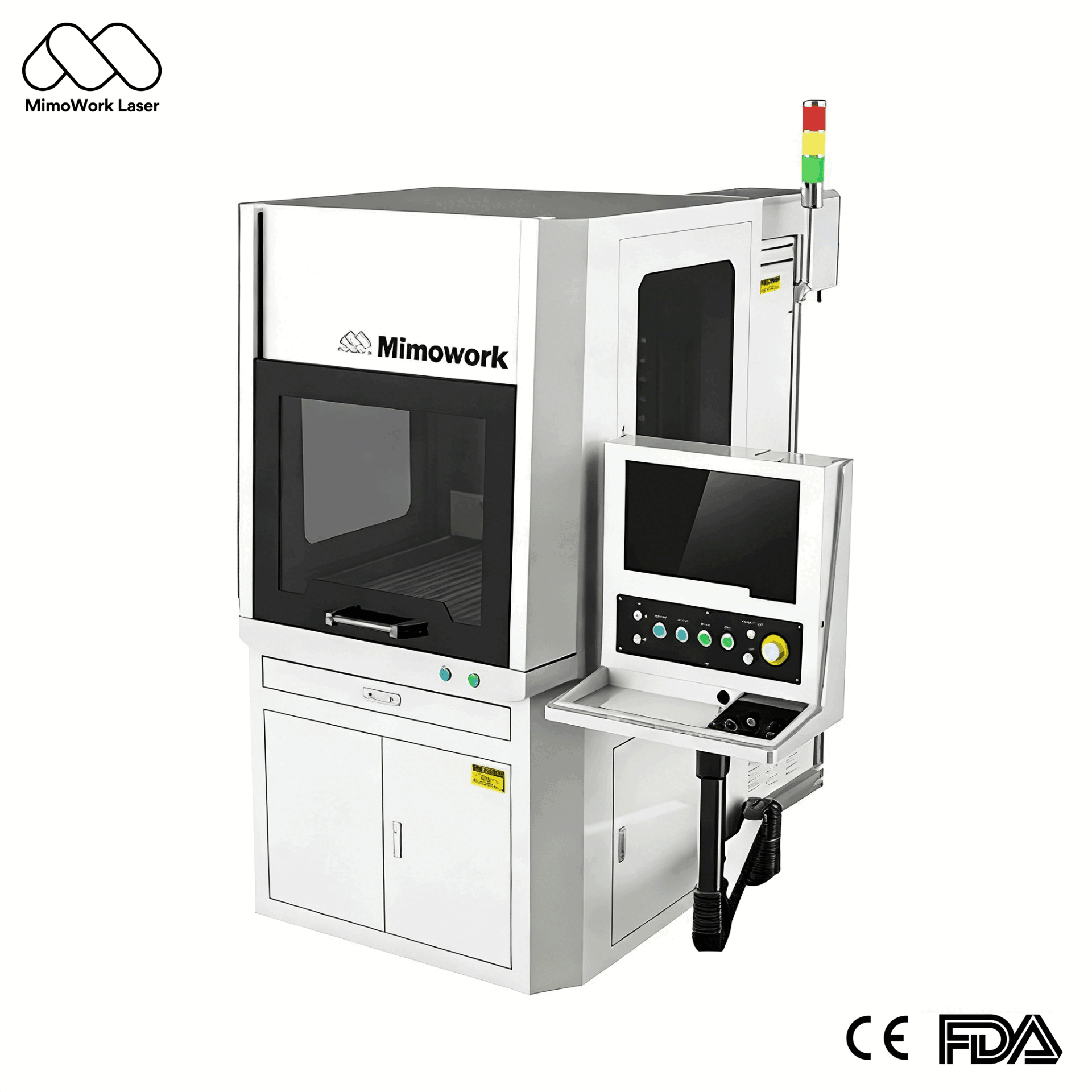
For automated, high-volume production, fiber laser welding technology integrates seamlessly with programmable motion systems. A 4-axis gantry fiber laser welder is engineered for high-precision welding of small to medium batch parts within a fixed work envelope. Combining a continuous wave fiber laser with CNC control over X, Y, Z, and rotary axes, it delivers consistent, high-speed welds for components like sensor housings and battery contacts. For the ultimate in flexibility on complex three-dimensional geometries, a manipulator (robotic) laser welding system is the definitive solution. This setup integrates a high-power fiber laser (1000–4000W) with a multi-axis industrial robot arm, allowing it to follow intricate 3D contours and access tight spaces unreachable by other systems, making it ideal for automotive and aerospace structural components.
FAQ
Q: What type of laser source is used in a fiber laser welder?
A: A fiber laser welder utilizes a solid-state laser source where the active gain medium is an optical fiber doped with rare-earth elements like ytterbium. This design produces a laser beam with excellent quality that is delivered via a flexible fiber optic cable, allowing for versatile integration into handheld guns, gantries, or robotic arms.
Q: How do I choose the right fiber laser welder for my application?
A: The choice depends on your workpiece geometry and production needs. For large, immobile parts or repair work, a handheld system offers portability. For automated, high-volume welding of small to medium flat or rotational parts, a 4-axis gantry system is ideal. For complex 3D components requiring maximum path flexibility, a robotic manipulator system is the best solution. Power requirements (e.g., 1000W vs. 4000W) are then determined by material type and thickness.
Q: Why is fume extraction important for laser welding?
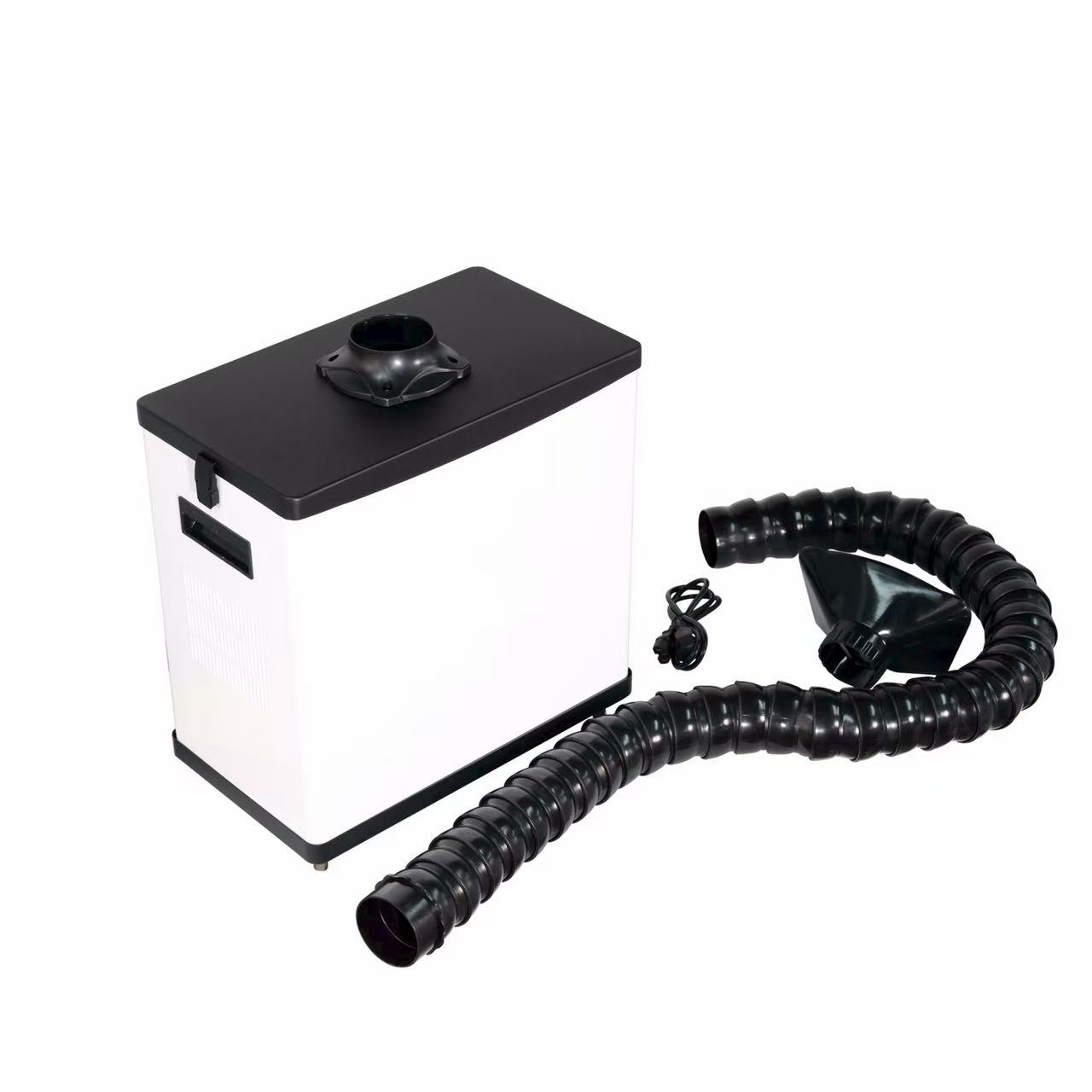
A: Laser welding and cleaning processes produce dense smoke, metal dust, and airborne particles that can harm equipment optics and operator health. A dedicated fume extractor captures these emissions at the source, ensuring a clean, safe work environment, protecting the laser’s optical path from contamination, and helping facilities meet workplace air quality standards.