Blog
In a field that evolves daily, staying ahead means staying informed.
Explore in-depth articles designed to help you solve complex challenges,
maximize your machine’s ROI.
Stay ahead in a competitive market.


In a field that evolves daily, staying ahead means staying informed.
Explore in-depth articles designed to help you solve complex challenges,
maximize your machine’s ROI.
Stay ahead in a competitive market.
News | Apr-21-2026
Operational Advantages and Enhancements
Operating a CO2 laser marking machine is a consumable-free process, eliminating the ongoing cost and hassle of inks, dyes, or tooling, which translates to low operating costs and consistent mark quality. For enhanced productivity and capability, several upgrades are available. These include a fully enclosed safety system with integrated fume extraction, dynamic field-of-view lenses for marking on curved or uneven surfaces, and shuttle table systems that allow continuous loading and unloading for non-stop, high-throughput production.
Critical Considerations for Safe Operation
While highly effective, it is crucial to note that processing certain materials like PVC or PTFE with a CO2 laser marking machine generates hazardous fumes. Therefore, the use of appropriate Personal Protective Equipment (PPE) and a high-efficiency fume extraction system is not just recommended but mandatory for safe operation. Implementing such extraction systems protects both the equipment’s optics from contamination and ensures a safe working environment for operators.
FAQ
Q: What are the primary materials a CO2 laser marking machine is designed for?A: The CO2 laser marking machine is specifically engineered for non-metallic materials. It delivers optimal results on plastics (acrylic, ABS, PET), wood, leather, paper, glass, ceramics, and coated surfaces, producing high-contrast, permanent marks through a thermal interaction process.
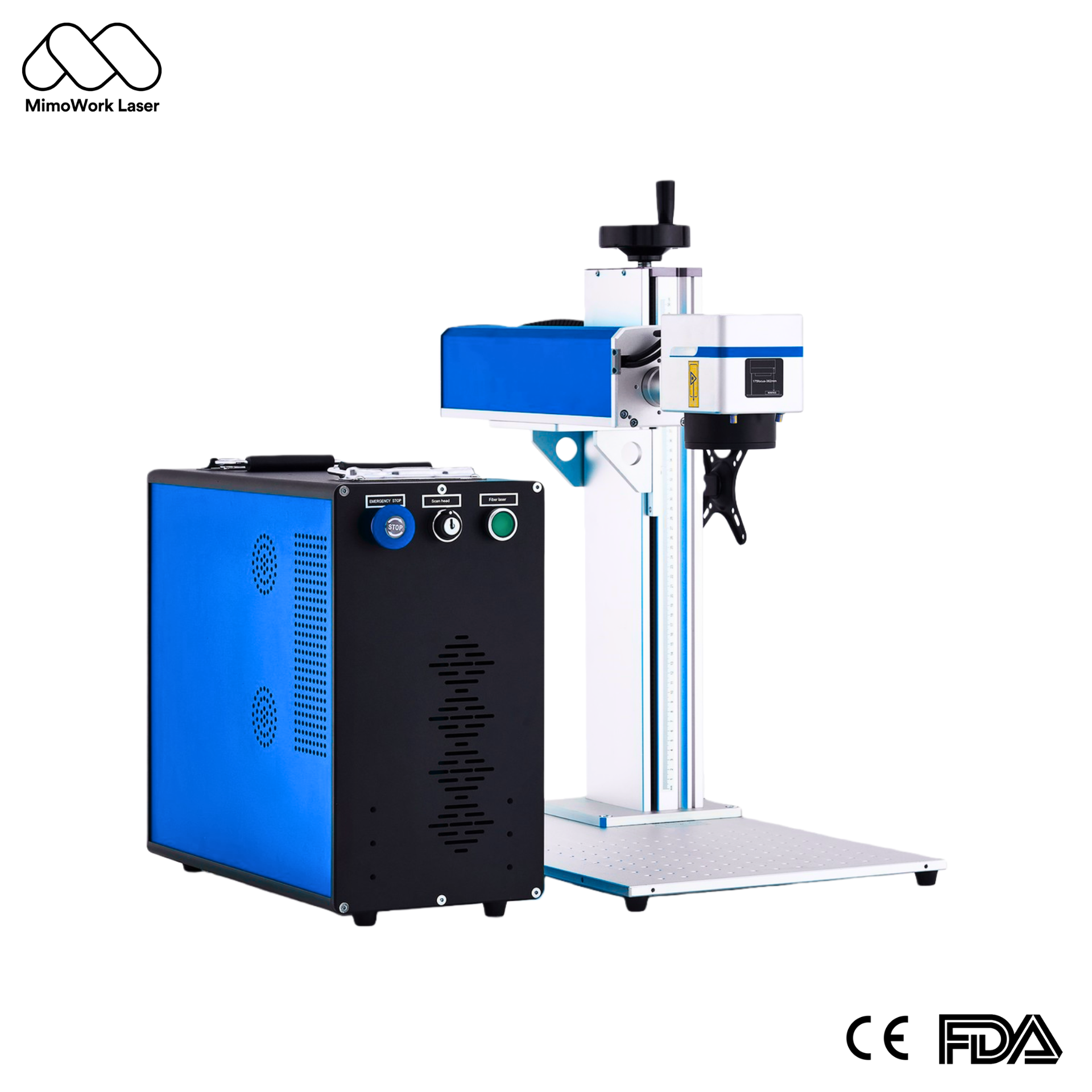
Q: Can this machine mark metals effectively?A: No, the standard CO2 laser wavelength is not absorbed well by untreated metals. For permanent marking on metals like steel or aluminum, a fiber laser marking machine or a MOPA laser marking machine is the appropriate technology choice.
Q: What safety measures are necessary when operating this machine?A: Beyond standard laser safety enclosures, a critical requirement is an efficient fume extraction system. This is especially vital when processing materials like PVC or vinyl, as they release harmful fumes. Proper extraction maintains air quality, protects the machine’s optics, and ensures operator safety.
Q: What are the key advantages over other marking methods like inkjet?A: The CO2 laser marking machine is specifically engineered for non-metallic materials. It delivers optimal results on plastics (acrylic, ABS, PET), wood, leather, paper, glass, ceramics, and coated surfaces, producing high-contrast, permanent marks through a thermal interaction process.