Blog
In a field that evolves daily, staying ahead means staying informed.
Explore in-depth articles designed to help you solve complex challenges,
maximize your machine’s ROI.
Stay ahead in a competitive market.


In a field that evolves daily, staying ahead means staying informed.
Explore in-depth articles designed to help you solve complex challenges,
maximize your machine’s ROI.
Stay ahead in a competitive market.
News | Apr-24-2026
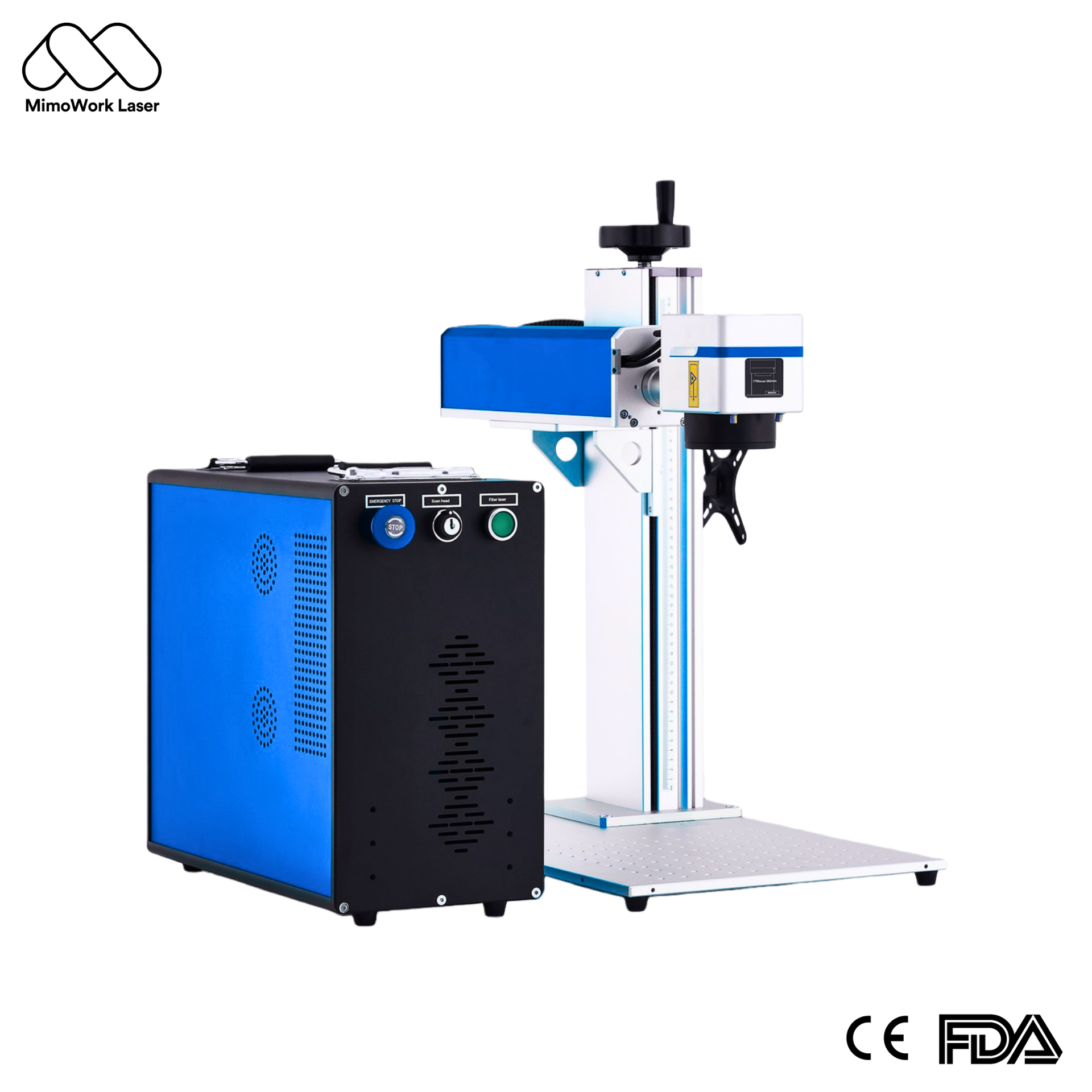
The demand for flexible, on-demand part identification is driving innovation in laser marking technology. A Portable Laser Marking Machine represents a significant evolution, transforming a traditionally stationary process into a versatile tool that brings permanent marking capability directly to the workpiece. This system typically consists of a compact, handheld marking head connected via a flexible fiber optic cable to a stationary laser source and control unit. This design decouples the marking operation from a fixed work envelope, offering unparalleled flexibility for maintenance, large-part marking, and low-volume customization directly on the shop floor or in the field.
Safety and Operational Considerations
Operating a portable laser marking machine requires strict adherence to laser safety protocols (e.g., Class 4 laser product controls). Operators must use appropriate Personal Protective Equipment (PPE), including laser safety glasses specific to the laser wavelength. The work area should be controlled to prevent exposure to reflected beams. Furthermore, when processing materials like PVC or PTFE, which generate hazardous fumes, the use of a high-efficiency local fume extraction system is mandatory, even in open or non-environments. Proper training on the handheld device’s safety features and marking parameters is essential for safe and effective operation.
Conclusion
The portable laser marking machine is a powerful solution that extends the benefits of permanent laser marking beyond the fixed workstation. By combining the proven performance of fiber laser technology with a flexible handheld delivery system, it addresses critical needs in maintenance, large-scale manufacturing, and field service for durable part identification and branding.
FAQ
Q: What materials can a portable laser marking machine typically mark?
A: It is primarily engineered for metals like stainless steel, aluminum, and titanium, as well as some engineered plastics. The specific results depend on the laser source parameters and material properties.
Q: Are there special safety requirements for using a portable laser marker?
A: Yes. As a Class 4 laser product, it requires stringent safety measures. Operators must wear certified laser safety glasses, and the area must be controlled to prevent accidental exposure. Adequate fume extraction is also critical when processing certain plastics.
Q: Can this system be used for outdoor or remote site applications?
A: While highly portable within a facility, outdoor use depends on the system’s design and power requirements. Critical considerations include providing stable power to the laser generator and ensuring a safe, controlled environment for the laser operation, which can be challenging in fully open, uncontrolled spaces.
Q: How do I choose the right laser power for a portable system?
A: The required power depends on your target materials and desired mark depth/speed. For instance, a 20W fiber laser is suitable for most surface marking on metals, while deeper engraving or faster throughput may require 30W or 50W. Consulting with an application expert is recommended to match the power to your specific use case.