Blog
In a field that evolves daily, staying ahead means staying informed.
Explore in-depth articles designed to help you solve complex challenges,
maximize your machine’s ROI.
Stay ahead in a competitive market.


In a field that evolves daily, staying ahead means staying informed.
Explore in-depth articles designed to help you solve complex challenges,
maximize your machine’s ROI.
Stay ahead in a competitive market.
News | May-14-2026
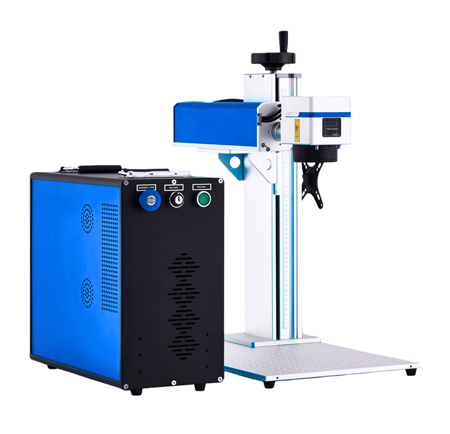
Many factories have to deal with uneven or faded markings. This often results in re-work, compliance risks, and increasing operational costs. But fortunately, there is a solution: a Laser marking machine. It alleviates these problems by providing clean, permanent marks without contact or consumables. With its help, you will get consistent results across batches, improved traceability, and lower expenses in the long run. This blog post will assist you to pick the right marking system for your unique needs.
A laser marking machine is a common piece of equipment that is used in industries. It directs a concentrated laser beam to modify the surface of a substrate. This machine makes permanent imprints like text, logos, barcodes, and serial numbers without removing or impacting substantial amounts of material.
It uses controlled energy, in lieu of mechanical force or chemicals, which are generally used in traditional methods. This provides excellent precision as well as repeatability. This machine can laser mark metals, plastics, ceramics, glass, and coated materials.
A high-energy laser beam is directed by the machine onto the material surface. This beam interacts with the substance either by heating or photochemical processes. Thereafter, surface changes in color, texture, or reflectivity.
Typical effects of marking include:
Software controls the operation and directs the laser to move with pinpoint accuracy.
These terms are often mixed up, but they refer to different processes.
For industrial traceability, marking is the go-to method: it’s fast and has minimal impact on the part.
Marks are resistant to wear, heat, and chemicals. This is vital for compliance as well as for continuous tracking.
No inks, no chemicals are used. This alleviates the ongoing cost and streamlines operations.
Laser systems achieve micron-level accuracy. That’s important for small parts and dense data codes.
Fiber lasers are around 1064 nm in wavelength. They work well with metals, including stainless steel, aluminum, brass, and titanium.
They provide:
They are often utilized in the automotive and aerospace production industries.
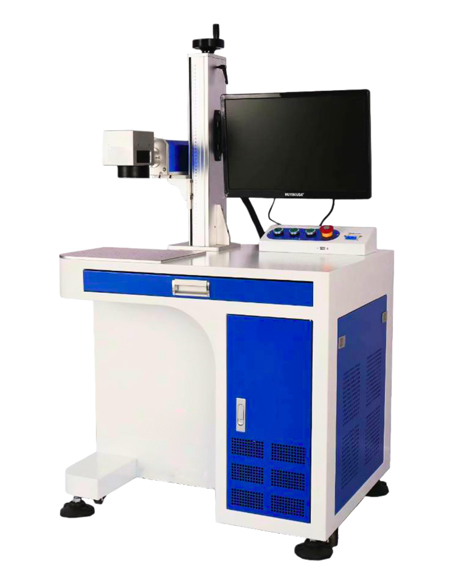
CO₂ lasers employ a wavelength of 10.6 micrometer making them ideal for wood, glass, paper, leather, and plastic. They are preferred for organic materials, packaging, and signs.
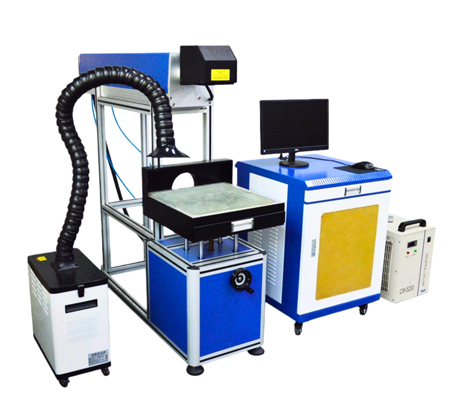
UV lasers have shorter wavelengths around 355 nm. They emit very little heat.
This allows:
This is widely used in electronics and the medical industry.
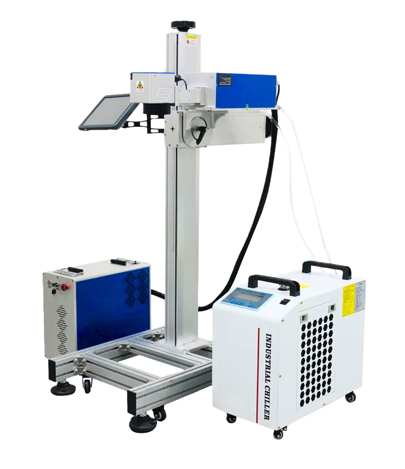
532 nm green lasers are more readily absorbed by reflecting material.
They are used for:
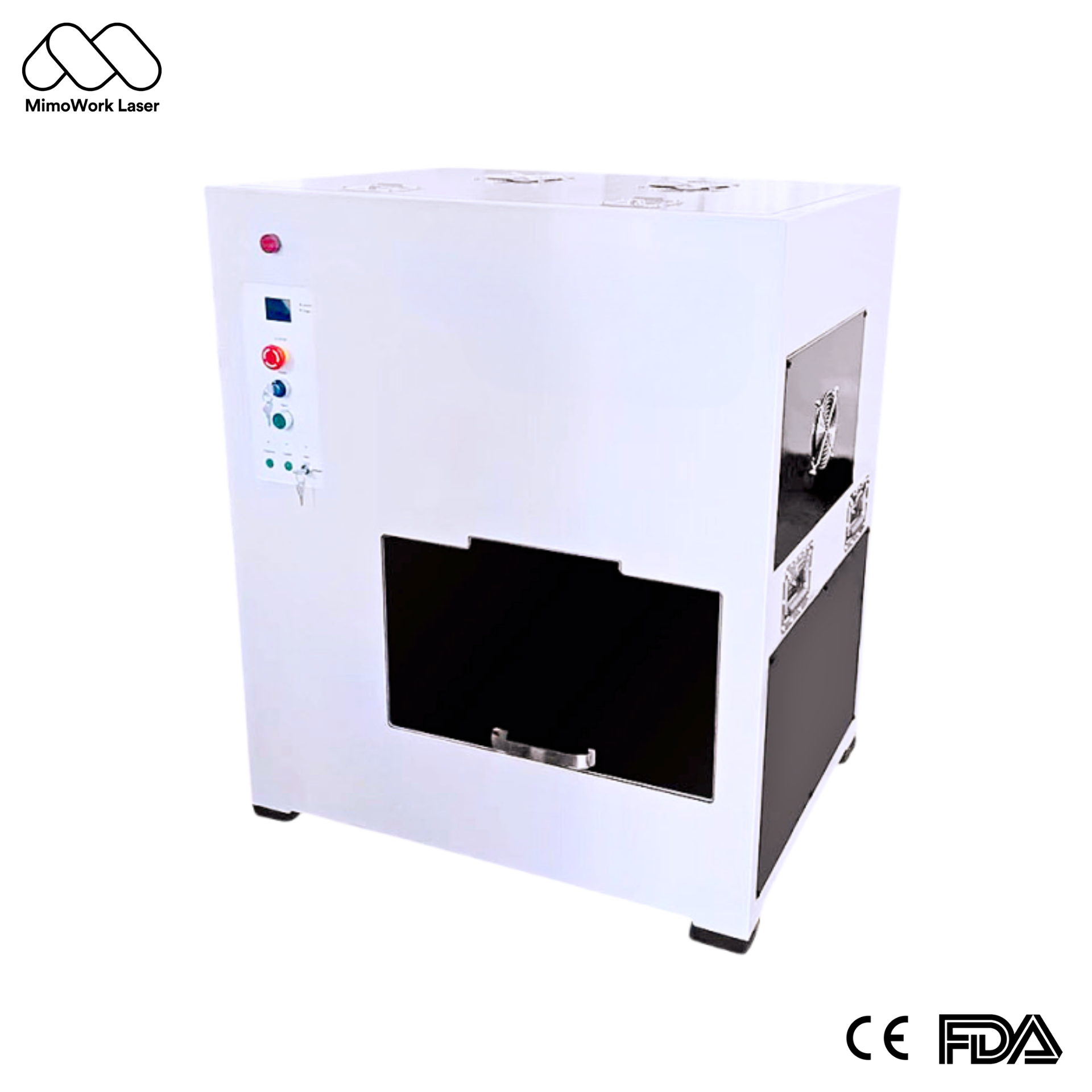
Comparison of the Four Laser Types
| Laser Type | Wavelength | Best Materials | Advantage | Use |
| Fiber | 1064 nm | Metals | High power | Automotive parts |
| CO₂ | 10.6 μm | Non-metals | Versatility | Packaging |
| UV | 355 nm | Plastics, glass | Low heat | Electronics |
| Green | 532 nm | Reflective metals | Precision | Micro-marking |
There is more to choosing the correct system than simply comparing prices. You need to match specs to your manufacturing requirements.
The laser power impacts the marking depth and speed.
Select the power according to the material type and the desired marking depth.
The marking field defines your maximum design area.
Larger worktables accommodate bigger parts but may compromise precision for fine details. Choose a size that accommodates your product dimensions and production flow.
The speed relies on the galvanometer performance and the laser type. Productivity is increased by high-speed systems. Repeat accuracy guarantees consistent outcomes between batches. Look for systems with stable motion control and minimal variation.
The lifetime of fiber lasers can be up to 100,000 hours. CO2 systems may need extra maintenance. Lower upkeep means less downtime and lower operating expenses over time.
Modern systems have to work with production lines.
Check for:
Laser marking is used in many sectors where precision and traceability are required.
You may immediately mark part IDs, VIN numbers, and QR codes on metal surfaces. These marks can be readable even in rough conditions.
Laser systems produce fine markings on PCBs and chips without any damage to the circuits. Here, UV lasers are commonly used.
Medical devices need a permanent identification. The laser marking process complies with stringent regulatory requirements without compromising the integrity of the material.
Jewelry makers employ laser technology for intricate etching of trademarks and motifs. The process preserves the integrity of the piece.
Food & Packaging: Production Dates and Anti-Counterfeiting Codes
CO₂ lasers are used to mark expiry dates and batch codes on packaging, supporting traceability and brand protection.
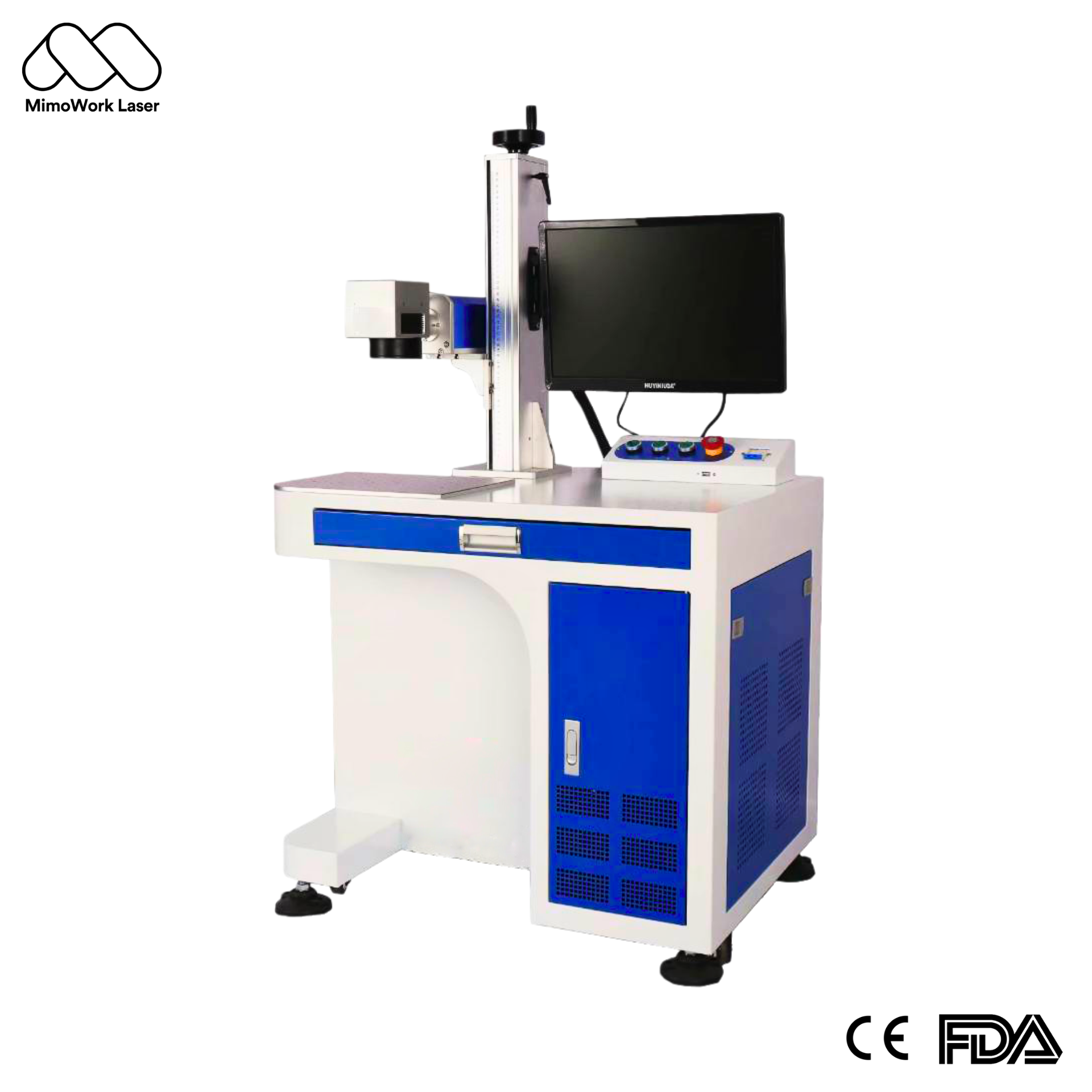
The kind of system depends on the scale of your production.
Best Setup for Small Batch & Prototyping
Desktop systems are compact and economical. They are suitable for low-volume production and workshop use.
Inline machines are built into conveyor systems. They label products in real-time without pausing production.
Handheld units are adaptable for big or fixed components. They are particularly useful for maintenance and on-site marking duties.
It entails:
A lot of buyers look at specs without thinking about what they need to produce. Here are 5 common mistakes to avoid when evaluating the laser marking machine price:
The accuracy depends on the quality of the beam. A lower power system with a better beam quality can give better results.
Reliable support means less downtime. So, always verify the service capability of suppliers.
Lack of good integration can break workflows. Be sure it is compatible before buying.
Laser marking makes fumes. Therefore, for safety and compliance, proper extraction systems are required.
Cheap systems often require repairs. This adds to the long-term cost.
A:The type of laser determines which materials can be marked, such as metals, polymers, ceramics, glass, and coated materials.
Speed depends on material and power. Industrial systems may label hundreds of parts in an hour.
Most systems only need basic training. However, advanced configurations may need skilled operators.
Review supplier compliance records and formal documents. Make certain that the system is designed to support industry standards.
The correct laser marking machine will influence your production efficiency, your product quality, and your compliance. The right system means less downtime, better traceability, and lower operational costs over time.
MimoWork is a reliable laser marking machine manufacturer. We provide industrial-grade laser solutions for the real production environment. If you’re evaluating a new system or upgrading existing equipment, we can help you assess your requirements.
Contact MimoWork to request a quote and find the right system for your production needs.
News | Apr-22-2026
News | Apr-22-2026
News | Apr-21-2026
News | Apr-22-2026
News | Apr-24-2026