Blog
In a field that evolves daily, staying ahead means staying informed.
Explore in-depth articles designed to help you solve complex challenges,
maximize your machine’s ROI.
Stay ahead in a competitive market.


In a field that evolves daily, staying ahead means staying informed.
Explore in-depth articles designed to help you solve complex challenges,
maximize your machine’s ROI.
Stay ahead in a competitive market.
News | May-21-2026
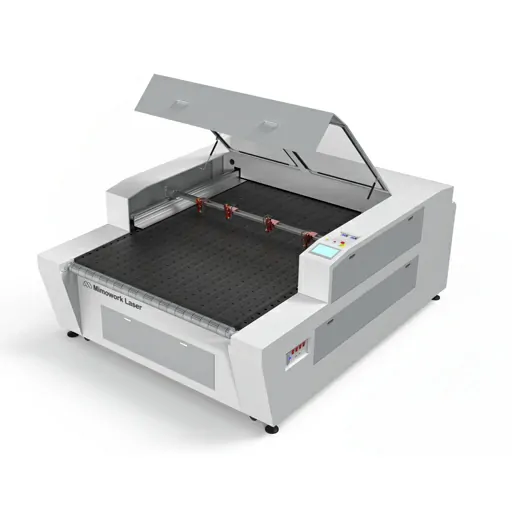
Production delays, inconsistent cutting quality, material waste, and slow production speeds can impact the profitability of a business. That is why textile manufacturers, fabrication shops, and product makers are investing in premium quality CO₂ laser cutting machines. They improve precision and maintain high output in a demanding production environment.
But choosing the correct system is more than just a pricing comparison. It includes several factors. This guide will outline the important things to consider before buying a CO2 laser cutter. Here you will learn how CO2 laser cutting technology works, what materials different systems can handle, and which specifications matter most when it comes to performance. Apart from this, we will discuss the common purchase mistakes that can lead to costly upgrades down the road.
A CO2 laser cutter creates a high-powered infrared beam from a combination of carbon dioxide gas. This beam travels over the surface of a substrate, vaporizing or melting it along a programmed route. The outcome is a clean and precise cut without any physical tool contact. An advanced industrial CO2 laser cutting machine works well with everything from sample development to continuous production lines.
The electricity stimulates the gas mixture inside the laser tube. Then the laser tube generates a laser beam of wavelength around 10.6 microns. Mirrors are used to guide the direction of the beam along with the focus lens, which concentrates it on the substrate surface.
This focused beam creates high heat to melt or vaporize the non-metallic materials. Also, air is blown through the cutting process to safeguard the lens and enhance the quality of the edge.
These three laser types are built for different jobs. Picking the wrong one costs you both time and material quality.
There are a wide range of uses of CO2 laser cutting machines. Its key applications are acrylic signage, textile cutting, leather processing, bespoke products, fabric pattern cutting, and more. In fact, nearly every non-metallic production category is covered.
The versatile material compatibility makes CO2 laser technology the top choice for businesses. You can cut the following materials with the help of these cutters:
CO2 lasers help you cut MDF, plywood, hardwood, veneer, and bamboo with flawless edges.
Another material that you can process with a CO2 laser cutter is Acrylic. This equipment works nicely on PMMA sheets, display panels, and plexiglass.
The fabrics that can be cut easily with this laser cutter are polyester, nylon, denim, and cotton. It also works well on faux leather.
You can also handle the cutting of craft paper, corrugated board, and cardstock with a CO2 cutter.
It can process some plastics safely, such as PET, PC, and ABS. But you need to check whether they produce toxic fumes when cut.
You can engrave glass and crystal with the help of this cutter, for a high-class finish. This is mainly done for decorative branding and awards customization.
Avoid processing PVC or vinyl with a CO2 laser machine. These materials produce harmful chlorine gas and can damage the equipment.
Machine specification is directly related to the operating efficiency and the quality of the final result. Here are key features of the machine that you need to understand before making a buying decision:
The power of the equipment determines what material it can practically handle. Entry-level industrial CO2 laser cutters work between 60W and 100W. They can be used to cut thin fabric and acrylic. However, if you want to cut a thicker substrate, a high-powered cutting machine will be required.
The work area, also called the bed size, should match the dimensions of the materials that you want to process, a larger work area of 1600 x 1000 mm or more can handle oversized materials and is best for large production.
Always choose the machine with high speed as it gives better throughput. Also, the repeat position accuracy should be ±0.01mm for detailed pattern work. This factor determines how accurately the head returns to a set point. Remember, a high-precision CO2 laser cutter keeps consistent edge quality.
You can choose between two tube types: glass and RF. Although RF tubes give better beam quality, they are pretty expensive. Glass tubes are affordable and work well across several industrial applications.
Another important factor to consider is software compatibility. Verify that the machine you are going to choose supports LightBurn software. It can help you manage work efficiently. Machines equipped with the Ruida controller are often compatible with these two softwares.
When you cut materials like acrylic, glass, and leather, smoke particles and fumes will be produced. These can degradethe workplace air quality and also affect machine components. So, the CO2 cutter must be equipped with the right fume extractor.
The following are the major advantages of industrial CO2 laser cutting. It offers more than the basic cutting capability
This machine can tackle complex patterns and shapes effectively. It produces edges and details that traditional manual equipment cannot.
The substrate does not physically come in contact with the tool. This means reduced material distortion throughout the process.
You can connect these advanced laser cutters with conveyor tables and feeders. The automated workflows save time and eliminate the hassle of manual handling
A single machine can process almost the entire non-metal range, including acrylic, glass, leather, wood, paper, and more. This way, you don’t have to invest in multiple machines to expand the product range in the future.
MimoWork provides software integration, feeding systems, conveyor tables, and automation modules based on real production needs. Our technologies serve manufacturers handling specialized work and enterprises moving toward automated production.
The right setup depends on your materials, production goals, and workflow.
Thin fabric and paper need different settings than thick acrylic or plywood. Choosing a machine with more power than you need only increase the operational expense without enhancing the outputs.
Production capacity counts. Shops deal with small bespoke orders, so manageable bed sizes will work for them. Conversely, factories that do continuous work profit from automated loading and feeding systems and large-format beds.
Sample development often needs flexibility along with quick revisions. On the other side, big companies in mass production need automated workflow, consistency, and throughput. So, it’s clear that the configuration of the CO2 laser cutter for mass production and sample development will be different.
The standard flat-bed laser cutter often misses the mark while cutting sublimated sportswear or printed materials. For these applications, you’ll need visual positioning, auto-feeding, or material recognition systems. The camera-guided processing will help you get precise cut alignment.
MimoWork offersa wide range of
CO2 laser machine configurations to match your specific requirements. Our goal is to provide a solution for different types of production environments.
Have a look at our top picks:
F60 Laser Cutter Machine
The best CO2 laser cutter for small business operations, the F60 keeps things simple without cutting corners on quality. It includes:
F100 / F130 Laser Cutter Machine
These are designed for businesses that cut multiple material types at moderate daily volumes. Here are their key features:
F160 / F180-L Laser Cutter Machine
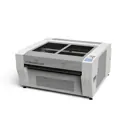
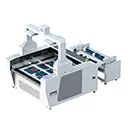
C160-L is the ideal pick for sublimation sportswear, printed fabrics, and pre-printed sheet cutting.
Here are its key features:
Apart from all the above options, MimoWork also offers customized laser cutter machines. You can specify your workspace dimensions, automation modules, software integration, and feeding systems to match your specific requirements — helping you build out a complete production line.
Sign and advertising businesses use these devices to cut acrylic letters, display props, and dimensional signs. They offer smooth, polished edges.
Apparel industries often employ a CO2 laser cutter for fabric pattern and sublimation print cutting.
Woodworking shops manufacture eye-catching panels and pieces with the help of these cutters.
Co2 cutters give packaging shops fast turnaround on cardboard cutting and custom gift box production.
Leather goods brands cut straps, patches, and create raised patterns with the use of CO2 cutters.
Schools, labs, and makerspaces use laser systems for model-making, rapid prototyping, and many other creative endeavors.
The inconsistent beam quality can result in subpar performance, no matter how high your machine’s power is rated. So, you should take some time to check beam quality and consistency before making any decision.
Ignoring Fume Extraction and Workplace Safety Requirements
Workplace and machine safety are vital. Therefore, make sure that your laser cutter machine is equipped with a dependable ventilation system.
Both software and support matter. Software compatibility enables your firm to be more productive. Similarly, quick after-sales support assists you in recovering from technical issues without unnecessary delays.
The machine you choose should be flexible enough to scale. The reason is that production needs often expand at a rapid rate.
Don’t pick a machine just on the basis of ease of use. Instead, look for throughput, durability, and upkeep requirements.
A:No, CO2 laser cutters can only process non-metal materials like fiber, leather, wood, and acrylic.
A:A glass tube lasts for several thousand working hours. However, the exact life expectancy varies and depends on upkeep.
A:Yes, at MimoWork, we offer customizable solutions. You can pick software compatibility, automation module, and system options based on your specific processing needs.
A:You can contact us via email, WhatsApp, or directly submit a quote request from our website. We offer a sample test before purchase, so that you can assess the cut quality, speed, and material compatibility.
CO2 laser cutters should be picked carefully after evaluating your production volume, workflow and material requirements. This can save your significant dollars later and keep your workflow smoother.
Contact MimoWork today to request a quote, ask about sample testing. Our engineers are here to help you choose the right configuration of CO2 laser cutter.
News | May-21-2026
News | May-18-2026
News | Apr-22-2026