Blog
In a field that evolves daily, staying ahead means staying informed.
Explore in-depth articles designed to help you solve complex challenges,
maximize your machine’s ROI.
Stay ahead in a competitive market.


In a field that evolves daily, staying ahead means staying informed.
Explore in-depth articles designed to help you solve complex challenges,
maximize your machine’s ROI.
Stay ahead in a competitive market.
News | Jul-3-2026
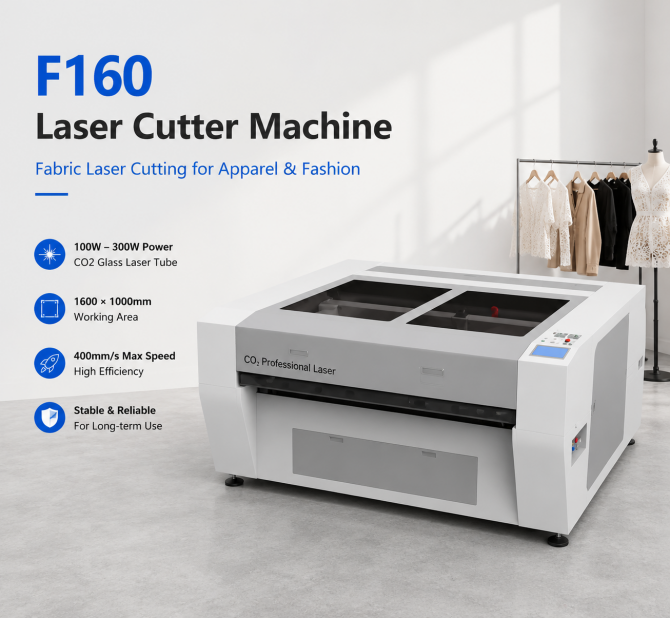
In the competitive world of textile and apparel manufacturing, precision, speed, and efficiency are non-negotiable. As design complexity increases and time-to-market shrinks, traditional cutting methods like scissors and manual knives present significant bottlenecks. The adoption of laser cutter for fabric technology offers a transformative alternative, enabling manufacturers to achieve unparalleled accuracy, automate workflows, and produce higher-quality goods with less waste. This guide provides a comprehensive, technical overview of how laser technology is reshaping the fabric cutting landscape.
To fully leverage the benefits of laser cutting, it’s essential to understand its underlying principles and how they differ from conventional mechanical methods. This knowledge is key to selecting the right equipment and optimizing processes for specific materials.
Laser cutting is fundamentally a non-contact processing technique. A computer-controlled laser beam directs intense energy onto the fabric surface. The primary mechanism is pyrolysis, a thermal decomposition process. The focused laser beam rapidly heats the material to its ignition or vaporization point, creating a clean cut. The material is either vaporized or blown away by a stream of assist gas. Because there is no physical contact, there is no mechanical distortion, pulling, or fraying of the fabric, preserving the integrity of delicate materials.
The operational differences between traditional knife cutting and laser cutting significantly impact production efficiency, cost, and final product quality. The table below provides a clear comparison.
| Feature | Laser Cutting | Traditional Knife Cutting |
| Process | Non-contact, thermal (pyrolysis) | Contact, mechanical pressure |
| Edge Quality | Sealed, anti-fraying, no burrs | Prone to fraying, requires sealing |
| Complexity | Handles intricate patterns and fine details with ease | Struggles with complex curves and fine details |
| Maintenance | Lower; no physical blades to sharpen or replace | High; blades dull and require frequent replacement |
| Material Waste | Reduced due to precise, computer-optimized “nesting” | Higher due to less precise cuts and material distortion |
| Versatility | Effective on a wide range of synthetic and natural fabrics | Limited; struggles with stretchy or delicate materials |
Visualizing the performance gap between a CO2 laser and a manual tool like scissors is highly instructive. A compelling video demonstration, titled “Fabric Cutting Machine | CO2 Laser vs Scissor“, provides a direct comparison. This type of demonstration typically reveals the significant advantages of the laser process.
Fabric Cutting Machine | CO2 Laser vs Scissor
Key Takeaways from the Demonstration:
Speed and Efficiency: The laser completes complex cuts in seconds, while manual cutting is significantly slower and labor-intensive.
Precision and Detail: The laser effortlessly produces sharp corners and intricate curves that are extremely difficult to achieve with scissors.
Edge Quality: The laser-cut edge is sealed and clean, whereas the scissor-cut edge is raw and prone to fraying, highlighting the laser’s key advantage.
One of the key strengths of a fabric laser cutter is its ability to handle a broad spectrum of materials. The optimal settings (power, speed, frequency) will vary, but the technology is inherently compatible with many common textiles. These include popular natural and synthetic fabrics such as cotton, polyester, nylon, and spandex, as well as blends and technical materials like leather and various industrial textiles. The specific material properties will dictate the precise parameter adjustments needed for optimal cutting results.
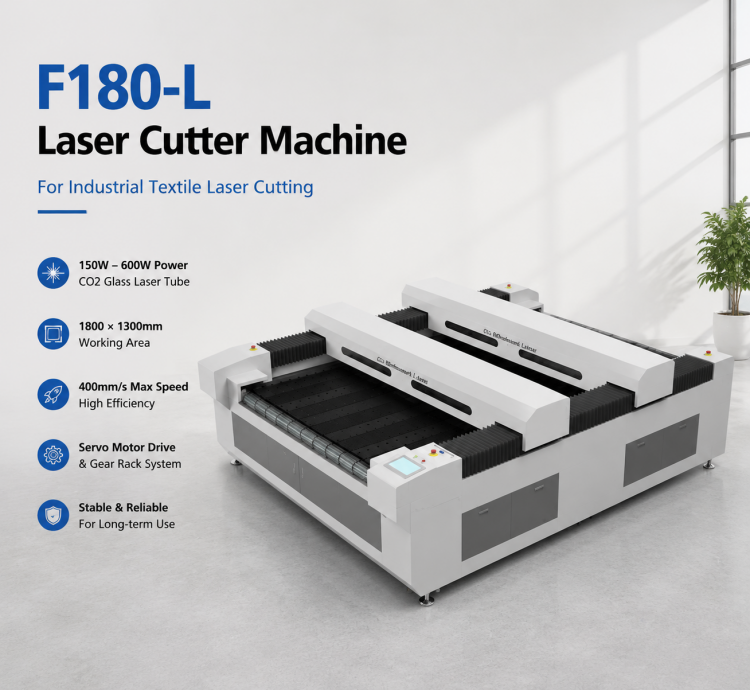
Laser cutting delivers exceptional precision, consistently producing complex patterns that are nearly impossible with traditional blades. The laser’s small spot size allows for cutting fine details, sharp corners, and intricate geometries without difficulty. This capability enables design innovation, allowing for highly detailed cutouts, micro-perforations, and other complex elements that add significant value to finished products.
A primary advantage is the automatic edge sealing effect. The heat from the laser melts the fiber ends, which then cools to form a solid, smooth edge. This is particularly beneficial for synthetic materials like nylon and polyester, as it prevents fraying and unraveling during use and washing. This eliminates the need for additional edge-finishing processes (like hemming or serging), reducing production costs and time while enhancing product durability.
Modern fabric laser cutters integrate seamlessly into automated workflows. The process from a digital design file to physical production is streamlined. A single operator can manage multiple machines, and the software-driven process allows for “nesting” optimally arranging patterns to minimize fabric waste. This combination of reduced manual labor and material savings directly contributes to increased throughput and improved overall profitability in manufacturing environments.
Laser cutters have become an essential tool across the apparel industry for a variety of tasks. They are widely used for cutting components for sportswear, including synthetic materials like sublimated polyester and stretch fabrics. Other common applications include cutting appliqués, patches, and technical textiles, as well as creating decorative perforations or etches on materials like denim. Technology’s versatility makes it suitable for both high-volume production and specialized, low-volume runs.
Maintaining uniformity across thousands of pieces is critical for brand reputation in mass production. Laser cutting delivers this consistency perfectly. Every piece is cut to the exact same digital specification, eliminating the variance inherent in manual or mechanical blade cutting. This ensures that components fit together accurately during assembly, reducing production time and minimizing defects, which is a cornerstone of efficient textile manufacturing.
The speed and flexibility of laser cutters are invaluable during the design and development phase. Designers can quickly produce prototypes to test new patterns and materials without the expense of creating physical dies or tools. This rapid iteration accelerates the time-to-market for new collections and supports a more creative, responsive design process, allowing brands to react quickly to market trends.
CO2 laser cutters are the industry standard for textile processing. They operate at a wavelength (10.6 micrometers) that is exceptionally well-absorbed by organic materials, making them highly efficient for cutting and engraving non-metal materials. This thermal interaction is precisely what is needed to both cut and seal the edges of synthetic and natural fabrics effectively, as visually confirmed in the “CO2 Laser vs Scissor” video comparison.
The power of the CO2 laser tube is a critical factor in achieving optimal results. Lower power systems (e.g., 30-60W) are generally suitable for cutting thin, delicate fabrics. For thicker materials, denser textiles, or higher production speeds, a more powerful laser (e.g., 100W or higher) is necessary. Higher power enables faster cutting and cleaner edges through robust materials, reducing the risk of incomplete cuts or scorch marks.
Beyond common textiles, CO2 laser cutters are remarkably versatile. They can efficiently process a wide range of other flexible materials often used in conjunction with fabrics, including various types of synthetic leathers, felt, and technical membranes. This versatility makes them a sound investment for facilities that need to switch between different product lines or materials without requiring multiple specialized machines.
Cutting delicate fabrics like silk, chiffon, or thin nylon demands careful parameter control to avoid thermal damage. The key is to use a combination of high speed and low power. Moving the laser quickly ensures that the heat is applied for a shorter duration, minimizing the heat-affected zone and preventing the material from charring or melting excessively.
Several strategies help control cutting quality and prevent burn marks or deformation. Using sacrificial backing material, such as a damp paper towel or a specialized cutting grid, can help dissipate heat. Fine-tuning the air assist system to blow away smoke and debris prevents staining. The settings must be carefully optimized for each material to balance cutting power with the risk of thermal damage.
Finding the perfect cut involves balancing three primary variables: speed, power, and airflow (air assist).
Speed: Determines the laser’s interaction time. Higher speeds mean less heat penetration, suitable for thin materials.
Power: The energy of the beam. Higher power cuts thicker materials but increases burn risk for fine fabrics.
Airflow: A stream of compressed air that removes molten material and smoke. It is crucial for keeping the lens clean and the cut edge free from residue.
The optimization process involves testing these variables on a sample. Typically, one starts with high speed and low power, then adjusts until a clean cut is achieved.
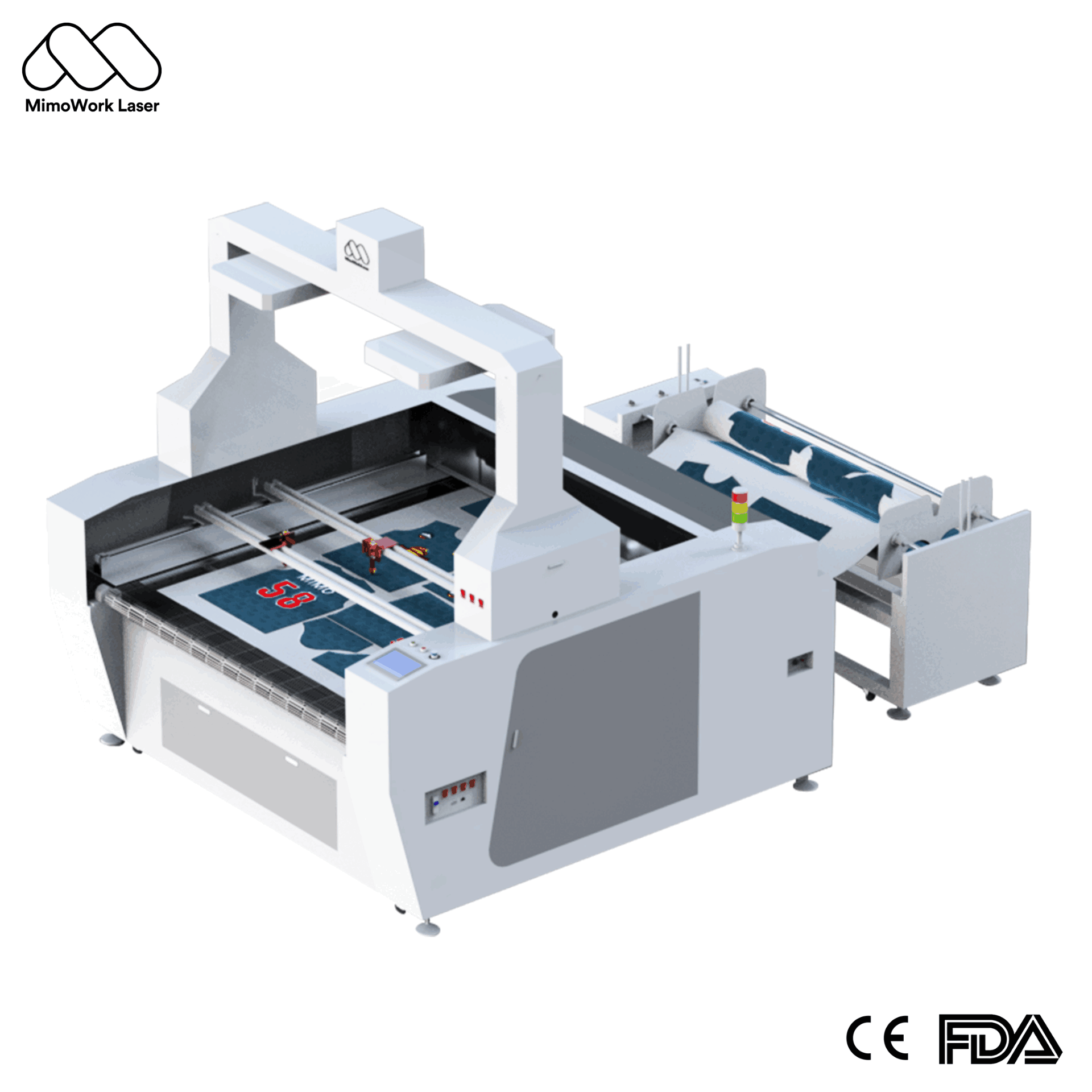
For large-scale manufacturing, industrial laser systems are designed for integration into automated production lines. This often includes conveyor systems for continuous processing of roll goods. Such automation minimizes manual intervention, reduces labor costs, and ensures a consistent, high-volume output that meets the rigorous demands of the modern textile industry.
The financial benefits of industrial laser cutting extend beyond the initial investment. By automating the cutting process, reliance on skilled manual labor is reduced. Furthermore, the precision of laser cutting, combined with advanced nesting software, maximizes material usage and minimizes waste. These factors, along with lower maintenance costs, make laser cutting a highly cost-effective solution for textile manufacturing.
Industrial laser systems provide the stability and reliability needed for continuous 24/7 operations. Unlike mechanical cutters, which require frequent blade changes, a laser cutter delivers consistent performance over long periods. This operational stability ensures production schedules are met, and output quality remains consistently high, providing a direct path to increasing overall production capacity.
The anti-fraying property of laser-cut fabric is a result of the thermal edge sealing effect. The intense heat of the laser beam melts the fiber ends at the cut line, which quickly cools and fuse into a solid, smooth edge. This inherent property of the laser cutting process is one of its most valuable benefits for textile applications, effectively sealing the material against unraveling.
The edge-sealing effect varies depending on the material’s composition.
Synthetics (Polyester, Nylon): These materials melt and fuse perfectly, creating a clean, hard, and completely sealed edge that will not be frayed.
Blends (Cotton/Polyester): The synthetic component in the blend melts and binds the natural cotton fibers, effectively stabilizing the edge.
Natural Fibers (Cotton, Linen): While they do not melt, the heat can ‘cauterize’ or caramelize the edge fibers, which helps to stabilize the weave and reduce fraying more effectively than a mechanical cut.
The sealed edge significantly enhances the product’s appearance, giving it a crisp, professional finish. This clean edge is a hallmark of quality for high-end garments. It also ensures long-term quality stability: garments retain their shape, edges don’t fray, and the overall aesthetic remains pristine throughout the product’s lifecycle.
Yes, CO2 laser cutters are highly versatile and can effectively cut various fabrics (cotton, polyester, nylon) and leather types, with adjustments to power and speed settings.
To prevent burn marks, use a combination of high speed, lower power, and strong airflow. Using protective backing material like a damp paper towel can also help dissipate heat.
A laser cutter is ideal for stretchy materials because the non-contact process does not drag or pull the fabric, preventing distortion and puckering common with knife cutters.
Modern laser systems are designed with powerful yet intuitive software. The user interface typically allows you to seamlessly transform digital designs from common design programs into final products.
The integration of a laser cutter for fabric represents a strategic investment in quality, efficiency, and innovation. From its non-contact thermal process that eliminates fraying and distortion to its ability to handle a diverse range of materials, the technology addresses the core challenges of modern textile manufacturing. As demonstrated by visual comparisons, the advantages in speed, precision, and edge quality over traditional manual methods are profound.
By enabling intricate designs, reducing waste, and accelerating the path from prototype to production, fabric laser cutters have become an indispensable tool for the apparel and textile industry. This technology delivers a measurable return on investment and positions businesses to meet the demands of a competitive market. To explore the comprehensive range of automation, software, and system options available, we invite you to learn more about the solutions offered by MimoWork-Laser.com.
News | Apr-22-2026