Blog
In a field that evolves daily, staying ahead means staying informed.
Explore in-depth articles designed to help you solve complex challenges,
maximize your machine’s ROI.
Stay ahead in a competitive market.


In a field that evolves daily, staying ahead means staying informed.
Explore in-depth articles designed to help you solve complex challenges,
maximize your machine’s ROI.
Stay ahead in a competitive market.
News | Aug-6-2026
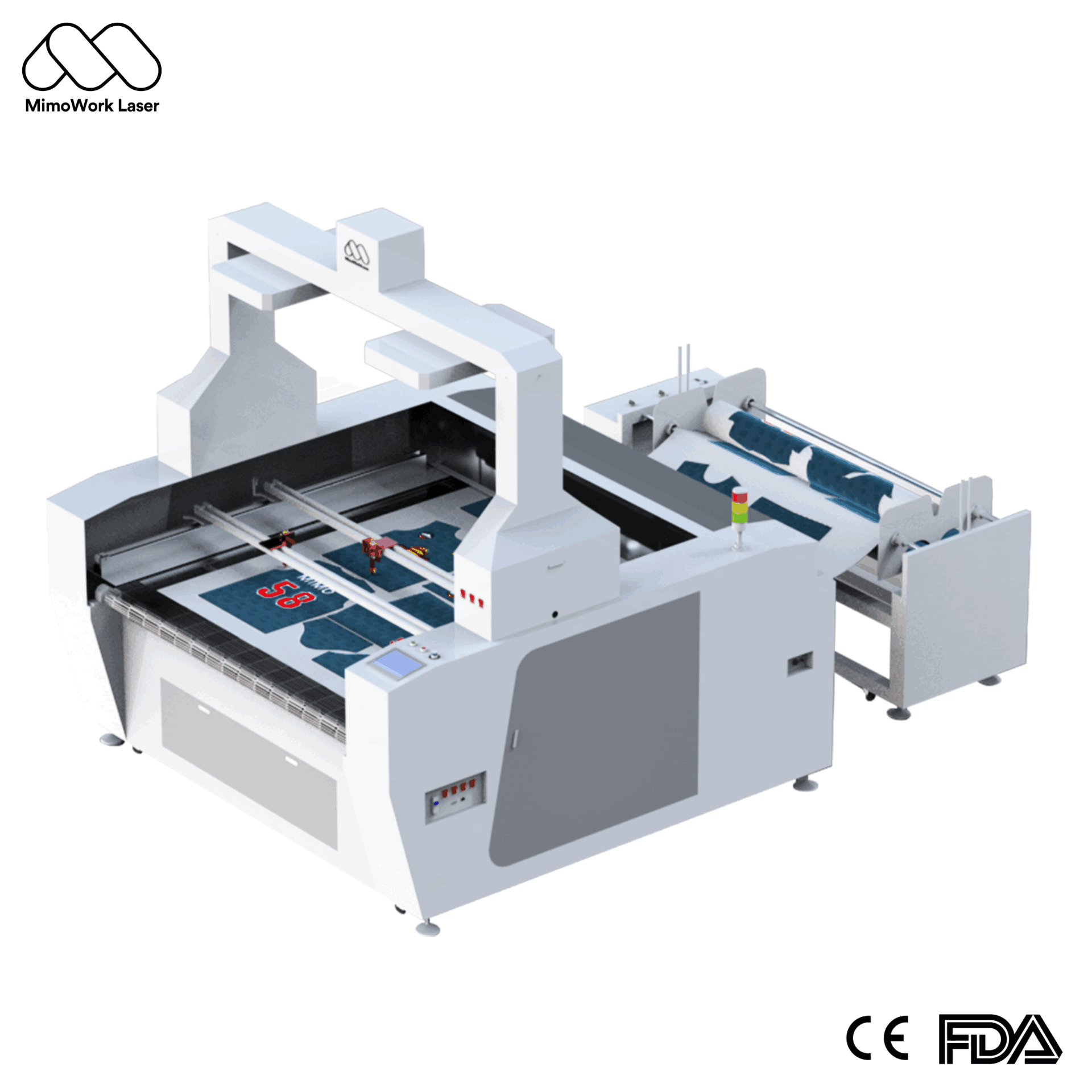
If you’re a manufacturer working with sublimation-printed textiles, you’ve likely faced a frustrating challenge: how do you cut these colorful, detail-rich fabrics accurately without ruining the print, distorting the pattern, or wasting expensive material? The answer many professionals are turning to is sublimation fabric laser cutting — a technology that promises cleaner edges, higher precision, and faster production cycles. But is it truly the right solution for your production line?
This guide breaks down everything you need to know — from how laser cutters interact with sublimation fabrics, to what parameters matter most, to how vision-guided systems can eliminate alignment errors at scale.
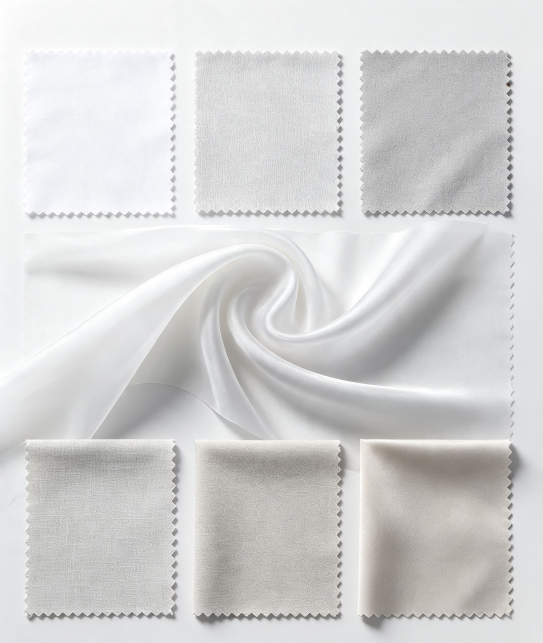
Sublimation fabric refers to textiles — most commonly polyester-based fabrics — that have been printed using dye-sublimation technology. In this process, heat and pressure convert dye from solid to gas, which then permanently bonds into the fiber structure. The result is:
Because the dye becomes part of the fiber itself, any cutting method that generates excessive heat, friction, or mechanical tension risks damaging the print, distorting the image, or fraying the edges.
Before sublimation fabric laser cutting became mainstream, manufacturers relied on several conventional methods — each with notable drawbacks:
Traditional cutting methods create problems that directly affect production quality and efficiency:
| Cutting Method | Edge Quality | Pattern Accuracy | Setup Cost | Speed |
| Manual / Rotary | Low | Poor | Very Low | Slow |
| Die Cutting | Medium | Medium | High | Medium |
| Knife Cutter | Medium | Medium-Low | Medium | Fast |
| Laser Cutting | High | Excellent | Medium | Very Fast |
The table above illustrates why more manufacturers are evaluating laser-based alternatives for their sublimation fabric operations.
The short answer is yes — and with the right laser system, the results are exceptional. CO2 lasers are particularly well-suited to cutting polyester-based sublimation fabrics because:
The key is matching the correct laser type, power range, and cutting parameters to your specific fabric weight and composition.
To better understand the laser cutting process, watch the following demonstration showing how sublimation fabrics are cut with a laser system, including the cutting process, edge quality, and overall performance.
Both CO2 flatbed lasers and galvo (galvanometer) laser systems can process sublimation fabrics, but they serve different production needs:
A CO2 flatbed laser cutter provides large-format cutting with stable, consistent beam delivery, making it ideal for bulk production of apparel panels, banners, and promotional items. A galvo laser system offers extremely high cutting speeds over smaller areas, which suits mass production of small components.
| Feature | CO2 Flatbed Laser | Galvo Laser |
| Cutting Area | Large (1.2m x 1.8m+) | Small to medium |
| Speed | High | Very High |
| Pattern Registration | Excellent (with vision) | Good |
| Edge Sealing | Yes | Yes |
| Best For | Apparel panels, banners | Small repeated shapes |
For most sublimation fabric laser cutting applications in garment and promotional manufacturing, a CO2 flatbed laser with a vision registration system represents the optimal balance of precision, speed, and versatility.
One of the most compelling benefits of laser cutting polyester sublimation fabric is the quality of the finished edge. Unlike mechanical cutting, the laser beam:
This level of precision is especially critical when cutting sublimation-printed sportswear panels, where the cut must align precisely with the printed design boundary.
High-speed sublimation fabric laser cutting dramatically reduces production cycle times compared to traditional methods:
In high-volume environments, laser systems can improve throughput by 40–70% over equivalent knife-cutting setups, particularly for complex shapes.
Because the laser beam never physically touches the fabric:
This non-contact advantage is particularly valuable when processing lightweight polyester sublimation fabric used in activewear, swimwear, and promotional flags.
Vision-guided laser cutting, also referred to as CCD camera laser cutting for sublimation fabric or optical registration cutting, is a technology where the laser cutter uses a camera system to:
This means even if the fabric has slightly shifted, stretched, or shrunk after printing, the laser will still cut accurately along the correct contour.
Sublimation fabrics present unique alignment challenges that make vision registration not just useful — but essential:
Without a vision system, even a 1–2mm offset between the printed design and the cut path can render an entire batch of sportswear panels unusable. With CCD-based optical registration, this problem is solved automatically at production speed.
The laser system scans registration marks (typically printed corner marks or cross marks), computes the exact transformation needed, and applies the corrected cut path — all within seconds, with no operator intervention required.
Laser cutting for sublimation sportswear is one of the fastest-growing applications in garment manufacturing:
Custom sublimation flag laser cutting represents another major use case:
When evaluating laser cutting systems for sublimation fabric production, manufacturers should assess the following factors:
Based on the requirements of sublimation fabric laser cutting, an ideal machine configuration includes:
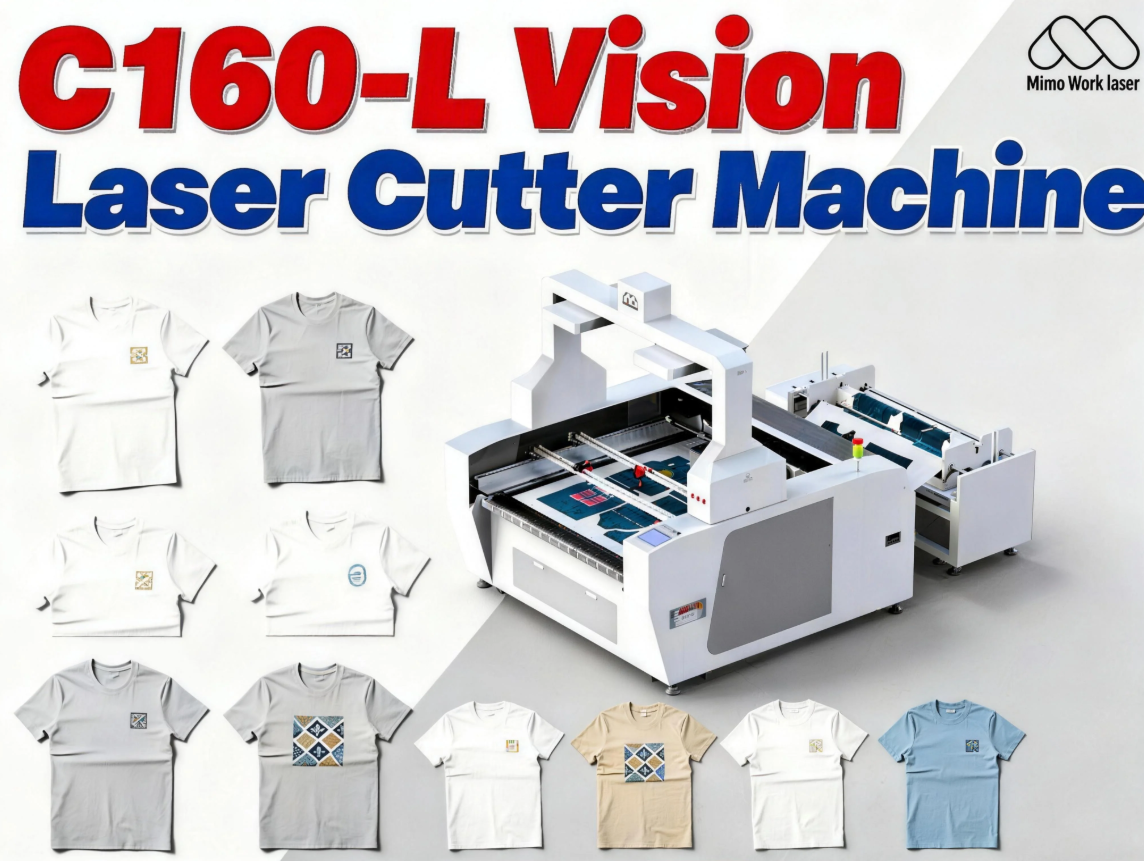
The C160-L Vision Laser Cutter is specifically designed to address these requirements. It integrates a high-resolution CCD vision system with a high-speed CO2 laser platform, enabling accurate print-registered laser cutting for sublimation textiles at production scale. Its conveyor table system supports continuous roll feeding, making it well-suited for apparel, flag, and promotional fabric manufacturers who need reliable, high-throughput sublimation fabric laser cutting capability.
A: When properly configured, laser cutting causes minimal impact on the surrounding print. The key is using the correct power and speed settings to avoid excessive heat accumulation.
A: While a basic laser cutter can cut sublimation fabric by shape, a vision registration system is strongly recommended for print-registered cutting. Sublimation printing involves heat, which causes minor fabric distortion. Without vision correction, even small offsets between the print and cut path will result in misaligned panels. For professional production, CCD camera laser cutting for sublimation fabric is essential.
A: A CO2 laser operating at 10.6μm wavelength is the industry standard for polyester-based sublimation fabrics. This wavelength is efficiently absorbed by synthetic fibers, enabling clean cuts with sealed edges. Fiber lasers are not recommended for textile cutting applications.
A: Yes, multi-layer cutting is possible with CO2 laser systems. However, the total stack thickness and combined material density must be within the laser’s cutting capacity. Thin sublimation fabrics can typically be stacked 3–6 layers. Note that pattern registration between layers must be managed carefully to ensure consistent alignment across all layers.
A: Both methods produce sealed, fray-free edges on polyester fabrics. However, high-speed sublimation fabric laser cutting offers significantly greater design flexibility, as the laser can follow any digital contour without tooling. Ultrasonic cutting requires physical contact tools and is better suited to straight or gently curved cuts. For complex sublimation print contours and high-mix production, laser cutting is the superior choice.
Ready to evaluate whether a vision laser cutting system is right for your sublimation fabric production line? The next step is to request a material cutting test with your actual fabric and print samples — real-world results on your specific materials will tell you far more than any specification sheet.
News | Jul-31-2026
News | Jul-30-2026
News | Jul-9-2026