Blog
In a field that evolves daily, staying ahead means staying informed.
Explore in-depth articles designed to help you solve complex challenges,
maximize your machine’s ROI.
Stay ahead in a competitive market.


In a field that evolves daily, staying ahead means staying informed.
Explore in-depth articles designed to help you solve complex challenges,
maximize your machine’s ROI.
Stay ahead in a competitive market.
News | Sep-1-2026
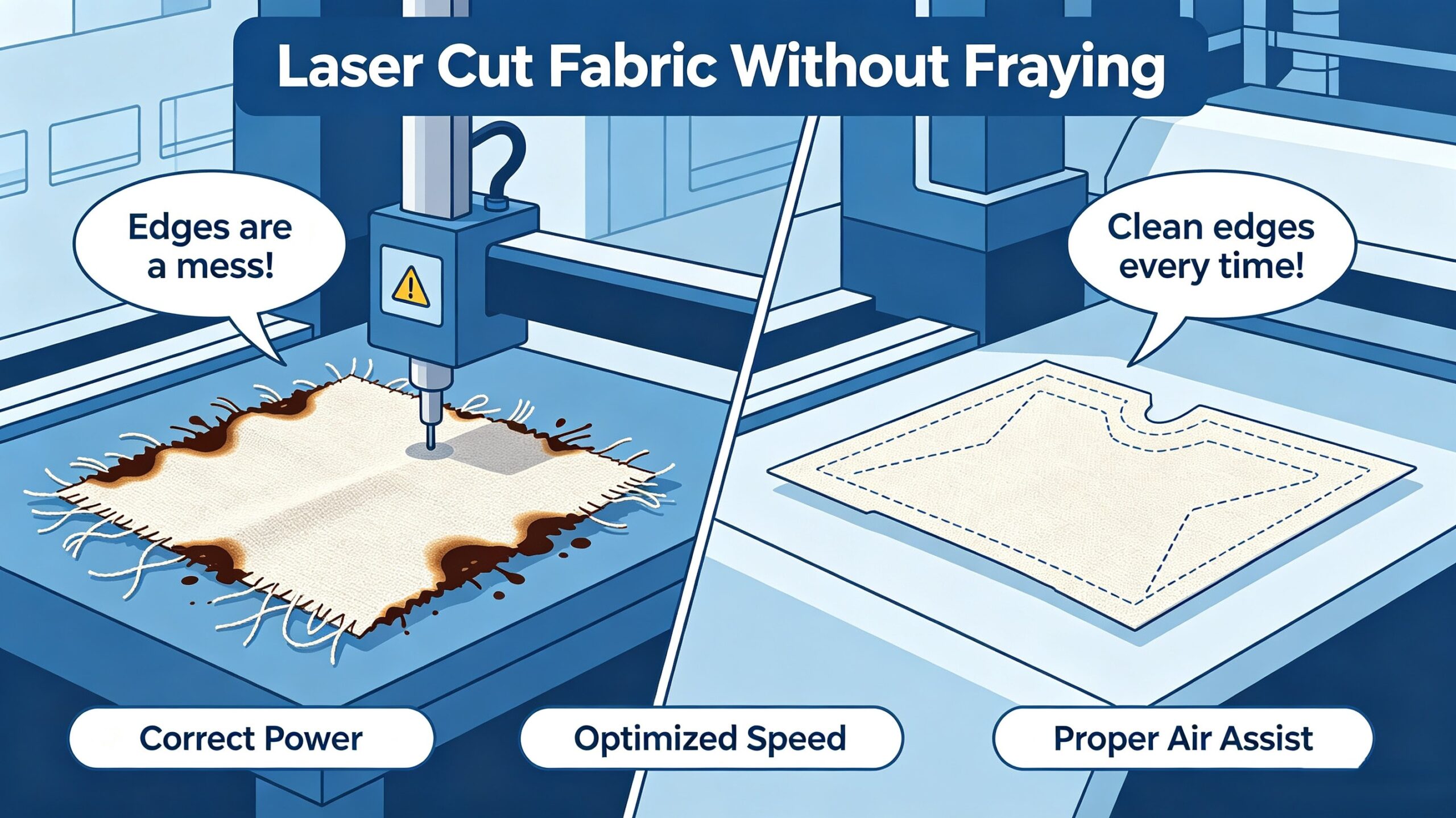
Let’s be honest. You’ve probably been there. You spend hours designing the perfect pattern, carefully lay out your fabric, and hit start on your laser cutter. What comes out? The shape is right, but the edges are a mess. Loose threads everywhere. Or worse—a brown, crispy edge that ruins the whole piece.
Sound familiar?
Fraying and burning are two of the most common headaches when you start cutting fabric with a laser. But here’s the truth: custom laser cut fabric can be absolutely flawless. Clean edges. No burn marks. Professional results every single time.
The key isn’t just having a powerful machine. It’s understanding how to use it for fabric specifically. And that’s exactly what this guide is about. I’ll walk you through everything you need to know to cut fabric without fraying, from the right settings to the practical steps that actually work.
Laser cutting works differently from mechanical cutting methods. Instead of using blades or tools, a focused CO₂ laser beam uses heat energy to cut and separate fabric fibers.
The final edge quality depends on how the material reacts to this thermal process.
Before we fix the problem, we need to understand it. Why does fabric fray or burn in the first place?
Fraying happens when the laser doesn’t fully seal the edge of the fabric as it cuts. Think of it like this: a clean cut with a laser should melt the fibers together just enough to stop them from unraveling. But if the power is too low or the speed is too high, the cut won’t create that sealed edge. The fibers stay loose and start unraveling the moment you touch them.
This is especially common with loosely woven fabrics like cotton or linen. The natural structure of these materials makes them more prone to fraying in the first place.
Burning is the opposite problem. When the laser moves too slowly or the power is too high, the fabric absorbs too much heat. The edges carbonize instead of just melting. You end up with that ugly brown or yellow edge that ruins the look of your project.
Here’s something interesting: different materials react differently to heat. Cotton burns pretty easily if you’re not careful, while polyester can melt too much and harden into a stiff, dark edge. The sweet spot is where the laser does just enough work to seal the edge without pushing it into burn territory.
Burn marks occur when excessive heat accumulates during cutting.
Typical causes include:
Different fabrics respond differently:
| Fabric Type | Laser Cutting Reaction | Common Issue |
| Cotton / Linen | Burns instead of melting | Brown or carbonized edges |
| Polyester / Nylon | Melts and seals edges | Hard or darkened edges |
| Blended Fabrics | Mixed reaction | Requires parameter adjustment |
| Technical Fabrics | Depends on composition | May require higher power |
For many synthetic fabrics, laser cutting provides an advantage because the heat naturally seals the edge and prevents future fraying.
Achieving clean textile cuts requires controlling several important factors.
The most important rule for fabric laser cutting is:
Use enough power to cut through the material, but avoid unnecessary heat buildup.
Unlike thick materials such as wood or acrylic, fabrics usually require:
A slower cutting speed does not always create better results. Excessive exposure time increases heat accumulation and can cause discoloration.
| Fabric Type | Power Level | Speed Level | Cutting Approach |
| Cotton / Linen | Low to medium | High | Minimize heat exposure |
| Polyester / Nylon | Medium | Medium to high | Use edge sealing effect |
| Technical Fabrics | Medium to high | Adjust by thickness | Test before production |
Actual parameters depend on laser power, lens configuration, fabric thickness, and machine structure.
Air assist plays an important role in textile laser cutting.
A controlled airflow helps:
However, excessive airflow can move lightweight fabrics and affect cutting accuracy.
For thin textiles, use moderate airflow. For thicker technical fabrics, stronger airflow may be required.
Fabric movement is one of the most common reasons for inconsistent laser cutting results.
Before cutting:
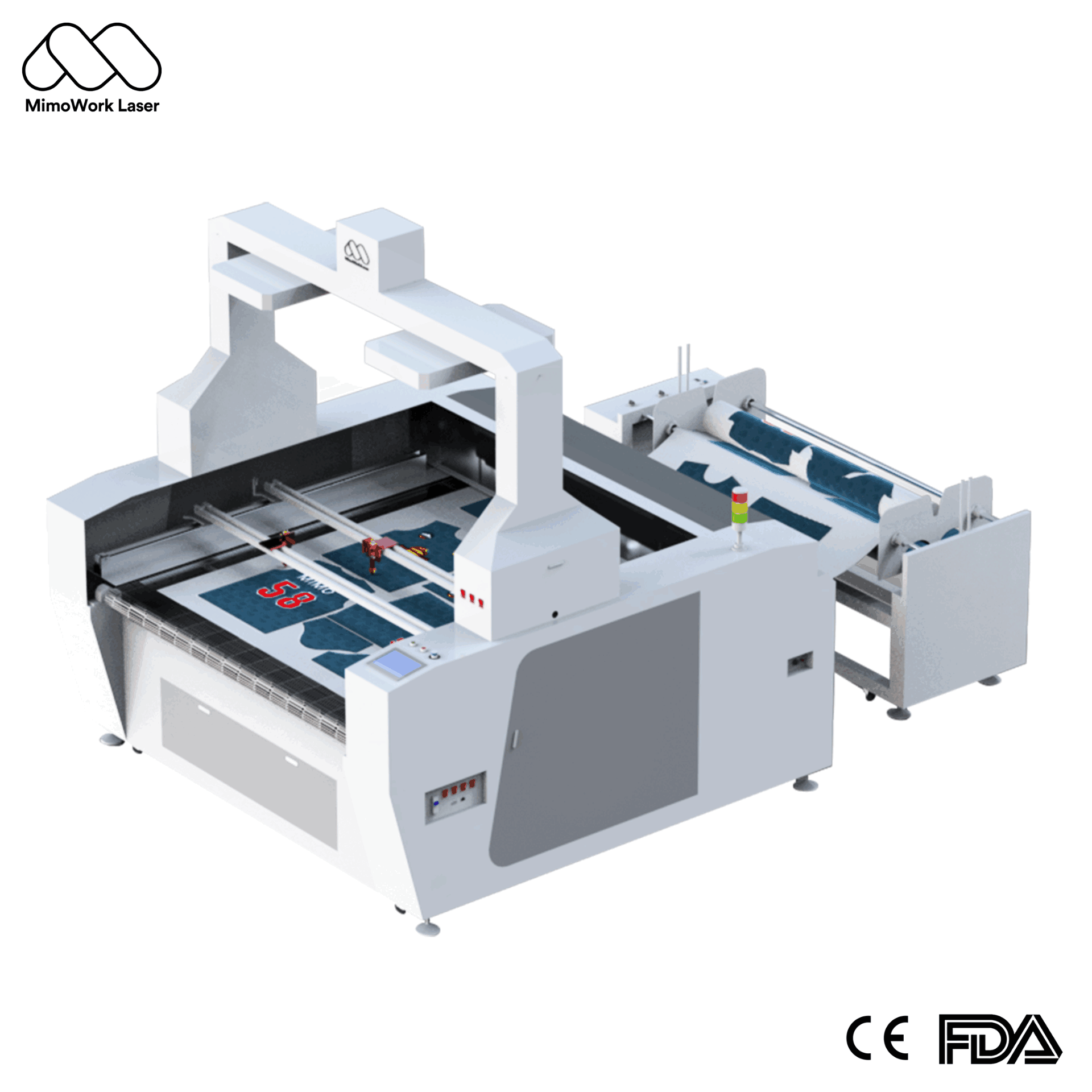
For industrial production, a conveyor working table and automatic feeding system help maintain continuous and accurate fabric positioning.
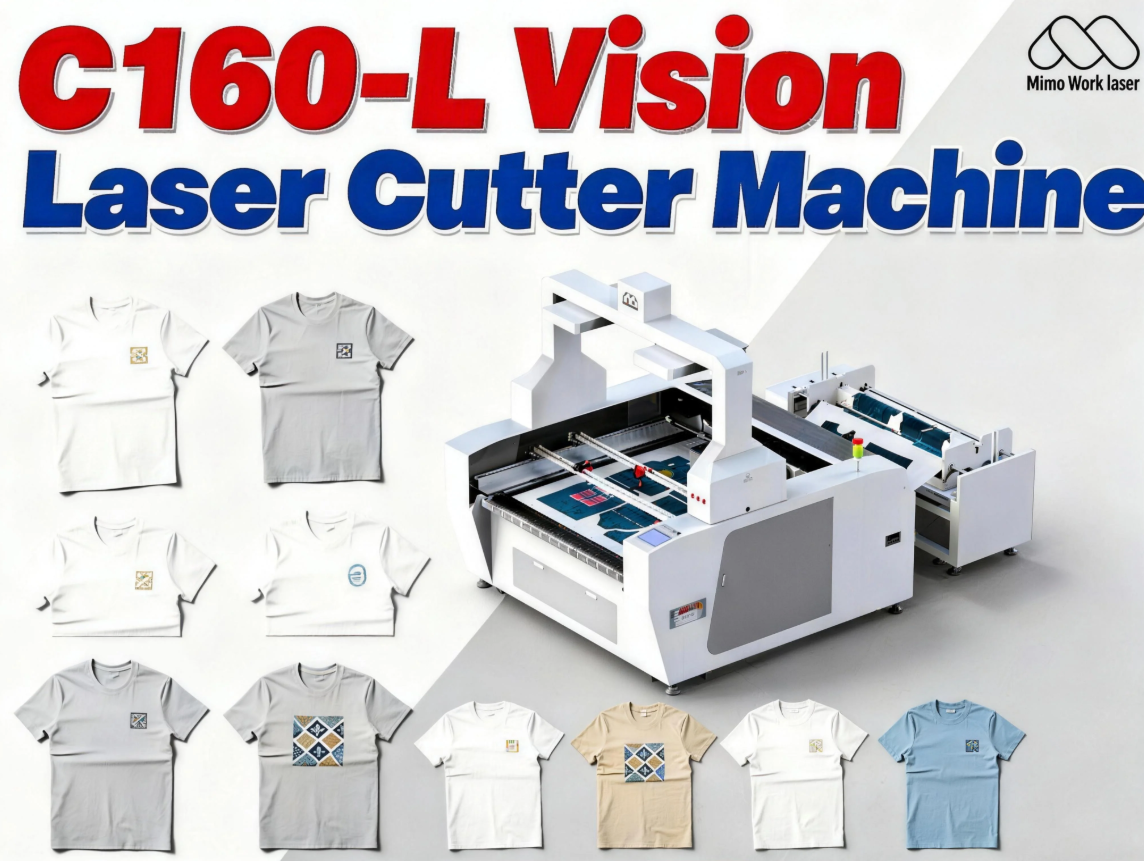
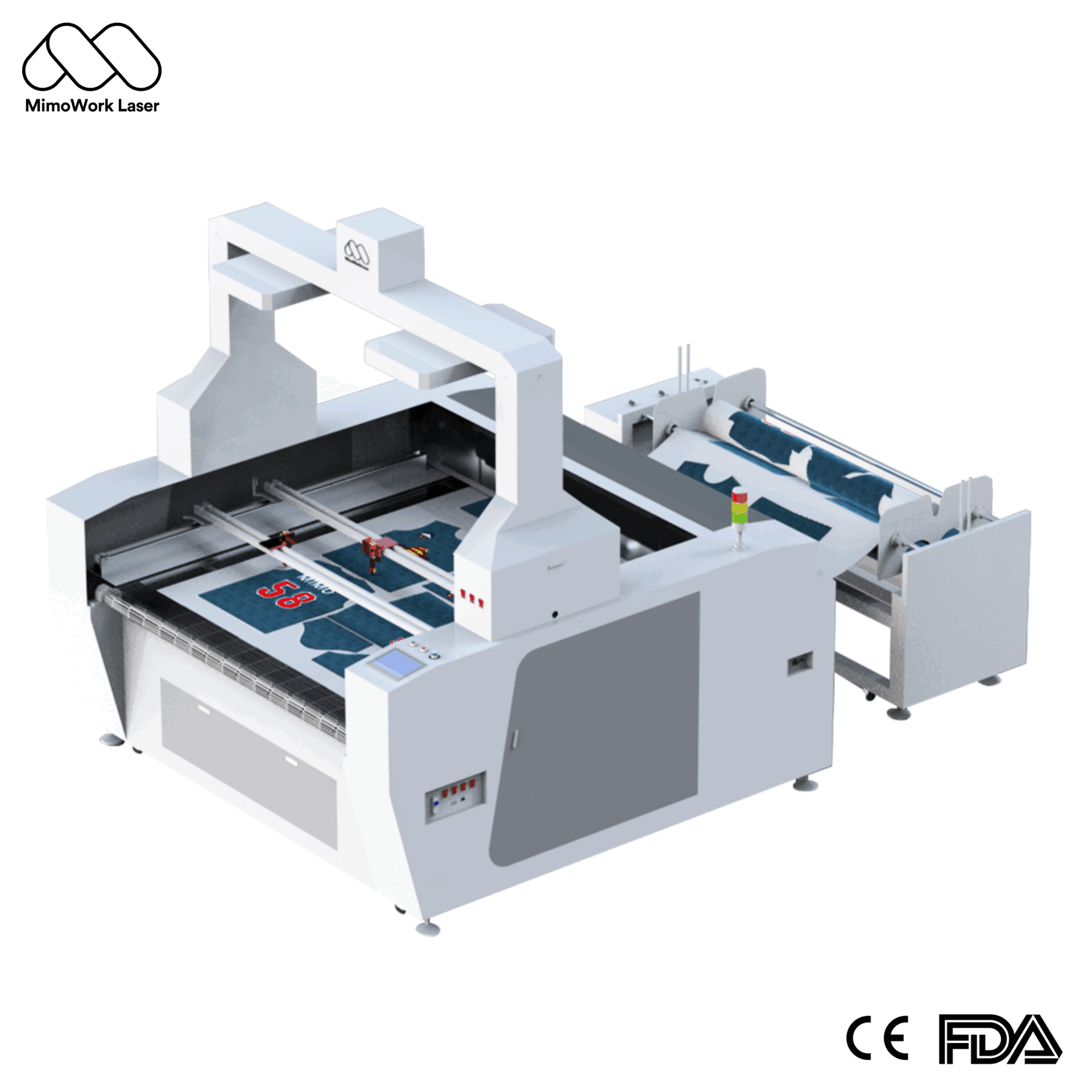
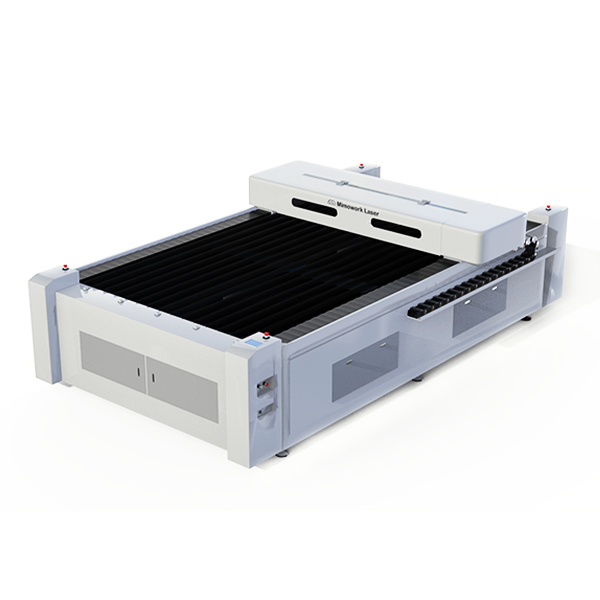
Mimowork textile laser cutting machines are designed for roll-to-roll fabric processing, making them suitable for apparel, upholstery, and technical textile applications.
The cutting surface directly affects edge quality.
A honeycomb working table is commonly used for textile laser cutting because it allows:
For large-scale textile manufacturing, conveyor tables provide additional advantages:
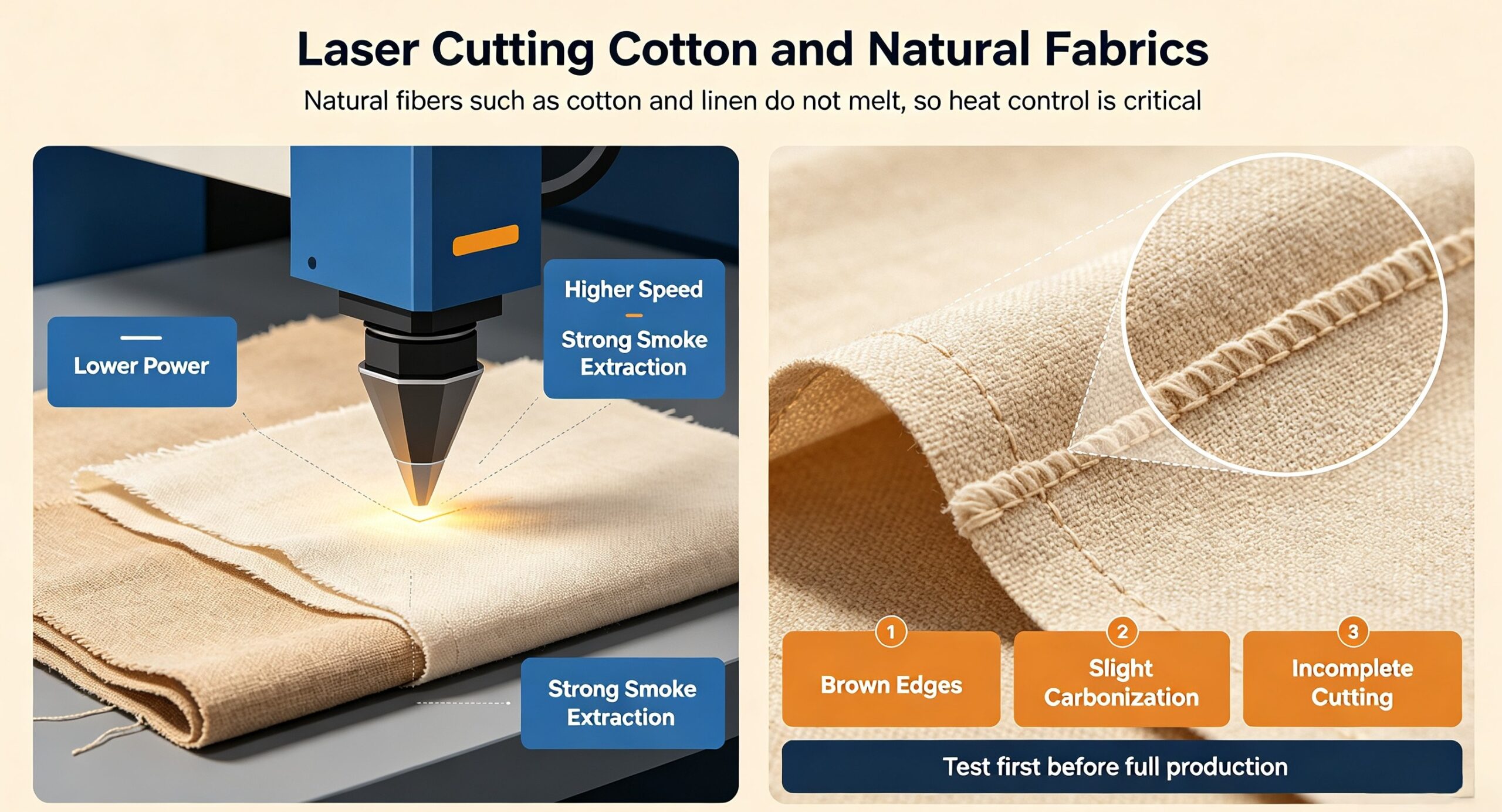
Natural fibers such as cotton and linen require careful heat control because they do not melt.
Recommended approach:
Possible issues:
Testing is recommended before production.
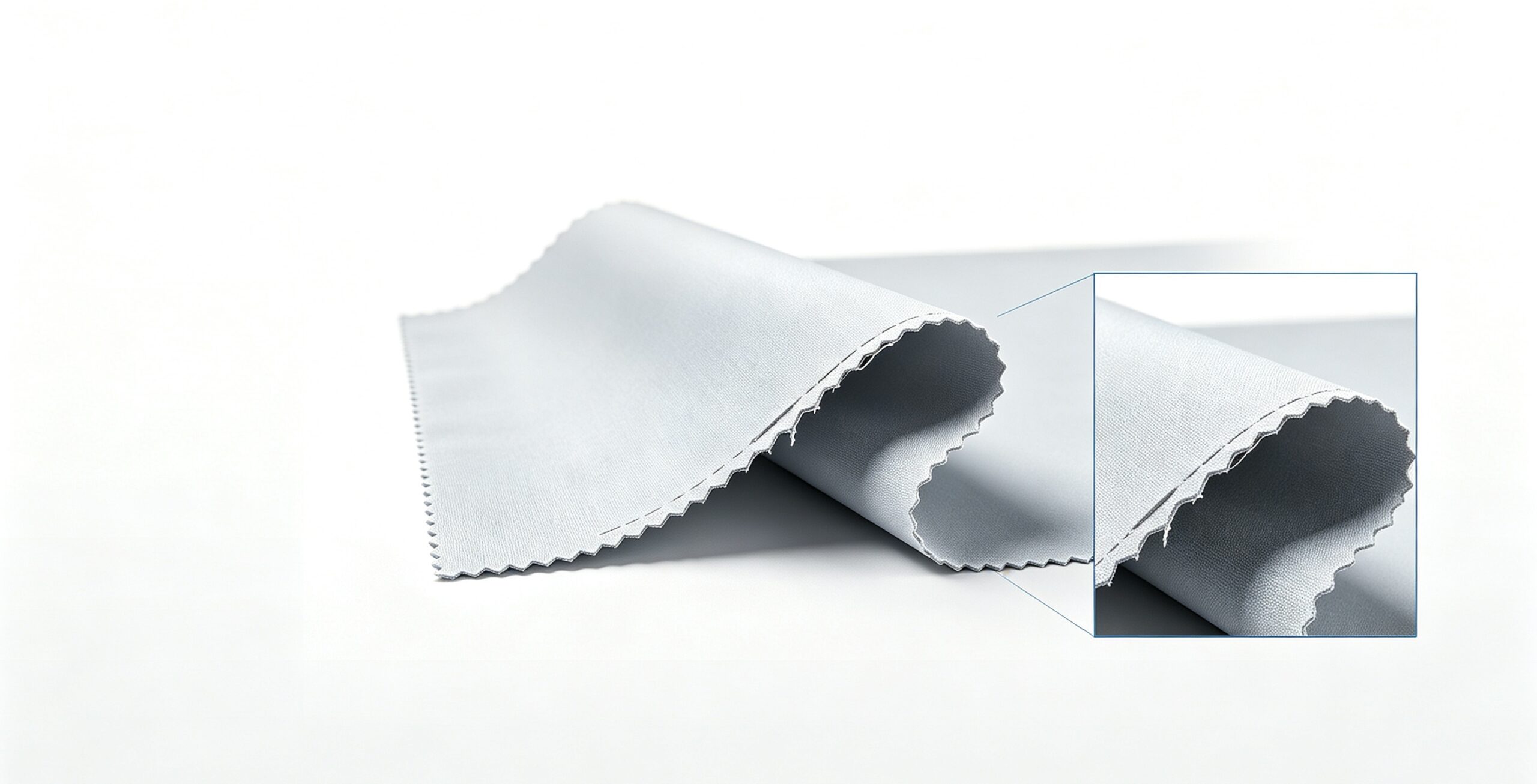
Synthetic fabrics are often ideal for laser cutting because the laser melts and seals the edge.
Applications include:
Common problems:
Solutions:
Materials such as:
may require higher laser power depending on thickness and structure.
For industrial applications, testing is important because fiber composition varies significantly.
Before cutting:
Always test before production.
A simple workflow:
Evaluate:
After confirming settings:
High-quality laser cutting should produce:
A CO₂ laser cutter is widely used for textile processing because fabric materials absorb the 10.6μm wavelength efficiently.
Compared with mechanical cutting methods, laser cutting provides:
| Advantage | Benefit |
| Non-contact cutting | No blade wear or fabric deformation |
| Heat-sealed edges | Reduced fraying on synthetic fabrics |
| High precision | Suitable for complex patterns |
| Digital processing | Easy customization and rapid design changes |
| Automation capability | Suitable for industrial production |
For manufacturers requiring continuous textile processing, an industrial textile laser cutting machine can integrate conveyor systems, automatic feeding, and vision positioning.
Mimowork provides CO₂ laser cutting solutions designed for different textile applications, including:
Key features include:
With the right laser system and optimized parameters, manufacturers can achieve reliable custom laser cut fabric production with clean edges and consistent quality.
Yes. A CO₂ laser cutter can reduce or eliminate fraying by sealing the edges during cutting, especially on synthetic fabrics such as polyester and nylon.
CO₂ laser cutters are commonly used for fabric cutting because textile materials absorb CO₂ laser energy effectively and can be processed with high precision.
Burning usually happens because of excessive heat. Try increasing cutting speed, reducing power, improving air assist, or adjusting focus settings.
For many applications, yes. Laser cutting provides higher precision, cleaner edges, and better flexibility for customized textile production.
Learning how to laser cut fabric without fraying requires balancing laser parameters, fabric characteristics, and machine configuration.
The best results come from combining the correct power and speed settings with proper material handling, air assist, and a suitable textile laser cutting system.
For apparel, technical textiles, and industrial fabric applications, a well-configured CO₂ laser cutter can deliver clean, precise, and repeatable cutting performance.
News | Aug-7-2026
News | Jun-17-2026