Blog
In a field that evolves daily, staying ahead means staying informed.
Explore in-depth articles designed to help you solve complex challenges,
maximize your machine’s ROI.
Stay ahead in a competitive market.


In a field that evolves daily, staying ahead means staying informed.
Explore in-depth articles designed to help you solve complex challenges,
maximize your machine’s ROI.
Stay ahead in a competitive market.
News | Aug-31-2026
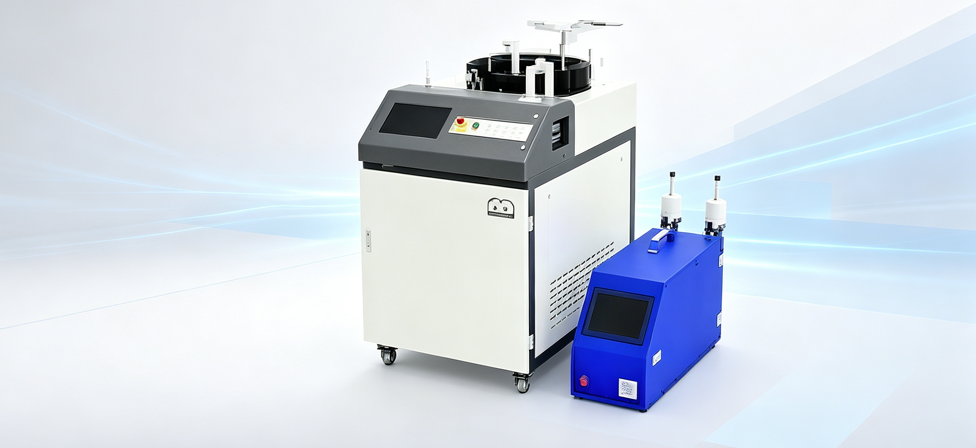
The Short Answer: How Does a 2000W Laser Welder Work?
A 2000W laser welder uses a high-power fiber laser beam to create a concentrated heat source that melts and joins metal parts. The focused energy delivers fast welding speeds, deep penetration, and consistent weld quality for various metal fabrication applications.
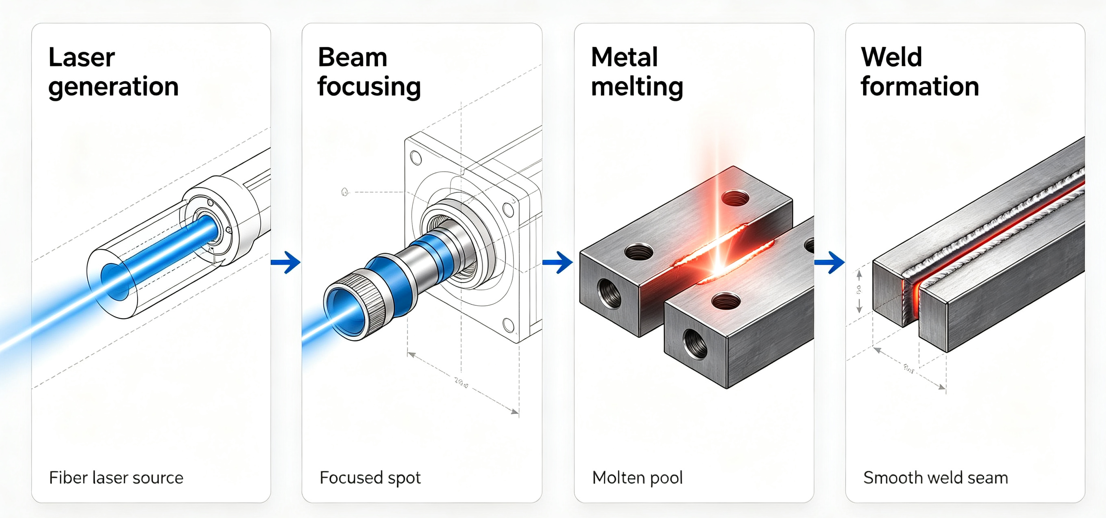
Laser welding uses a focused laser beam to melt and join metal parts with high precision.
A laser beam melts metal by concentrating high energy density into a small area. This allows fast welding with less heat spread and lower risk of material distortion.
Due to its concentrated heat source and precise control, laser welding reduces heat damage, speeds up production, and creates cleaner welds with less finishing work.
A 2000W fiber laser welder can typically weld stainless steel and carbon steel up to around 3mm, depending on joint design and welding conditions.
In practical production, welding thickness is affected by several factors, including:
For reference, a 2000W laser welding system can commonly process:
| Material | Typical Welding Capability |
| Stainless Steel | Around 3mm |
| Carbon Steel | Around 3mm |
| Aluminum | Around 2.5mm (application dependent) |
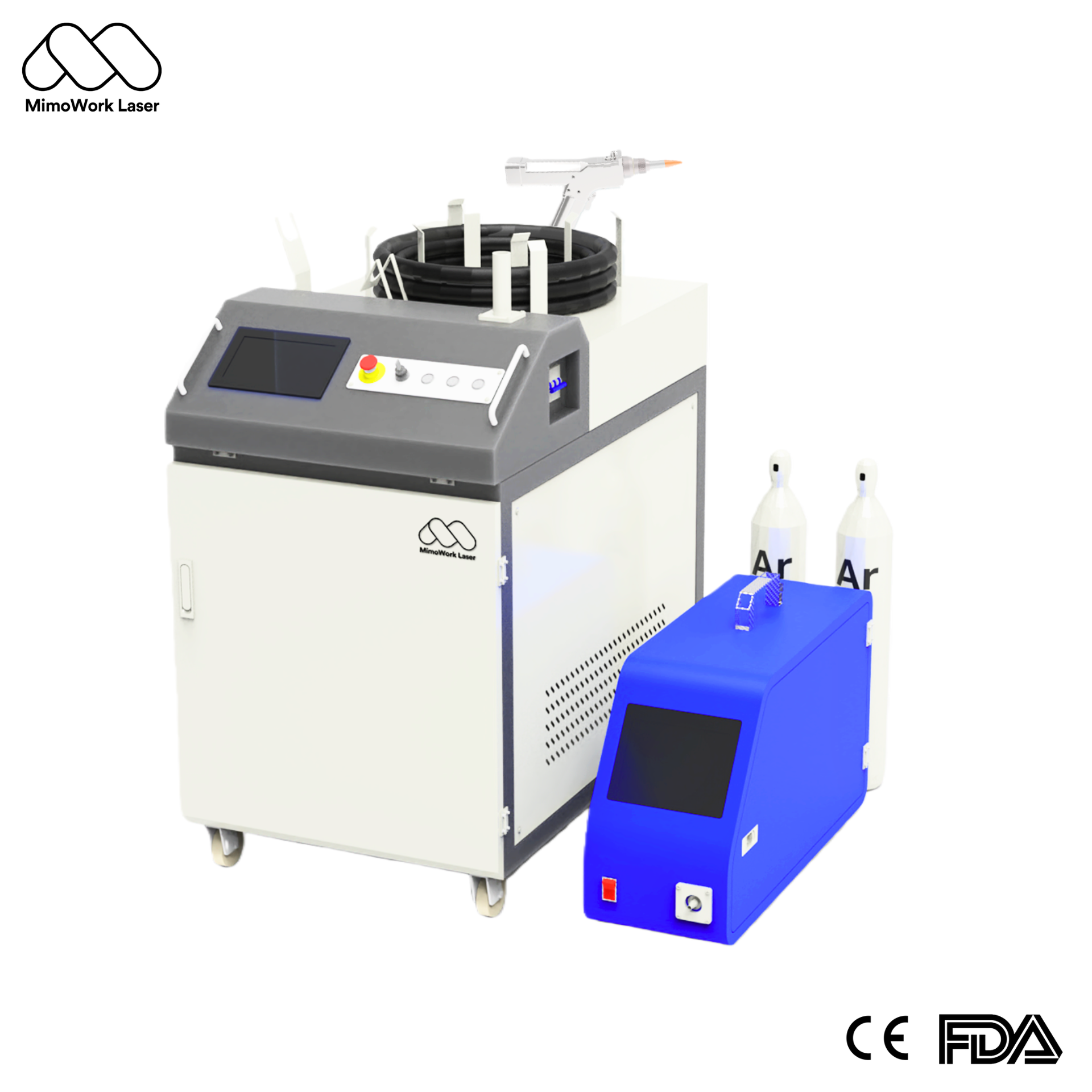
MimoWork’s 2000W fiber laser welding machine is designed for metal fabrication applications including stainless steel, carbon steel, and galvanized sheets. It uses a 1064nm fiber laser source and supports welding speeds up to 120 mm/s depending on materials and settings.
A higher power level does not simply mean welding thicker materials. For many manufacturers, the bigger advantage is maintaining stable quality during continuous production.
The right laser power depends on your material thickness, welding frequency, and production goals. A 2000W laser welder is usually the better choice when speed, continuous operation, and higher output become priorities.
| 1000W Laser Welder | 1500W Laser Welder | 2000W Laser Welder | |
| Best for | Light-duty welding | General fabrication | Industrial production |
| Typical Applications | Repairs, thin sheets, small parts | Sheet metal projects, regular fabrication | Metal structures, equipment, continuous welding |
| Main Advantage | Lower investment | Balanced performance | Higher speed and productivity |
| Production Level | Occasional use | Medium workload | High-volume production |
A 2000W laser welder is worth considering when you need:
For manufacturers producing stainless steel equipment, metal enclosures, doors, frames, or industrial components, the additional power can help improve efficiency and reduce overall production costs.
The right choice depends on whether your priority is flexibility, repeatability, or full automation.
A simple way to decide:
Different production environments require different levels of automation.
Handheld laser welders are usually the most flexible option for manufacturers handling different products and welding positions.
Unlike fixed welding systems, handheld equipment allows operators to move around the workpiece and adjust welding angles easily.
It is commonly used for:
MimoWork handheld laser welding machines are designed with flexible fiber cable options, allowing operators to work more conveniently around larger parts.
For businesses that frequently change products, a handheld system can reduce setup time and improve production flexibility.
A 4-axis gantry laser welding machine is a better option when welding paths are repetitive and production consistency is more important than flexibility.
Instead of manually controlling every movement, the CNC system controls the welding path with higher repeatability.
This makes it suitable for:
For manufacturers producing the same products every day, automation can reduce operator differences and improve overall efficiency.
A manipulator robotic laser welder uses a six-axis industrial robot arm combined with a high-power fiber laser system to weld complex 3D parts with high flexibility and repeatability.
Typical applications include:
For manufacturers producing complex metal structures, robotic laser welding can reduce manual workload while improving welding consistency and production efficiency.
The fiber laser source determines the stability, energy output, and overall welding performance of the machine.
A high-quality fiber laser provides:
MimoWork’s 2000W laser welding system uses a 1064nm fiber laser source with M²<1.5 beam quality, supporting stable beam delivery and consistent welding performance.
An automatic wire feeder helps maintain consistent weld quality when additional filler material is needed.
While some thin metal applications can be welded without wire, thicker materials or specific joint designs may require filler wire.
A wire feeding system helps:
This is especially useful for manufacturers working with different joint structures.
An industrial cooling system helps maintain stable machine performance during long working hours.
Laser welding generates heat during operation, and effective temperature control protects key components.
A reliable water chiller helps:
A 2000W fiber laser welder is widely used for stainless steel fabrication, structural components, and customized metal products. A laser welding machine for stainless steel fabrication provides fast welding, precise results, and consistent quality for demanding applications.
In sheet metal fabrication, a 2000W laser welder helps produce precise welds with less heat distortion and fewer post-processing steps.
Common applications include:
When weld appearance is important, a 2000W laser welder helps manufacturers achieve smoother welds and reduce additional finishing work.
Typical applications include:
The cleaner weld appearance is especially valuable for visible products, helping manufacturers save time on finishing processes.
Manufacturers of industrial components choose 2000W laser welders for their balance of speed, precision, and repeatability.
Common applications include:
For companies producing different metal assemblies, a 2000W laser welding system provides stable performance and flexibility across various welding requirements.
Choosing a laser welder is not only about selecting the highest power available. The right machine depends on your materials, production needs, and the way your parts are manufactured.
The best choice starts with understanding your materials, workload, and production process.
Before making a decision, consider three key factors:
Material and Thickness
Make sure the machine matches your common welding applications:
Testing your actual materials is often the most reliable way to confirm whether a 2000W laser welder meets your expectations.
Production Volume and Workflow
Your daily production requirements also determine the right configuration.
Consider:
For flexible jobs with changing products, a handheld laser welder is usually more practical.
For repeated parts with fixed welding paths, a gantry or robotic system may provide better consistency.
Part Shape and Welding Requirements
Different workpieces require different machine structures:
Choosing the right structure can have a bigger impact on productivity than simply increasing laser power.
A 2000W laser welder can typically process around 3mm stainless steel and carbon steel under suitable welding conditions, while aluminum capability depends on alloy type, joint design, and process parameters.
A 2000W laser welding machine is generally easier to operate than traditional welding methods because it reduces the skill requirements for achieving consistent welds.
However, operators still need basic training in machine settings, safety procedures, and material preparation to achieve the best results.
For many sheet metal and fabrication applications, a 2000W fiber laser welder can replace TIG welding by offering faster processing, cleaner welds, and less finishing work.
However, TIG welding may still be preferred for certain specialized applications where specific welding characteristics are required.
A 2000W laser welding machine can be a valuable upgrade for manufacturers looking to improve welding efficiency, reduce labor costs, and achieve more consistent weld quality.
With the right configuration, it can handle a wide range of applications, from stainless steel fabrication and metal structures to industrial components and customized products.
If you are unsure whether a 2000W laser welder matches your materials and production goals, MimoWork can help you evaluate your application with a welding sample test and recommend a suitable solution based on your actual needs.
Send us your material type, thickness, and welding requirements—and our team can help you find the right laser welding system for your production.
News | Aug-19-2026
News | Aug-6-2026