Blog
In a field that evolves daily, staying ahead means staying informed.
Explore in-depth articles designed to help you solve complex challenges,
maximize your machine’s ROI.
Stay ahead in a competitive market.


In a field that evolves daily, staying ahead means staying informed.
Explore in-depth articles designed to help you solve complex challenges,
maximize your machine’s ROI.
Stay ahead in a competitive market.
News | Aug-19-2026
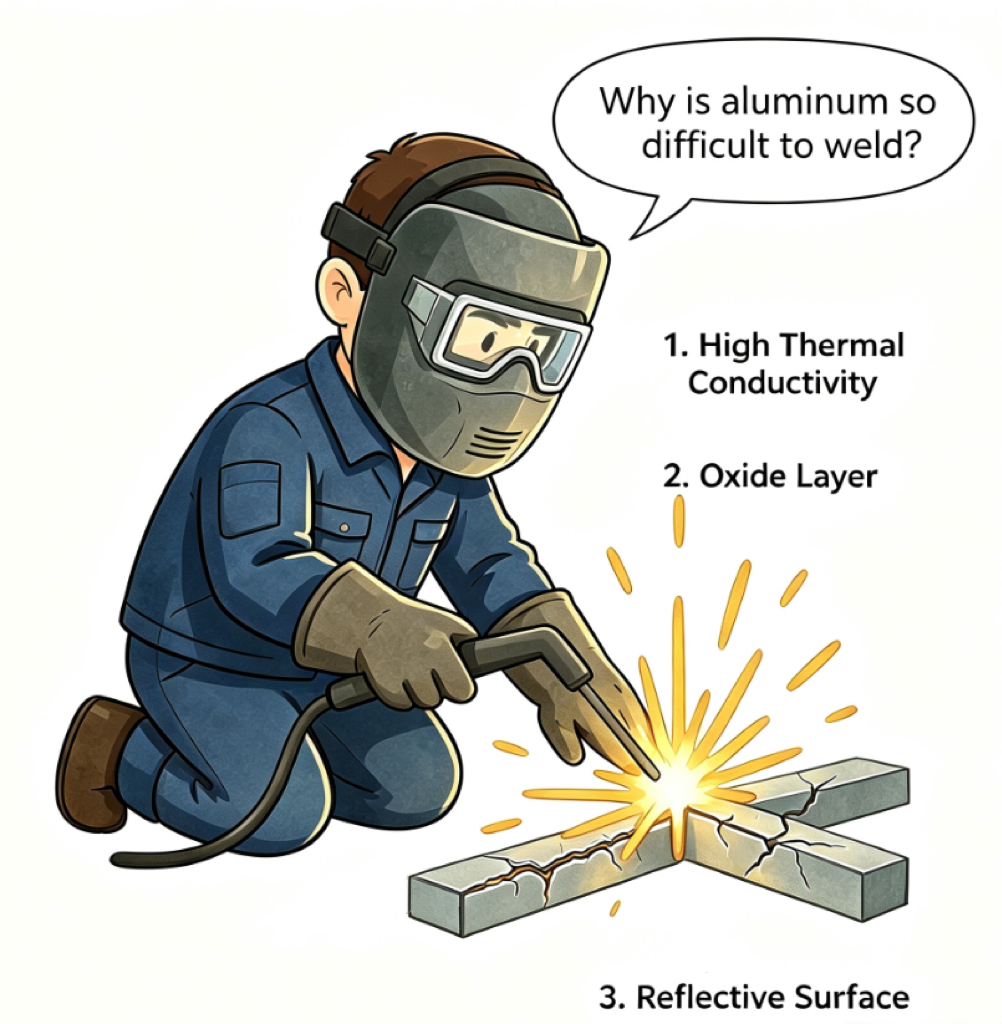
“Why is aluminum so difficult to weld?”
Many manufacturers ask this question when working with aluminum parts.
Unlike steel, aluminum’s high thermal conductivity, oxide layer, and reflective surface make welding more challenging, often causing cracks, distortion, and inconsistent results.
That is why more companies are choosing laser welding for aluminum. Choosing the best laser welding machine for aluminum requires understanding aluminum welding challenges, laser technology advantages, material requirements, and machine selection factors.
Although aluminum is an excellent manufacturing material, its physical properties create several challenges during welding.
Understanding these challenges helps manufacturers choose a welding solution that matches their production needs instead of selecting equipment based only on specifications.
Traditional aluminum welding methods can achieve reliable results, but they often require experienced operators and careful process control.
Aluminum has excellent thermal conductivity, which means heat spreads quickly during welding.
With traditional welding methods, excessive heat may affect surrounding areas and cause:
For manufacturers producing precision aluminum parts, these issues may result in additional correction and finishing work.
Laser welding reduces this challenge by delivering energy into a highly concentrated area. The smaller heat affected zone helps maintain the original shape of aluminum components while improving welding consistency.
Aluminum welding requires precise control of:
Small changes during the welding process can influence weld strength and appearance.
For production environments, inconsistent welding quality can lead to:
A fiber laser welding system provides more stable energy control, helping manufacturers achieve repeatable results across different aluminum projects.
Traditional welding processes may require additional grinding or surface treatment to achieve the desired appearance.
For manufacturers producing visible aluminum products, reducing post-processing is an important factor when choosing welding equipment.
Laser welding creates cleaner weld seams, which can help reduce finishing time and improve overall production efficiency.
| Traditional Aluminum Welding Challenge | Impact on Production |
| High heat input | Higher risk of deformation |
| Manual process control | Less consistent results |
| More finishing work | Increased labor cost |
| Longer welding time | Lower production efficiency |
Before choosing a laser welding machine, manufacturers should understand how aluminum characteristics influence the welding process.
Aluminum transfers heat quickly, making it difficult to maintain a stable welding temperature.
A suitable laser welding machine needs precise energy control to provide enough heat for penetration without damaging surrounding areas.
This is one reason fiber laser technology has become popular for aluminum welding applications. The concentrated laser beam allows manufacturers to control heat more accurately compared with traditional welding methods.
Aluminum has a reflective surface that can affect energy absorption during welding.
A stable fiber laser source helps maintain consistent energy delivery, allowing the welding process to remain more predictable.
For businesses evaluating a laser welding investment, laser source stability is an important factor because it directly affects weld quality and equipment reliability.
Aluminum naturally develops an oxide layer on its surface.
This layer has a higher melting point than aluminum itself and may influence welding penetration.
Proper surface preparation combined with suitable welding parameters helps achieve stronger and cleaner weld results.
Yes. With the correct equipment configuration and welding parameters, laser technology can significantly improve aluminum welding performance.
Many manufacturers are adopting laser welding aluminum solutions because they need faster production, cleaner weld appearance, and better control over heat distortion.
Laser welding uses a focused laser beam to create a controlled molten pool between aluminum materials.
The process works by:
Unlike traditional welding methods that spread heat over a larger area, laser welding focuses energy exactly where it is needed.
For manufacturers, this means:
Fiber laser technology has become a preferred option for aluminum welding because it provides the combination of precision, speed, and flexibility that modern manufacturers need.
Key advantages include:
The focused laser beam allows operators to control energy input more accurately.
This is especially valuable when working with:
Production efficiency is a major reason business switch to laser welding.
Compared with slower manual welding processes, fiber laser systems can complete welding tasks faster while maintaining consistent quality.
For manufacturers handling different aluminum parts, a handheld laser welder for aluminum provides greater flexibility.
Handheld systems are suitable for:
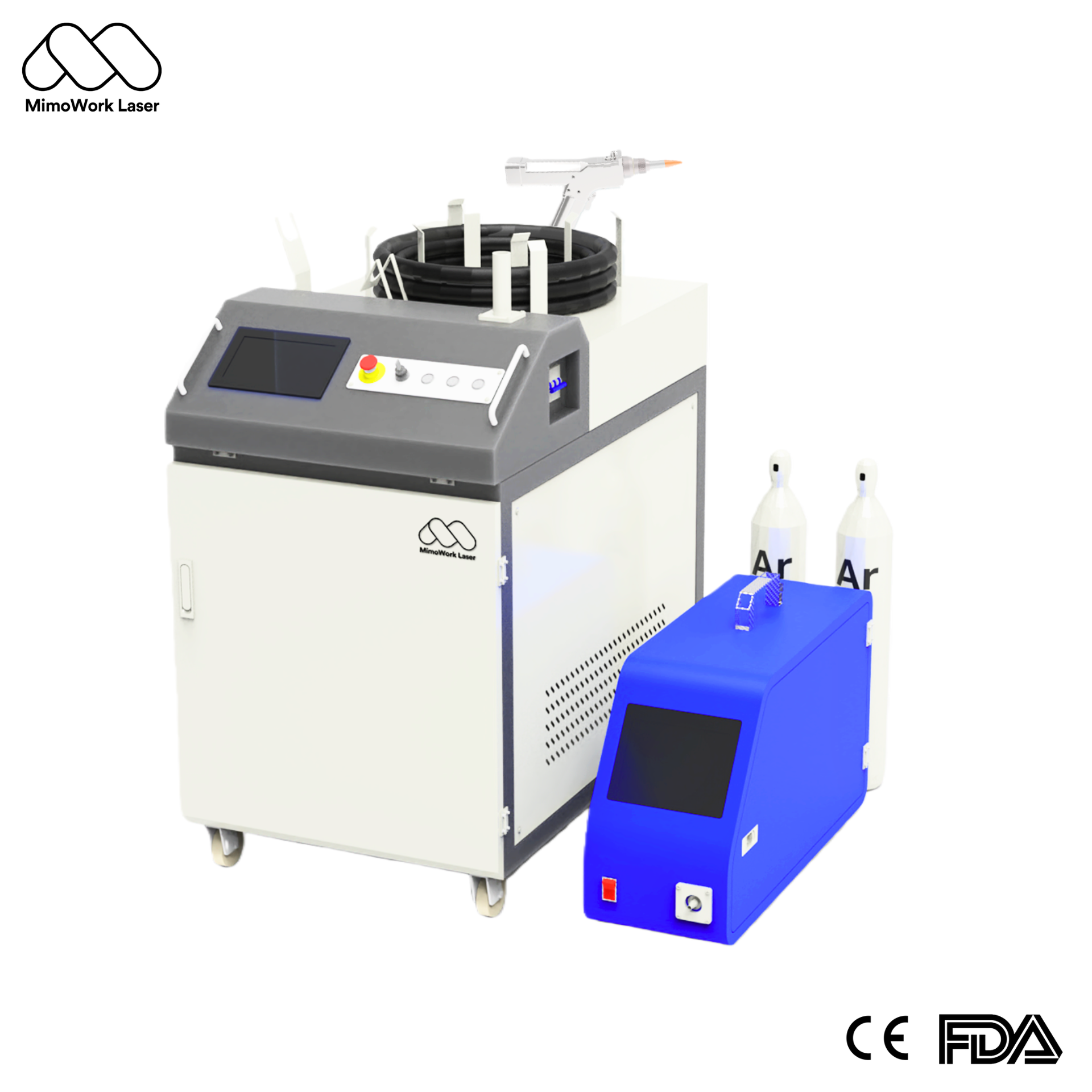
Mimowork’s handheld laser welding solutions are designed for flexible metal fabrication applications, combining fiber laser technology with user-friendly operation. This allows manufacturers to process different metal materials while maintaining welding quality and efficiency.
For manufacturers, the value of a laser welding machine is not only measured by welding performance. The more important question is how the technology can improve daily production.
Compared with traditional welding methods, laser welding aluminum helps businesses achieve better quality control, faster production, and lower post-processing requirements.
One of the biggest advantages of laser welding is precise heat control.
Because the laser beam focuses energy into a small area, it creates a much smaller heat affected zone compared with many traditional welding processes.
For manufacturers, this means:
This advantage is especially important for industries that require accurate aluminum components, where even small deformation can affect assembly and final product performance.
When evaluating a laser welding machine, buyers should consider not only welding power but also how effectively the system controls heat during the welding process.
Appearance and finishing requirements are important factors when choosing aluminum welding equipment.
Traditional welding methods may require additional grinding, polishing, or surface correction after welding. These extra steps increase labor time and production costs.
Laser welding creates a smoother and cleaner weld seam by controlling the energy input more precisely.
The benefits include:
For manufacturers producing aluminum frames, housings, panels, and custom metal components, cleaner weld quality can directly improve production efficiency.
Production efficiency is one of the main reasons manufacturers are investing in laser welding technology.
A suitable laser welding machine can help reduce production time through:
Compared with traditional welding methods that rely heavily on operator experience, laser welding systems provide more consistent results with controlled parameters.
| Production Factor | Traditional Welding | Laser Welding Aluminum |
| Welding speed | Usually slower | Faster processing |
| Heat control | More difficult | More precise |
| Weld appearance | More finishing needed | Cleaner weld seam |
| Production consistency | Depends on operator skill | More stable results |
| Post-processing | More required | Reduced workload |
For businesses looking to increase production capacity without significantly increasing labor requirements, laser welding can provide a practical upgrade path.
Before purchasing a laser welding machine, manufacturers should understand whether their materials and applications are suitable.
In most cases, laser welding can be used for a wide range of aluminum components, including sheets, frames, and fabricated parts.
However, the best welding results depend on:
Laser welding is commonly used for aluminum components that require precision and a clean finish.
Typical applications include:
Used in:
Laser welding helps reduce deformation when working with thinner aluminum materials.
Aluminum frames are widely used in industrial equipment and structural applications.
Laser welding provides:
For custom fabricated aluminum parts, flexibility is often more important than maximum welding speed.
A handheld laser welder for aluminum allows operators to work with different shapes and positions, making it suitable for custom manufacturing environments.
Mimowork’s handheld laser welding solutions are designed for manufacturers who need a flexible welding method for various metal fabrication tasks. The system combines portability with fiber laser performance, helping businesses handle different welding applications more efficiently.
The demand for aluminum laser welding continues to grow as industries require lighter materials, better production efficiency, and improved product quality.
The automotive and transportation industries increasingly use aluminum to reduce weight while maintaining strength.
Laser welding is suitable for:
For these applications, welding consistency is critical because production involves repeated manufacturing processes.
A stable laser welding system helps manufacturers maintain quality while improving production efficiency.
Metal fabrication companies often work with different aluminum components and require equipment that can adapt to various projects.
Laser welding is used for:
For businesses handling different product types, flexibility is an important factor.
A handheld laser welding machine provides easier operation and greater adaptability compared with fixed welding systems.
Aluminum is commonly used for electronic housings and precision components because of its lightweight structure and heat management properties.
Laser welding helps manufacturers achieve:
For precision manufacturing, controlling heat input is especially important because excessive heat may affect sensitive components.
When manufacturers compare welding solutions, the decision is usually not only about welding capability. The real question is which method provides better value for their production goals.
Both laser welding and TIG welding can be used for aluminum. However, they offer different advantages depending on production requirements.
TIG welding remains a common choice for many aluminum applications, especially when flexibility and manual control are the main priorities.
However, manufacturers who need faster production, cleaner weld appearance, and more consistent results are increasingly considering laser welding technology.
The main difference between laser welding and TIG welding is the way heat is delivered.
TIG welding uses an electric arc to generate heat, while laser welding uses a concentrated laser beam to create a controlled welding area.
For manufacturers, this difference directly affects production efficiency, finishing requirements, and weld consistency.
| Comparison Factor | Laser Welding Aluminum | TIG Welding Aluminum |
| Heat input | More concentrated and controlled | Higher heat spread |
| Heat affected zone | Smaller | Larger |
| Welding speed | Faster for many production tasks | Generally slower |
| Weld appearance | Smooth and clean | More finishing may be required |
| Production consistency | Easier to standardize | More dependent on operator skill |
For businesses producing aluminum parts regularly, laser welding can provide a stronger return on investment because it reduces production bottlenecks.
The goal is not to replace every welding method, but to choose the right technology for the application.
For example:
Precision aluminum components may benefit from lower heat input.
Custom repair work may benefit from a flexible handheld solution.
High-volume repetitive production may require automated laser welding.
The shift toward laser welding is driven by the need for faster, more consistent production.
A modern laser welding machine for aluminum helps manufacturers reduce welding time, lower finishing costs, and handle various aluminum components with better heat control and process stability.
Key benefits include:
Higher Efficiency: Faster welding speeds improve overall productivity.
Less Rework: Cleaner welds reduce grinding and correction after welding.
Consistent Quality: Stable laser output ensures repeatable weld results.
Selecting the right machine depends on how your business uses aluminum.
A small fabrication shop, repair workshop, and automated production line will have different requirements.
Mimowork provides different laser welding solutions designed around these application needs.
For workshops, fabricators, and manufacturers processing different aluminum parts, a handheld laser welding machine is often the most flexible solution.
Mimowork Handheld Laser Welding Machine is designed for aluminum, stainless steel, carbon steel, and other metal welding applications. It uses a fiber laser source with 1000W–1500W power options, providing a balance between welding capability and operational flexibility.
| Specification | Handheld Laser Welding Machine |
| Laser power | 1000W / 1500W |
| Laser type | Fiber laser |
| Laser wavelength | 1064nm |
Want to master your handheld laser welder faster? Watch this video to explore the essential settings, software operation, and practical tips for achieving high-quality welds across different materials.
Laser power selection is one of the most important purchasing decisions.
A higher wattage machine is not always better. The correct choice depends on the aluminum thickness you process most often.
For reference:
| Laser Power | Recommended Aluminum Welding Thickness |
| 500W | Not suitable for aluminum welding |
| 1000W | Around 1.2mm aluminum |
| 1500W | Around 1.5mm aluminum |
For many small and medium manufacturers, a 1000W or 1500W handheld laser welder for aluminum provides enough capability for common aluminum fabrication tasks.
A 1000W system can be suitable for thinner aluminum sheets, while a 1500W configuration offers additional welding capacity for manufacturers who need more flexibility.
Yes. Fiber laser welders can process aluminum and aluminum alloys when the correct power level and welding parameters are selected.
A suitable fiber laser system provides controlled heat input, helping manufacturers achieve cleaner welds with reduced deformation.
The required power depends on aluminum thickness and production requirements.
For many general aluminum fabrication applications, 1000W-1500W handheld laser welding systems provide a practical solution. Thicker materials or specialized applications may require higher power configurations.
The achievable aluminum thickness depends on:
Manufacturers should test their specific materials before selecting final equipment.
For many production applications, laser welding provides advantages in speed, heat control, and weld appearance.
However, the best choice depends on whether your priority is flexibility, automation, production speed, or precision.
Yes.
A handheld laser welder is suitable for aluminum fabrication because it offers flexibility, easy operation, and good welding control.
It is especially useful for manufacturers handling custom projects, repairs, and small-to-medium production.
Not sure which laser welding machine is right for your aluminum application?
Feel free to share your application details with our team. We will help you explore a suitable laser welding solution based on your needs.
News | Aug-7-2026
News | Jun-30-2026
News | Apr-16-2026