Blog
In a field that evolves daily, staying ahead means staying informed.
Explore in-depth articles designed to help you solve complex challenges,
maximize your machine’s ROI.
Stay ahead in a competitive market.


In a field that evolves daily, staying ahead means staying informed.
Explore in-depth articles designed to help you solve complex challenges,
maximize your machine’s ROI.
Stay ahead in a competitive market.
News | Jun-30-2026
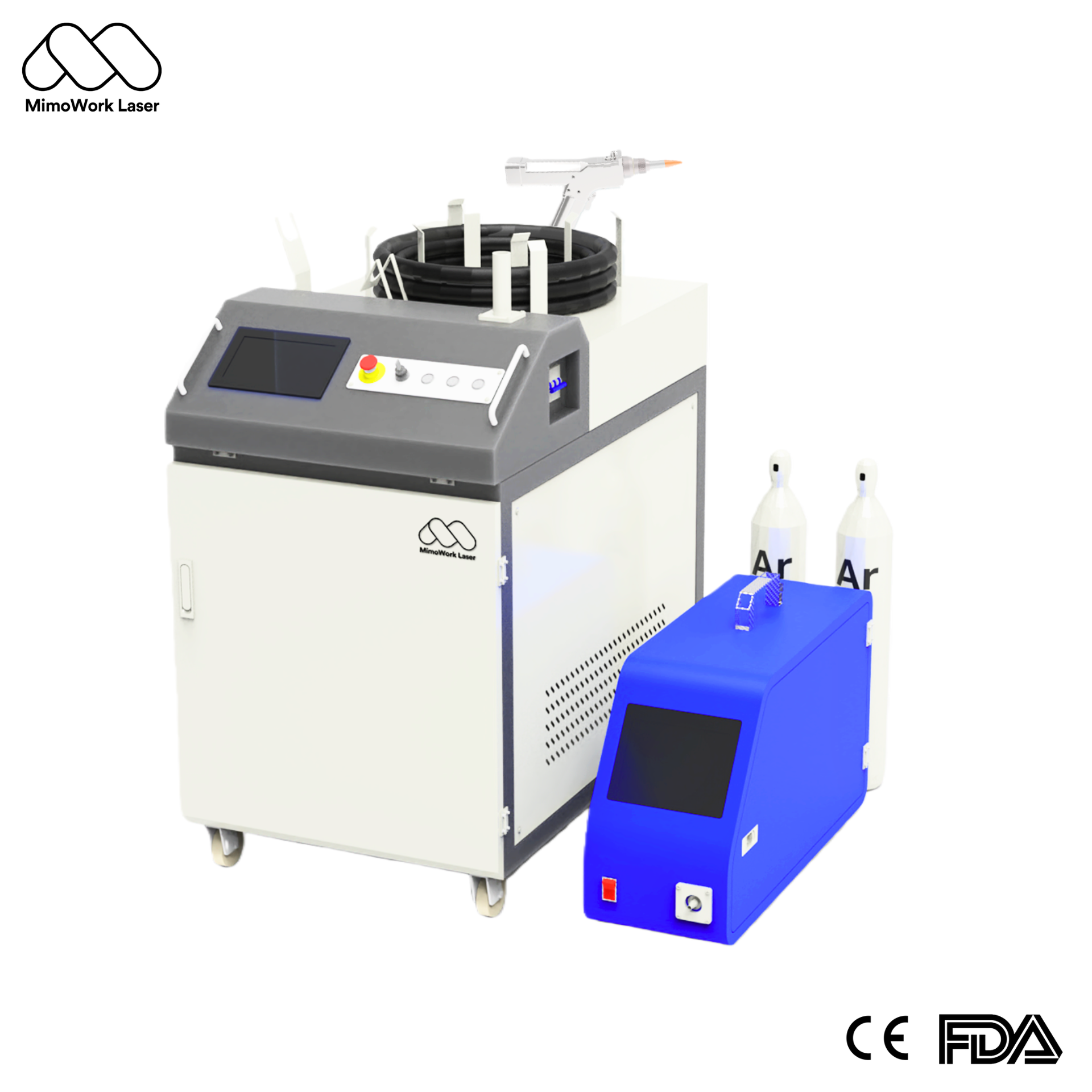
Modern metal fabrication demands speed, precision, and cost efficiency — three qualities that a professional laser welding machine delivers better than almost any other joining technology. Whether you run a sheet metal workshop, a jewelry studio, or a large-scale manufacturing plant, laser welding has transformed how industries approach metal joining, repair, and production.
This guide covers everything you need to know about laser welding machines: how they work, which types suit different applications, how to choose the right power level, and what operational best practices lead to the cleanest, strongest welds.
A laser welding machine uses a concentrated, high-energy laser beam to melt and fuse metal surfaces together. Unlike traditional welding methods that rely on electrical arcs, flames, or friction, laser welding delivers energy in an extremely focused spot — resulting in deep, narrow welds with a minimal heat-affected zone.
When the laser beam strikes the metal surface, the material rapidly absorbs the energy, melts, and in high-power applications, partially vaporizes. This vaporization creates a keyhole — a narrow, deep cavity that allows the laser to penetrate far below the surface. As the beam moves along the weld path, molten metal flows around and behind the keyhole and solidifies into a clean, strong weld joint.
The fiber laser source converts electrical energy into a 1064nm wavelength laser beam, which is then delivered through a fiber optic cable to the welding gun head. This delivery method makes the system compact, efficient, and highly flexible for handheld or automated applications.
Choosing between laser welding and arc welding depends on your production goals, material types, and required finish quality. The table below summarizes the most critical differences:
| Comparison Factor | Laser Welding Machine | Traditional Arc Welding |
| Welding Speed | 2–10× faster | Baseline speed |
| Heat-Affected Zone | Very small, minimal distortion | Large, more distortion |
| Weld Finish | Smooth, flat, no porosity | Often requires post-processing |
| Electricity Running Cost | Saves up to 80% vs arc welding | Higher energy consumption |
| Operator Skill Required | Low to moderate | High skill required |
| Post-Weld Polishing | Rarely needed | Frequently required |
| Material Range | Metals, alloys, dissimilar metals | Primarily common metals |
In practical terms, laser welding produces stronger, flatter joints in less time while significantly reducing labor costs — making it a compelling upgrade for most metal fabrication environments.
The laser welding machine category covers a range of specialized systems, each designed for distinct production contexts. Understanding these types helps you identify the right solution for your application.
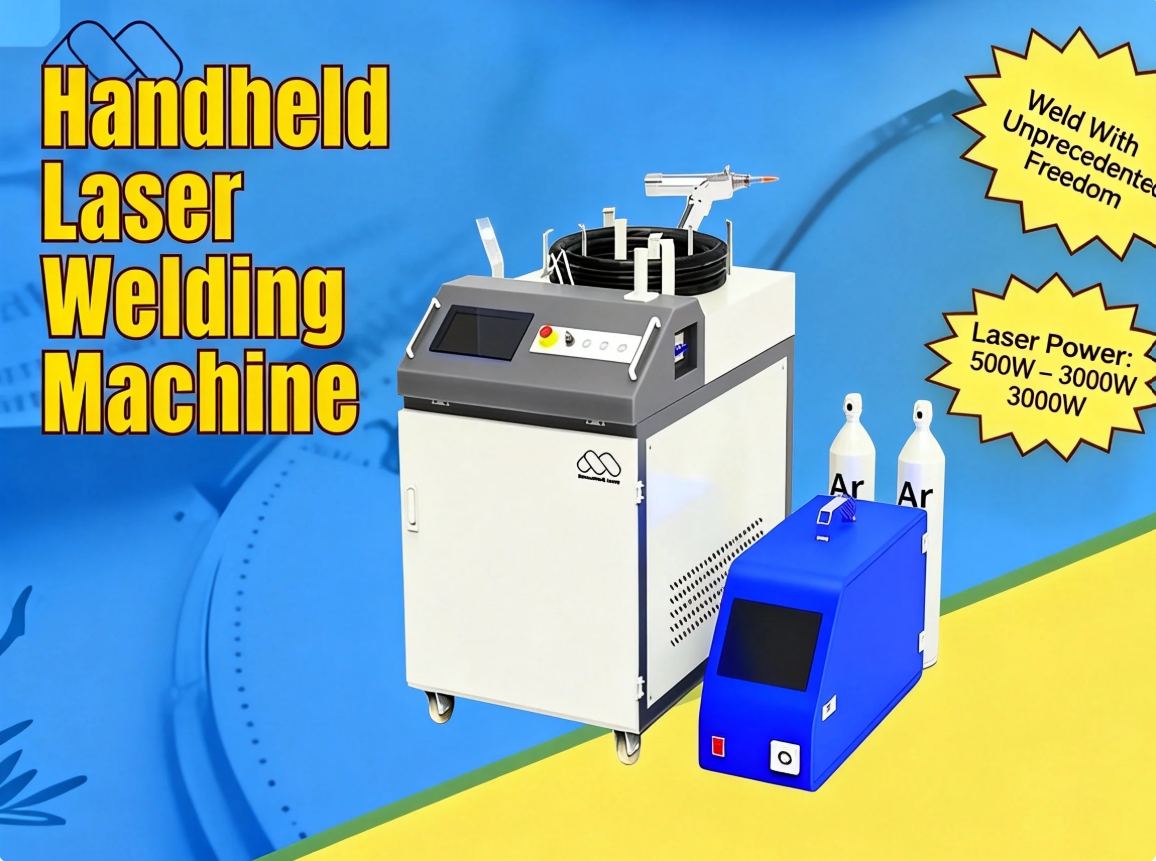
The handheld fiber laser welding machine is the most widely adopted type in modern workshops. Its portable, gun-style design allows operators to move freely around large workpieces — a critical advantage when welding metal billboards, stainless steel cabinets, or large structural sheet metal that cannot be repositioned easily.
Key characteristics of the handheld fiber laser welder include:
This machine type is ideal for maintenance technicians, fabricators, and sheet metal specialists who need portable, versatile performance on the shop floor.
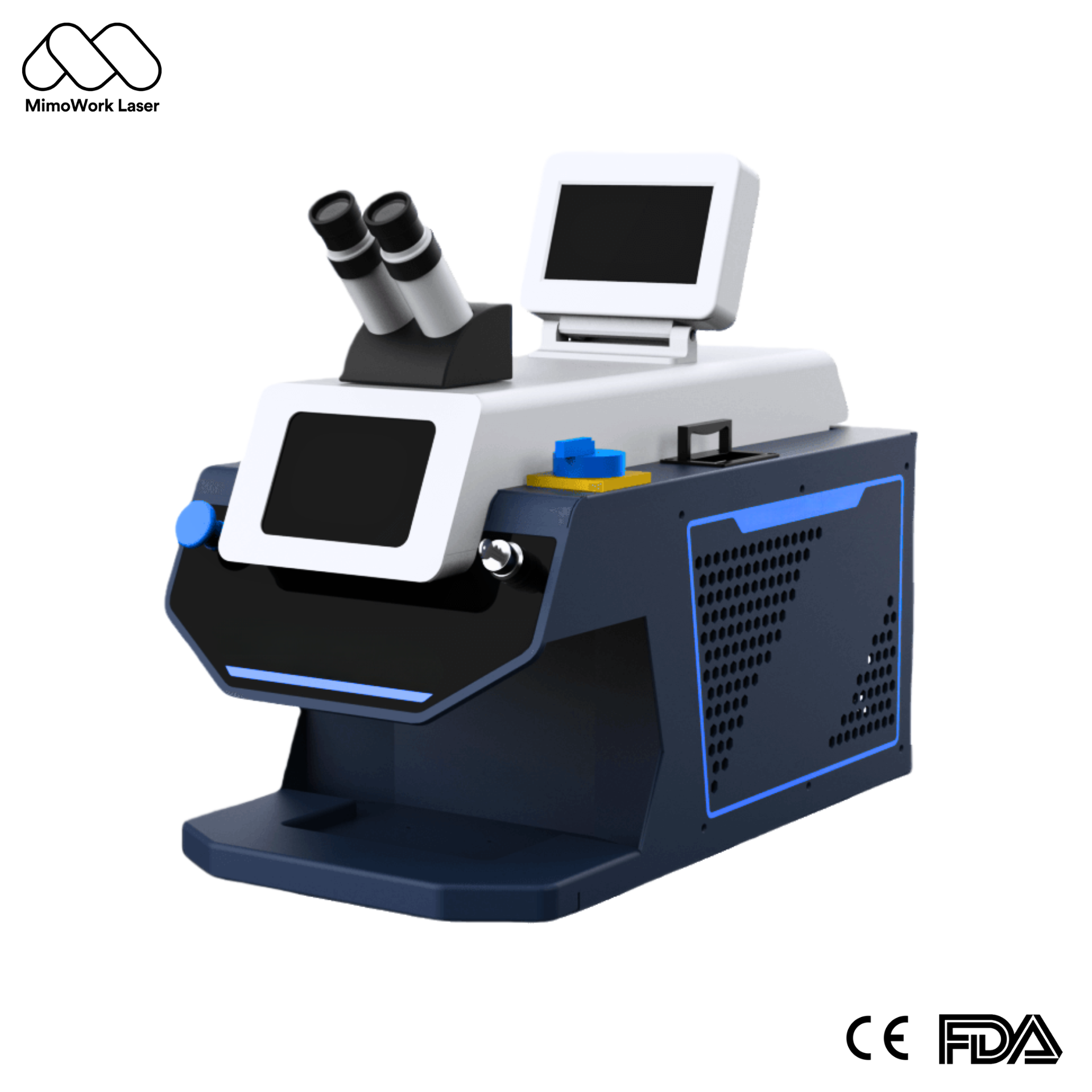
The jewelry laser welding machine is a precision instrument purpose-built for the delicate demands of jewelry manufacturing and repair. It’s fine, controlled pulsed beam performs pinpoint welds on gold, silver, platinum, and other precious metals without affecting adjacent gemstones or intricate filigree work.
Core features include:
Applications in jewelry include prong retipping, chain repair, assembling complex multi-part pieces, and adding micro-details with minimal thermal stress on surrounding materials.
The 3-in-1 laser welding machine integrates three functions — laser cleaning, laser welding, and laser cutting — into a single portable handheld unit. This multifunctional design eliminates the need for three separate machines and allows rapid task-switching on the shop floor without complicated setups or downtime.
The three functions work as follows:
This all-in-one system is particularly effective for automotive repair, metal fabrication, and industrial maintenance, where teams need to perform multiple metalworking tasks efficiently.
A fiber laser welding machine consistently outperforms traditional arc welding in speed. The fast conversion and transmission of laser energy allows the welding gun to travel at significantly higher speeds than conventional methods. In production environments, this translates to 2 to 10 times higher output per shift compared to traditional arc welding — without sacrificing joint quality.
For large-format applications, flexible welding angles from the handheld gun and accurate laser positioning further reduce cycle times and the need for fixture repositioning.
Laser welding produces results that are difficult or impossible to achieve with arc or MIG welding:
The economic case for laser welding machines is compelling over the long term. Compared to arc welding, a fiber laser welder saves approximately 80% on electricity costs, because the laser energy is delivered precisely to the weld spot rather than being dissipated as broad heat. Additionally, the elimination of post-weld polishing, rework, and tool replacement reduces labor costs substantially. The fiber laser source itself has an average lifespan of 100,000 working hours, requiring minimal maintenance over its operational life.
A professional laser welding machine offers broad material compatibility, making it suitable for a wide range of industrial and commercial metalworking tasks. Compatible metals include:
For high heat conductivity materials such as copper and aluminum, the focused, precise laser output makes it possible to complete the weld in a short time window without overheating the surrounding area.
The versatility of laser welding machines supports a broad spectrum of industries:
| Industry | Typical Laser Welding Applications |
| Metal Fabrication & Sheet Metal | Cabinets, structural panels, enclosures |
| Automotive | Component welding, body repair, galvanized sheet |
| Jewelry Manufacturing | Prong repair, chain assembly, precious metal joining |
| Electronics | Battery welding, computer components, micro-welding |
| Aerospace | Precision component assembly, alloy welding |
| Medical Devices | Instrument assembly, component micro-welding |
| Advertising & Signage | Metal billboard welding, stainless steel lettering |
Power selection is one of the most critical decisions when purchasing a laser welding machine. Choosing the wrong wattage leads to either insufficient penetration or unnecessary energy waste. The right power depends on the type of metal you process and the material thickness you need to weld.
The table below shows single-sided weld thickness achievable at different power levels:
| Metal Type | 500W | 1000W | 1500W | 2000W |
| Aluminum | Not suitable | 1.2 mm | 1.5 mm | 2.5 mm |
| Stainless Steel | 0.5 mm | 1.5 mm | 2.0 mm | 3.0 mm+ |
For light-duty work and thin-gauge metals, a 500W to 1000W handheld fiber laser welding machine provides sufficient power. For medium-thickness production welding in automotive or sheet metal fabrication, 1500W offers a balanced combination of speed and depth. For heavy industrial applications involving thick plates or high-throughput production, 2000W to 3000W systems deliver the deepest penetration and fastest cycle times.
Beyond wattage, several additional specifications determine how well the machine performs in your specific environment:
Proper operation of a laser welding machine ensures consistent weld quality, extends machine life, and protects operator safety. The following workflow covers the essential steps from startup to shutdown.
Before powering the machine, inspect each of these systems:
Once pre-checks are complete, follow this sequence:
For shutdown: exit the operation program first, then turn off the laser generator. Switch off the water chiller, fume extractor, and other auxiliary equipment in sequence. Close the argon cylinder valve last, then turn off the main power switch.
Safety note: if any emergency occurs during operation — unusual sounds, water leakage, or abnormal behavior — press the emergency stop immediately and cut off the main power supply.
A fiber laser source used in a professional laser welding machine has an average lifespan of approximately 100,000 working hours. This far exceeds the service life of traditional welding equipment components, making fiber laser systems a cost-effective long-term investment with minimal maintenance requirements.
Q2: Can a handheld fiber laser welding machine weld aluminum?Yes, but aluminum requires careful power selection due to its high thermal conductivity. A handheld fiber laser welding machine at 1000W can weld aluminum up to approximately 1.2mm thick on a single side, while a 2000W system extends this to around 2.5mm. The modulated laser mode and precise beam control help manage heat input on this reflective material.
Q3: How does a laser welding machine compare to MIG or TIG welding in terms of finish quality?A laser welding machine consistently produces smoother, flatter weld joints than MIG or TIG welding. Laser welds are free from porosity, require little to no post-weld grinding or polishing, and produce minimal spatter. The result is a clean, professional finish that reduces downstream labor — particularly valuable for visible welds on stainless steel products or decorative metalwork.
Q4: What shielding gas is used in laser welding, and why is it important?Argon is the most commonly used shielding gas in laser welding machine applications. It floods the weld zone during operation to prevent oxidation, fire-scale formation, and contamination of the weld pool — especially important when welding precious metals like gold and silver, or reactive metals like titanium. The proper argon flow rate is set through the machine’s gas control system before welding begins.
Q5: What is a 3-in-1 laser welding machine, and who benefits most from it?A 3-in-1 laser welding machine combines laser cleaning, laser welding, and laser cutting in a single portable handheld unit. It eliminates the need for three separate machines and allows rapid task switching without downtime or complex setup changes. It delivers the greatest value for workshop owners, automotive repair technicians, and metal fabricators who regularly need to clean surfaces, weld joints, and cut sheet metal as part of the same workflow.
A laser welding machine delivers faster production, cleaner welds, and significantly lower operating costs compared to traditional welding methods. Whether you need a handheld fiber laser welding machine for sheet metal fabrication, a jewelry laser welding machine for precision metalwork, or a 3-in-1 laser welding machine for maximum shop floor versatility, the right solution is available for your exact requirements.
News | Apr-8-2026
News | Apr-16-2026