Blog
In a field that evolves daily, staying ahead means staying informed.
Explore in-depth articles designed to help you solve complex challenges,
maximize your machine’s ROI.
Stay ahead in a competitive market.


In a field that evolves daily, staying ahead means staying informed.
Explore in-depth articles designed to help you solve complex challenges,
maximize your machine’s ROI.
Stay ahead in a competitive market.
News | Sep-20-2026
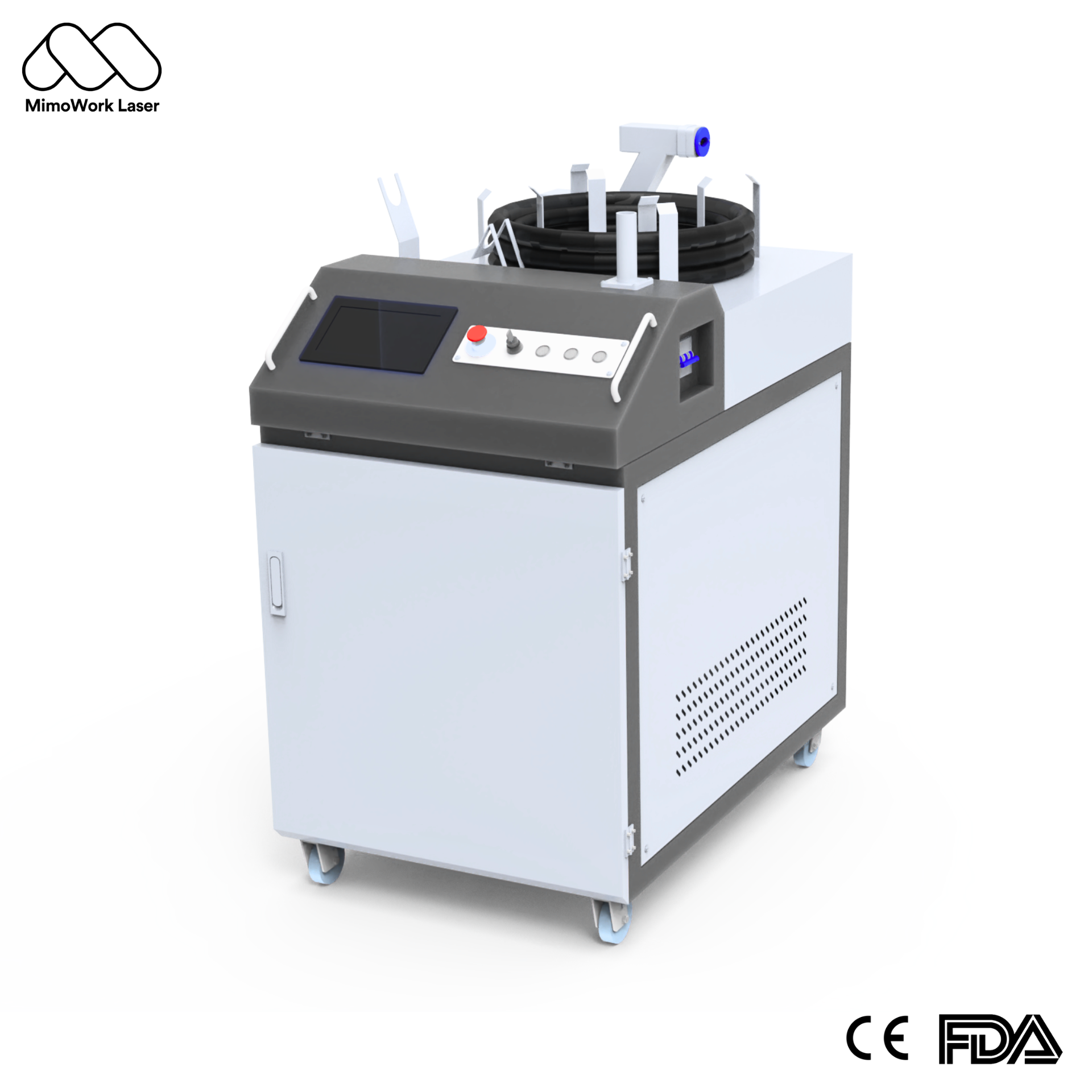
Short Answer: A 2000W laser cleaning machine is a high-power option for demanding industrial cleaning jobs, especially when rust, paint, oxides, or coatings need to be removed quickly from relatively large metal surfaces. As a type of laser cleaning machine, it is commonly configured with a continuous-wave (CW) fiber laser and sits between 1000–1500W systems for general cleaning and 3000W systems for higher-throughput applications.
If you are cleaning heavy rust from steel structures, machinery, weld areas, or large metal components, 2000W can provide substantially more cleaning capacity than lower-power machines. But laser power alone does not determine the result. The contaminant, substrate, surface area, cleaning speed, and required finish all need to be considered before choosing a machine.
A 2000W laser cleaning machine uses a high-power fiber laser to remove unwanted material from a surface without abrasive contact. The laser energy interacts with contaminants such as rust, paint, oxide, grease, and coatings, allowing them to be removed while keeping the underlying material under control.
For heavy-duty cleaning, 2000W systems are generally based on continuous-wave (CW) fiber laser technology rather than low-power pulsed systems.
MimoWork’s CW laser cleaning machines cover 1000–3000W, use a 1070nm wavelength and water cooling, and are designed for heavy rust, coatings, and large metal surfaces.
The main reason to move to 2000W is simple: cleaning throughput. If a lower-power machine takes too long to cover a large workpiece, additional laser power can make the process more practical for production.
A 2000W laser cleaner is mainly used for industrial surface preparation rather than delicate restoration work.
| Contaminant | Typical Application | 2000W Suitability |
| Heavy rust | Steel structures, machinery | High |
| Paint | Metal parts and structures | High |
| Oxides | Metal surface preparation | High |
| Mill scale | Steel fabrication | High |
| Grease and oil | Industrial components | High |
| Welding residue | Weld preparation | High |
| Light contamination | Small precision parts | Often excessive |
Rust is one of the most common applications for a high-power CW laser. A 2000W laser cleaning machine for rust removal can be used on steel components, machinery, structural metal, and other robust substrates where cleaning speed matters.
For heavy or widespread corrosion, the advantage is less about removing rust at all and more about how quickly the machine can cover the required area.
There is no single cleaning speed that applies to every workpiece.
Actual productivity changes with rust thickness, coating type, substrate, scanning parameters, beam width, and the level of surface cleanliness required.
These figures should be treated as reference values, not guaranteed production rates. A thick coating on a complex surface may clean much more slowly than a uniform rust layer on a flat steel plate. MimoWork also notes that actual results vary with rust thickness, material, geometry, and process parameters.
More power is useful when the workload demands more throughput, but buying a larger laser than necessary can add cost without improving the actual process.
1000W can be suitable for moderate rust removal, equipment maintenance, and smaller industrial cleaning jobs.
1500–2000W makes more sense when contamination is heavier, the cleaning area is larger, or cleaning time is becoming a production bottleneck.
3000W is aimed further toward large-scale and high-volume cleaning where maximum throughput is a priority.
For many buyers, the practical question is not “What is the most powerful laser available?” but “How much surface do we need to clean per day?”
A 2000W CW laser and a pulsed laser are designed around different cleaning requirements.
A CW system delivers continuous laser energy and is commonly used for fast removal of rust, paint, mill scale, and other heavy contamination from robust metal surfaces.
Pulsed lasers deliver short bursts of energy and provide more control over heat input. They are commonly used for precision cleaning, molds, delicate components, and applications where protecting the substrate is especially important.
If you are cleaning a large steel frame covered in heavy rust, a 2000W CW system may be appropriate. If you are cleaning a small precision component where surface damage is the main concern, a lower-power pulsed system may make more sense.
Yes, when the workflow involves different workpiece shapes, maintenance work, or large surfaces that are difficult to place into a fixed machine.
A 2000W handheld laser cleaning machine gives operators flexibility to move the cleaning head across the workpiece. This can be useful in shipbuilding, structural steel, machinery maintenance, fabrication, and repair environments.
MimoWork’s handheld CW configuration uses a 1070nm fiber laser, water cooling.
For repetitive production with fixed parts, however, an automated scanning system may provide more consistent coverage and reduce dependence on operator technique.
The 2000W laser cleaning machine price varies considerably depending on the laser source, cleaning head, cooling system, controls, extraction, automation, and other configuration requirements.
When comparing quotations, look beyond the headline machine price. Check whether the quotation includes:
A lower purchase price does not necessarily mean a lower cost per cleaned part. For production users, labor time, cleaning speed, consumables, and machine uptime should also be included in the calculation.
Before ordering, check these five points:
1. Contaminant: Rust, paint, oxide, grease, or coating?
2. Substrate: Carbon steel, stainless steel, aluminum, or another material?
3. Surface area: How much material must be cleaned per shift?
4. Required speed: Is cleaning a maintenance task or part of production?
5. Surface finish: How clean does the surface need to be after treatment?
A supplier should be able to test your actual material rather than selecting the machine from power alone.
A laser that performs well on heavy rust may behave differently on paint, oxide, aluminum, or a thin substrate. Even within the same material, contamination thickness and surface geometry can change the required settings.
MimoWork offers application testing using customer samples to evaluate the cleaning result and machine configuration before purchase.
If you are comparing a 2000W laser cleaning machine with 1000W, 1500W, or 3000W systems, testing the actual workpiece can give you a much more useful answer than comparing power ratings alone.
Have a rust, paint, or coating removal job to test? Send MimoWork your workpiece details, contamination type, and required cleaning area for an application evaluation and material test.
Related Guide:https://www.mimowork-laser.com/solutions/laser-cleaning/continuous-wave-laser-cleaning-machine