Blog
In a field that evolves daily, staying ahead means staying informed.
Explore in-depth articles designed to help you solve complex challenges,
maximize your machine’s ROI.
Stay ahead in a competitive market.


In a field that evolves daily, staying ahead means staying informed.
Explore in-depth articles designed to help you solve complex challenges,
maximize your machine’s ROI.
Stay ahead in a competitive market.
News | Jul-17-2026
Choosing the best laser fume extractor is one of the most important decisions for any workshop running CO2 or fiber laser equipment. Laser cutting and engraving inevitably produce smoke, fumes, and fine particulates, and without proper extraction, these byproducts can compromise operator health, damage sensitive machine components, and reduce the quality of finished products.
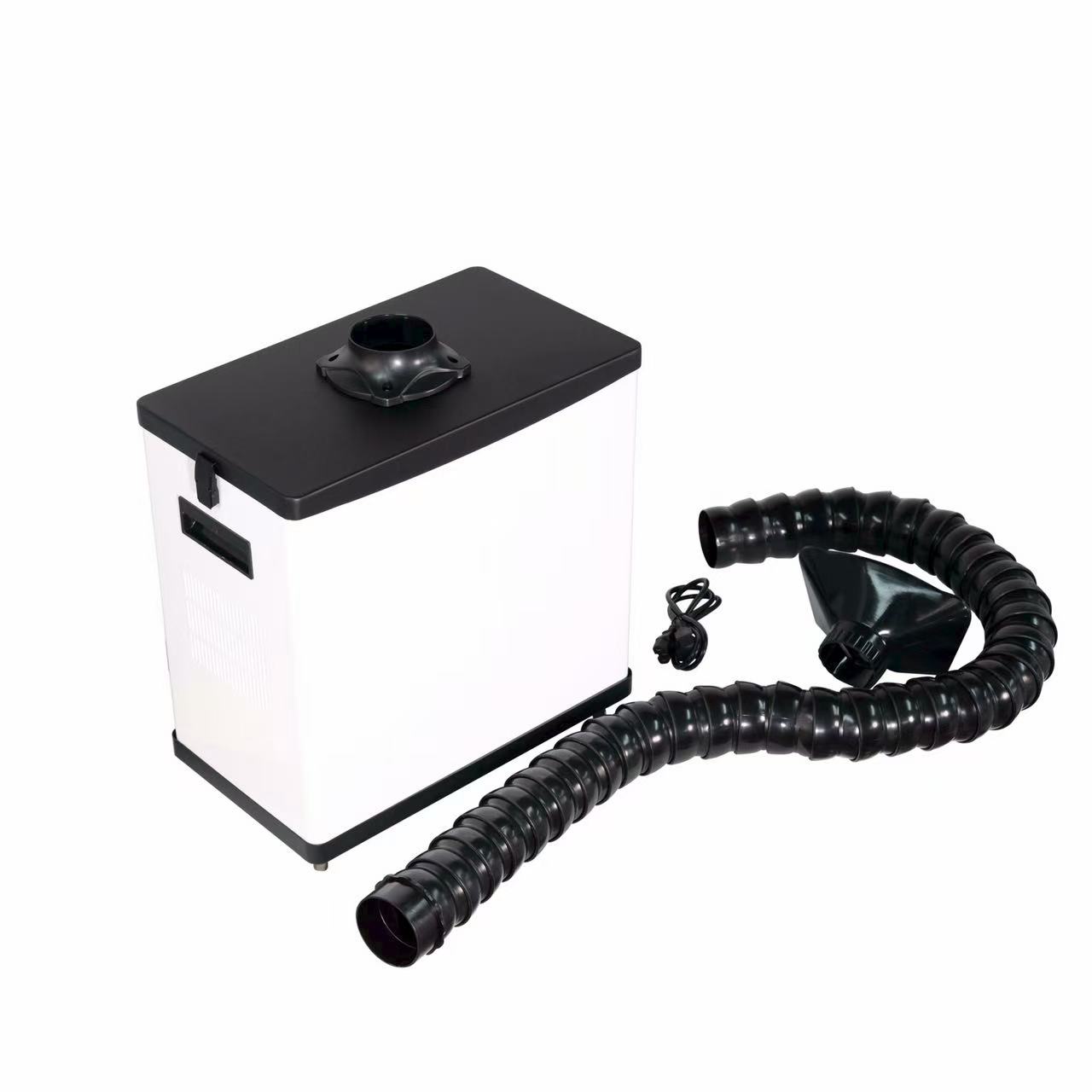
Laser processing thermally decomposes material, releasing a mix of smoke, aerosols, and gaseous emissions. Depending on the material being processed, this can include sticky organic fumes from wood and acrylic, or fine abrasive metal dust from fiber laser cutting.
Without effective extraction, hazardous byproducts linger in the air, posing health risks to operators and disrupting productivity. Smoke and debris can also settle on materials, interfering with cutting and engraving results, while corrosive dust and residue can settle inside a laser’s electronics and mechanics, shortening its lifespan.
Understanding the difference between dust collector and fume extractor systems helps you choose equipment matched to your actual laser process.
While the terms are sometimes used interchangeably, dust collectors and fume extractors are often optimized for different types of airborne contaminants generated by different laser processes.
| System Type | Primary Target | Common Source |
| Dust collector | Larger solid particulates | Cutting dust, debris |
| Fume extractor | Fine smoke, gases, and aerosols | Thermal decomposition of material |
CO2 laser cutting and engraving of non-metals like wood, acrylic, and plastics primarily generates high-volume, often sticky organic smoke, while fiber laser cutting and marking on metals produce hazardous, abrasive metal dust and fine smoke that can infiltrate motion systems and obscure optical paths. Choosing a system designed for your specific laser process matters more than choosing based on general specifications alone.
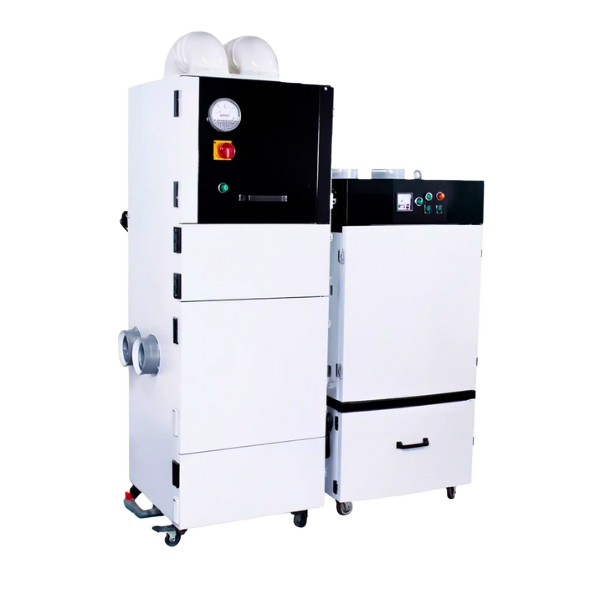
Selecting a laser fume extractor for CO2 laser engraver setups requires understanding the specific challenges of non-metal material processing.
CO2 laser engraving on wood, acrylic, leather, or plastics generates smoke and fine particulates that can redeposit onto workpieces, causing staining and requiring rework, while also coating lenses and internal components if left unmanaged.
A properly designed extraction system typically uses a multi-stage approach:
This layered approach is considered the industry standard for non-metal CO2 laser fume control and extraction, protecting both product quality and equipment longevity.
A laser fume extractor for acrylic fumes setup needs to account for the particularly strong odors and vapors that acrylic processing releases.
When lasering plastics like PMMA (acrylic), intense odors and vapors are released, which behave differently from the drier smoke produced by wood or paper. Sticky resins can also accumulate on internal components if not properly captured.
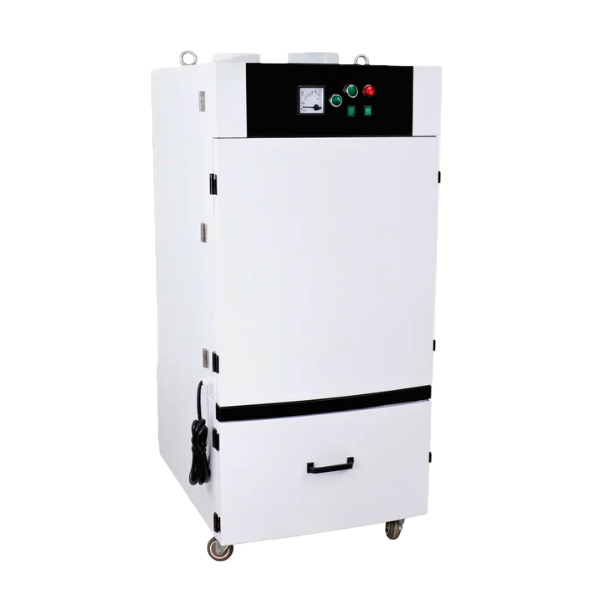
High-capacity activated carbon beds adsorb gaseous molecules, allowing chemical bonds to neutralize odors effectively before air is recirculated or exhausted. This is particularly important for workshops running acrylic engraving on a regular basis, where uncontrolled odor buildup can affect both comfort and compliance.
Choosing a laser fume extractor OSHA compliant system is not just a regulatory checkbox — it directly protects your team and your equipment.
A dedicated fume extractor removes harmful fumes and particulates from the air, helping ensure operator safety and supporting compliance with recognized workplace air quality standards. Laser fume contains fine dust and nano-scale particles that, without proper control, can contribute to respiratory and other long-term health concerns.
Beyond health considerations, proper extraction prevents corrosive dust and residue from settling inside a laser’s electronics and mechanics, extending its operational lifespan, while also eliminating smoke and debris that could otherwise interfere with cutting and engraving results.
| Benefit Area | Without Extraction | With Proper Extraction |
| Operator health | Exposure to fumes and particulates | Cleaner air, reduced health risk |
| Equipment lifespan | Corrosive residue buildup | Protected electronics and optics |
| Product quality | Staining, rework needed | Clean, consistent results |
For workshops evaluating a laser fume extractor for small workshop setups, practical fit matters more than raw capacity alone.
Compact, space-saving extraction solutions are well suited to smaller marking or engraving stations, where source-capture integration at the workstation captures fumes before they spread. Larger or more industrial-grade systems are better suited to higher-volume cutting or welding operations with more demanding extraction needs.
Many fume extraction systems are designed to connect directly to a specific laser system while also remaining compatible with other brands of fiber and CO2 laser cutting machines. This flexibility allows workshops to upgrade their fume control without needing to replace existing laser equipment.
A dust collector generally targets larger solid particulates like cutting debris, while a fume extractor is designed to capture fine smoke, gases, and aerosols produced by thermal decomposition during laser processing.
Yes. Acrylic releases intense odors and vapors when lasered, and a system with activated carbon filtration is important for neutralizing these gaseous emissions effectively.
Many fume extraction systems are designed to be compatible with a range of fiber and CO2 laser cutting machines, not just one specific brand, making them flexible additions to an existing workshop setup.
Corrosive dust and residue from unmanaged fumes can settle inside a laser’s electronics and mechanics, leading to increased maintenance needs and reduced equipment lifespan over time.
Compact, source-capture systems are often sufficient for smaller marking or engraving stations, while higher-volume cutting or welding operations typically require larger, more industrial-grade extraction capacity.
Choosing the best laser fume extractor comes down to matching the system to your specific laser process, material type, and production scale — whether you’re managing sticky organic smoke from acrylic and wood, or fine abrasive dust from metal processing. A properly selected system protects operator health, extends equipment lifespan, and keeps product quality consistent.
If you’d like guidance on matching a fume extraction solution to your specific laser cutting or engraving setup, you can find detailed system options and technical support on our official website at mimowork-laser.com.
News | Jun-22-2026
News | Apr-17-2026