Blog
In a field that evolves daily, staying ahead means staying informed.
Explore in-depth articles designed to help you solve complex challenges,
maximize your machine’s ROI.
Stay ahead in a competitive market.

In a field that evolves daily, staying ahead means staying informed.
Explore in-depth articles designed to help you solve complex challenges,
maximize your machine’s ROI.
Stay ahead in a competitive market.
News | Sep-11-2026
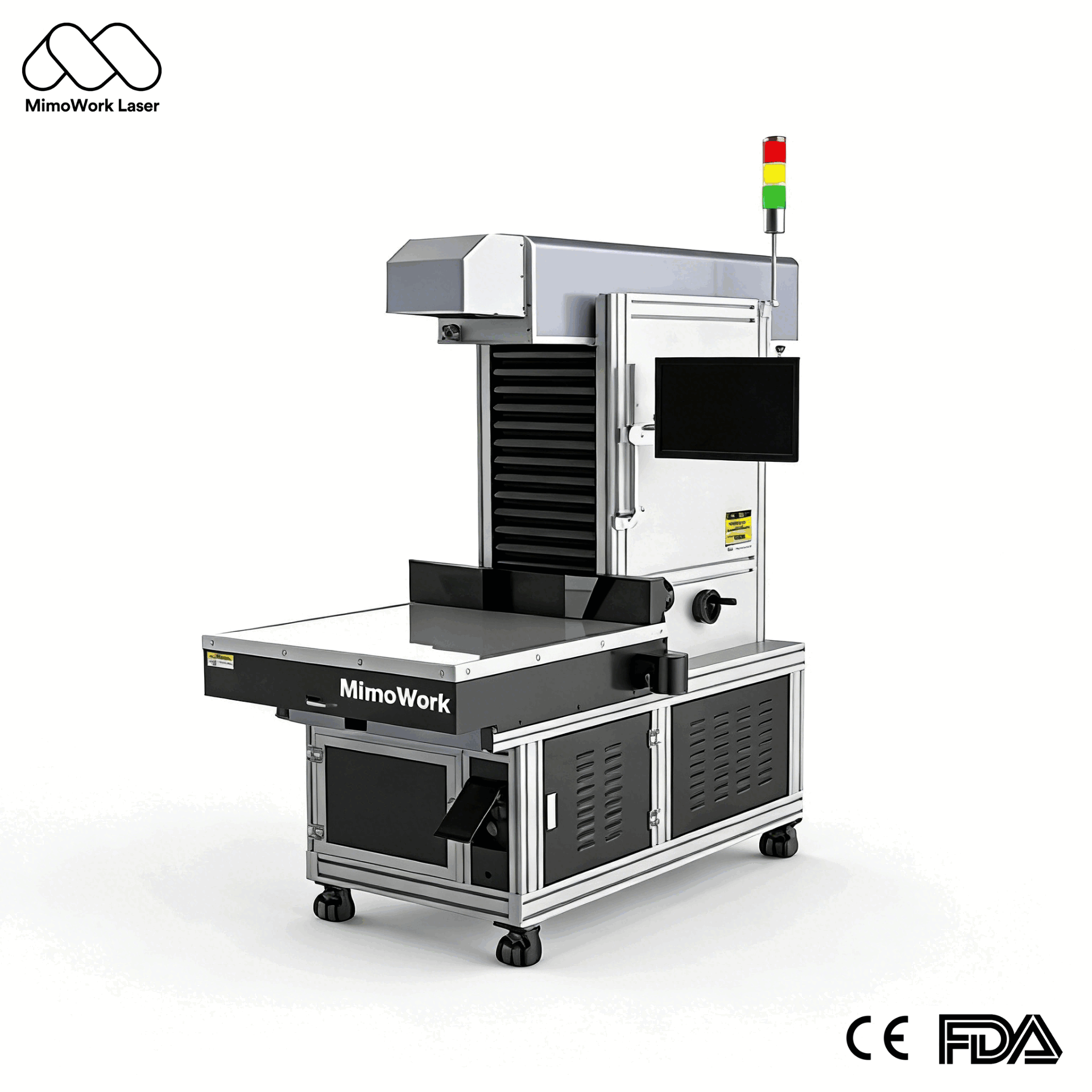
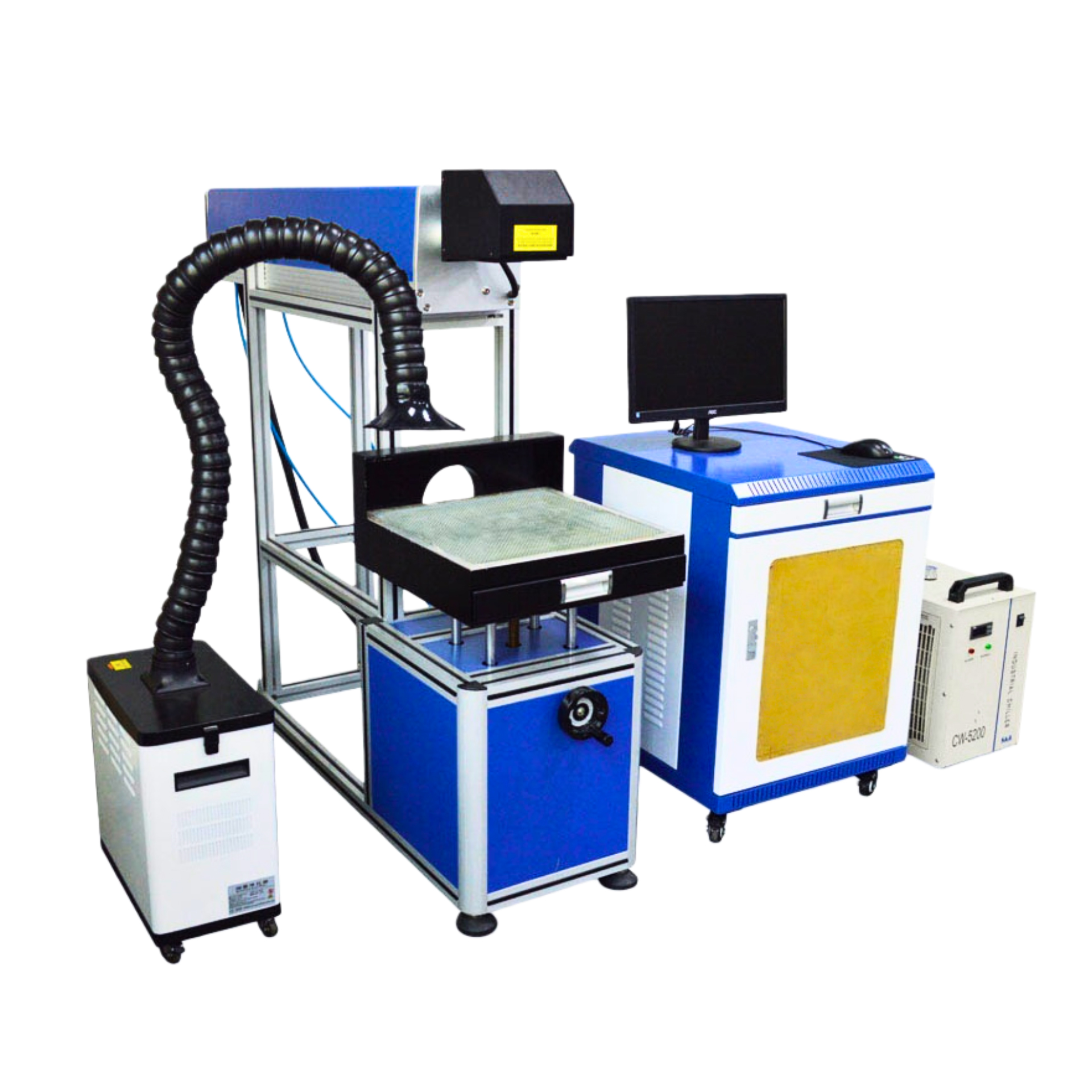
The G-40 CO₂ Galvo Laser Marker is designed for high-speed marking on flat, non-metal materials. Unlike a traditional gantry laser, which moves the laser head across the workpiece, the G-40 uses a galvanometer scanning system to steer the laser beam with rapidly moving mirrors.
This beam-steering design allows the G-40 to reach marking speeds of up to 15,000 mm/s within a defined 400 × 400 mm marking field. It is particularly useful for repeated logos, product information, serial numbers, QR codes, and other production marking tasks.
However, maximum scanning speed is only one part of the equation. Actual cycle time also depends on the design, marking parameters, filling patterns, and material.
A CO₂ galvo laser marker combines a CO₂ laser source with a galvanometer scanning system.
The galvo scanner uses rapidly controlled mirrors to direct the laser beam along the X and Y axes. Because the mirrors move the beam instead of mechanically moving the entire laser head, the system can position the laser spot quickly across the marking field.
This makes a CO2 galvo laser marker well suited to applications where speed and repeatability are important, but the workpiece does not require a very large processing area.
CO₂ lasers are commonly used with non-metal materials such as acrylic, plastics, wood, paper, and leather, making this technology suitable for a wide range of product-marking applications.
The main advantage of a galvo system is its low moving mass.
A conventional gantry laser must accelerate and decelerate the laser head as it travels across the material. In the G-40, the workpiece can remain stationary while lightweight scanning mirrors rapidly change the direction of the beam.
This allows fast acceleration and direction changes, which are especially valuable for small or repeated marking patterns.
The G-40 can reach 15,000 mm/s under suitable processing conditions. The actual production cycle, however, depends on the design and processing requirements.
A simple logo may be completed quickly, while a large, filled graphic requires more beam movement. For this reason, the best production setting is not necessarily the maximum speed, but the speed that provides the required marking quality within the target cycle time.
Acrylic is a common non-metal material for CO₂ laser processing.
The G-40 can be used for marking acrylic products with logos, serial numbers, QR codes, product information, decorative graphics, and personalized designs.
This can be useful for products such as acrylic awards, signs, promotional items, retail components, and customized products. When these markings need to be repeated across hundreds or thousands of parts, a high-speed galvo system can help reduce the marking time per piece.
The actual marking result still depends on the acrylic type, surface finish, design, focus, and laser parameters. Testing the actual material is therefore recommended before production.
The key specifications help determine whether the G-40 matches your application.
| Specification | G-40 CO₂ Galvo Laser Marker | Why It Matters |
| Maximum marking speed | Up to 15,000 mm/s | Supports high-speed marking |
| Marking field | 400 × 400 mm | Defines the available marking area |
| Laser power | 250W / 500W | Provides different processing options |
| Scanning system | High-speed galvo scanning | Rapidly directs the laser beam |
| Main application | Flat non-metal materials | Suitable for marking applications |
The 400 × 400 mm marking field is particularly important. Before selecting the machine, check whether the complete design and product surface can fit within the available field.
The G-40 is designed for high-speed marking on flat, non-metal materials.
Applications can include acrylic products, wood components, paper and packaging materials, leather goods, promotional products, and other suitable materials.
For acrylic, common marking applications include:
Logos and branding: Add permanent brand information to finished products.
Serial numbers and product information: Create identification marks without labels or consumables.
QR codes: Mark machine-readable codes for product identification or tracking.
Decorative graphics: Add patterns, personalized designs, and other visual details.
The most suitable application depends on the material, product dimensions, marking area, and required visual effect.
High speed does not automatically produce the best marking result.
Laser power, marking speed, frequency, focus, material characteristics, and design all work together to determine the final appearance.
For example, increasing power or reducing speed can increase the energy delivered to the material. However, excessive energy may produce an unwanted marking effect.
Acrylic can also respond differently depending on its color, formulation, thickness, and surface finish. Application testing is therefore the most reliable way to establish suitable parameters.
The G-40 and conventional gantry CO₂ lasers are designed for different production requirements.
| Feature | G-40 CO₂ Galvo | Traditional Gantry CO₂ Laser |
| Beam movement | Galvo mirrors | Moving laser head |
| Speed | Up to 15,000 mm/s | Generally lower |
| Marking field | 400 × 400 mm | Available in larger formats |
| Best suited for | High-speed marking | Large-area processing |
| Production focus | Speed and repeatability | Flexibility and larger workpieces |
The G-40 is a strong option when the priority is fast, repeated marking within a defined area.
A gantry system may be more appropriate when the application involves large sheets, oversized workpieces, cutting, or large-area engraving.
The G-40 is worth considering when marking has become a production bottleneck and the products can be processed within its 400 × 400 mm field.
It can be particularly relevant for manufacturers producing batches of acrylic awards, signs, promotional products, retail components, packaging, and other customized items.
The decision should be based on more than maximum speed. Consider the product dimensions, marking area, material, design complexity, required finish, and production volume.
If these requirements align with the G-40’s capabilities, its high-speed galvo scanning system can help shorten marking cycles and improve production efficiency.
Related guide:Sizzling Up with Galvo Fiber Laser Marker Review
A CO₂ galvo laser marker combines a CO₂ laser source with a galvanometer scanning system. The mirrors rapidly direct the laser beam across a defined marking field, enabling high-speed marking on suitable non-metal materials.
The G-40 can achieve marking speeds of up to 15,000 mm/s under suitable processing conditions. Actual production speed depends on the material, design, parameters, and required marking effect.
Yes. The G-40 can be used for acrylic marking applications such as logos, QR codes, serial numbers, decorative graphics, and personalized designs.
The G-40 provides a 400 × 400 mm marking field, which determines the maximum area that can be processed in a single marking operation.
Not necessarily. It is the maximum marking speed. Actual cycle time also depends on the design, filled area, acceleration, beam movements, laser parameters, and product handling.
It depends on the application. A galvo system is advantageous for fast, repeated marking within a defined field, while a gantry laser can be more suitable for large-format cutting and engraving.
The G-40 Galvo Laser Marker combines CO₂ laser processing with high-speed galvo scanning to support fast marking on flat, non-metal materials.
With marking speeds of up to 15,000 mm/s and a 400 × 400 mm marking field, it is designed for applications where repeated marking speed and consistency are important.
For manufacturers processing acrylic products and other flat non-metal materials, the G-40 can help reduce marking cycle times and improve production efficiency.
The best way to evaluate its performance is to test your actual material and design.
Send your material and design to MimoWork for a sample test and find out how the G-40 CO₂ Galvo Laser Marker can perform in your production workflow.
News | Jul-30-2026