Blog
In a field that evolves daily, staying ahead means staying informed.
Explore in-depth articles designed to help you solve complex challenges,
maximize your machine’s ROI.
Stay ahead in a competitive market.


In a field that evolves daily, staying ahead means staying informed.
Explore in-depth articles designed to help you solve complex challenges,
maximize your machine’s ROI.
Stay ahead in a competitive market.
News | Aug-17-2026
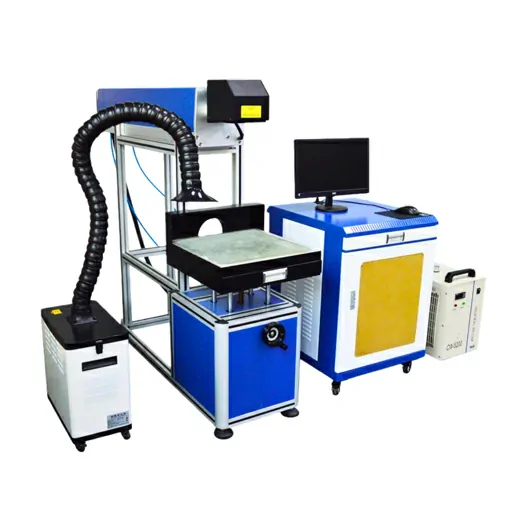
Plastic products are widely used in electronics, automotive components, packaging, consumer products, and industrial manufacturing. As product traceability requirements continue to increase, manufacturers need reliable marking methods to create permanent logos, serial numbers, barcodes, QR codes, and identification information.
However, many manufacturers find that plastic laser marking does not always deliver the expected results.
When companies first try laser marking plastic parts, they often expect the process to be as simple as marking metal materials. In reality, plastic materials behave very differently because of their chemical structure, surface properties, and heat sensitivity.
Common problems include:
The reason is simple:
Not all plastics interact with laser energy in the same way.
Choosing an unsuitable laser marking machine for plastic may result in poor marking quality, unstable production, and unnecessary processing costs.
Understanding why plastic marking fails is the first step toward choosing the right laser solution.
One of the most common reasons for poor plastic marking results is using an unsuitable laser wavelength.
Different plastic materials absorb laser energy differently. Some plastics respond well to CO2 laser wavelengths, while others may require specific parameter adjustments to achieve clear marking results.
If the laser energy cannot interact effectively with the plastic surface, manufacturers may experience:
Therefore, selecting the correct laser technology is more important than simply increasing laser power.
Unlike metals, many plastic materials are sensitive to heat.
During laser marking, excessive energy input may cause:
For plastic applications, the goal is not only to create a visible mark but also to maintain the original appearance and function of the product.
A suitable laser marking system should provide accurate energy control to achieve clear and consistent results.
Even with the right laser type, incorrect settings can reduce marking performance.
Important parameters include:
Optimizing these parameters helps manufacturers achieve better contrast, cleaner edges, and more stable production results.
For many non-metal applications, a CO2 laser marking machine for plastic provides an effective and reliable solution.
CO2 lasers use an infrared wavelength that is widely absorbed by many non-metal materials, making them suitable for processing various plastic products.
Compared with traditional printing or labeling methods, CO2 laser marking offers several advantages:
A CO2 laser marking machine is commonly used for:
For manufacturers requiring durable and consistent plastic marking, CO2 laser technology provides a practical solution.
Before selecting equipment, manufacturers should consider several factors:
Different plastics have different characteristics. Testing the actual material is important to determine suitable laser parameters.
Common plastic materials include:
Manufacturers should define whether they need:
For industrial production, equipment selection should also consider:
The right laser marking machine for plastic should provide a balance between marking quality, efficiency, and reliability.
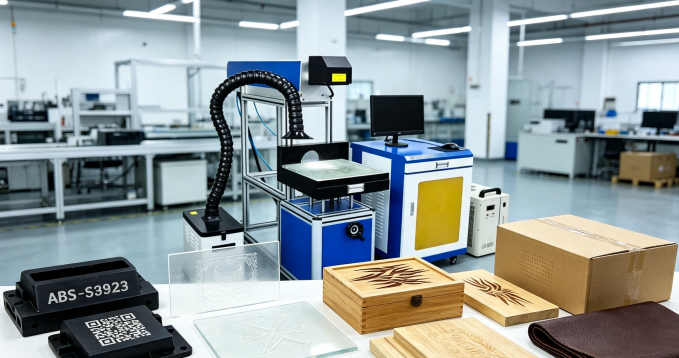
Mimowork provides laser processing solutions for various industrial materials, including plastics, wood, acrylic, and other non-metal materials.
The CO2 laser marking machine is designed to help manufacturers achieve:
It is suitable for applications such as:
By selecting the appropriate laser configuration and processing parameters, manufacturers can improve marking quality and production efficiency.
Yes. CO2 laser marking machines are widely used for many plastic and non-metal materials. They can create permanent marks, logos, numbers, and identification codes on suitable plastic surfaces.
Plastic melting usually happens when laser energy is too high, parameters are not optimized, or the selected laser technology does not match the material characteristics.
The best choice depends on the plastic material, marking requirements, and production conditions. For many non-metal applications, CO2 laser marking machines provide reliable performance and good marking quality.
In many applications, yes. Laser marking creates permanent marks without ink, labels, or additional consumables, making it suitable for long-term product identification.
Plastic laser marking can be challenging because different plastic materials respond differently to laser energy. Problems such as poor contrast, melting, and unstable marking results often come from unsuitable laser technology or incorrect processing parameters.
A properly selected laser marking machine for plastic can help manufacturers achieve clear, permanent, and reliable markings.
For many plastic and non-metal applications, CO2 laser marking technology provides an effective balance of performance, flexibility, and production efficiency.
By understanding the material characteristics and choosing the right laser solution, manufacturers can improve marking quality and create more efficient production processes.
News | Jul-31-2026
News | Jul-24-2026
News | Jul-22-2026