Blog
In a field that evolves daily, staying ahead means staying informed.
Explore in-depth articles designed to help you solve complex challenges,
maximize your machine’s ROI.
Stay ahead in a competitive market.


In a field that evolves daily, staying ahead means staying informed.
Explore in-depth articles designed to help you solve complex challenges,
maximize your machine’s ROI.
Stay ahead in a competitive market.
News | Aug-17-2026
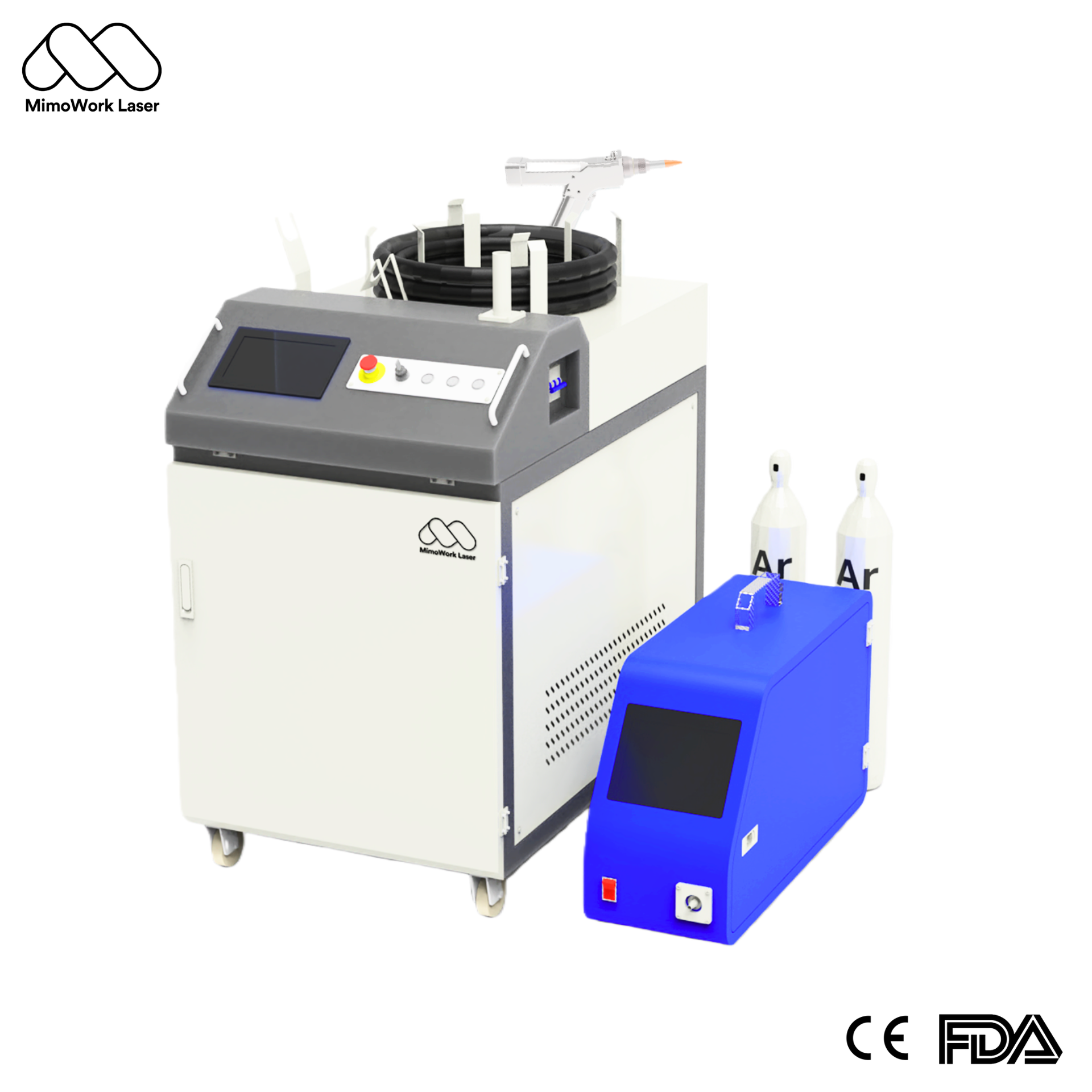
Copper is widely used in industries such as electric vehicles, electronics, power systems, automotive components, and precision manufacturing because of its excellent electrical conductivity and thermal performance.
However, when manufacturers try to use laser welding copper, they often face challenges that are different from welding common metals such as stainless steel or carbon steel.
Problems such as unstable penetration, excessive spatter, and inconsistent weld quality can affect production efficiency and product reliability.
So, why is copper so difficult to laser weld?
The main reasons are copper’s high reflectivity, excellent thermal conductivity, and narrow processing window. These properties make it difficult for traditional laser systems to deliver stable energy into the material.
Fortunately, modern fiber laser welding technology has made copper welding much more practical. By optimizing laser parameters, beam control, and welding methods, manufacturers can achieve reliable copper welds for demanding applications.
Mimowork provides industrial laser welding solutions designed for metal processing applications, including copper, stainless steel, aluminum, and other alloys. With the right laser welding configuration, manufacturers can improve welding speed, consistency, and production efficiency.
This guide explains why copper is challenging to weld and how advanced laser welding machines can solve these problems.
Copper is not impossible to weld with a laser. In fact, modern laser welding systems are widely used for copper components in automotive, electronics, and energy industries.
The challenge is that copper requires better control of laser energy compared with many other metals.
The main difficulties include:
Understanding these challenges helps manufacturers select the right laser welding machine for copper.
One of the biggest challenges in copper laser welding is its high reflectivity.
Most industrial fiber laser welding systems use infrared wavelengths around 1030–1070nm. Copper reflects a large amount of this laser energy before melting begins.
This can cause:
For manufacturers, this means simply increasing laser power is not always the best solution.
A successful copper welding process requires:
Modern fiber laser welding systems improve copper processing by precisely controlling energy delivery and welding parameters.
Copper is one of the best thermal conductors among industrial metals.
While this makes copper valuable for electrical and heat transfer applications, it also creates challenges during laser welding.
When laser energy is applied to copper, heat quickly spreads away from the welding area.
This may result in:
Therefore, copper welding requires accurate control of:
A well-designed laser welding machine can help maintain stable welding conditions and reduce unnecessary heat impact on surrounding areas
Copper has a relatively small temperature range between melting and boiling.
If laser energy is too low:
If laser energy is too high:
Because of this, choosing the correct laser welding system is critical.
Industrial copper welding applications often require:
Although copper is challenging to process, modern laser welding technology provides effective solutions.
The key is not only using higher power but controlling how laser energy interacts with the material.
The most effective approaches include:
Fiber laser welding has become one of the most widely used solutions for industrial metal welding because of its:
For copper welding applications, fiber laser systems can achieve reliable results when combined with optimized parameters and suitable beam control.
Mimowork fiber laser welding solutions are designed for industrial metal applications, supporting materials including copper, aluminum, stainless steel, and other alloys.
Typical applications include:
For manufacturers requiring flexibility, handheld laser welding machines provide an efficient solution.
Compared with traditional welding methods, handheld laser welders offer:
Mimowork handheld laser welding machines are designed for flexible metal welding applications and can process materials including copper, aluminum, stainless steel, and other metals.
They are suitable for:
For operators who need to switch between different materials and thicknesses, intelligent welding control systems can further simplify parameter adjustment and improve consistency.
For challenging materials such as copper, controlling laser energy distribution is essential.
Traditional laser beams concentrate energy in the center area, which may create excessive heat concentration.
Ring spot beam technology improves welding stability by distributing laser energy more evenly.
The advantages include:
This allows manufacturers to achieve higher-quality copper welds without relying only on increased laser power.
Selecting the right laser welding machine for copper depends on several factors, including material thickness, production volume, welding accuracy requirements, and automation needs.
Different manufacturers may require different welding solutions.
A small workshop repairing metal parts may need a flexible handheld laser welder, while an automotive or battery manufacturer may require an automated laser welding system for continuous production.
The key factors to consider include:
| Solution | Main Advantages | Suitable Applications |
| Handheld Laser Welding Machine | Flexible operation, easy setup, suitable for different welding positions | Metal fabrication, repair welding, small and medium batch production |
| Automated Laser Welding Machine | High repeatability, stable quality, suitable for continuous production | Battery components, precision parts, mass production |
| Fiber Laser Welding System | High efficiency, excellent beam quality, reliable operation | Copper, aluminum, stainless steel, and other metal welding applications |
For many industrial users, fiber laser welding provides the best balance between performance, flexibility, and investment cost.
As a laser system manufacturer, Mimowork develops laser solutions for cutting, marking, welding, and cleaning applications.
Its fiber laser welding systems are designed to help manufacturers improve welding efficiency, consistency, and production quality.
For copper welding applications, Mimowork solutions focus on:
Depending on production requirements, manufacturers can choose from different laser welding configurations.
A handheld laser welding machine is a practical choice for manufacturers who need flexibility and fast operation.
Compared with traditional welding methods, laser welding provides:
Mimowork handheld laser welding machines use fiber laser technology and are designed for various metal welding applications, including stainless steel, aluminum, copper, and other alloys.
Typical applications include:
For workshops and manufacturers handling different materials, handheld laser welding provides a flexible solution without requiring complex automation systems.
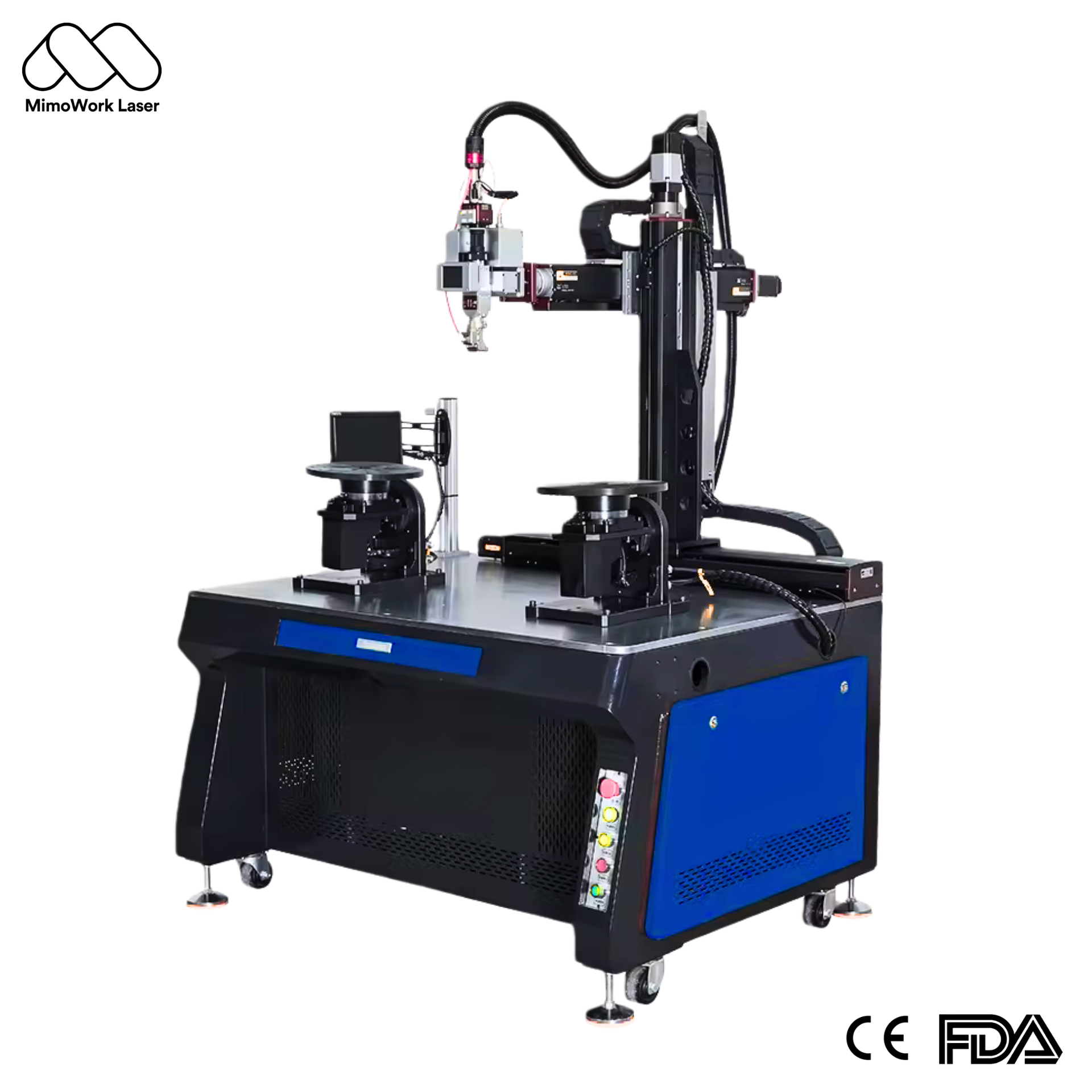
For manufacturers requiring repeatable and automated welding, an automated laser welding system provides higher production consistency.
Mimowork’s 4-axis gantry laser welding machine combines fiber laser technology with CNC-controlled motion across X, Y, Z, and rotary axes. It is designed for automated, high-precision welding of small to medium batch parts.
Key advantages include:
Automated motion control ensures consistent welding paths and reduces variation caused by manual operation.
The rotary axis allows processing of different part geometries, making it suitable for components requiring multiple welding directions.
Automation helps manufacturers improve throughput while maintaining stable weld quality.
Typical applications include:
Copper laser welding is becoming increasingly important in industries where electrical performance, precision, and reliability are critical.
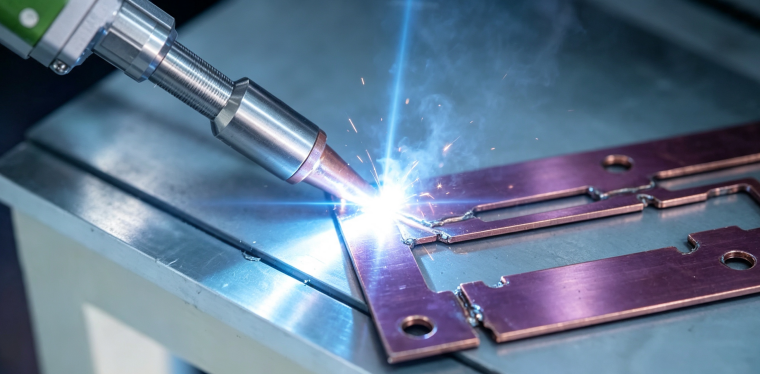
The rapid growth of electric vehicles has increased demand for reliable copper welding solutions.
Copper is commonly used in:
Laser welding provides:
This makes it suitable for modern battery manufacturing processes.
Copper’s excellent conductivity makes it essential in electronics manufacturing.
Laser welding is used for:
The small heat-affected zone helps protect sensitive electronic parts.
Electric vehicles and modern automotive systems contain many copper-based components.
Applications include:
Reliable copper welding helps improve product durability and electrical performance.
For general metal manufacturers, laser welding can replace or complement traditional welding methods.
Advantages include:
Choosing a laser welding machine is not only about laser power. Manufacturers need a complete solution that matches their materials, workflow, and production goals.
Mimowork supports customers with:
Different materials and welding requirements need different configurations.
Mimowork provides professional guidance to help customers select suitable laser systems based on:
From handheld laser welders to automated welding systems, Mimowork provides different solutions for various production environments.
This allows manufacturers to choose equipment based on their actual needs instead of investing in unnecessary complexity.
Copper welding requires careful parameter adjustment.
Factors such as:
can affect final results.
Mimowork provides application support to help customers optimize welding performance before production.
Yes. Copper can be welded with modern laser welding machines when suitable laser parameters and beam control technologies are applied. Fiber laser welding systems are widely used for industrial copper welding applications.
Copper is difficult because it reflects much of the infrared laser energy, transfers heat quickly, and requires precise energy control to maintain a stable molten pool.
The best choice depends on the application. Fiber laser welding is a practical solution for many industrial applications, while advanced beam control technologies can improve copper welding stability.
Copper laser welding is challenging because of its high reflectivity, thermal conductivity, and sensitivity to heat input.
However, these challenges can be effectively solved with modern laser welding technology.
By using advanced fiber laser welding systems, optimized beam control, and suitable welding configurations, manufacturers can achieve stable and reliable copper welds for demanding applications.
The key is to choose the right solution based on production requirements.
Whether you need a flexible handheld laser welder or an automated laser welding system for industrial production, Mimowork provides laser welding solutions designed to improve efficiency, consistency, and manufacturing performance.
Contact Mimowork to discuss your copper welding requirements and find the right laser welding solution for your application.
News | Aug-6-2026
News | Aug-6-2026
News | Jun-30-2026