Blog
In a field that evolves daily, staying ahead means staying informed.
Explore in-depth articles designed to help you solve complex challenges,
maximize your machine’s ROI.
Stay ahead in a competitive market.


In a field that evolves daily, staying ahead means staying informed.
Explore in-depth articles designed to help you solve complex challenges,
maximize your machine’s ROI.
Stay ahead in a competitive market.
News | Jul-24-2026
You’ve invested in a quality laser machine, fine-tuned your settings, and started creating precise cuts, engravings, or markings.
Everything seems to be working perfectly. But there’s one thing that is easy to overlook when running a laser system:
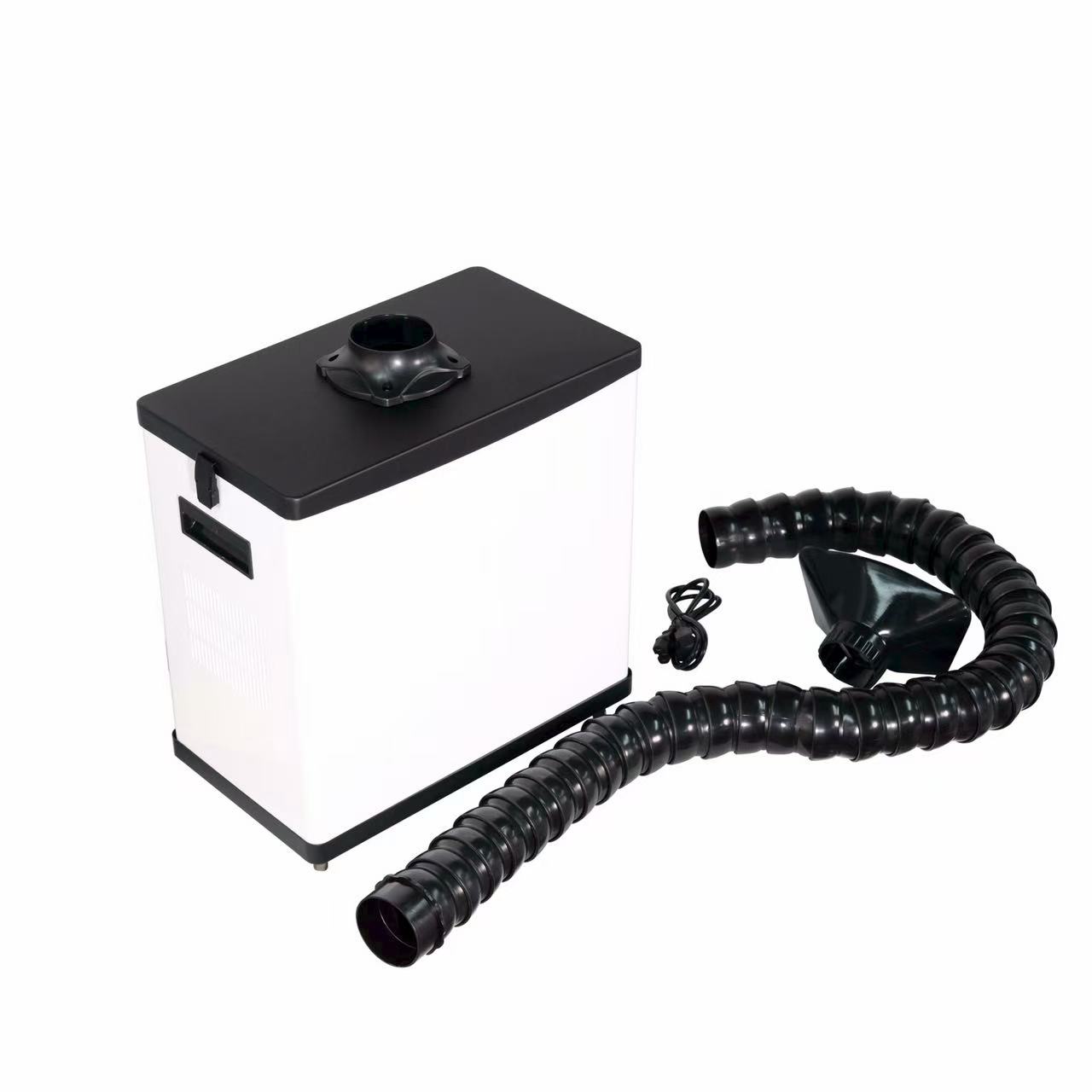
A reliable laser fume extractor helps protect operators, maintain equipment performance, and create a more comfortable working environment.
Many laser users focus on power, speed, accuracy, and material compatibility. However, the air produced during laser processing deserves just as much attention.
When a laser beam interacts with materials such as wood, acrylic, plastic, fabric, or coated metals, it creates more than visible smoke. The process can release tiny airborne particles, chemical vapors, and unpleasant odors that may remain in your workspace without proper extraction.
For occasional use, this problem may not seem obvious. But in a workshop, studio, classroom, or production environment where lasers operate regularly, accumulated fumes can become a serious concern.
In this guide, we’ll explain why laser fume extraction matters, how these systems work, and what you should consider when choosing the right solution for your laser machine.
Whenever material is burned, melted, or vaporized, contaminants are released into the air.
The visible smoke you see is only part of the problem.
This is why simply opening a window or using basic ventilation is not always enough.
A dedicated laser air filtration system is designed specifically for capturing these contaminants before they circulate throughout your workspace.
One of the biggest reasons businesses install laser fume extractors is simple:
People spend hours working around laser equipment.
Even if smoke is not visible after a few minutes, microscopic particles can remain suspended in the air.
Long-term exposure to airborne contaminants may affect indoor air quality and create an uncomfortable working environment for operators.
A properly designed extraction system helps by:
For small workshops and professional production facilities alike, clean air is not just about comfort—it is an important part of workplace safety.
Laser users often think about maintenance from a mechanical perspective:
But smoke contamination is another factor that affects machine performance.
During laser processing, smoke particles can settle on:
Over time, this buildup can reduce cutting quality and increase cleaning frequency.
For businesses relying on laser machines every day, protecting the equipment is just as important as protecting the operator.
Modern manufacturing is placing greater attention on indoor air quality and employee safety.
Whether you operate a small creative studio or a large production facility, maintaining a clean workspace helps create a more professional working environment.
At first glance, a laser fume extractor may look like a simple ventilation device.
But inside, it is a carefully designed filtration system that combines airflow management and multiple purification stages.
The basic process is simple:
Capture → Filter → Purify → Release Clean Air
The challenge is making each step effective.
A high-performance system needs enough airflow to capture smoke while using the right combination of filters to remove both particles and gases.
Laser fumes are complex.Some contaminants are solid particles. Others are gases.That is why professional extraction systems use multiple filtration stages.
The pre-filter captures larger particles before they reach the main filters.
It helps remove:
This protects the more expensive filtration layers and extends their service life.
Fine particles are one of the biggest challenges in laser processing. A high-efficiency HEPA filter is designed to capture microscopic particles that standard filters may miss.
This makes HEPA filtration especially important for applications involving:
Particle filtration alone is not enough.Many materials release gases during laser processing.
Activated carbon filtration helps capture:
This stage is particularly valuable when working with plastics, acrylic, and other materials that produce noticeable fumes.
Filtration performance is only one part of a good laser fume extractor.
Even the most advanced filters cannot work properly without the right airflow.
The extractor needs enough suction power to capture smoke immediately as it is created, before it spreads around the machine or into the surrounding workspace.
A well-designed system balances three important factors:
For example, a compact desktop engraving machine may only require a small extraction unit, while a high-power laser cutter running continuously in a production environment may need a stronger industrial fume extraction system.
Modern laser fume extractors are becoming smarter and easier to operate.
Instead of manually guessing when filters need attention, advanced systems may include features such as:
These functions help operators maintain consistent performance and reduce unexpected interruptions.
Choosing a laser fume extractor is not simply about buying the most powerful model available.
The right system depends on your machine, materials, working environment, and production requirements.
A small engraving studio and a large manufacturing facility may both use lasers—but their extraction needs are completely different.
Here are the key factors to consider before making a decision.
The material you process has a major impact on the type of filtration you need.
Different materials create different challenges.
Materials such as plywood and MDF are widely used in laser cutting.
However, they can produce:
A good extraction system helps remove these contaminants while keeping the workspace cleaner.
Plastic materials are popular in signage, displays, and custom products.
But when heated by a laser, they may release:
For these applications, carbon filtration becomes especially important.
Laser marking and processing metals may generate very fine particles.
Applications involving coated surfaces or industrial materials often require efficient particle filtration to maintain a safe working environment.
Your laser specifications directly affect extraction requirements.
Consider:
A hobby laser used occasionally does not have the same requirements as a production laser operating eight hours a day.
Choosing a properly sized laser fume extraction system helps achieve the right balance between performance, operating cost, and filter life.
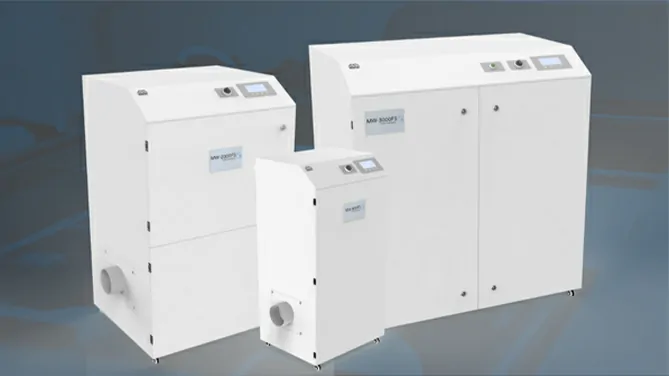
Laser fume extractors come in different sizes and configurations.
The best option depends on where and how you work.
Compact systems are ideal for:
Their advantages include:
They are a practical choice when workspace size is limited.
For larger operations, industrial systems provide:
They are commonly used in:
Every laser application has different challenges.
A jewelry studio creating personalized products, a sign manufacturer cutting acrylic sheets, and a factory processing industrial components all require all require different extraction approaches
This is why Mimowork focuses on practical laser fume extraction solutions designed around real working conditions.
Mimowork works with laser users across different industries and understands that extraction requirements are influenced by:
Instead of a one-size-fits-all approach, the goal is to provide solutions that match the actual application.
Smoke extraction is not only about air quality.
It also helps protect your laser machine.
By reducing smoke buildup around optical components and internal areas, an effective extraction system can support:
For businesses that depend on laser processing every day, protecting machine performance means protecting productivity.
Whether you operate a small workshop or a professional production facility, installation requirements can vary.
| Series | Application | Effectively Filtered | Power Rating |
| M-Series Fume Extractor | Laser Marking | Metal Oxide Fumes | 230W |
| Plastic Vapors | |||
| Rubber Coating Particulates | |||
| General Organic Compounds from Marking | |||
| C-Series Fume Extractor | CO₂ Laser Engraving | Wood engraving smoke | 1500W |
| Acrylic Vapor & Particulates | |||
| Leather, Paper, Fabric Fumes | |||
| Non-Metal Composite Dust | |||
| Minor Plastic Pyrolysis Fumes | |||
| F-Series Fume Extractor | Fiber Laser Cutting | Metal Cutting Fumes | 3500W |
| Metal Oxide Nanoparticulates | |||
| Protective Coating/Oil Smoke from Coated Metals | |||
| Nitrogen/Oxygen Assist Gas By-Products | |||
| W-Series Fume Extractor | Laser Welding & Cleaning | Welding Fume | 500W |
| Metal Vapor & Spatter Fine Particles | |||
| Surface Cleaning Debris | |||
| Shielding Gas Contaminants | |||
| D-Series Fume Extractor | DTF Printing | PET Film Heating Fumes | 450W |
| Hot-Melt Adhesive Aerosol | |||
| Ink Pigment Particulates | |||
| Powder Adhesive Dust | |||
| General VOC from Drying/Curing | |||
| S-Series Fume Extractor | Sublimation Printing | Dye-Sublimation Vapor | 1600W |
| Polyester Coating Fumes | |||
| Transfer Paper Fiber Dust | |||
| Minor Plasticizer Emissions |
Mimowork provides laser solutions designed for different working environments, helping users integrate fume extraction into their existing laser workflow.
Even the best filtration system requires regular care.
Proper maintenance helps maintain airflow, extend filter life, and ensure consistent extraction performance.
Many users wait until extraction performance drops significantly before checking filters.
However, early warning signs include:
The replacement cycle depends on:
A few simple habits can keep your system working effectively:
Make sure smoke is being captured properly during operation.
Loose ducts or blocked hoses can reduce extraction efficiency.
Regular inspection prevents unexpected performance issues.
Removing excess dust around the laser area helps improve overall system efficiency.
A quality laser fume extractor can significantly reduce smoke, particles, and odors, but performance depends on several factors.
These include:
For materials that produce strong VOC emissions, choosing a system with effective carbon filtration is especially important.
No.A properly selected extraction system should not affect laser accuracy.
In fact, removing smoke and residue can help maintain cleaner optical components, which supports more stable laser performance over time.
Outdoor ventilation may work in some situations, but it is not always practical.
Many users face challenges such as:
A self-contained laser air filtration system provides a flexible alternative by filtering contaminants indoors without requiring complex external ducting.
There is no universal replacement schedule.
Filter life depends on:
The best approach is to monitor system performance and replace filters when efficiency decreases.
Start by considering:
If you are unsure, Mimowork can help evaluate your application and recommend a suitable laser fume extraction solution.
Laser technology allows businesses to create faster, more precise, and more innovative products.
But a successful laser operation requires more than just the machine itself.
From small creative workshops to professional manufacturing applications, Mimowork provides laser solutions designed to support safer and more efficient laser processing.
If you are looking for a suitable laser fume extraction system for your laser cutter, engraver, or marking machine, contact Mimowork to discuss your application requirements and find the right solution.
News | Jul-9-2026
News | Apr-17-2026