Blog
In a field that evolves daily, staying ahead means staying informed.
Explore in-depth articles designed to help you solve complex challenges,
maximize your machine’s ROI.
Stay ahead in a competitive market.


In a field that evolves daily, staying ahead means staying informed.
Explore in-depth articles designed to help you solve complex challenges,
maximize your machine’s ROI.
Stay ahead in a competitive market.
News | Jul-24-2026
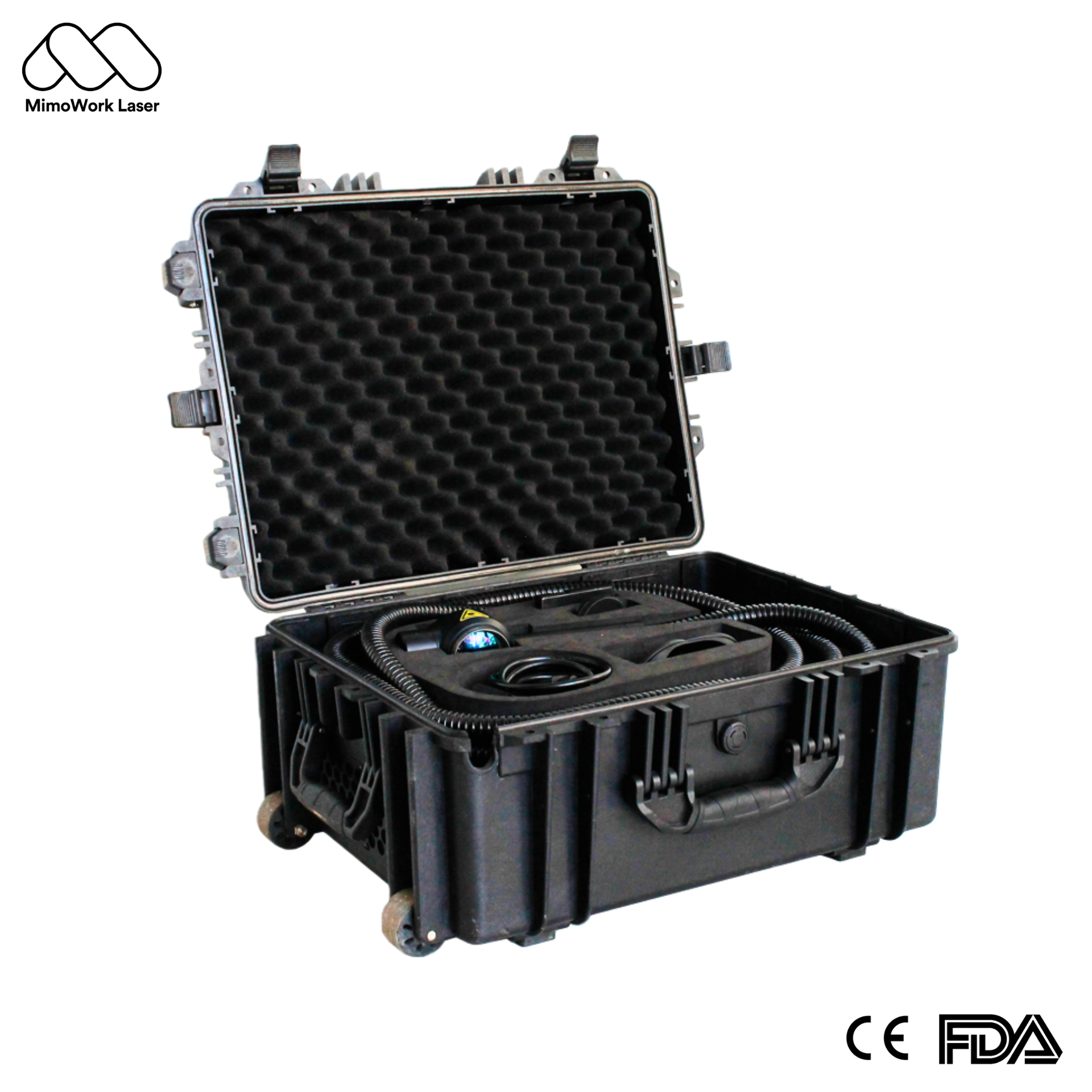
Choosing the right laser cleaning machine is critical for manufacturers dealing with rust, coatings, oxides, and surface contamination.
A pulsed laser cleaning machine provides a precise, non-contact cleaning solution for removing unwanted layers while protecting the underlying material.
In this guide, you will learn how to choose a laser cleaning machine that fits your application, understand the differences between pulsed and continuous wave (CW) laser technologies, and identify the key factors when selecting the right system.
The core technology behind pulsed laser cleaning is laser ablation technology.
During the cleaning process, the laser source generates a series of precisely controlled laser pulses that deliver energy to the contaminated surface. Each pulse delivers a precisely controlled amount of energy within an extremely short duration.
When contaminants absorb the laser energy, several physical reactions may occur:
Rapid thermal expansion
The contaminant layer heats up faster than the substrate, creating stress between the two materials.
Material separation
The difference in thermal expansion causes cracks and weakens the bond between contaminants and the surface.
Vaporization or particle removal
The unwanted material is removed as microscopic particles, vapor, or debris.
Because the laser parameters can be precisely adjusted, operators can achieve selective cleaning—removing rust, paint, oxide layers, or residues while maintaining the integrity of the base material.
Both pulsed laser cleaning machines and continuous wave (CW) laser cleaning systems use laser energy to remove contaminants. However, their energy delivery methods create different cleaning characteristics.
| Feature | Pulsed Laser Cleaning | Continuous Wave Laser Cleaning |
| Energy output | Short, high-energy pulses | Continuous laser beam |
| Precision | High precision | Moderate precision |
| Heat effect | Lower thermal impact | Higher heat accumulation |
| Surface protection | Excellent for sensitive materials | Better for robust materials |
| Typical applications | Precision parts, molds, electronics | Large metal structures |
| Cleaning speed | Controlled and accurate | High-speed large-area cleaning |
A pulsed laser cleaning machine is generally preferred when surface protection, precision, and controlled cleaning are important.
For example:
Continuous wave lasers may be considered for applications requiring extremely high cleaning speed on large and heat-resistant surfaces.
The best choice depends on:
Pulsed laser technology offers distinct advantages in precision, material protection, operational efficiency, and environmental performance—making it the preferred choice for a wide range of industrial applications.
Although performance is the primary advantage, pulsed laser cleaning also supports green manufacturing goals.
Compared with other methods, pulsed laser cleaning:
This allows manufacturers to improve both production efficiency and environmental performance.
For many industries, the value of the component is much higher than the cleaning process itself. A cleaning method that damages the part can lead to expensive repairs or replacements.
Pulsed laser cleaning helps maintain component integrity by providing a non-contact and controlled cleaning process.
Excessive heat is a major concern in industrial cleaning, especially when working with thin, delicate, or heat-sensitive components.
Pulsed laser cleaning minimizes thermal diffusion because laser energy is delivered in extremely short bursts. This helps prevent:
Compared with continuous laser cleaning, pulsed lasers provide better control over heat input, making them a preferred choice for applications requiring surface protection.
For applications requiring strict surface quality control and precise cleaning performance, pulsed laser cleaning machines offer an ideal solution.
Corrosion and old coatings are common challenges in industries such as shipbuilding, rail transportation, infrastructure, and heavy equipment manufacturing.
Pulsed laser cleaning machines can remove rust, oxide layers, and paint coatings by concentrating laser energy on the contaminated surface. The process breaks the bond between the unwanted layer and the substrate, allowing contaminants to be removed without direct mechanical contact.
Laser cleaning helps reduce material wear and eliminates the need for large amounts of consumables.
Typical applications include:
Pulsed laser cleaning can be applied to various metals, including carbon steel, stainless steel, cast iron, and aluminum alloys.
Molds are critical production tools, and their surface condition directly affects product quality and production efficiency.
During continuous operation, molds can accumulate rubber residues, release agents, oil, and other deposits. Traditional cleaning methods often require removing the mold from the production line, which can lead to extended downtime.
Pulsed laser cleaning provides a practical solution for in-place mold maintenance. Operators can clean complex mold surfaces without disassembly while preserving surface details and dimensions.
Common applications include:
For applications requiring mobility and flexibility, handheld pulsed laser cleaning systems, such as those offered by Mimowork, allow operators to perform cleaning tasks directly at the workstation.
Some industries require cleaning methods that remove contamination without affecting the original surface.
In aerospace, semiconductor, electronics, and medical device manufacturing, even small amounts of residue or particles can impact product performance.
Pulsed laser cleaning allows controlled removal of:
The low heat input of pulsed laser technology helps prevent common issues associated with traditional methods, such as:
This makes pulsed laser cleaning suitable for high-value components where accuracy and surface integrity are essential.
Automotive manufacturers and industrial suppliers use pulsed laser cleaning in several production and maintenance processes.
Weld Preparation
Before welding, laser cleaning can remove rust, oil, and surface contaminants to improve welding consistency.
Surface Treatment Preparation
Laser cleaning can prepare metal surfaces before coating, painting, or bonding by creating a cleaner and more uniform surface.
Component Maintenance
Precision parts, tooling, and production equipment can be cleaned without abrasive contact, helping maintain their service life.
Instead of choosing a machine based only on power or price, businesses should evaluate the key specifications and configurations that match their production needs.
Laser power and frequency are two of the most important parameters in a pulsed laser cleaning machine. Together, they determine how aggressively contaminants are removed and how much control you have over the cleaning process.
Higher laser power does not always mean better cleaning performance. The right power level depends on contamination thickness, material sensitivity, cleaning area, and required productivity.
| Power Range | Recommended Applications | Suitable Materials & Tasks | Best Choice For |
| 50–100W | Precision cleaning, small components, delicate surfaces | Light rust, oxide removal, surface residue | Manufacturers prioritizing accuracy and surface protection |
| 200–300W | General industrial cleaning, mold maintenance, welding preparation | Rust removal, oil contamination, coating removal | Most factories needing a balance between efficiency and precision |
| 500W+ | Heavy-duty cleaning and large-area applications | Thick rust, industrial equipment, large metal surfaces | Users requiring higher productivity and continuous operation |
A properly matched setup should remove unwanted layers effectively while keeping the original substrate intact.
Laser power mainly affects cleaning speed and the types of contaminants a system can handle.
Lower-power pulsed laser cleaning systems are commonly used for applications where surface protection is a priority, such as:
Higher-power systems are better suited for more demanding tasks, including:
When selecting laser power, consider:
For many industrial applications, the 100W–500W range provides a practical balance between cleaning efficiency and surface protection. Mimowork’s pulsed laser cleaning solutions are available in different power configurations to meet various industrial cleaning requirements, from precision maintenance to heavy-duty surface preparation applications
Frequency controls how often laser pulses are delivered to the surface and plays an important role in balancing cleaning efficiency and surface control.
Lower frequency settings deliver more energy in each pulse. This makes them suitable for removing stubborn contaminants such as thick rust, heavy oxidation, and strongly bonded coatings.
Higher frequency settings distribute energy across more pulses, creating a smoother and more controlled cleaning process. They are often preferred for applications where maintaining surface appearance and precision is more important than maximum removal speed.
In real-world applications, power and frequency are adjusted together. The ideal settings depend on the material, contamination type, and desired cleaning result. Testing parameters on sample parts before production use is often the most reliable way to determine the best configuration.
The choice between a handheld and automated laser cleaning system depends largely on how your cleaning work is organized.
Do you need a flexible tool for different parts and maintenance tasks, or are you looking for a repeatable process that can run as part of a production line?
Mimowork provides handheld pulsed laser cleaning machines designed for rust removal, mold maintenance, and surface preparation applications.
When cleaning requirements are repetitive and clearly defined, automation can improve consistency and production efficiency.
Automated laser cleaning systems can be integrated with:
They are commonly used in industries such as:
The main advantage of automation is repeatability. Once the cleaning parameters are optimized, the system can perform the same process consistently with limited operator involvement.
A pulsed laser cleaning machine is a long-term industrial investment. Beyond cleaning performance, safety features and equipment reliability directly affect daily operation and maintenance costs.
Laser Safety Features:
Proper training and safe operating practices are essential when using laser cleaning equipment in a production environment.
Equipment Durability and Maintenance
For industrial applications, machine reliability matters as much as cleaning performance.
When evaluating a pulsed laser cleaning system, consider:
A well-designed system reduces unexpected downtime and helps maintain stable cleaning performance over years of operation.
Buying a Pulsed Laser Cleaner? Not Before Watching This | MimoWork Laser
When properly configured, pulsed laser cleaning generally does not damage the base material. The laser parameters can be adjusted to remove contaminants while minimizing thermal impact on the surface.
The initial investment of a laser cleaning machine is usually higher than traditional equipment. However, laser cleaning reduces ongoing costs related to abrasives, chemicals, waste disposal, and labor.
For many industrial applications, the total operating cost can become lower over time.
Modern pulsed laser cleaning systems are designed with user-friendly interfaces and adjustable parameters.
Operators mainly need training on:
Compared with mechanical cleaning equipment, laser cleaning machines require relatively low maintenance.
Regular maintenance usually includes:
Selecting a pulsed laser cleaning machine depends on your material type, contamination level, cleaning precision requirements, and production environment.
Pulsed laser technology is particularly valuable for applications where precision, surface protection, and cleaning quality are critical.
Mimowork offers pulsed laser cleaning systems designed for industrial applications, from handheld units for on-site maintenance to customized solutions for specialized tasks. Contact us to discuss your application and find the right system for your needs.