Blog
In a field that evolves daily, staying ahead means staying informed.
Explore in-depth articles designed to help you solve complex challenges,
maximize your machine’s ROI.
Stay ahead in a competitive market.


In a field that evolves daily, staying ahead means staying informed.
Explore in-depth articles designed to help you solve complex challenges,
maximize your machine’s ROI.
Stay ahead in a competitive market.
News | Jul-31-2026
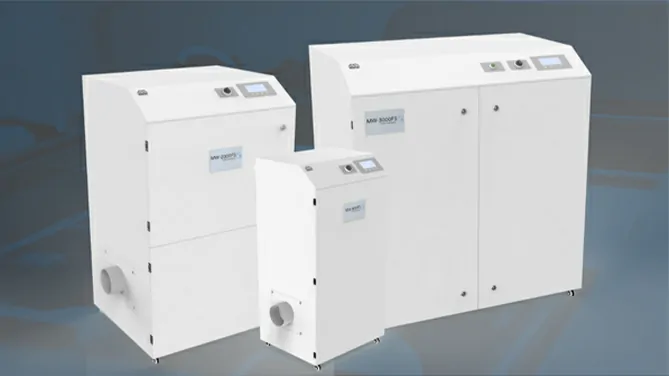
Every time you fire up a laser engraver or laser cutter, you’re not just shaping material — you’re releasing a plume of smoke, gas, and ultra-fine particulate that most workshops never think twice about. That plume doesn’t just smell bad. It settles on your lens and mirrors, quietly eating into cut quality and engraving precision, and it works its way into your lungs long before you notice any symptoms.
Without a dedicated laser fume extractor, operators face real, cumulative risks: irritated airways, headaches, and long-term respiratory issues from repeated exposure to combustion byproducts. On the machine side, unfiltered smoke coats optics and rails, forcing more frequent cleaning, more part replacements, and a shorter working life for equipment that isn’t cheap to begin with.
This is exactly the problem Mimowork was built around. We design laser engraving fume extraction systems that scale from hobbyist desktop machines to industrial cutting lines, so operators of any size can put the right air-handling solution in place instead of guessing. This guide walks through why extraction matters, how to size and choose the right unit, and how to set it up so it performs — because laser cutting safety starts with the air you breathe, not just the guard around the beam.
What comes off the material matters as much as what comes off the beam. Different substrates release very different — and sometimes surprising — hazards:
None of these are things you want, drifting around an enclosed workshop for eight hours a day.
Fume isn’t just a personal exposure problem — it’s a maintenance problem. Smoking residue is sticky and slightly acidic in many cases, and it doesn’t stay in the air. It settles on the focus lens, the protective window, and the linear rails, where it:
A fume extractor isn’t just a health accessory. It’s part of protecting the investment you made in the machine.
The most common workaround is venting straight outside through a duct and an exhaust fan. It sounds simple, but it comes with real downsides:
A properly sized, multi-stage internal-circulation purifier solves all three problems at once: it filters and recirculates clean air back into the room instead of exhausting it, which keeps the space climate-controlled, avoids odor complaints, and removes the hazardous content rather than displacing it.
Not all lasers produce the same fume profile, so the filtration priority shifts depending on what you’re running:
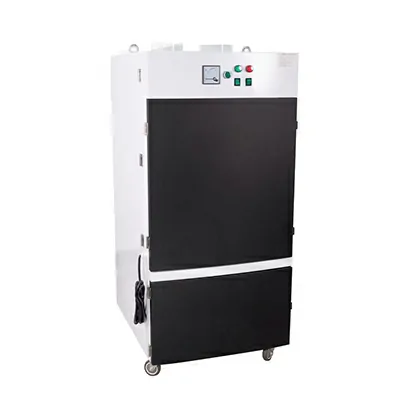
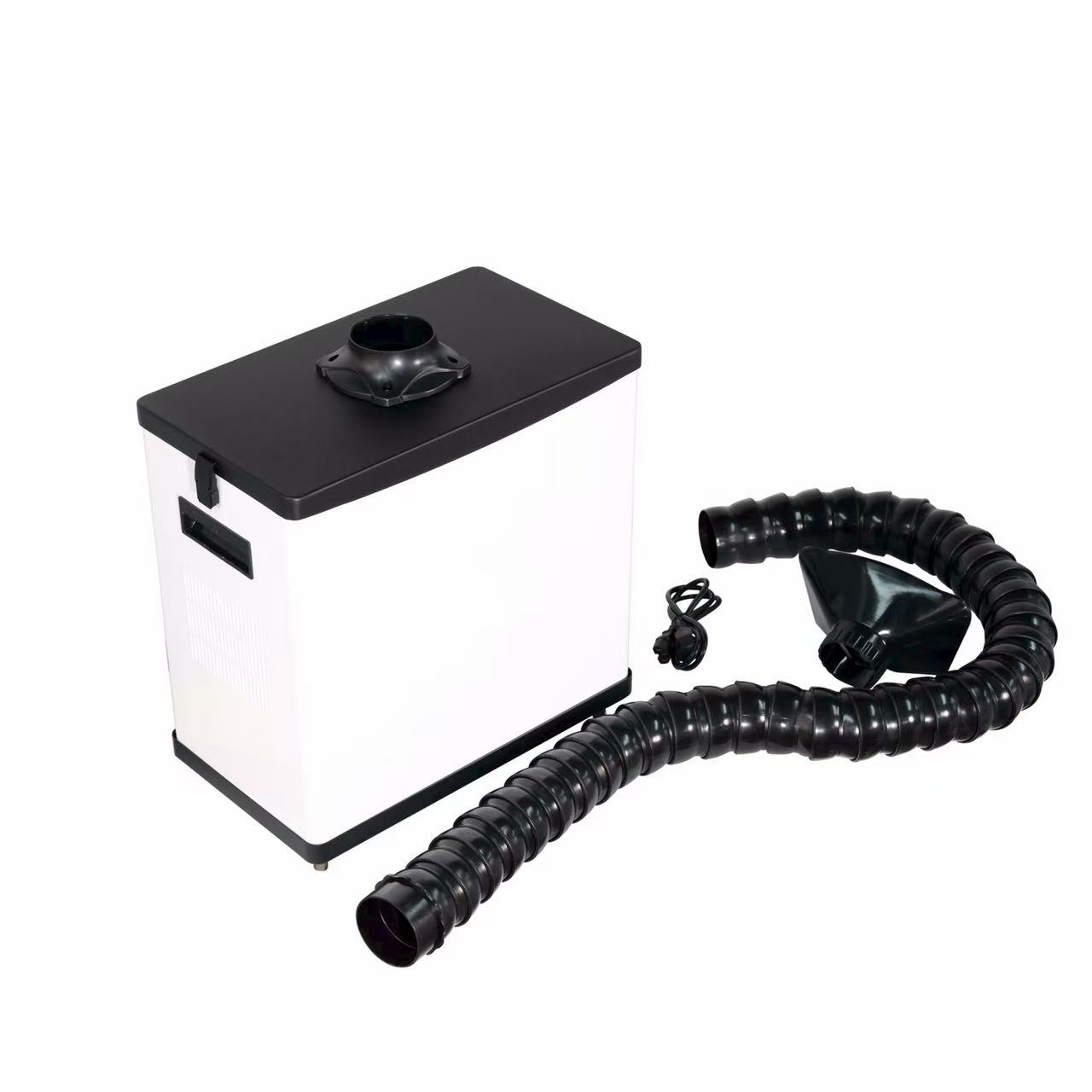
Choosing an extractor built for your laser category — rather than a generic industrial dust collector — means the airflow, filter stack, and intake design are already matched to the fume type you’re actually producing.
A properly engineered extractor filters air in layered stages, each targeting a different particle size or contaminant type:
Mimowork’s purifiers are built around this same multi-stage logic — pre-filter, HEPA, and activated carbon working in sequence — so particulate and gas-phase contaminants are both addressed rather than just one or the other.
Airflow is the single most common source of buyer’s remorse: too little, and fumes linger inside the enclosure; too much, and you’re paying for capacity — and noise — you don’t need.
A simple starting formula:
Example: an enclosure measuring 4 ft × 2 ft × 2 ft = 16 cubic feet. At 5 air changes per minute, you’d want an extractor rated around 80 CFM at the point of extraction, accounting for some loss through ducting and filters.
When in doubt, size slightly above your calculated figure — most extractors include speed control, so it’s easier to throttle down excess capacity than to make up for a unit that’s undersized.
If you’re running a machine for hours at a time — especially in a home, studio, or shared office space — noise matters as much as filtration. Look for units with sound-dampened housings and variable-speed fans, so you can run at a lower, quieter setting for light jobs and ramp up only when a denser material demands it.
The extractors worth paying for go beyond “turn on, filter air.” Useful features to look for include:
A generic industrial dust collector is built for wood shops and metal grinding, not for the specific mix of fine particulate and VOC-heavy gas that lasers produce. Mimowork extractors are engineered around laser fume profiles specifically — airflow, static pressure, and filter combinations are matched to what a CO2, diode, or fiber laser actually emits, rather than repurposed from unrelated dust-collection equipment.
| Shop Type | Recommended Extractor Class | Best For |
| Hobbyists & small studios | Desktop / compact models (e.g., Mini series) | Direct fit for common desktop diode and small CO2 engravers |
| Growing small-to-mid production | Mid-to-high power units | CO2 laser cutters running continuous production cycles |
| Metal fabrication & industrial cutting | Heavy-duty welding/cutting purifiers | High-volume metal laser welding and cutting fume loads |
Each class is built around the CFM range, filter depth, and noise profile appropriate to its use case — so you’re not overpaying for industrial capacity in a hobby setup, or underpowering a production line with a desktop unit.
Browse the full range and specifications on the Mimowork product pages to find the model matched to your machine and workload.
Mimowork units are built around HEPA-stage filtration rated to capture 99.97% of particulate at 0.3 microns, paired with activated carbon stages sized for extended service life — which means fewer filter changes, lower ongoing consumable costs, and consistent air quality between replacements rather than a steep drop-off right before a filter change is due.
Buying the right unit is only half the job — how you install it determines whether you actually get the performance it’s rated for.
Yes. Cutting or engraving acrylic releases methyl methacrylate vapor, which is a respiratory and eye irritant even in small concentrations, and it also leaves residue that clouds lenses over time. Dedicated extraction is one of the few truly non-negotiable setups for acrylic work.
It depends on usage volume and material type, but as a general guide: pre-filters should be checked monthly and replaced every 1–3 months under regular use, while HEPA and activated carbon filters typically last 6–12 months. Heavy daily production use or dense materials like leather and rubber will shorten these intervals — always check your unit’s filter-life indicator if it has one rather than relying on a fixed schedule.
No. Standard shop vacuums are built to capture larger debris and dust, not the sub-micron smoke particulate and gas-phase VOCs that lasers produce. They lack the HEPA and activated carbon staging needed to actually clean the air, and running one continuously for laser work isn’t what the motor or filter bags are designed for.
In some cases, yes — provided the combined airflow demand of both machines stays within the extractor’s rated CFM, and both machines aren’t expected to run at full extraction simultaneously without a drop in performance. For workshops running two machines regularly at the same time, it’s generally more reliable to size a single higher-capacity unit for the combined load, or run two independent units, rather than splitting one extractor’s capacity across two active sources.
Choosing the right laser fume extractor comes down to three questions: What’s your laser’s power and type? What materials are you actually cutting or engraving? And what level of filtration — HEPA, activated carbon, or both — does that combination demand? Get those three right, and everything else (CFM, noise level, smart features) falls into place around them.
Investing in proper extraction isn’t an accessory purchase — it’s an investment in your health, your machine’s lifespan, and the consistency of your finished work. Clean optics cut cleaner. Clean air means longer days at the machine without the headache, literally.
Browse Mimowork’s full range of laser fume extraction systems at mimowork-laser.com, or reach out to our team directly for a model recommendation matched to your specific laser, materials, and workspace.
News | Jul-24-2026
News | Jul-9-2026