Blog
In a field that evolves daily, staying ahead means staying informed.
Explore in-depth articles designed to help you solve complex challenges,
maximize your machine’s ROI.
Stay ahead in a competitive market.


In a field that evolves daily, staying ahead means staying informed.
Explore in-depth articles designed to help you solve complex challenges,
maximize your machine’s ROI.
Stay ahead in a competitive market.
News | Jul-22-2026
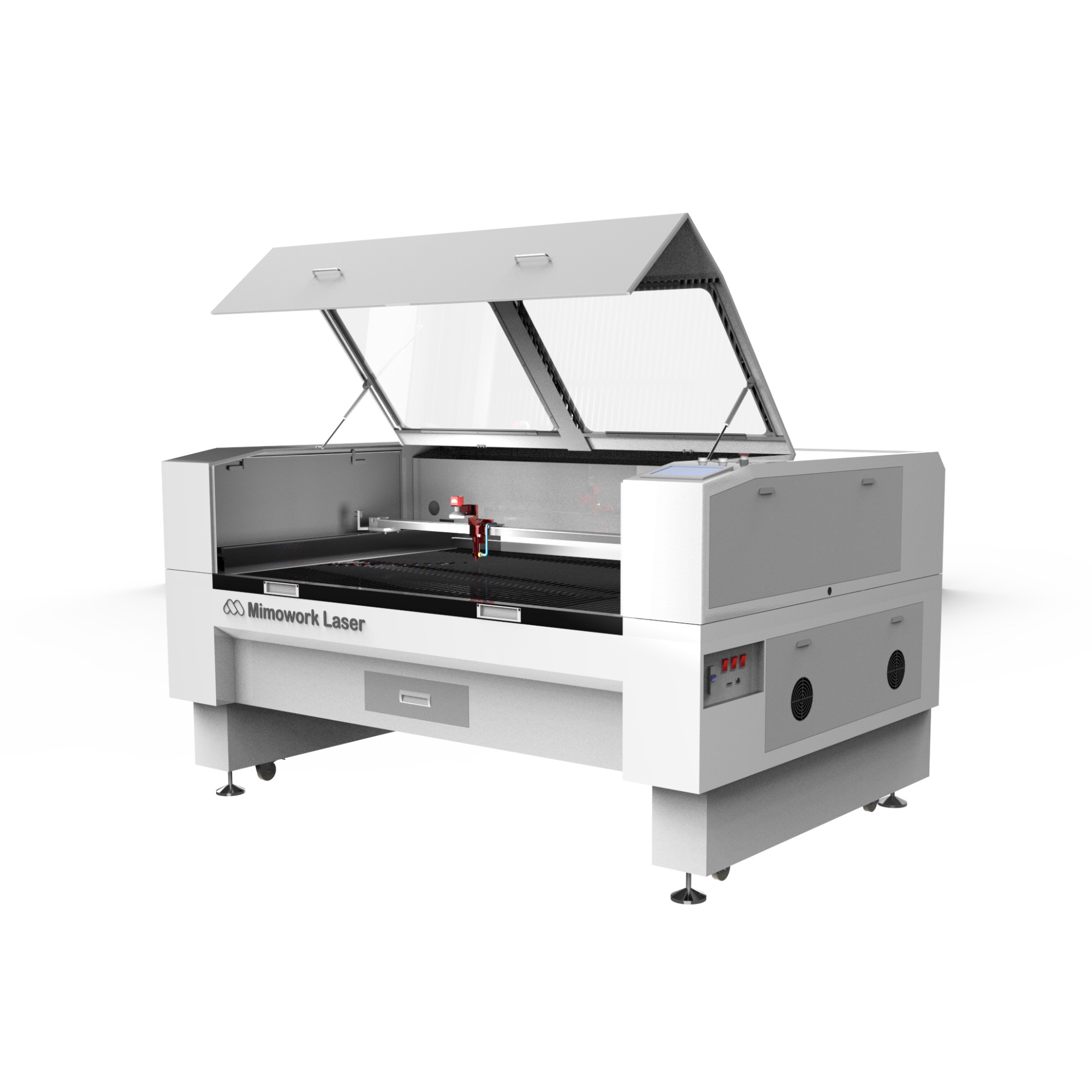
Woodworking has evolved significantly from traditional mechanical saws and physical routing bits. Modern manufacturing and custom design workshops increasingly rely on advanced thermal technology to achieve superior precision. At the heart of this evolution is the wood laser cutter and engraver, a specialized system engineered to handle intricate details on various timber substrates without physical wear or tear.
The operational principle of a CO2 laser system relies on a concentrated, high-energy beam of light directed through precision optics and a focusing lens. When this beam strikes the timber surface, the intense thermal energy instantly vaporizes the material along a digitally programmed vector path. Because there is no physical blade pressing into the grain, no heavy clamping is required for most standard jobs, which eliminates mechanical stress on fragile panels. Furthermore, a synchronized air assist blows away residue, leaving behind a pristine kerf. Wood absorbs CO2 laser energy very efficiently, which makes this specific wavelength the gold standard for clean wood processing.
When comparing thermal processing to conventional routing equipment, several distinct operational differences emerge. Traditional routers spin a physical cutting bit that applies noticeable mechanical force, often resulting in splintered edges, tool wear, and the need for heavy fixtures. In contrast, a laser wood cutting machine operates via non-contact thermal vaporization. The intense heat of the beam seals the wood grain as it cuts, producing smooth, finished edges that typically eliminate the need for secondary sanding.
| Comparison Parameters | Traditional Mechanical Router | Wood Laser Cutter and Engraver |
| Contact Type | Physical contact with high friction and downward force | Non-contact thermal vaporization via focused light beam |
| Edge Quality | Prone to splintering, requiring manual post-sanding | Heat-sealed smooth edges with no fraying or splintering |
| Tool Wear | High bit wear requiring frequent replacement and costs | Zero physical tool wear, ensuring consistent long-term quality |
| Detail Capability | Limited by bit radius; struggles with sharp interior corners | Exceptional precision for sharp corners, fine text, and complex patterns |
Choosing the correct configuration for your workshop requires a careful evaluation of technical specifications, power output, and mechanical accuracy. Understanding these parameters ensures that your investment matches your production volume and material thickness requirements.
Laser power directly dictates both engraving depth and cutting capability. For entry-level creators, hobbyists, and light workshop tasks, a 60W system provides a versatile balance of capability and accessibility, effectively handling thin plywood, basswood, and MDF up to 10mm to 12mm. For professional woodshops and demanding manufacturing environments requiring continuous operation on full sheets of dense hardwoods, power ratings between 100W and 300W are recommended. A reliable CO2 laser wood cutter within this higher tier ensures high throughput without pushing components to their thermal limits.
Engraving accuracy determines how sharp and clean the final graphic or text appears on the timber surface. Dots per inch (DPI) and raster resolution control image detail and shading quality. Higher DPI settings produce smoother grayscale gradients, clearer text, and exceptional photo-realistic engraving results for personalized items. These high-resolution outputs are driven by robust CNC motion systems—offering precise performance metrics such as maximum speeds up to 400 mm/s and accelerations up to 4000 mm/s²—that maintain steady movement along the X and Y axes, ensuring that every vector pass aligns perfectly across single items or large production batches.
| System Specification | Entry-Level Configuration (F60 / 60W) | Industrial Production Configuration (F130, F130-L / Up to 600W) |
| Target Application | Prototyping, custom gifts, hobbyist crafts, thin sheets | Full-sheet cutting, heavy hardwoods, continuous industrial batch work |
| Effective Working Area | Compact desktop setups starting from 600×400mm | Versatile industrial sizes scaling up to 1800×3000mm (customizable) |
| Effective Cutting Depth | Ideal for materials ranging up to 10mm–12mm | Capable of processing thick structural plywood and dense solid lumber |
| Operational Workflow | Suitable for single-piece customization and low-volume tasks | Optimized for automated integration and high-throughput manufacturing |
Different wood types and sheet materials react uniquely to thermal energy. Mastering material behavior ensures optimal results and prevents common issues like excessive charring or incomplete cuts.
Engineered woods like plywood and MDF contain glues and resins that react differently compared to natural solid woods such as maple, oak, basswood, and cedar. Plywood cuts exceptionally well because the laser vaporizes both the wood layers and adhesive evenly, provided the glue quality is consistent. Solid hardwoods require slightly higher energy density due to natural density variations within the grain. Utilizing a dependable laser engraving machine for wood allows operators to adjust frequency and assist gas pressure to prevent flare-ups and minimize surface discoloration on sensitive finishes.
Achieving a flawless finish involves balancing travel speed with laser power output. Excessive power combined with slow movement can scorch delicate edges or widen the kerf unnecessarily, while insufficient power leaves the material uncut. Operators must test parameters on sample scraps before running final production batches. Fine-tuning the focal length of the lens ensures that the beam width remains at its absolute minimum when hitting the surface, guaranteeing razor-sharp details and clean vertical cut lines.
| Timber Substrate | Primary Processing Behavior | Recommended Operational Focus |
| Plywood & MDF | Vaporizes cleanly; edges are sealed by heat | Balance air assist pressure to blow away smoke residue without shifting light sheets |
| Hardwoods (Maple/Oak) | Dense structure requires stable, concentrated energy | Lower travel speed slightly to ensure full penetration through denser grain rings |
| Softwoods (Basswood/Cedar) | High absorption rate; processes rapidly | Monitor power levels carefully to prevent surface scorching on lighter natural tones |
Scaling a woodworking business relies heavily on software integration, efficient file preparation, and streamlined workflow management from digital concept to physical reality.
Modern processing begins in professional design software and intuitive control platforms like LightBurn. Operators import vector files (such as DXF or SVG) or raster graphics directly into the controller. Dual functionality allows the system to switch seamlessly between cutting mode (lower speed, higher power for contour profiles) and engraving mode (high-speed raster scanning for surface textures) simply by updating parameters within the software interface. This eliminates physical tooling delays and lets creators switch between entirely different layouts in seconds.
For workshops transitioning from custom one-off pieces to volume manufacturing, efficiency is paramount. Industrial setups maximize material yield through advanced software nesting features that minimize waste between components on a single sheet. Non-contact processing removes the time-consuming need for mechanical clamps, drastically reducing setup intervals between cycles. By ensuring consistent output across hundreds of identical panels, businesses can fulfill large orders reliably without operator fatigue or quality drift.
| Workflow Stage | Traditional Processing Workflow | Laser-Optimized Workflow |
| Setup & Fixturing | Complex manual clamping and mechanical alignment | Minimal fixturing required due to non-contact processing |
| Tool Changing | Frequent bit changes, manual adjustments, and tool wear | Zero physical tool changes; switch designs digitally in seconds |
| Material Utilization | Wider cutting paths create larger scrap margins | Narrow laser kerf and software nesting maximize material yield |
Yes, CO2 laser systems process wood effectively while sealing the edges as they cut. While minor residue or smoke traces can occasionally appear on the surface depending on the wood type and power settings, proper air assist pressure and protective masking tape completely eliminate unwanted discoloration, leaving clean edges ready for assembly.
Laser cutting utilizes full laser power to vaporize material entirely along the depth of the wood sheet, producing separated parts, puzzle pieces, or structural components. Laser engraving uses reduced power and high-speed raster scanning to alter only the surface layer, creating depth, contrast, logos, and detailed photographic textures without cutting through the material.
In most cases, post-cut sanding is entirely eliminated. The high thermal energy of the focused beam instantly vaporizes the wood and seals the side grain simultaneously, producing a smooth, finished edge straight off the machine bed.
Effective cutting thickness depends heavily on the laser wattage selected. Entry-level 60W systems comfortably process materials up to 10mm–12mm thick, whereas robust industrial systems ranging from 100W to 300W effortlessly penetrate full sheets of dense hardwoods and thick structural plywood for continuous production.
Consistency is maintained by utilizing stable CO2 laser wavelengths, precision CNC motion control systems, and reliable software nesting. Because there is no physical tool wear or mechanical cutting friction, the thousandth part produced matches the first part precisely in dimension and edge quality.
Investing in a reliable wood laser cutter and engraver transforms workshop capabilities, replacing slow mechanical constraints with seamless, high-precision thermal processing. Whether you are scaling up custom production batches or fine-tuning delicate architectural details, having the right technology ensures long-term operational success. To explore professional-grade laser systems tailored to your specific workshop requirements and discover advanced manufacturing solutions, visit mimowork-laser today.
News | Jul-16-2026
News | Jul-15-2026
News | Jul-9-2026