Blog
In a field that evolves daily, staying ahead means staying informed.
Explore in-depth articles designed to help you solve complex challenges,
maximize your machine’s ROI.
Stay ahead in a competitive market.


In a field that evolves daily, staying ahead means staying informed.
Explore in-depth articles designed to help you solve complex challenges,
maximize your machine’s ROI.
Stay ahead in a competitive market.
News | Jun-17-2026
CO2 laser cutter machines have become one of the most versatile tools for processing wood, acrylic, and a wide range of non-metal materials. Whether you are a DIY creator, small workshop owner, signage business, or industrial manufacturer, choosing the right CO2 laser system directly affects cutting quality, production efficiency, and long-term operating cost.
This guide explains how CO2 laser cutters work for wood and acrylic, what factors to consider before purchasing, and how to evaluate machine performance based on real production needs.
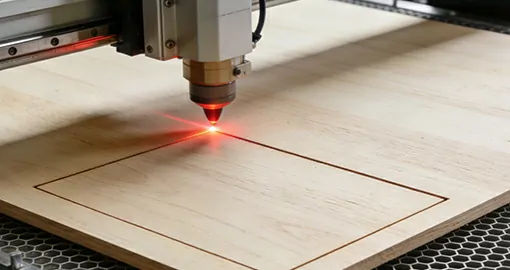
CO2 laser cutting machines are widely used for wood and acrylic because they provide a rare combination of precision, smooth cutting edges, and high processing flexibility. Unlike mechanical tools, laser cutting does not physically touch the material, which allows cleaner finishes and more detailed designs.
For both wood and acrylic applications, CO2 lasers can handle everything from simple straight cuts to highly complex engraving patterns, making them ideal for signage, decoration, and customized production.
CO2 laser cutters deliver extremely clean, smooth cutting edges, especially when processing materials such as plywood, MDF, and acrylic sheets. The laser beam vaporizes material instantly, reducing burrs, splintering, and post-processing requirements.
For acrylic in particular, laser cutting produces polished edges with a flame-polished effect, eliminating the need for additional sanding or polishing. This makes it highly suitable for advertising signs, display panels, and decorative products where appearance quality is critical.
MimoWork CO2 laser systems are designed to maintain stable beam quality, ensuring consistent cutting results even during long production runs.
One of the biggest advantages of CO2 laser technology is its ability to cut extremely detailed and complex shapes with high accuracy. Intricate lettering, fine decorative patterns, and micro-level engraving details can all be reproduced consistently without tool wear.
This is especially valuable for custom design work, where every project may require different shapes or artistic elements. Unlike traditional cutting tools, laser systems do not require mold changes, making them ideal for flexible and short-run production.
CO2 laser cutting is a non-contact process, meaning the laser beam does not physically touch the material. This eliminates mechanical stress, reducing the risk of cracking acrylic sheets or splintering wood edges.
It also ensures better consistency across batches, as there is no tool degradation over time. This makes CO2 laser cutters particularly reliable for long-term industrial use and high-volume production environments.
Selecting the right CO2 laser cutter requires evaluating not just machine price, but also performance parameters, application needs, and long-term scalability.
Laser power determines cutting capability and efficiency. Lower-power machines (40W–80W) are suitable for engraving and light cutting, while mid-range (80W–150W) and industrial systems (150W–300W+) are better for thicker wood and acrylic.
Higher power also improves cutting speed, which is critical for production environments where efficiency directly impacts cost.
The working area determines the maximum material size that can be processed. Small desktop machines are suitable for DIY projects, while industrial systems support large sheets of acrylic or wood panels.
For signage and furniture production, larger worktables reduce the need to reposition materials and improve production efficiency.
MimoWork offers scalable working area configurations designed for both small studios and industrial manufacturing lines.
Not all CO2 laser machines are optimized for the same materials. Wood density, acrylic thickness, and surface coating all affect cutting performance.
A high-quality system should support a wide range of materials, including plywood, MDF, solid wood, cast acrylic, and extruded acrylic, ensuring flexibility for different project requirements.
Modern CO2 laser cutters are equipped with intelligent control software that allows users to import design files, adjust cutting parameters, and optimize layout.
Advanced systems may also include features such as autofocus, air assist control, and nesting software, which help improve efficiency and reduce material waste.
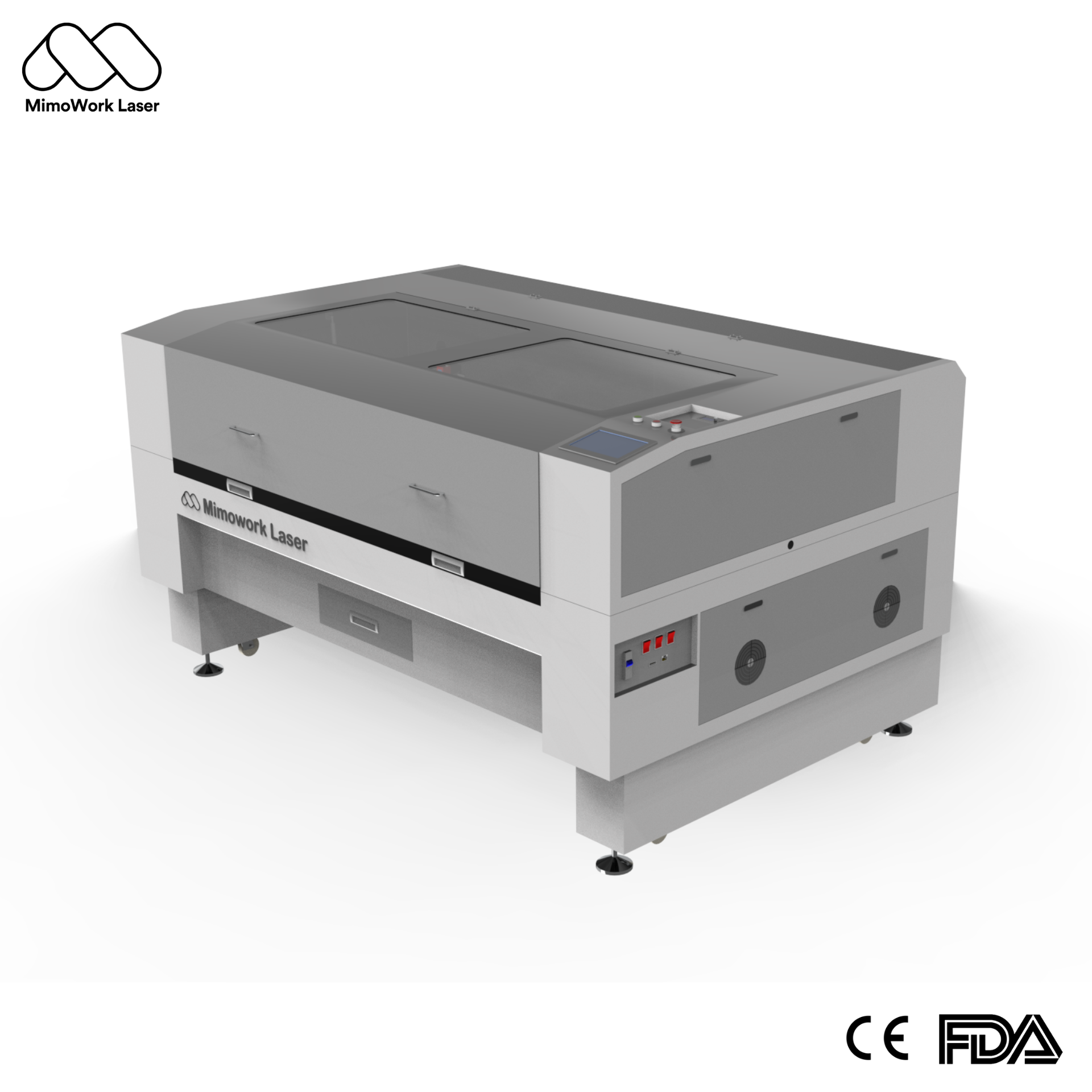
CO2 laser cutters are widely used in the wood manufacturing industry due to their ability to produce precise, detailed designs without physical contact.
Laser cutting is commonly used for indoor and outdoor signage. It allows manufacturers to create sharp lettering, logos, and decorative shapes with high precision.
Because there is no tool wear, every sign produced maintains identical quality, making it ideal for branding and commercial signage applications.
In furniture manufacturing, CO2 laser cutters are used to create decorative panels, joints, and custom components. The high accuracy ensures perfect fitment between parts, reducing assembly errors.
This also allows designers to experiment with complex geometries that would be difficult to achieve using traditional woodworking tools.
CO2 laser systems are widely used in decorative arts, including wall art, wooden ornaments, and interior design elements. The ability to engrave fine details makes it ideal for creative industries.
Laser engraving allows customization of wooden gifts such as photo frames, plaques, and souvenirs. This is a growing market driven by personalized consumer demand.
Acrylic is one of the most popular materials for CO2 laser cutting due to its clean finish and excellent laser response.
CO2 lasers produce polished edges on acrylic sheets, making them ideal for advertising signs, store displays, and branding materials.
The flame-polished effect eliminates the need for post-processing, saving time and cost.
Laser-cut acrylic is widely used in LED lighting panels and illuminated signage. The precision of laser cutting ensures uniform light diffusion and clean edge definition.
Acrylic trophies and awards require high aesthetic quality and precise engraving. CO2 laser cutters allow full customization with logos, text, and complex shapes.
Acrylic is also used in industrial applications such as protective covers, machine panels, and prototype components, where precision and repeatability are critical.
Safety is a critical factor when working with laser equipment, especially in enclosed workshop environments.
Laser cutting wood and acrylic produces smoke and fumes that must be properly extracted. A ventilation system or fume extractor is essential for maintaining air quality and protecting operators.
Operators should always wear laser safety glasses designed for CO2-wavelength protection to prevent accidental exposure to laser radiation.
Certain plastics, such as PVC, should never be cut with CO2 lasers due to toxic gas emissions. Material compatibility should always be verified before processing.
Laser tubes generate heat during operation and require stable water cooling systems. Regular monitoring ensures consistent performance and prevents overheating damage.
Proper maintenance ensures long-term performance stability and extends machine lifespan.
Dust and residue can reduce laser efficiency and cutting accuracy. Optical components should be cleaned regularly using appropriate cleaning solutions.
Water chillers should be monitored to ensure stable temperature control. Poor cooling can significantly reduce the laser tube’s lifespan.
Laser beam alignment affects cutting precision. Regular calibration ensures consistent output quality across all production tasks.
Components such as laser tubes, belts, and filters have limited lifespans and should be replaced based on usage conditions to maintain optimal performance.
MimoWork Laser focuses on delivering industrial-grade laser cutting solutions for both small businesses and large-scale manufacturers.
MimoWork machines are designed with stability, precision, and scalability in mind. They integrate advanced motion systems, intelligent control software, and optimized laser configurations to ensure consistent production performance.
Whether you are a small workshop, a signage business, or an industrial manufacturer, MimoWork provides flexible configurations, including standard flatbed laser cutters, mid-size production machines, and fully automated large-format industrial laser-cutting solutions.
This scalability allows businesses to expand production capacity without replacing entire systems.
| Parameter | Entry-Level Configuration (Small Workshop / Studio) | Mid-Level Commercial Machine (Advertising / Craft Factory) | Industrial Production System (Mass Manufacturing) |
| Laser Power | 40W–80W | 80W–150W | 150W–300W+ |
| Suitable Materials | Soft wood, thin acrylic | MDF, plywood, acrylic sheets | Thick wood panels, industrial acrylic |
| Max Cutting Thickness | 3–5mm | 6–15mm | 15–30mm+ |
| Working Area Size | 300×500mm / 600×400mm | 1300×900mm | 1600×1000mm / larger |
| Processing Precision | Medium | High precision | Industrial-grade high stability |
| Acrylic Edge Finish | Basic cut edge | Semi-polished edge | High-gloss flame-polished edge |
| Software Capability | Basic control software | RDWorks / LightBurn | Industrial control system + auto optimization |
| Automation Features | None | Optional autofocus / air assist | Expandable nesting & batch production system |
| Typical Applications | DIY, model making | Signage, crafts, advertising production | Commercial manufacturing, batch production |
| Production Efficiency | Low | Medium | High |
| System Scalability | Poor | Medium | High (upgradeable architecture) |
| Machine Type Example | Desktop CO2 laser cutter | Commercial CO2 laser cutter | Industrial CO2 laser cutting system |
CO2 laser cutters can process wood, acrylic, MDF, plywood, leather, fabric, paper, and many other non-metal materials.
Both materials are suitable, but acrylic produces cleaner, polished edges, while wood offers more texture and engraving depth.
Yes, regular maintenance such as lens cleaning, cooling system checks, and beam alignment is necessary to ensure long-term performance and stability.
Yes. Equipped with the advanced Contour Recognition System, MimoWork Vision Laser cutters can automatically scan, detect, and compensate for any material shifts or irregular print patterns, ensuring absolute cutting accuracy.
Choosing the right CO2 laser cutter depends on your application needs, production scale, and material requirements. For wood and acrylic processing, factors such as laser power, working size, and automation features play a critical role in determining efficiency and output quality.
MimoWork Laser provides scalable, industrial-grade solutions designed to help businesses improve productivity, reduce operational costs, and achieve high-precision manufacturing results across both creative and industrial applications.
News | May-27-2026
News | May-18-2026
News | Apr-23-2026