Blog
In a field that evolves daily, staying ahead means staying informed.
Explore in-depth articles designed to help you solve complex challenges,
maximize your machine’s ROI.
Stay ahead in a competitive market.

In a field that evolves daily, staying ahead means staying informed.
Explore in-depth articles designed to help you solve complex challenges,
maximize your machine’s ROI.
Stay ahead in a competitive market.
News | Jun-15-2026
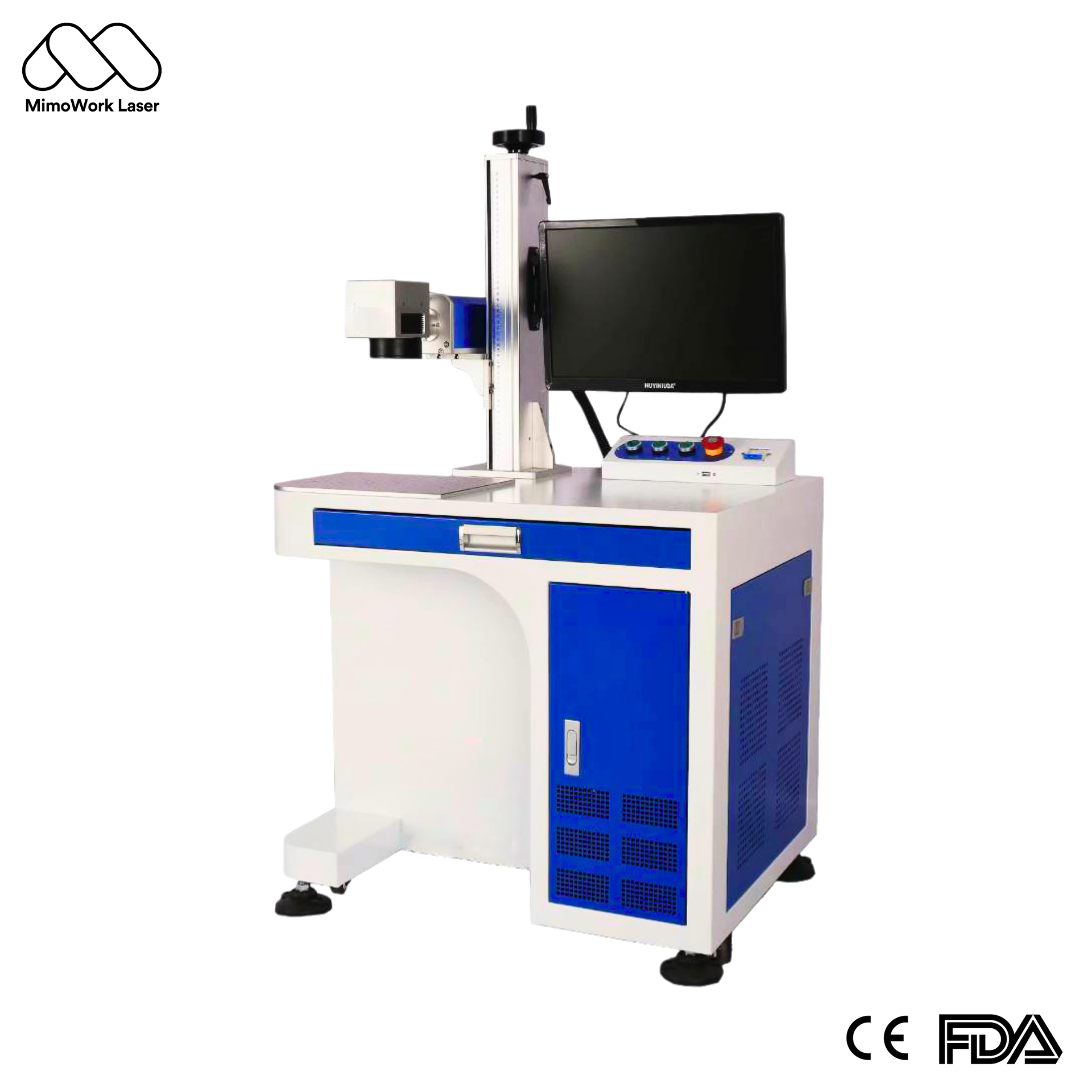
If you run a production line that needs permanent markings on metal components — serial numbers, barcodes, part codes, logos — fiber laser marking is probably already on your radar. But there’s a gap between knowing what technology is and knowing whether a specific machine fits your workflow. This guide closes that gap.
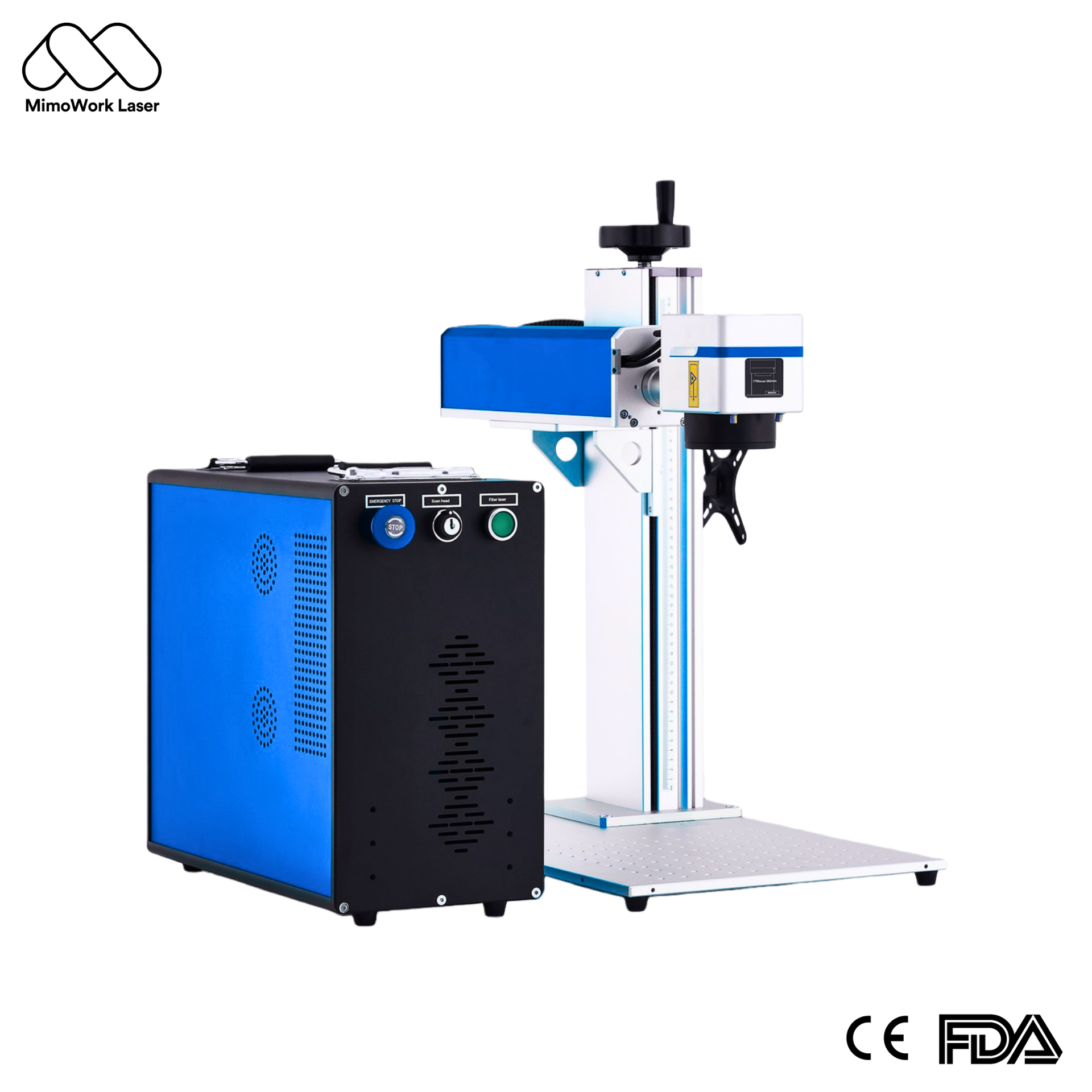
A fiber laser marking machine generates a laser beam through an optical fiber doped with rare-earth elements (typically ytterbium), producing a wavelength of 1064 nm. That beam is delivered through a 3D galvanometer system — two high-speed, motor-driven mirrors that steer it across the marking field at up to 8,000 mm/s.
When the beam hits the material surface, it either vaporizes or alters the surface layer through controlled thermal energy, exposing the layer beneath. The result is permanently altered — recessed, discolored, or surface-annealed depending on the parameters used.The galvanometer approach is what separates fiber laser markers from older flatbed-style machines. There’s no gantry moving across the workpiece — just mirrors redirecting a beam in milliseconds. That’s what makes the speed possible.
The 1064 nm wavelength is highly absorbed by metals, which is why fiber laser marking dominates metal identification applications. Here’s how it breaks down by material category.
The core use case. Stainless steel, carbon steel, tool steel, and iron alloys — fiber laser marking produces clean, high-contrast permanent marks on all of them. Black annealing (heating the surface without ablation) produces a smooth, dark mark that typically maintains the material’s corrosion resistance — important in food-contact and medical applications. Direct ablation creates recessed marks for deeper identification needs.
Aluminum marks cleanly, though its higher reflectivity than steel requires more attention to parameter settings. Copper, gold, and other reflective metals can be marked, though their higher reflectivity at 1064 nm requires careful parameter adjustment — results vary by alloy and surface condition, and testing on the actual material before committing to a configuration is worth doing.
Materials such as ABS, polycarbonate (PC), PET/PES, and nylon are supported within this product lineup. PVC and PTFE are not recommended for marking — processing these materials generates hazardous fumes, and use of appropriate PPE and a high-efficiency fume extraction system is mandatory if your workflow involves them.
Ceramics can be marked under the right parameters, though the interaction is different from metals — the laser ablates the surface rather than annealing it. Composite materials vary widely; some fiber-reinforced composites carry a risk of fiber damage during processing. Testing on actual samples is the reliable way to determine suitability.
A fiber laser mark is part of the material, not something applied to it. It won’t wear off, fade under UV exposure, or get wiped away by cleaning solvents. For parts that need to remain traceable throughout their service life — medical devices, automotive components, aerospace hardware — this permanence is the whole point. Barcodes, QR codes, data matrix codes, serial numbers: the galvanometer system reproduces them all accurately at production speed.
There’s no ink, no ribbon, no nozzle to clean. Once the machine is set up, the primary ongoing cost is electricity. Fiber laser sources are designed for long service life — one reason industrial buyers who run high-volume marking operations find the total cost of ownership significantly lower than inkjet or pad printing alternatives over time.
With marking speeds reaching up to 8,000 mm/s with high repeat accuracy, fiber laser markers are well-suited for production environments where cycle time is critical. Their compact design also makes integration relatively easy, whether you’re adding an XY moving table or a rotary device to an existing line.
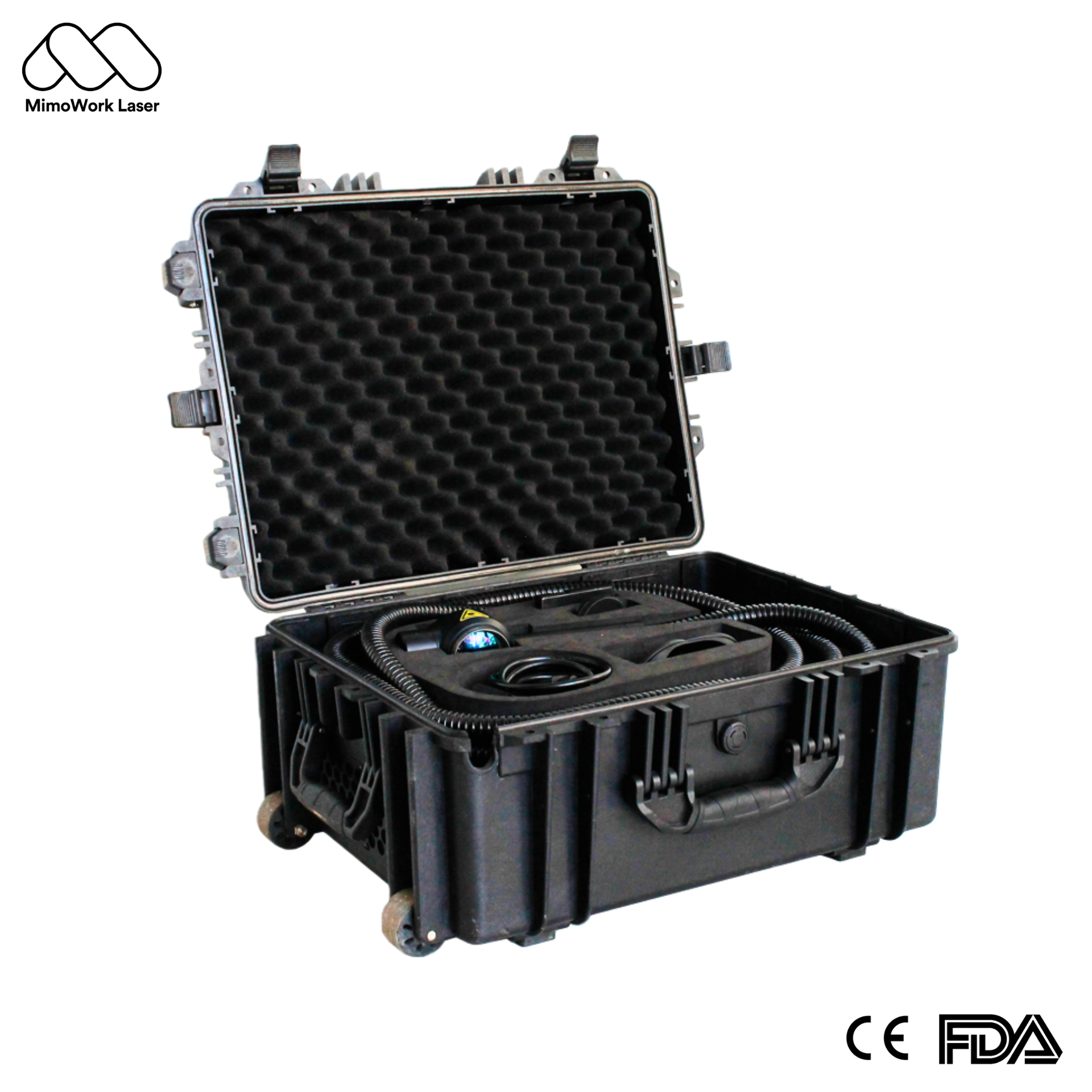
For more flexible setups, optional portable or handheld configurations are available for applications requiring greater mobility, making it much easier to move the equipment between trade shows, job sites, or different production areas.
Fiber laser sources don’t have moving parts or consumable optics like ink cartridges or CO₂ tubes along the beam path, so there’s generally less maintenance involved compared to CO₂ tube systems. The 3D galvanometer setup is made for continuous, high-speed work in industrial environments.
For surgical instruments, implants, and other medical-grade parts, markings must hold up through sterilization — autoclaving, chemical disinfection, and repeated cleaning. Fiber laser marking on stainless steel handles this well, while typically maintaining corrosion resistance and surface quality, so it’s commonly used in medical device production.
PCBs, ICs, electronic components, and nameplates are all listed as core applications on the Mimowork product page. Fiber laser marking handles the fine detail and tight tolerances needed for electronics identification, and since it’s a non-contact process, there’s no mechanical stress on fragile parts.
In automotive supply chains, keeping track of parts usually comes down to having markings that can survive everything they go through — assembly, painting, heat treatment, and actual use in the field. Fiber laser marking is often used on metal components like tools, fittings, and fasteners because the marks remain clear over time. It’s also fast and consistent enough to handle batch production, not just one-off pieces.
For fine detail work on precious metals — rings, pendants, watch components — the small spot size and precise galvanometer control of a fiber laser marker produce clean results that mechanical engraving can’t easily replicate. Portable configurations make this accessible to jewelry studios and custom gift operations that need flexibility in where the machine can operate.
Mimowork’s fiber laser marking machines are available in three power configurations. The right choice depends on your material, required mark depth, and production throughput.
One important note: higher power doesn’t automatically mean better marks. Parameters such as pulse frequency, scanning speed, and focus determine the actual result. Testing on your specific material at your required depth is the only reliable way to confirm which configuration fits.
The standard desktop configuration is compact and open — practical for workshop environments where you’re loading parts manually and have operator supervision. A handheld laser marking system, connected via a fiber cable, provides flexible reach for large or irregularly shaped workpieces that cannot be easily moved.
For environments where laser safety enclosures are required, or where dust or debris needs to be contained, an enclosed configuration is the more appropriate choice. Both configurations use the same core laser and galvanometer technology — the difference lies in the housing and safety setup, not in the marking performance.
Mimowork’s fiber laser marking machines are typically configured with industry-standard fiber laser sources, with options from Raycus, JPT, and IPG Photonics depending on budget, performance requirements, and application type.
For buyers with specific marking requirements—such as color marking, high-contrast plastics, or precision engraving—the choice of laser source (especially JPT MOPA vs. standard fiber) should be clarified early in the configuration process.
The system is generally driven by industry-standard laser control software such as EzCad, which is widely used for fiber laser marking applications and supports common formats, including barcodes, QR codes, data matrix codes, and vector graphics.
For users looking for a more design-oriented workflow or broader compatibility with creative vector tools, support for software like LightBurn may also be considered, depending on the controller and configuration.
In terms of system integration:
Mimowork provides integrated machine and system solutions and supports customers across the configuration and integration process — including material testing before purchase. The product line covers CO₂, fiber, UV, and MOPA laser marking, plus laser cutting and cleaning systems, which means there’s a single point of contact if your requirements span multiple laser processes. The fiber laser marking machine ships with the galvanometer, control system, and software as a complete unit.
The core difference is wavelength, which determines material compatibility.
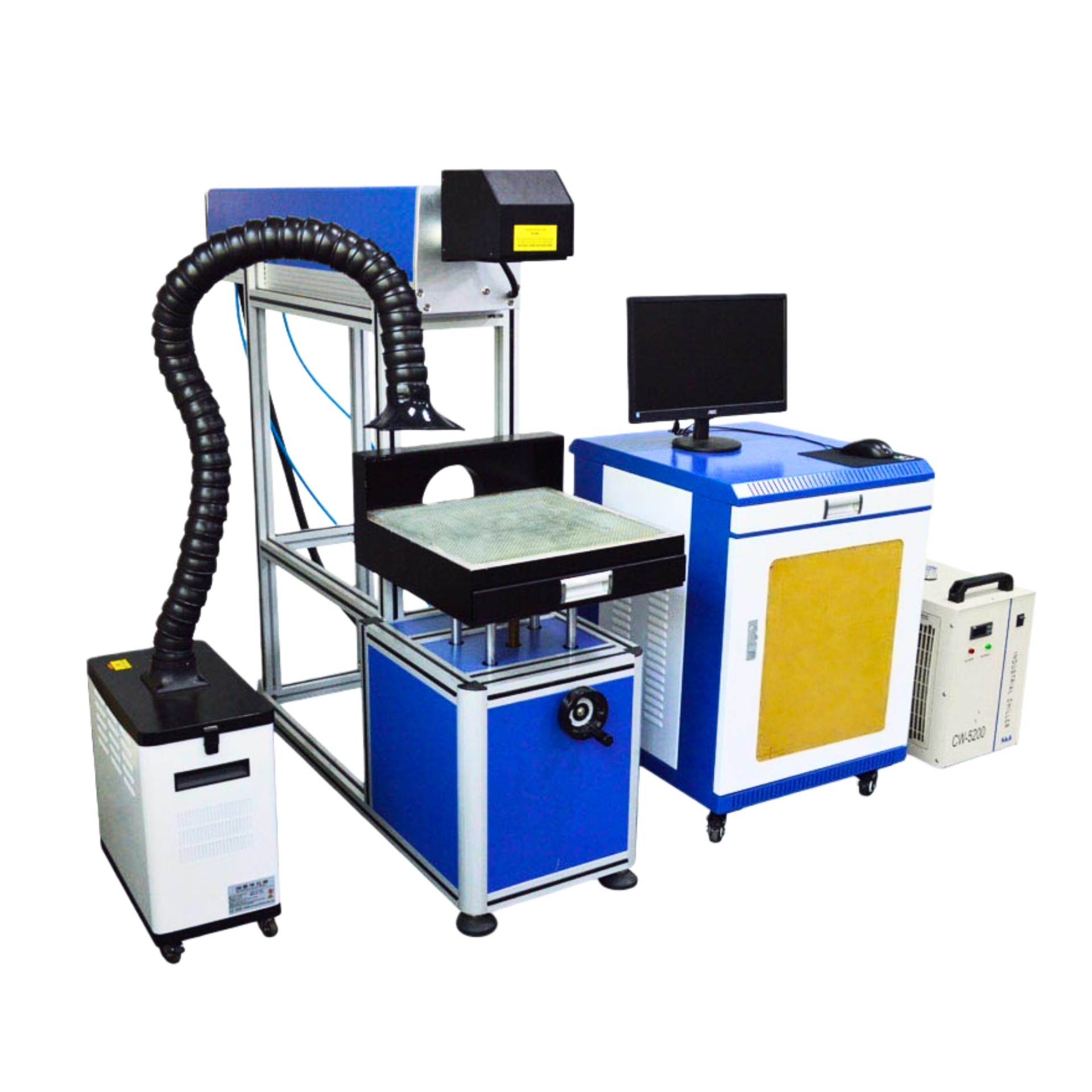
UV laser (355 nm): Very short wavelength enables cold processing with minimal heat input. Used for precision marking on sensitive plastics, glass, and materials where thermal effects need to be minimized.
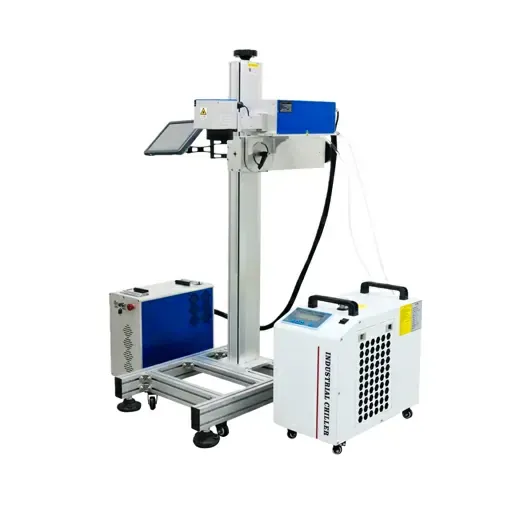
If your primary materials are metals, a fiber laser is the correct starting point. If you process both metals and non-metals, the two technologies address different parts of that need.
Yes, with the right parameters. Deep engraving requires multiple passes at higher power and lower speed — the laser removes material layer by layer. At 50W, this is more efficient than at 20W, but it takes longer than surface marking regardless of power level. The achievable depth depends on the material’s hardness and the time per part that the application allows. If deep engraving is a primary use case rather than an occasional one, it’s worth discussing specific depth requirements and cycle time targets during the selection process.
The control software handles most of the complexity. You import your design file, set the power, speed, and frequency parameters for your material, and run the job. Most operators are comfortable with routine production use after a short learning period. Initial installation, focus calibration, and parameter optimization for a new material take more time and, ideally, involve support from the supplier, which is part of why material testing before purchase is worth doing. Once the parameters for your standard materials are established, day-to-day operation is straightforward.
Fiber laser marking isn’t complicated, but getting the configuration right — power, field size, software integration, safety setup — requires matching the machine to your actual production context, not just buying on spec. The 20W/30W/50W range covers most industrial metal-marking needs; the choice among them depends on your throughput requirements and material.
If you want to test results on your actual parts before committing, Mimowork supports material testing as part of the pre-purchase process. That’s the most direct way to confirm the right configuration.
News | Jun-5-2026
News | May-14-2026
News | Apr-24-2026