Blog
In a field that evolves daily, staying ahead means staying informed.
Explore in-depth articles designed to help you solve complex challenges,
maximize your machine’s ROI.
Stay ahead in a competitive market.


In a field that evolves daily, staying ahead means staying informed.
Explore in-depth articles designed to help you solve complex challenges,
maximize your machine’s ROI.
Stay ahead in a competitive market.
News | Jul-3-2026
The landscape of small-scale manufacturing and product creation has transformed dramatically over the past decade. What once required large workshops, expensive tooling, and skilled manual labor can now be accomplished with a single laser cutter machine sitting on a workbench. For small businesses in 2026, investing in the right laser cutting equipment isn‘t just about keeping up with technology—it’s about unlocking new revenue streams, reducing production costs, and delivering quality that rivals enterprise-level operations.
Small businesses across industries—from custom signage shops and apparel brands to jewelry designers and architectural model makers—are discovering that this technology enables them to take on projects previously out of reach. The equipment can cut intricate patterns in wood, engrave detailed logos on acrylic, perforate delicate fabrics, and even mark serial numbers on metal components, all with precision measured in fractions of a millimeter.
For many business owners, the transition from manual cutting to laser-based workflows represents a fundamental shift. Traditional methods—mechanical saws, die-cutting, or manual knives—are labor-intensive, material-wasteful, and limited in design complexity. Laser cutting, by contrast, operates from digital files, meaning that once a design is created, it can be reproduced with perfect consistency hundreds or thousands of times.
This automation is particularly valuable for scaling production without hiring extra staff. The best laser cutter machines for small business offer intuitive software that bridges design and production, allowing owners to focus on creativity and customer relationships rather than manual labor.
Beyond efficiency, laser cutting provides a distinct edge. The ability to offer custom, intricate designs that competitors using traditional methods cannot match creates a powerful differentiator. Whether it‘s personalized invitations with laser-cut lace patterns, custom wooden signs with photo-realistic engravings, or branded leather goods with permanent markings, this equipment enables premium pricing for unique, high-quality products.
To see the power of this technology in action on a real custom woodworking project, watch the video below:
Custom Woodworking Project
Choosing the right laser cutter machine for your business requires careful evaluation of several factors. Unlike hobbyist models that prioritize low cost, or industrial systems built for 24/7 operation, the ideal unit balances performance, reliability, and affordability.
The working area (bed size) is arguably the most important specification. It determines the maximum material size you can process in a single pass, directly impacting what jobs you accept and how efficiently you produce.
Entry-level desktop models typically offer around 600×400mm (23.6″×15.7″), sufficient for small gifts, jewelry, phone cases, and similar products. Mid-size machines expand to 1000×600mm (39.3″×23.6″), accommodating signage, garment panels, and displays. For full sheets, larger formats like 1300×2500mm (51.1″×98.4″) or even 1800×3000mm (70.8″×118.1″) become necessary.
| Working Area | Material Size | Best Suited Business Types |
| 600 × 400mm | A3 and smaller | Gifts, jewelry, phone cases, small custom items |
| 1000 × 600mm | Medium format | Signage, garment panels, displays, mid-size decor |
| 1300 × 900mm | Large format | Wood signage, acrylic displays, gifts, exhibits |
| 1300 × 2500mm | Full sheets | Bulk wood products, large-format acrylic cutting |
| 1600 × 1000mm and above | Industrial format | Fabric bulk cutting, industrial textiles |
Laser power (watts) determines cutting speed and maximum material thickness. Higher power cuts thin materials faster and enables thicker cuts, but also increases cost, energy consumption, and maintenance needs.
For small businesses working with wood, acrylic, and fabric, CO2 lasers typically range from 60W to 150W. A 60W unit efficiently cuts 3-5mm acrylic and wood, while 100-150W systems handle 10-15mm thickness. Industrial applications may require up to 600W.
| Laser Power | Cutting Thickness (Wood/Acrylic) | Cutting Speed | Best Suited Business Scenarios |
| 60W | 3-5mm | Medium | Gifts, crafts, small custom orders |
| 80W | 5-8mm | Medium-fast | Signage, displays, batch production |
| 100W-150W | 8-15mm | Fast | Large signage, furniture components, industrial parts |
| 150W-300W | 15-25mm | Very fast | Industrial wood processing, thick acrylic |
| 300W-600W | 25mm+ | Extremely fast | Heavy industrial cutting |
The best systems offer automation features that dramatically boost productivity. Conveyor belts, auto-feed mechanisms, and integrated parts collection reduce manual labor and enable lights-out production—running jobs overnight without supervision.
Customization options allow you to configure the equipment exactly to your needs, from modular upgrades as you grow to industry-specific features, ensuring you don‘t pay for unnecessary capabilities while retaining flexibility.
Based on specific small-business needs, here’s a comparison of the most suitable laser cutter machine configurations available in 2026:
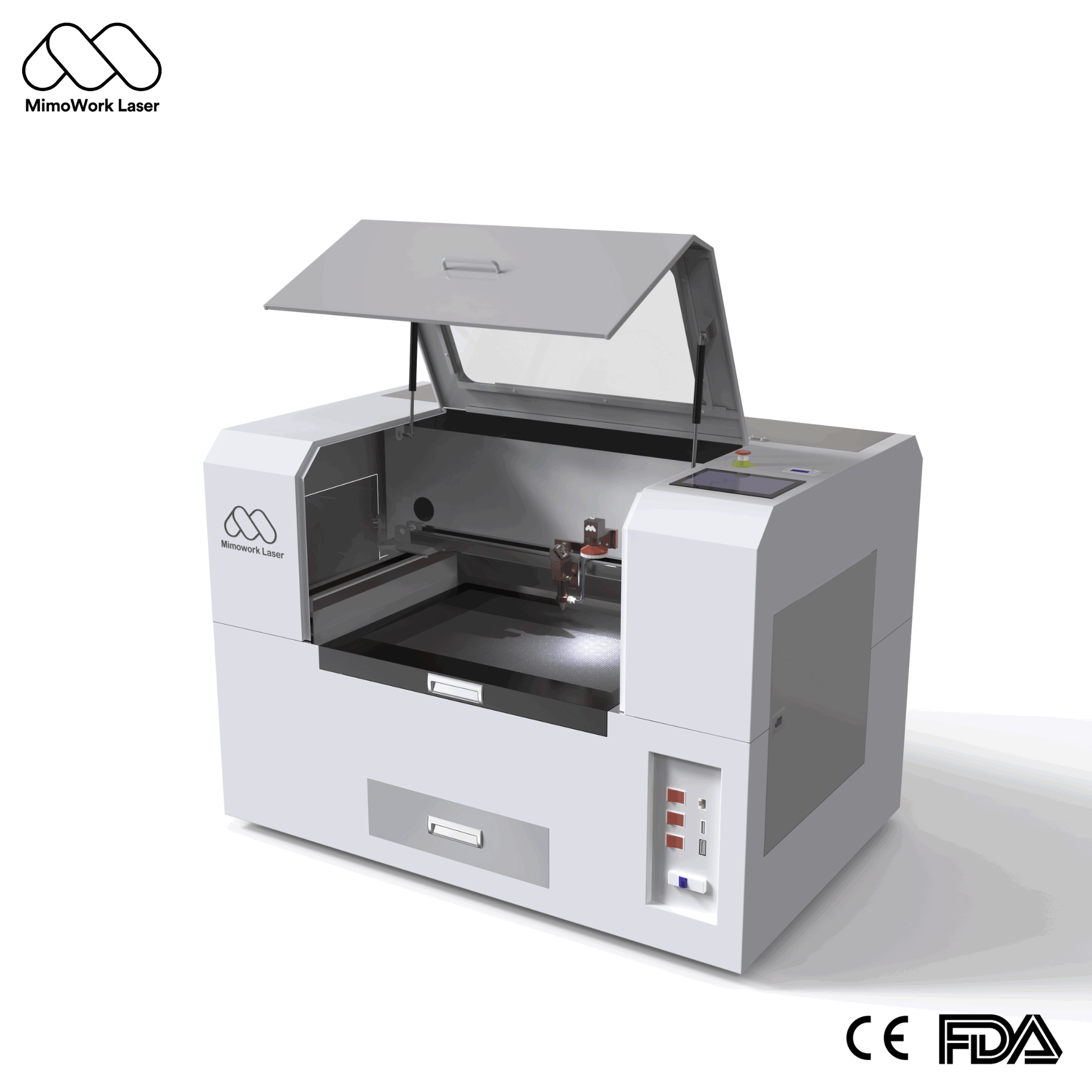
For startups with limited space and budget, desktop models offer an accessible entry point. The F60 provides a 600×400mm working area with 60W power, making it an ideal desktop laser cutter machine for startups and home-based businesses. It handles small gifts, jewelry, phone cases, and detailed engravings with professional results.
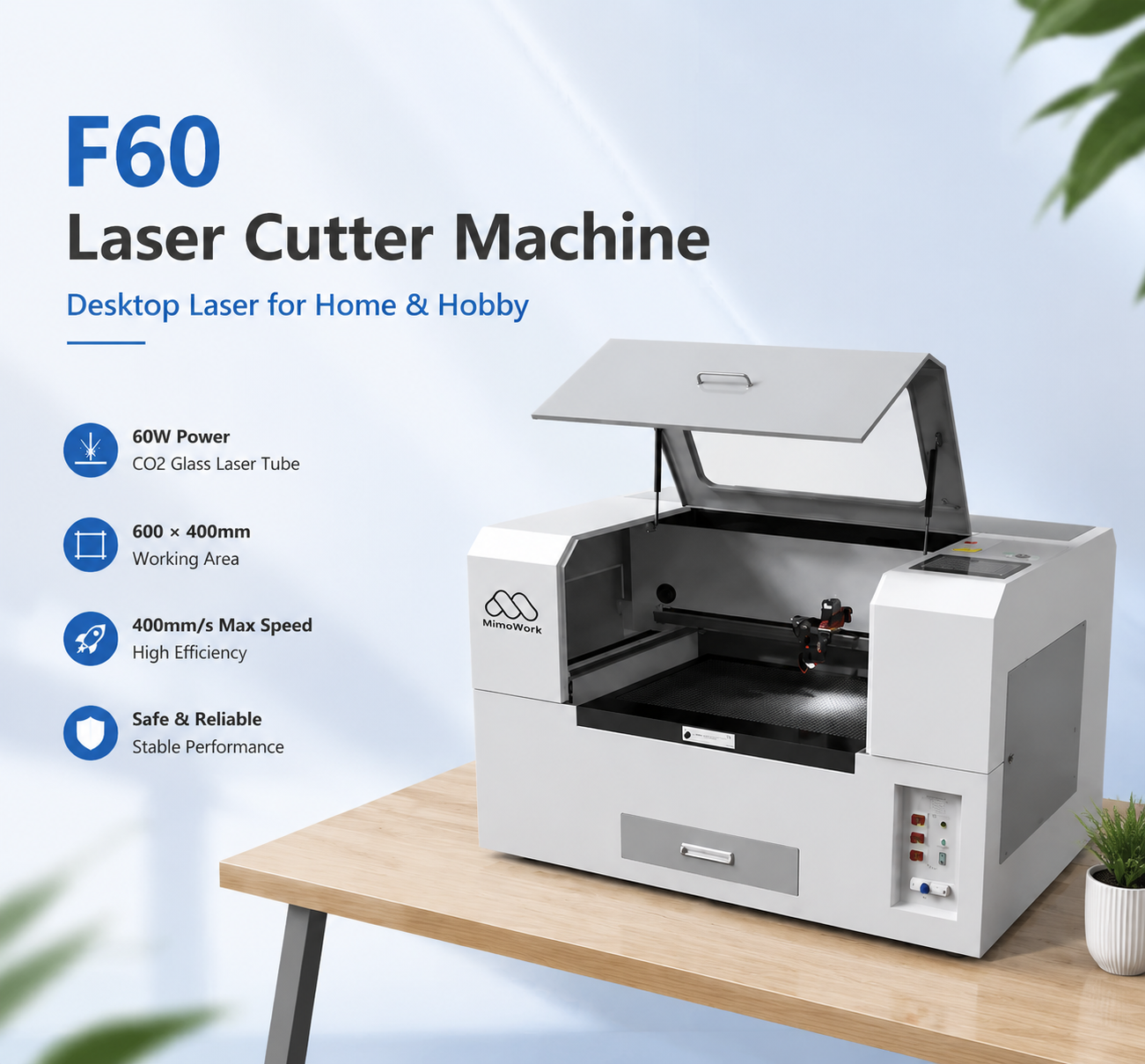
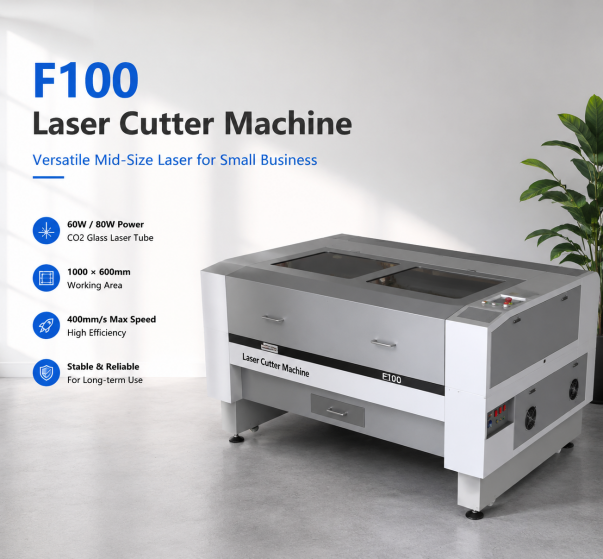
The most popular category for established businesses, the F100 offers a 1000×600mm area with 60W and 80W options, fitting signage, garment pieces, and most displays—a go-to for sign shops and promotional product companies.
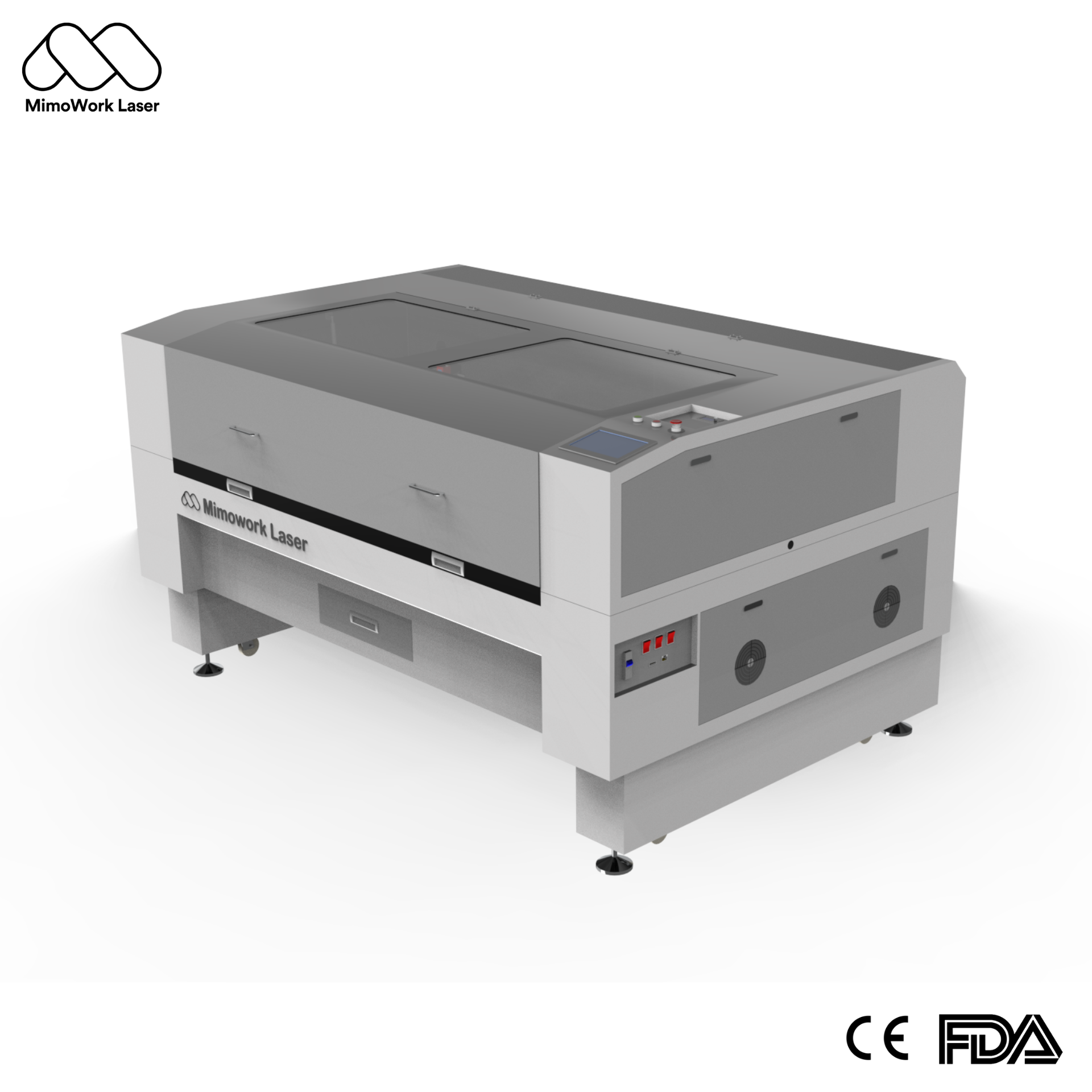
For wood and acrylic signage, gifts, and displays, the F130 provides a larger 1300×900mm area with power from 60W to 150W, handling larger projects while maintaining precision for detailed engraving. This is a best laser cutter machine for small business owners focused on wood and acrylic.
Businesses processing full sheets benefit from large-format machines. The F130-L offers 1300×2500mm with 100-600W, cutting full sheets of wood and acrylic in one pass, saving time and material.
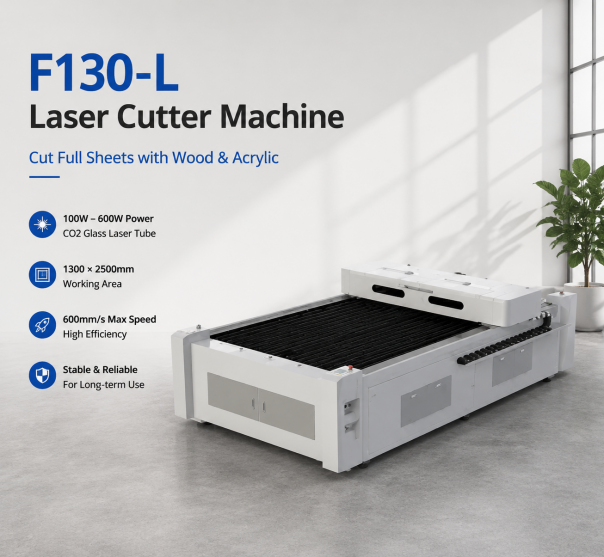
For apparel and fashion, the F160 provides 1600×1000mm with 100-300W, specifically optimized for fabric—a prime fabric laser cutting machine for apparel. The C160-L Vision system expands to 1600×3000mm, designed for sublimation sportswear with vision recognition for perfect alignment on printed materials. For industrial textile needs, the F180-L delivers 1800×3000mm with 150-600W.
| Model | Working Area | Power Range | Best Suited Business Type |
| F60 | 600 × 400mm | 60W | Startups, home-based businesses, custom gifts |
| F100 | 1000 × 600mm | 60W, 80W | Sign shops, promotional products, mid-size custom |
| F130 | 1300 × 900mm | 60W – 150W | Wood signage, acrylic displays, gifts |
| F130-L | 1300 × 2500mm | 100W – 600W | Full sheet processing, bulk wood products |
| F160 | 1600 × 1000mm | 100W – 300W | Fabric cutting, apparel, fashion industry |
| C160-L | 1600 × 3000mm | 100W – 150W | Sublimation sportswear, printed fabric |
| F180-L | 1800 × 3000mm | 150W – 600W | Industrial textile cutting |
The versatility of a modern laser system is perhaps its greatest asset. One unit can process an extraordinary range of materials, opening diverse product categories and revenue streams.
Wood and acrylic are the most common materials for small-business laser cutting. Both cut cleanly with CO2 lasers, produce minimal charring when properly configured, and offer excellent results for both cutting and engraving.
CO2 systems excel at MDF, plywood, hardwood, softwood, and bamboo. Acrylic (Plexiglass, PMMA, Perspex, Acrylite, Plaskolite, Lucite) cuts with glass-like edges requiring no post-processing. The F130 with 150W handles thicknesses up to 15mm with polished edges. For those seeking an affordable laser cutter machine for wood and acrylic, the F130 offers outstanding value.
| Material Type | Cutting Quality | Engraving Quality | Recommended Power | Typical Applications |
| Plywood | Excellent | Excellent | 60W-150W | Signage, furniture, decorative items |
| Solid Wood | Good | Excellent | 60W-150W | Crafts, gifts, custom wood products |
| Acrylic | Excellent (polished edges) | Excellent | 60W-150W | Displays, signage, light boxes |
| MDF | Good | Good | 80W-150W | Models, prototypes, structural components |
For apparel businesses, laser cutting seals fabric edges, preventing fraying and eliminating hemming on many applications. The F160 and C160-L are specifically designed for fabric, offering large working areas for garment panels.
Leather processing is another strong application. Vegetable-tanned, full-grain, top-grain, suede, and aniline leathers cut and engrave beautifully, enabling intricate patterns and detailed branding impossible with mechanical methods.
| Material Type | Cutting Quality | Engraving Quality | Notes | Typical Applications |
| Cotton Fabric | Excellent (edge sealing) | Good | Low power sufficient | Apparel, home textiles |
| Polyester | Excellent | Good | Watch for melting control | Sportswear, flags |
| Leather | Excellent | Excellent | Proper ventilation required | Leather goods, footwear, accessories |
| Nylon | Good | Fair | Precise power control needed | Outdoor gear, luggage |
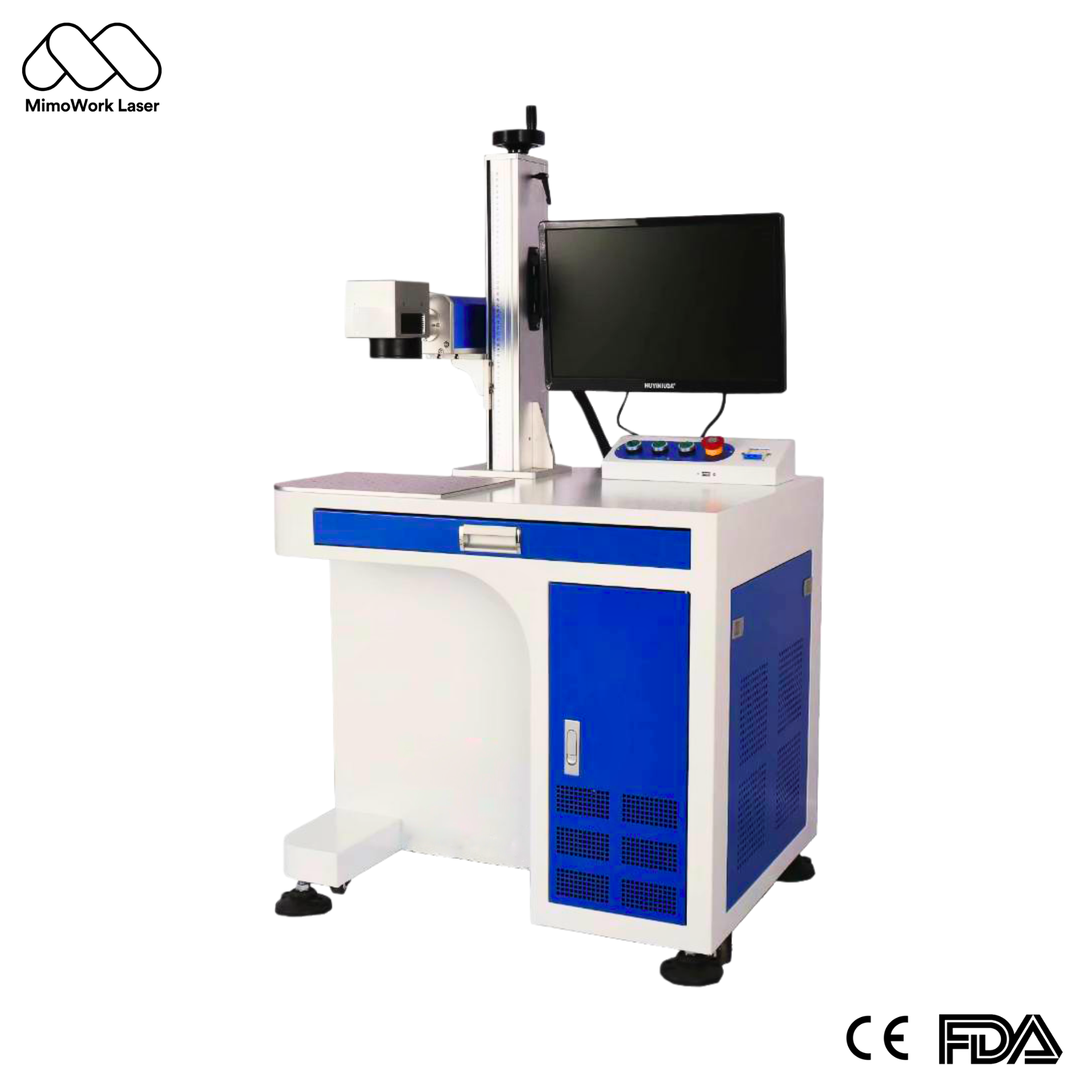
While CO2 lasers are primarily for non-metals, fiber lasers excel at metal processing—delivering crisp, high-contrast marks on brass, stainless steel, aluminum, titanium, and copper.
Plastic processing requires careful power management. CO2 lasers handle Teflon, Delrin, Ultem, ABS, PC, PA, PEEK, PET, and PBT. UV laser marking systems offer a solution for sensitive plastics, achieving high-contrast marks without heat damage—essential for medical devices and delicate electronics.
| Material Type | Suitable Laser Type | Processing Quality | Typical Applications |
| Stainless Steel | Fiber Laser | Excellent (high contrast) | Tool marking, branding |
| Aluminum | Fiber Laser | Good | Electronics marking, serial numbers |
| ABS Plastic | CO2/UV Laser | Good | Electronics enclosures, consumer goods |
| Glass/Crystal | Specialized Laser | Excellent | Gifts, trophies, decorative items |
When evaluating whether to invest in a laser cutter machine, business owners often compare it against traditional methods. The advantages are substantial and measurable.
Precision and Complexity: Traditional methods—mechanical saws, die-cutting presses, or manual knives—are fundamentally limited in the complexity of shapes they can produce. Laser systems can create intricate patterns, tight curves, and fine details impossible with mechanical tools. The kerf (cut width) is measured in fractions of a millimeter, enabling exceptional detail.
Material Efficiency: Traditional methods waste significant material. Die-cutting requires space between parts; sawing removes material as sawdust; manual cutting is error-prone. Laser cutting with smart nesting maximizes usage, directly reducing material costs—often the largest variable expense.
Labor and Speed: A single operator can run multiple laser systems simultaneously, monitoring while they do the cutting. Traditional methods require constant manual attention, limiting one operator to one machine. For repetitive runs, laser is dramatically faster and more consistent.
Setup and Changeover: Switching designs on a laser system takes seconds—load a new file and press start. Traditional methods require tool/die changes or reconfiguration, often taking hours—making laser ideal for small-batch and custom orders.
| Comparison Dimension | Laser Cutter Machine | Traditional Cutting Methods |
| Design Complexity | Extremely high—any digital design | Limited—complex shapes difficult or impossible |
| Material Utilization | High (smart nesting) | Low (fixed waste) |
| Labor Requirements | Low (one person can operate multiple machines) | High (each machine requires dedicated operator) |
| Changeover Time | Seconds (file switching) | Minutes to hours (tool/die changes) |
| Precision | Extremely high (±0.1mm) | Medium (operator dependent) |
| Edge Quality | Smooth, sealed (fabrics) | Rough, needs secondary finishing |
The F60 is an excellent entry point, offering a 600×400mm working area with 60W power. It handles most small-scale products including gifts, jewelry, custom phone cases, and detailed engravings, providing professional results at an accessible investment level.
The choice depends on your primary materials. CO2 lasers are ideal for wood, acrylic, fabric, leather, paper, stone, and most plastics—they are the classic CO2 laser cutting machine for acrylic and wood. Fiber lasers are designed for metal marking and processing. If you work mostly with non-metals, choose CO2; for metals, choose fiber.
Regular maintenance includes cleaning optical components (lenses and mirrors), checking beam alignment, cleaning the work area, and monitoring cooling systems. Daily tasks take about 5-10 minutes; weekly tasks are more thorough. With proper care, a quality unit can operate reliably for many years.
A single CO2 system can process an extensive range: wood, acrylic, fabric, leather, paper, stone, glass, and many plastics. Different materials may require different power settings and speeds, but these are controlled via software. For metal processing, however, a fiber laser is typically needed, so businesses working extensively with both metals and non-metals may require separate systems.
Investing in this technology delivers a clear, measurable return through material savings, labor efficiency, and new revenue streams—often paying for itself within the first 12-18 months. For small businesses, the right equipment is not just a tool but a strategic enabler that expands product capabilities, improves quality, and builds a lasting competitive edge in today‘s dynamic market.
News | Jul-1-2026
News | Apr-24-2026
News | Jun-22-2026