Blog
In a field that evolves daily, staying ahead means staying informed.
Explore in-depth articles designed to help you solve complex challenges,
maximize your machine’s ROI.
Stay ahead in a competitive market.


In a field that evolves daily, staying ahead means staying informed.
Explore in-depth articles designed to help you solve complex challenges,
maximize your machine’s ROI.
Stay ahead in a competitive market.
News | Aug-27-2026
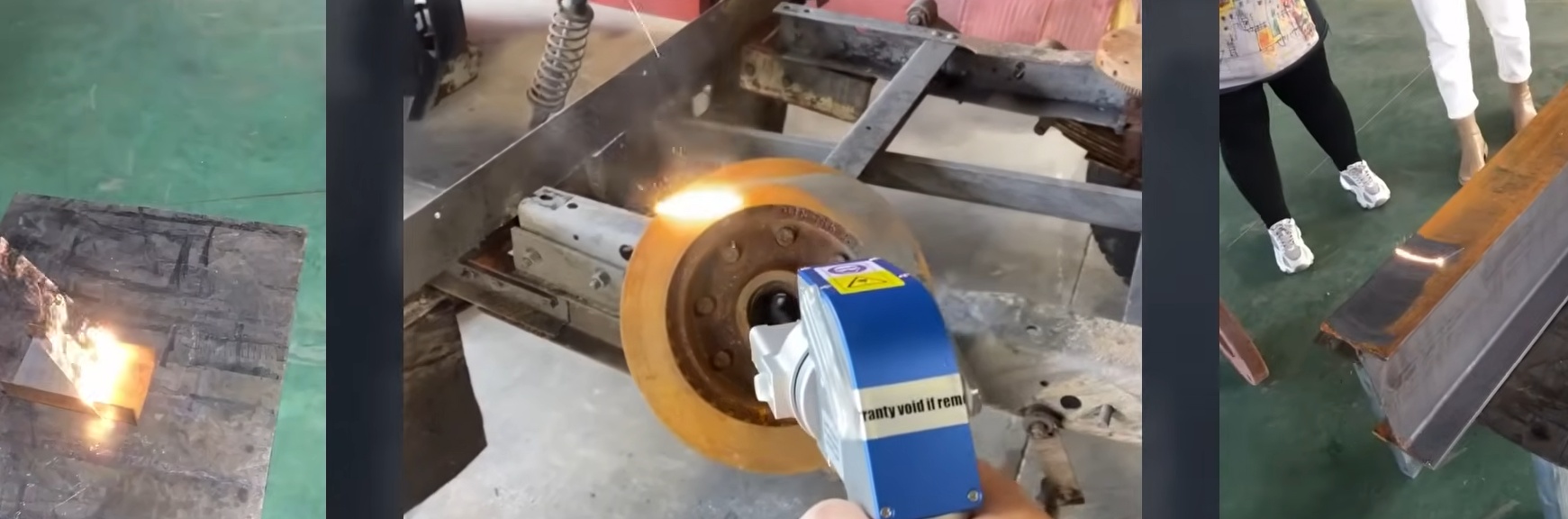
Metal surfaces rarely stay clean throughout their service life. Rust forms on exposed steel parts, paint coatings need to be removed before processing, grease builds up during manufacturing, and oxidation can affect welding quality. Although these problems are often grouped together as “surface contamination,” each one requires a different cleaning approach.
Choosing the right cleaning method is important because the wrong process can damage the surface, increase labor costs, or create additional waste.
A laser machine for cleaning offers a precise and efficient way to remove unwanted layers from metal surfaces. By using controlled laser energy, it can remove rust, coatings, oil, and oxidation while minimizing damage to the underlying material.
Unlike traditional methods such as chemical cleaning, grinding, or sandblasting, laser cleaning provides a cleaner process with fewer consumables and better control. This makes it increasingly popular in industries where surface quality and production efficiency matter.
Not all contaminants are created equal. Rust, paint, grease, and oxidation differ in thickness, chemical structure, and how strongly they bond to the surface.
For example, heavy rust on industrial equipment may require stronger laser power to break down corrosion layers, while precision components may need lower energy settings to avoid affecting the base material.
A modern laser cleaning machine allows operators to adjust key parameters based on the application, including laser power, scanning speed, frequency, and cleaning mode.
Understanding the type of contamination is the first step toward choosing the right laser cleaning solution.
Rust removal is one of the most common applications for laser cleaning technology.
When metal parts are exposed to moisture and oxygen, oxidation gradually forms on the surface. Over time, rust can affect appearance, reduce durability, and create problems during welding, coating, or assembly.
Traditional rust removal methods usually involve grinding, sanding, or chemical treatments. While these approaches can remove corrosion, they also come with limitations. Grinding may remove part of the original surface, while chemical cleaning requires additional handling of cleaning agents and waste.
A laser rust removal machine works by directing concentrated laser energy onto the rust layer. The rust absorbs the energy and separates from the metal surface through vaporization or rapid expansion.
Because the laser can be precisely controlled, operators can remove corrosion while preserving the original structure of the component.
This makes laser rust removal suitable for applications such as:
For companies comparing different solutions, finding the best laser machine for cleaning metal surfaces depends on several factors, including rust thickness, material type, cleaning area, and production speed requirements.
Removing paint is often required before welding, repainting, inspection, or surface treatment.
However, paint removal can be challenging when the original surface needs to remain intact. Aggressive methods such as mechanical grinding may create scratches or change surface characteristics. Chemical stripping can also introduce additional safety and disposal concerns.
Laser cleaning provides a more controlled alternative.
The laser energy is absorbed by the coating layer, allowing the paint to be removed while reducing the impact on the material underneath. By adjusting laser parameters, operators can handle different coating thicknesses and surface conditions.
This makes laser cleaning useful for:
For manufacturers that frequently switch between different materials or coatings, a flexible laser system can simplify the cleaning process and improve production consistency.
Oil, grease, and production residues are common challenges in mechanical manufacturing.
Even a thin contamination layer can affect welding strength, coating adhesion, and assembly accuracy. In industries with strict quality requirements, surface preparation is often just as important as the manufacturing process itself.
Traditional degreasing methods typically rely on solvents or detergents. While effective, they may require storage, handling, and disposal of chemical materials.
A laser cleaning machine provides a dry cleaning solution by using laser energy to remove surface contaminants without additional chemicals.
This approach helps manufacturers create cleaner work environments while reducing the need for consumable cleaning materials.
Common applications include:
Oxidation is another common surface issue, especially before welding and coating processes.
Oxide layers can prevent proper bonding between materials, leading to inconsistent results. Manual cleaning methods may also produce uneven surface preparation, especially on complex components.
Laser cleaning provides a consistent way to remove oxidation before further processing.
By preparing a cleaner surface, manufacturers can improve welding stability, coating performance, and overall production quality.
For industrial users, an industrial laser cleaning machine can become an important part of surface preparation workflows.
| Contamination Type | Cleaning Challenge | Recommended Laser Cleaning Application | Common Industries |
| Rust and corrosion | Thick oxidation layers on metal surfaces | Rust removal and surface restoration | Automotive, shipbuilding, machinery maintenance |
| Paint and coatings | Removing protective layers without damaging the substrate | Coating removal before welding or repainting | Automotive, aerospace, manufacturing |
| Oil and grease | Eliminating residues that affect processing quality | Dry surface cleaning before assembly or welding | Precision manufacturing, metal processing |
| Oxidation | Removing oxide layers for better bonding | Surface preparation before welding and coating | Electronics, fabrication, industrial production |
A laser machine for cleaning removes contaminants by using focused laser energy to interact with unwanted surface layers.
Instead of physically scraping materials away or dissolving them with chemicals, laser cleaning uses controlled energy to separate contaminants from the base material.
The basic process includes:
The effectiveness of the process depends on the relationship between laser parameters and material characteristics.
Let’s see how laser cleaning actually works.
Laser cleaning works because contaminants and base materials usually respond differently to laser energy.
Rust, paint, and oil layers often absorb laser energy differently compared with metals such as steel, aluminum, and stainless steel.
By selecting suitable parameters, the laser can target the unwanted layer while minimizing the impact on the original surface.
This selective cleaning capability is one of the main advantages over traditional abrasive methods.
The goal is not simply to remove material—it is to remove only what should not be there.
One concern many buyers have is whether laser cleaning can damage metal surfaces.
The answer depends on choosing the correct settings.
Too much energy may create unnecessary heat, while insufficient energy may reduce cleaning efficiency. Professional laser systems balance these factors through adjustable parameters such as:
For sensitive components, pulsed laser technology is often preferred because it provides accurate energy control with limited heat impact.
Laser cleaning is widely used for different metals and industrial components, but one machine configuration does not automatically fit every application.
Different materials have different thermal properties, surface conditions, and cleaning requirements. Steel parts with heavy rust, aluminum components with oxidation, and precision parts with delicate surfaces may require different laser settings.
The right laser cleaning machine should provide enough flexibility to adjust cleaning parameters based on the material and contamination type.
Steel is one of the most common materials used in industrial applications, and rust removal is a major reason companies invest in laser cleaning technology.
For steel structures, machinery parts, and fabricated components, laser cleaning can remove corrosion, paint, and surface residues before maintenance or further processing.
Aluminum requires more careful control because it has higher reflectivity and different heat characteristics compared with steel. Proper laser parameter adjustment helps remove oxidation and contamination without affecting the surface finish.
Stainless steel is often used in industries where cleanliness and appearance are important. Laser cleaning can help remove oxidation, welding discoloration, and processing residues while maintaining the quality of the surface.
When selecting equipment, users should consider:
A suitable laser system can support multiple materials, but performance depends on matching the machine configuration with the actual application.
Industrial equipment often accumulates contamination during long-term operation.
Molds may collect oil, carbon deposits, and production residues. Machinery parts can develop rust or surface buildup after extended use. Regular cleaning is necessary to maintain performance and extend service life.
Traditional maintenance methods can require significant downtime because parts may need to be removed, cleaned, dried, and reinstalled.
A portable laser cleaning machine for rust removal provides more flexibility for on-site maintenance. Operators can move the equipment directly to the working area instead of transporting large components to a separate cleaning station.
This is especially useful for:
By reducing preparation time and minimizing consumables, laser cleaning can help improve maintenance efficiency.
Some applications require more than simple contamination removal.
Precision components used in aerospace, electronics, automotive, and advanced manufacturing often require careful surface treatment. Excessive heat or mechanical force may affect dimensional accuracy or surface quality.
For these applications, laser control becomes critical.
Important factors include:
A well-designed laser cleaning system allows manufacturers to achieve reliable cleaning results without unnecessary surface damage.
Selecting a laser cleaning system requires more than comparing power ratings. The right choice depends on the type of contamination, production requirements, and working environment.
Before purchasing equipment, manufacturers should evaluate several key factors.
Laser power directly affects cleaning efficiency.
Higher power systems can remove thicker contamination layers faster, making them suitable for heavy rust, large metal structures, and industrial maintenance.
Lower power systems may be more suitable for precision cleaning, surface preparation, and applications where material protection is the priority.
However, higher power does not always mean better results.
The ideal power level depends on:
Choosing the correct power helps balance productivity and surface protection.
| Laser Type | Main Characteristics | Suitable Applications |
| Pulsed Laser | Short energy bursts, precise heat control | Precision parts, molds, sensitive surfaces |
| Continuous Wave Laser | Continuous energy output, high cleaning efficiency | Large surfaces, heavy rust, industrial maintenance |
Laser type is another important consideration.
Continuous wave lasers deliver a constant energy output and are often used for applications that require fast cleaning over larger areas.
Pulsed lasers deliver energy in short bursts, allowing more precise control of heat input. They are often preferred for applications involving delicate surfaces or precision components.
The choice between continuous and pulsed laser technology depends on the cleaning task.
For example:
Understanding these differences helps buyers select a system that matches their production needs.
The scanning area determines how much surface can be processed at one time.
For large industrial parts, equipment frames, or metal structures, a wider scanning range can improve working efficiency by reducing repeated movements.
For smaller precision components, a smaller and more focused cleaning area may provide better control.
Manufacturers should consider the typical size of their workpieces before selecting equipment.
Laser cleaning equipment is available in different formats depending on application requirements.
Handheld systems offer flexibility and are suitable for maintenance, repair, and smaller production environments. Operators can easily move around complex parts and clean areas that are difficult to reach.
Automated laser cleaning systems are designed for higher-volume production. They can integrate with production lines, robotic systems, or customized processing equipment.
The choice depends on:
Many manufacturers are replacing traditional cleaning processes because they need faster, cleaner, and more sustainable solutions.
Chemical cleaning can effectively remove contamination, but it often requires chemical storage, handling procedures, and waste management.
Laser cleaning uses a dry process without chemical agents. This helps reduce chemical consumption and simplifies workplace management.
For companies focusing on cleaner production, laser technology provides a more environmentally friendly alternative.
Sandblasting removes contamination through abrasive force.
While effective, it may alter surface texture, consume abrasive materials, and generate dust during operation.
Laser cleaning uses controlled energy instead of physical impact, allowing manufacturers to remove unwanted layers with greater precision.
This makes it suitable for applications where surface quality must be maintained.
Manual grinding can be time-consuming, especially for large components or complex surfaces.
It also depends heavily on operator skill and may produce inconsistent results.
Laser cleaning improves process consistency by providing controlled and repeatable cleaning parameters.
For industrial users, this means reduced labor requirements and more predictable production results.
Different industries have different cleaning challenges. A solution that works for heavy machinery maintenance may not be suitable for precision components.
MimoWork Laser Cleaning Machine solutions are designed to provide flexible cleaning options for industrial applications, helping users handle rust, paint, oxidation, and surface contamination with controlled laser processing.
The effectiveness of laser cleaning depends on matching laser performance with the application.
MimoWork systems are designed to support different cleaning requirements, from surface preparation to heavier contamination removal.
By selecting suitable laser parameters, users can achieve efficient cleaning while maintaining control over surface impact.
Industrial cleaning often requires accuracy.
Instead of removing unnecessary material, laser cleaning focuses on targeting unwanted layers such as rust, coatings, and residues.
With adjustable processing settings, operators can optimize cleaning performance based on different materials and applications.
From handheld maintenance tasks to industrial production environments, laser cleaning requirements vary widely.
MimoWork provides laser cleaning solutions that can adapt to different workflows, helping manufacturers improve cleaning efficiency while reducing reliance on traditional consumables.
Laser cleaning technology is being adopted across industries where surface preparation, maintenance, and material protection are important.
Automotive manufacturers use laser cleaning for removing rust, coatings, and production residues from metal components.
It can also support welding preparation and surface treatment processes where consistent cleanliness is required.
Clean surfaces are essential for reliable welding results.
Laser cleaning removes oxidation and contaminants before welding, helping manufacturers achieve better process stability.
Manufacturing equipment requires regular maintenance to maintain performance.
Laser cleaning helps remove deposits, oil, and corrosion from molds and machinery while reducing downtime.
Because laser cleaning can be precisely controlled, it is also used for sensitive applications such as restoration work and precision component cleaning.
The ability to remove unwanted layers while protecting the original material makes it valuable for specialized industries.
Yes, laser cleaning can remove many types of rust and oxidation layers. However, results depend on rust thickness, material condition, and selected laser parameters. Heavy corrosion may require higher power systems or multiple cleaning passes.
When properly configured, laser cleaning is designed to remove contaminants while protecting the base material. The final result depends on choosing suitable laser power, scanning speed, and cleaning settings for the specific application.
Laser cleaning systems generally require less consumable material compared with chemical cleaning or abrasive methods. Maintenance mainly involves regular inspection of optical components, cooling systems, and other machine parts according to manufacturer recommendations.
Have a specific cleaning challenge? Share your application details with MimoWork, and our team will help you identify the right laser parameters and equipment configuration for your process.
News | Aug-6-2026
News | Jul-24-2026