Blog
In a field that evolves daily, staying ahead means staying informed.
Explore in-depth articles designed to help you solve complex challenges,
maximize your machine’s ROI.
Stay ahead in a competitive market.


In a field that evolves daily, staying ahead means staying informed.
Explore in-depth articles designed to help you solve complex challenges,
maximize your machine’s ROI.
Stay ahead in a competitive market.
News | Aug-31-2026
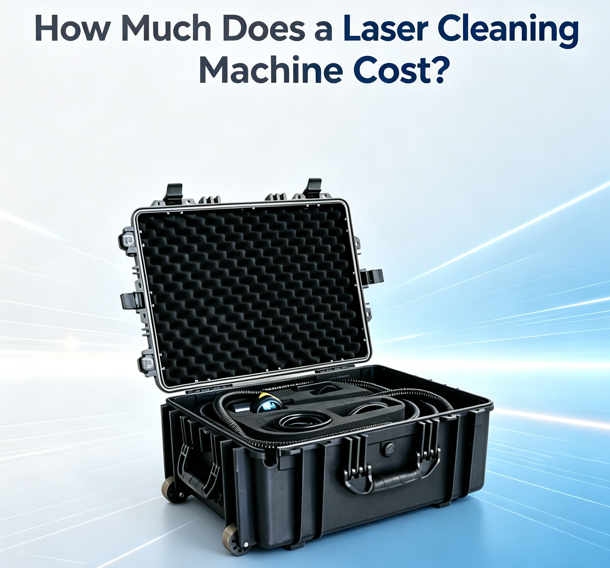
The Short Answer: How Much Does an Industrial Laser Cleaning Machine Cost?
Industrial laser cleaning machine prices typically range from $4,000–$5,000 for entry-level handheld models to over $100,000 for fully automated systems, depending on laser power, cleaning technology, automation level, and application requirements.
For example, a 100W laser cleaning machine price is typically around $4,000–$8,000 for entry-level industrial applications. Higher-power systems, automated cleaning solutions, and customized production lines can cost significantly more.
The right choice is not always the most powerful machine. The better investment depends on what you need to remove, how often you clean, and whether the process needs manual operation or automation.
The cost of an industrial laser cleaning machine varies mainly based on power, laser source type, and system configuration.
Instead of a fixed price, manufacturers usually need to evaluate the right configuration based on:
| Machine Type | Common Applications |
| Handheld laser cleaner | Rust removal, paint removal, surface maintenance |
| Pulsed laser cleaning machine | Mold cleaning, precision surface treatment, delicate parts restoration |
| Industrial automated laser cleaning system | Mass production, automated cleaning lines, large-scale manufacturing |
For an accurate quote, our team can help you evaluate the suitable laser power and configuration based on your application. Contact us to get a customized laser cleaning solution and pricing details.
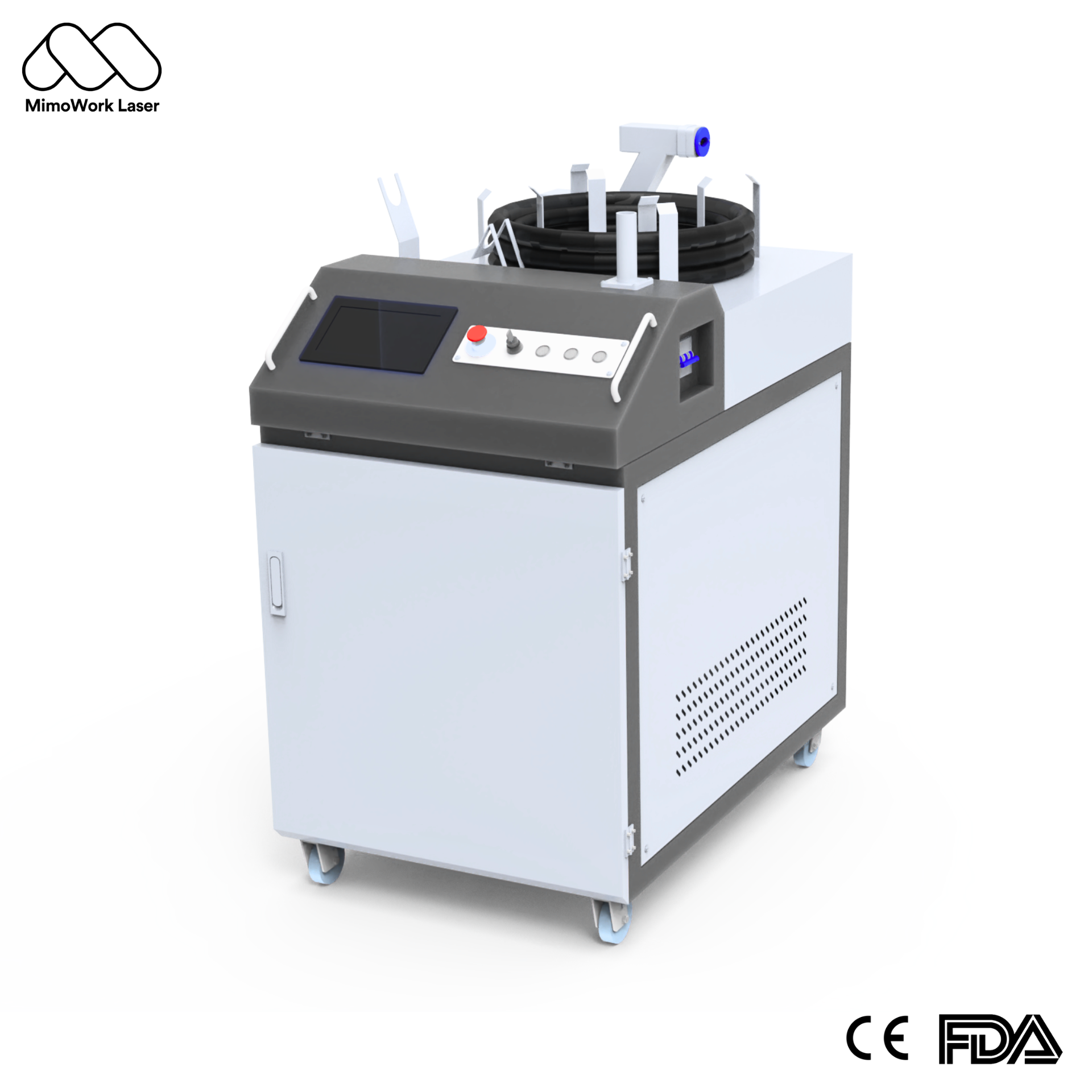
A handheld laser cleaner is usually the most affordable option for companies that need flexibility rather than full automation.
These machines are commonly used for:
For light cleaning work, a lower-power machine may already meet the needs of many businesses. However, factories with frequent cleaning requirements often choose higher-power models to improve productivity.
By replacing manual grinding and chemical treatments, a handheld industrial laser cleaner can reduce labor time while cutting down on consumables and maintenance expenses.
For factories looking to integrate cleaning into production lines, automated systems require a larger investment.
These systems are typically used in automotive, aerospace, and large-scale manufacturing where consistent cleaning quality is more important than initial equipment cost.
The main difference between pulsed and continuous wave (CW) systems is how laser
energy is delivered.
| Type | Main Advantage | Typical Applications |
| Continuous Wave (CW) | Faster cleaning speed | Rust, paint, large metal surfaces |
| Pulsed Laser | Higher precision and lower heat impact | Mold cleaning, delicate components |
A CW laser cleaning machine uses continuous laser output and is mainly designed for fast removal of heavy rust, paint, and surface contamination.
A pulsed laser cleaning machine delivers short, high-energy pulses, making it better for applications where surface damage must be minimized.
Because pulsed systems require more precise laser control and higher-performance components, they are usually more expensive.
The final price of a laser cleaner depends on more than laser power. The machine configuration must match the cleaning task.
Laser power is one of the biggest factors affecting price.
Common industrial power options include:
Higher power usually means faster cleaning speed, but it is not always the best choice.
For example:
A manufacturer cleaning molds may benefit more from a pulsed system with lower power than a high-power rust removal machine.
The goal is to choose enough power for your workload without paying for unnecessary capacity.
The laser source determines cleaning accuracy, speed, and suitable applications.
A fiber laser cleaning system offers:
However, different laser technologies serve different purposes.
Pulsed fiber lasers are preferred for precision applications, while CW lasers are often selected for larger surfaces requiring faster processing.
Besides the laser source, several components influence the final price:
A basic handheld system focuses on portability and ease of operation.
An industrial production system may require additional hardware for repeatability and integration.
MimoWork provides different laser cleaning solutions based on cleaning requirements, from flexible handheld systems to precision and automated applications.
For large metal surfaces and regular maintenance work, handheld continuous wave laser cleaners offer a practical solution.
Typical applications include:
See How a Handheld Laser Cleaning Machine Removes Rust and Coatings.
When protecting the original surface is important, pulsed laser cleaning technology provides better control.
It is commonly used for:
A pulsed laser cleaning machine for mold cleaning is especially suitable when traditional methods may damage fine structures.
For companies requiring repeatable cleaning results, automated solutions can integrate laser cleaning into existing production workflows.
They are suitable for:
Automation increases consistency and reduces dependence on manual operation.
The initial cost of a laser cleaner may seem higher than traditional methods, but the long-term operating cost is often lower.
Traditional methods often require:
Laser cleaning uses light energy instead of physical media or chemicals.
This means fewer consumables and less waste management.
Manual cleaning methods often require significant operator time, especially for complex parts.
Laser cleaning simplifies the process with:
For manufacturers with frequent cleaning requirements, reducing labor time can significantly improve productivity.
Unlike grinding or abrasive blasting, laser cleaning removes contaminants through controlled laser energy.
This helps reduce:
For expensive components and precision parts, protecting the original surface can be an important cost advantage.
The best machine depends on your cleaning requirements, not only your budget.
Start by identifying:
Different contaminants require different laser parameters.
A laser cleaning machine for rust removal may require different settings compared with precision mold cleaning.
Consider:
A small workshop may only need a handheld system.
A factory with continuous production may benefit from higher power or automation.
Machine prices vary significantly depending on the application.
Before choosing a system, manufacturers should provide:
MimoWork can evaluate your application through sample testing and recommend a suitable laser cleaning solution.
Pulsed laser cleaners usually cost more because they require higher precision control and are designed for applications where surface protection is critical.
They are commonly used for molds, precision parts, and delicate surfaces.
Laser cleaning machines generally have low operating costs because they do not require chemical cleaners or abrasive materials.
Maintenance mainly involves checking optical components, cooling systems, and machine cleanliness.
For many industrial applications, laser cleaning can be a worthwhile investment because it reduces consumable usage, creates less waste, and offers better control over surface treatment.
However, the best choice depends on cleaning volume, material type, and production requirements.
Need help choosing the right laser cleaning machine?
MimoWork can test your application and recommend the best laser power, cleaning method, and configuration for your production needs.
News | Aug-6-2026
News | Jul-17-2026