Blog
In a field that evolves daily, staying ahead means staying informed.
Explore in-depth articles designed to help you solve complex challenges,
maximize your machine’s ROI.
Stay ahead in a competitive market.


In a field that evolves daily, staying ahead means staying informed.
Explore in-depth articles designed to help you solve complex challenges,
maximize your machine’s ROI.
Stay ahead in a competitive market.
News | Jul-17-2026
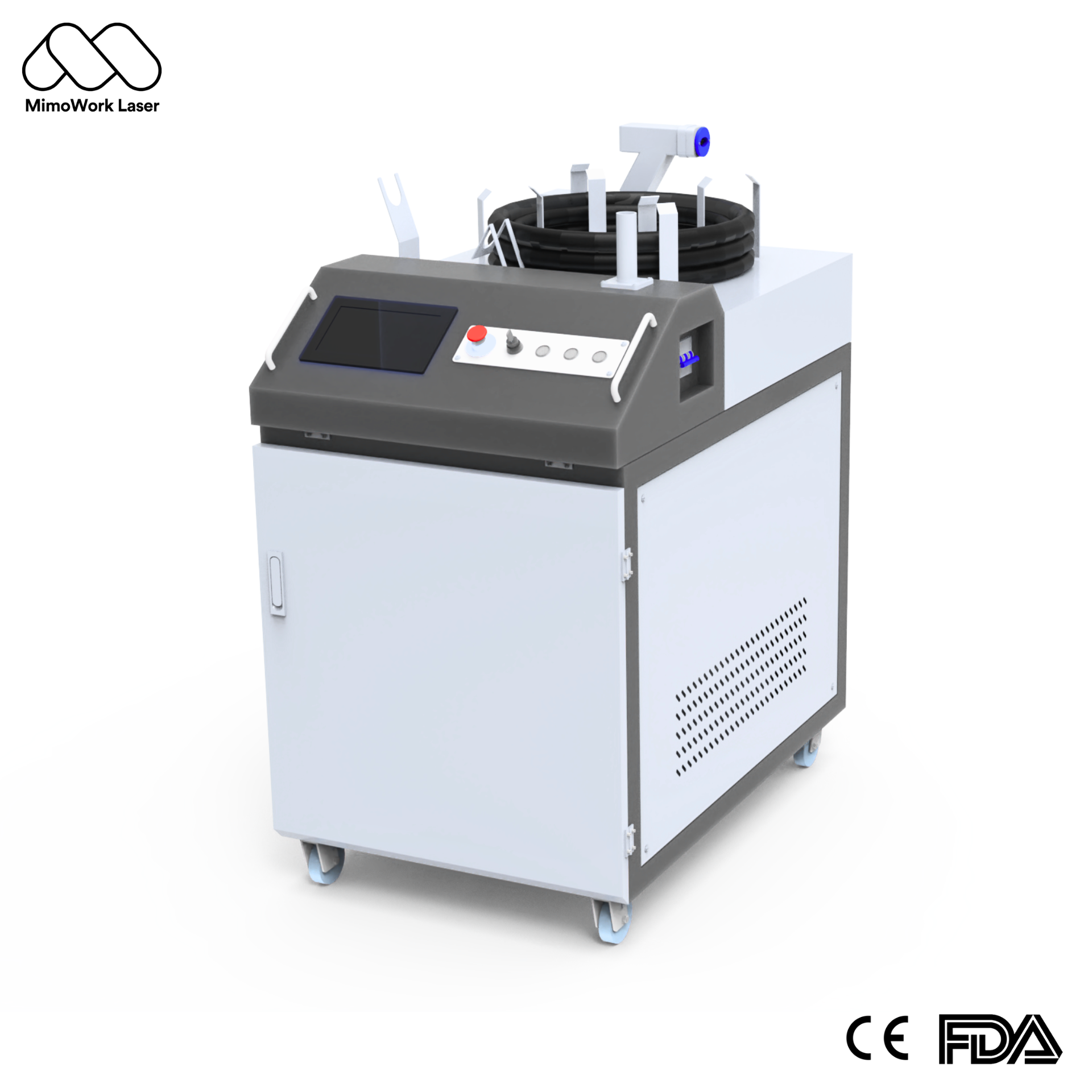
Laser cleaning machines provide a faster, safer, and more environmentally friendly alternative to conventional methods such as sandblasting and chemical cleaning. But with prices ranging from a few thousand to well over ten thousand dollars, the real challenge isn’t whether laser cleaning works—it’s choosing the right machine for your specific application.
In this guide, MimoWork explores how industrial laser cleaning machines work, their key advantages, common applications, and how to select the right solution based on different industrial requirements.
Laser cleaning, a form of laser ablation, is a surface treatment that uses light energy to selectively remove surface contaminants. The process removes unwanted material—whether by vaporization or thermal decomposition—while leaving the underlying substrate unharmed.
The core applications of laser cleaning systems revolve around “removal” to achieve purification, repair, or preparation for subsequent processes. Laser cleaning machines for rust removal are used in a wide range of applications and in several stages of production.
Common applications include:
Laser cleaning systems rely on precision subsystems working in perfect sync to produce a stable laser beam and achieve efficient contaminant removal.
| Component | Function | Key concerns | MimoWork Solution |
| Laser Source | Generates a high-energy laser beam | High replacement cost | Premium laser source with significantly longer service life |
| Optical Delivery System | Transmits beam to cleaning head | Lens contamination / damage from dust and backspatter | Optimized optical path + shielding gas assist + built-in fume extractor to keep optics clean |
| Laser Cleaning Head | Focuses and directs laser beam onto workpiece | Heavy, fatigue-prone handheld operation | Lightweight CW cleaning head design for reduced operator fatigue |
| Control System | Regulates power, pulse frequency, and scanning path | Complex parameter tuning / inconsistent results | Digital control system with preset modes and storage for multiple cleaning parameters |
| Cooling System | Maintains temperature stability | Overheating during extended high-power operation | High-capacity industrial water chiller for rapid heat dissipation and stable operation |
| Safety& Environmental System | Ensures operational safety and environmental compliance | Accidental trigger risks during handheld use | Emergency stop + safety interlocks; optional fume extraction for environmental protection |
Industrial manufacturers are replacing sandblasting and chemical cleaning with laser cleaning technology to reduce consumables, protect surfaces, and improve long-term operating efficiency.
Laser cleaning works differently:
Laser cleaning is not a cutting process—it is a selective surface removal process. Each material has its own ablation threshold. The key to damage free cleaning is to stay above the contaminant’s threshold, but safely below the substrates.
Not all materials react to the laser the same way. Rust, paint, and oil stains absorb the laser energy efficiently. The substrate generally absorbs less laser energy than many surface contaminants, allowing selective removal when parameters are properly adjusted.
Once the contaminant absorbs that energy, things happen fast—microseconds fast. The temperature spikes past the boiling point of rust or paint, and it doesn’t melt but is directly vaporized.
The laser is tuned to operate between these two values—above the contaminant’s threshold, but safely below the metals. So when the rust is gone and the beam hits bare metal, there simply isn’t enough energy left to do any harm.
The table below lays it all out at a glance, cutting through the technical jargon to show you exactly how each technology performs where it matters most
| CW Laser Cleaner | Pulsed Laser Cleaner | |
| Primary Objective | Speed and scale – maximum material removal over large areas. | Precision and protection – selective contaminant removal with zero substrate damage. |
| Beam Character | Continuous, unwavering high power – a steady stream of cleaning energy. | Ultra-short, high-intensity bursts – each pulse delivers a micro-blast of controlled energy. |
| Thermal Impact | Greater heat input; suited to robust, thermally tolerant substrates. | Minimal heat transfer; ideal for heat-sensitive or finely finished surfaces. |
| Best Suited For | Ship hulls, structural steel, heavy equipment, thick mill scale and multi-layer paint systems. | Historical artifacts, aerospace components, precision molds, and automotive refinishing where tolerances are tight. |
| Operational Philosophy | Maximum productivity – covering more square footage in less time. | Maximum fidelity – preserving the base material’s original condition and dimensions. |
Laser cleaning technology provides a cleaner and more sustainable solution for manufacturers looking to improve workplace safety and reduce environmental impact.
Unlike mechanical grinding or abrasive blasting, laser cleaning is a non-contact surface treatment process. The laser beam removes unwanted materials without direct physical contact with the workpiece.
This allows industrial laser cleaning machines to clean surfaces without causing scratches, deformation, or unnecessary wear. The process is especially suitable for precision components, molds, metal parts, and products with strict surface quality requirements.
Key benefits include:
Although the initial investment in an industrial laser cleaning machine may be higher than some traditional cleaning equipment, it can reduce overall operating costs over time.
It helps reduce expenses related to:
For manufacturers with frequent cleaning requirements, laser cleaning machines can improve production efficiency and provide long-term cost advantages.
Industrial laser cleaning machines combine accurate laser control with fast cleaning performance, allowing manufacturers to achieve both precision and productivity.
The laser parameters can be adjusted according to different materials and contamination types, enabling selective removal of rust, paint, oil, oxide layers, and coatings while preserving the underlying surface.
Compared with traditional cleaning methods, laser cleaning provides:
This combination of accuracy and efficiency makes laser cleaning technology suitable for automotive manufacturing, aerospace components, mold maintenance, metal processing, and other industrial applications.
Laser cleaning systems can be easily integrated into industrial production lines for automated cleaning processes. For flexible maintenance and repair tasks, handheld laser cleaning machines provide convenient operation and can be used in workshops, factories, and outdoor environments.
Laser cleaning technology can be applied to:
Industrial laser cleaning machines are commonly used for cleaning automotive components, preparing welding areas, removing coatings before painting, and maintaining production tools and molds.
Key Benefits:
Aerospace components often require extremely high surface quality because they are made from valuable alloys and precision-engineered materials. Laser cleaning machines are used for surface preparation before coating, bonding, welding, and repair processes, as well as for cleaning precision metal components.
Key Benefits:
Molds used in injection molding, casting, and other manufacturing processes often accumulate residues that can affect product quality and production efficiency.
Key Benefits:
Industrial laser cleaning equipment provides an efficient method for treating steel structures, metal components, and industrial machinery.
Key Benefits:
Because ships, construction machinery, and large industrial equipment operate in harsh and humid conditions over extended periods, laser cleaning machines are thus being used more extensively for ship maintenance, heavy equipment refurbishment, and large metal structure cleaning.
Key Benefits:
Manufacturers today face increasing challenges, including rising labor costs, stricter environmental requirements, and the need to minimize production downtime. Traditional abrasive blasting or chemical cleaning may affect surface conditions and generate additional waste depending on the application.
| Comparison Factor | Abrasive Blasting | Thermal Cleaning | Chemical Cleaning | Laser Cleaning |
| Cleaning Efficiency | Moderate | Moderate | Low | High |
| Automation Integration | Difficult | Difficult | Difficult | Easy |
| Waste Generation | Medium | Medium | High | Low |
| Selective Cleaning Capability | Limited (Requires Masking) | Limited | Limited (Requires Masking) | Excellent |
| Safety Risk | High | High | High | Low |
Laser cleaning is becoming an increasingly popular solution for industries that require precise, efficient, and environmentally responsible surface treatment.
Choosing the right laser cleaning system requires evaluating material type, contamination level, surface condition, and production requirements.
MimoWork helps manufacturers evaluate their cleaning challenges and select suitable laser cleaning solutions.
Contact our team to discuss your laser cleaning requirements and explore the right solution for your operation.
Lower-power laser cleaning machines may provide sufficient performance for light cleaning tasks. For applications involving heavy rust, thick coatings, or large metal structures, higher-power laser cleaning equipment is usually required to improve cleaning efficiency.
Understanding the material-contamination relationship ensures effective cleaning while protecting the substrate.
| Material Type | Common Contaminants | Suitability |
| Steel & Stainless Steel | Rust, oxide layers, paint | √Excellent |
| Aluminum & Alloys | Oxide films, grease | √Excellent |
| Cast Iron | Corrosion, old coatings | √Good |
| Molds & Precision Parts | Residues, release agents | √Excellent |
Match equipment configuration to your actual workflow to avoid over-investment or under-performance.
| Feature | CW Handheld | Pulsed Handheld | 5 Axis Gantry |
| Laser Type | CW Fiber Laser | Pulsed Fiber Laser | Pulsed Fiber Laser |
| Power Range | 1000W–3000W | 100W–500W | 100W–500W |
| Cleaning Capability | High cleaning efficiency for large-area cleaning tasks | Precise cleaning with better control over heat input | High-precision and repeatable cleaning for industrial production |
| Processing Method | Handheld laser cleaning gun guided by operator | Handheld precision cleaning head guided by operator | Automated cleaning head integrated with motion system |
| Suitable Applications | Rust removal, paint removal, heavy coating removal, and large metal surface cleaning | Mold cleaning, precision components, surface preparation, and applications requiring minimal thermal impact | High-volume production, complex components, and repeatable industrial cleaning processes |
Industrial laser cleaning machines can clean a wide range of materials, especially metal surfaces, including:
Laser cleaning is widely used for metal parts, molds, machinery, and industrial components. The cleaning parameters should be adjusted according to the material type and contamination condition to achieve effective cleaning while protecting the substrate.
When properly configured, laser cleaning removes contaminants while minimizing impact on the underlying metal surface.
Unlike mechanical cleaning methods that rely on direct contact, laser cleaning uses a non-contact process. This eliminates the risk of scratches, abrasion, and unnecessary material removal.
However, incorrect settings—such as excessive power or overly slow scanning speed —may cause surface melting or pitting. Factors including laser power, scanning speed, and working distance should always be adjusted according to the specific material and contamination type to achieve safe and effective results.
Yes. Industrial laser cleaning machines are widely used for laser rust removal.
Laser energy effectively removes rust, corrosion layers, and oxide buildup from metal surfaces through ablation, without using abrasive media or chemical cleaners.
Both methods are widely used for surface preparation, but they work differently.
Sandblasting removes contaminants through abrasive media impact. It is suitable for large-area cleaning and heavy surface preparation, but it requires continuous consumable supply and generates dust and secondary waste.
Laser cleaning uses focused laser energy for non-contact contaminant removal.
Regular maintenance ensures stable performance and extends equipment service life.
Common maintenance tasks include:
MimoWork, a laser technology provider specializing in industrial laser solutions, provides laser cleaning solutions designed for industrial applications, helping customers achieve precise surface cleaning for rust removal, coating removal, surface preparation, and component maintenance.
Laser cleaning does not require chemical solvents or abrasive media, helping reduce consumable usage, waste generation, and long-term operating costs compared with traditional cleaning methods.
Designed with a handheld laser cleaning gun, our systems provide flexible operation for different industrial applications, including rust removal, coating removal, surface preparation, and equipment maintenance.
With adjustable laser parameters, the cleaning process can be precisely controlled to remove contaminants while minimizing impact on the underlying material, helping protect metal parts, molds, and industrial components.
Laser cleaning is a dry and chemical-free process that reduces waste generation and provides a cleaner alternative for modern industrial surface treatment.
Industrial laser cleaning machines provide a precise and efficient solution for modern surface treatment applications, offering advantages such as non-contact cleaning, reduced waste generation, and improved process control compared with conventional approaches.
From rust removal and coating removal to surface preparation and component maintenance, laser cleaning technology serves industries including automotive manufacturing, aerospace, metalworking, mold maintenance, and heavy equipment servicing.
Selecting the right laser cleaning solution, however, requires more than simply choosing the highest power machine. Material type, contamination characteristics, cleaning requirements, and production environment all play an important role in achieving optimal results.
By understanding your application needs and matching the right laser parameters and equipment configuration, manufacturers can improve cleaning efficiency, protect valuable components, and reduce long-term operating costs.
MimoWork provides laser cleaning solutions for a wide range of industrial applications, helping customers evaluate their cleaning requirements and select the right system for their specific needs.
News | Jun-15-2026
News | Apr-22-2026
News | Apr-23-2026