Blog
In a field that evolves daily, staying ahead means staying informed.
Explore in-depth articles designed to help you solve complex challenges,
maximize your machine’s ROI.
Stay ahead in a competitive market.


In a field that evolves daily, staying ahead means staying informed.
Explore in-depth articles designed to help you solve complex challenges,
maximize your machine’s ROI.
Stay ahead in a competitive market.
News | Jun-15-2026
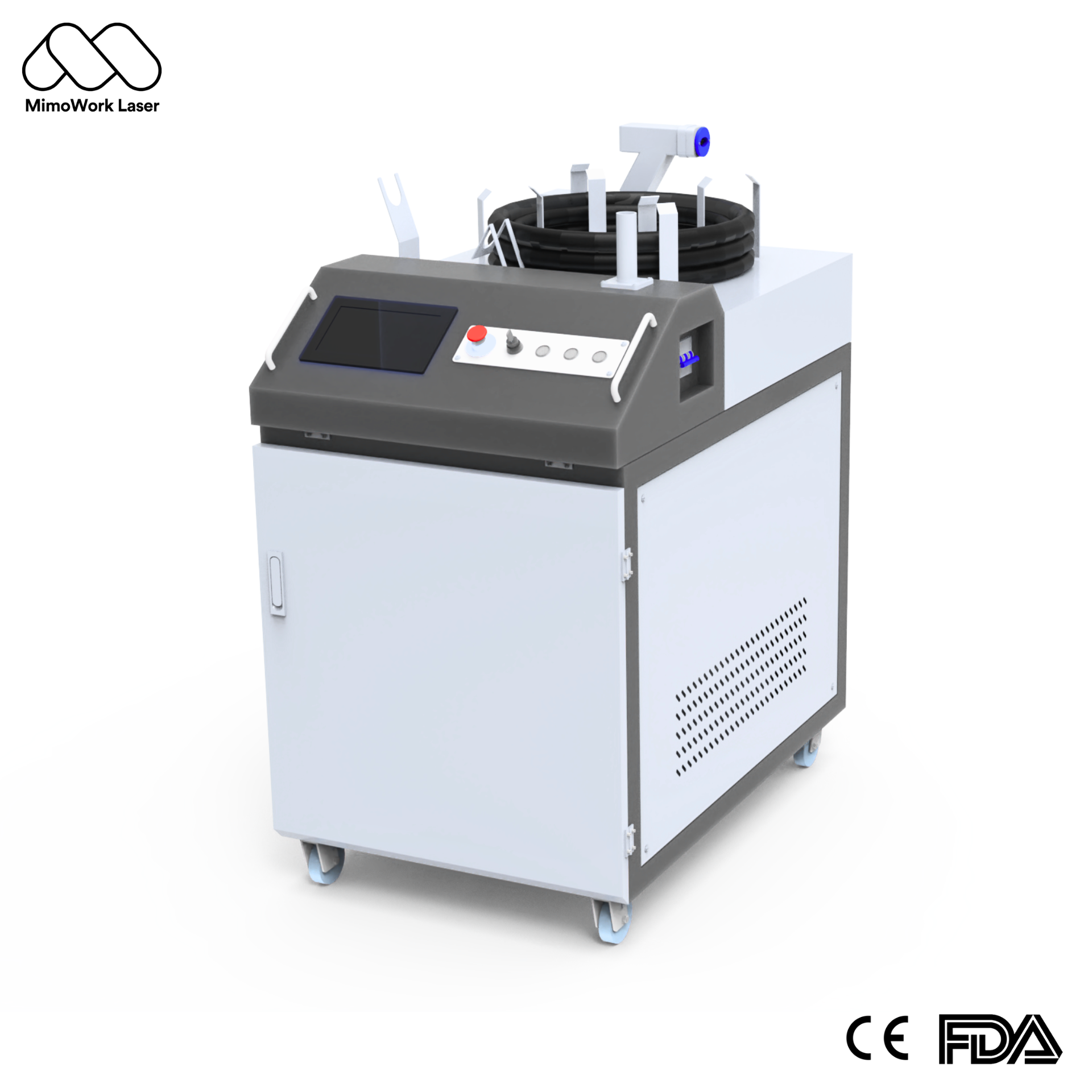
Industrial surface treatment has become a critical factor determining product quality and manufacturing costs. If you’re struggling to choose the right laser machine for cleaning, this guide will walk you through everything from basic principles and selection methods to operating tips and cost analysis. As a professional equipment provider, we aim to help you make informed decisions in this rapidly growing market.
Laser cleaning machines are advanced industrial tools that use high-energy laser beams to quickly remove dirt, rust, and coatings from workpiece surfaces by vaporizing or stripping them away. Considered an environmentally friendly cleaning method, this technology is now widely used to replace traditional chemical and mechanical cleaning processes.
Laser cleaning devices are mainly divided into three types according to laser sources and working modes:
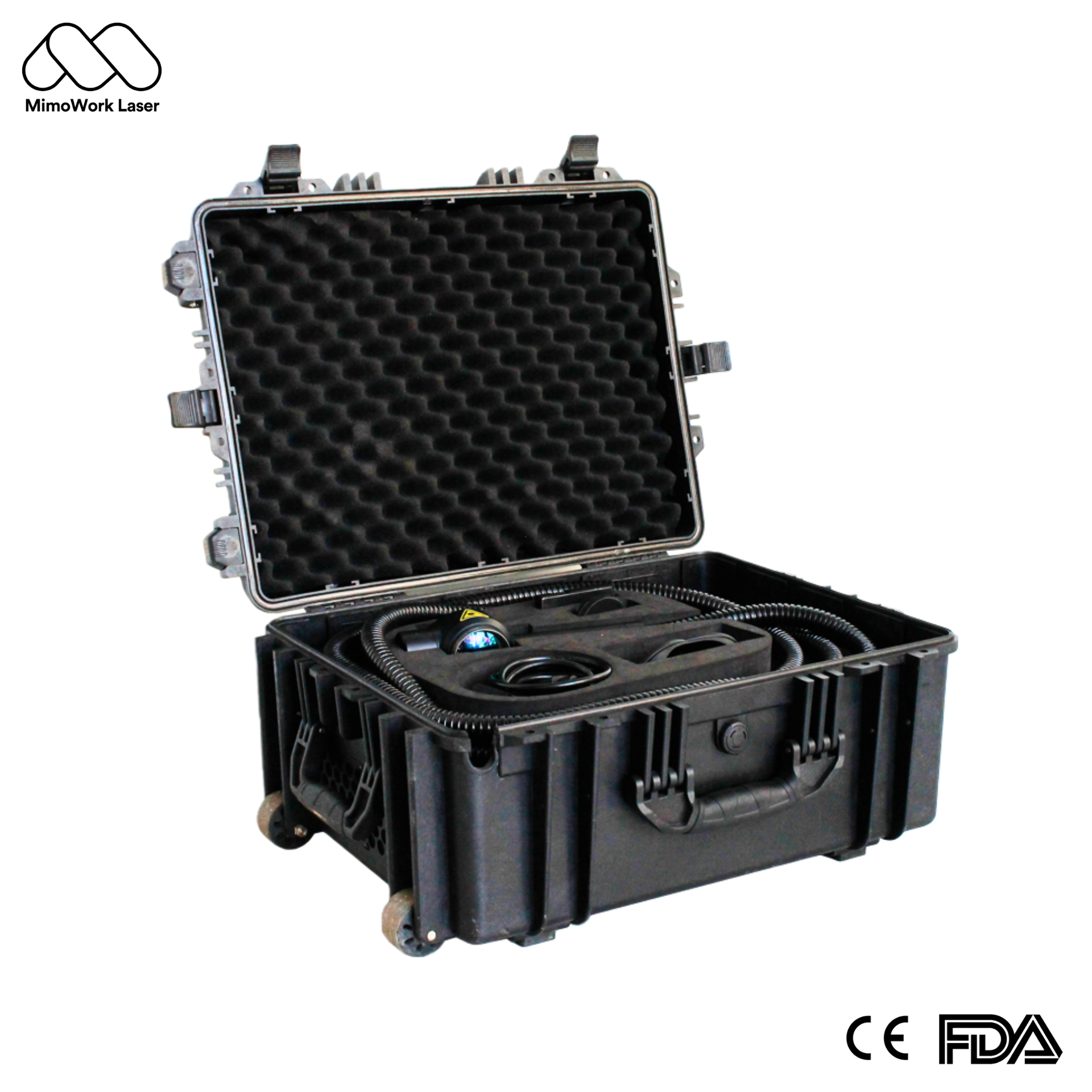
Compared to sandblasting, chemical cleaning, and mechanical grinding, the laser machine for cleaning offers overwhelming benefits:
| Feature | Laser Cleaning | Sandblasting | Chemical Cleaning |
| Substrate Damage | Minimal (parameter-controlled) | Surface wear | Possible corrosion |
| Environmental Impact | No waste, no chemicals | Heavy dust, waste sand disposal | Liquid waste pollution |
| Operating Cost | Electricity+minor maintenance | Abrasive+disposal fees | Chemicals+wastewater treatment |
| Flexibility | Handheld or automated | Site-limited | Tank or bath required |
| Precision | Selective cleaning possible | Difficult for localized work | No precise control |
Simply put, laser cleaning is far more than just another option for industrial surface treatment — it’s a genuine upgrade.
A professional Mimowork laser cleaning system is integrated with industrial-grade modules designed for stability, efficiency, and ease of use. Based on our machine architecture, the system comprises the following essential modules:
Fiber Laser Source: The powerhouse of the machine, delivering highly stable and concentrated laser beams. Mimowork configures top-tier laser sources (ranging from 100W to 3000W) to optimize both pulsed and continuous-wave (CW) cleaning performance.
Laser Cleaning Head (Handheld or Automated): The execution tool of the laser beam. For flexible, manual operations, we provide an ergonomic Handheld Laser Cleaning Gun; for high-volume, structural cleaning, this is replaced by our 5-Axis Gantry Automatic System featuring high-speed scanning optics.
Intuitive Control System: Mimowork’s customized software and hardware control interface. It allows operators to easily fine-tune key processing parameters—such as laser power, scanning speed, and frequency—thereby simplifying the workflow across different substrate materials.
Industrial Cooling Chiller: A critical thermal management system that ensures the fiber laser source operates within its safe temperature range, guaranteeing consistent power output and long-term hardware reliability.
Environmental Safety Accessories: Including a professional Fume Extractor to instantly capture and filter dust and smoke during ablation, keeping the workspace safe, compliant, and clean.
Targeting & Alignment: Manually position and square up the cleaning head, ensuring the focal point is precisely aligned with the target workspace.
Laser Ablation: Engage the laser. The internal galvanometers will rapidly sweep the beam across the surface, causing contaminants to instantly absorb the energy, expand, and vaporize or spall off cleanly via micro-shockwaves.
Concurrent Fume Capture: Throughout the ablation process, the dust extractor works in tandem to pull away airborne particulates, off-gases, and residues, maintaining a clear line of sight and a safe workspace.
Photothermal vaporization and expansion all come down to how different materials interact with laser light. Rust, grease, oxide films, and other impurities absorb targeted laser wavelengths much more readily than the base metal. Upon laser irradiation, the contaminated surface heats up sharply in an instant. The unwanted substances vaporize right away and expand rapidly, breaking away from the material surface completely.
Micro-shockwave stripping works differently with nanosecond pulsed lasers — the process relies on mechanical force rather than heat. Rapid pulses generate frequent micro-explosions on the material surface. Acting like countless tiny jackhammers, these shockwaves break apart brittle contaminants and dislodge firmly bonded particles from the base metal.
This is the key reason the process causes no damage. All materials have their own damage thresholds. By precisely adjusting laser parameters, including wavelength, pulse width, and energy density, technicians can set the output power high enough to break down contaminants, yet keep it well within the safe limit for the base material.In short, rust is fully removed, while the original metal stays intact.
Metal sheets straight from the supplier often come with rust and anti-rust oil on them. Before you do any cutting, bending, or welding. Laser cleaning can take those residues off quickly and get the metal back to its original surface, which makes the next steps work a lot better. It’s also really good at cleaning oxide layers around welds on big structural parts.
Aircraft parts like fuselage skins, engine blades, and landing gear have really strict requirements for surface processing — no damage, no residue left behind. Low-power pulsed laser cleaners can strip off old coatings, carbon buildup, and sealants precisely, without affecting the parts’ fatigue life at all. Regular mechanical grinding or chemical cleaning just can’t do that.
Oil spots and rust on welding, painting, and powertrain assembly lines often lead to product flaws. Handheld laser cleaners easily handle irregular castings, flange surfaces, brake discs, and other complex workpieces. They run efficiently and can be smoothly incorporated into automated production lines.
Low-power laser cleaning can safely clean smoke stains, lichen, and tough grime off marble sculptures, bronze artifacts, and old stone carvings. You can control how deep it cleans, so the original surface and fine details don’t get damaged. People in the industry see it as a reliable, non-invasive physical cleaning method.
For molds like tire molds, injection molds, and die-cast molds, after long-term use, they tend to pick up release agent residue, rubber buildup, and metal debris. Laser cleaning works right on site without taking the mold apart. In just a few minutes, the mold’s release efficiency is restored like new, and it also cuts down production downtime significantly.
| Machine Model / Type | Laser Source | Power Range | Core Advantage | Ideal Application |
| Continuous Wave Laser Cleaning Machine | Handheld Continuous Wave Fiber Laser | 1000W – 3000W | Uninterrupted high-power output, maximum cleaning speed and productivity. | Large-scale rust, thick paint, and heavy coating removal on factory floors or large steel structures. |
| Pulsed Laser Cleaning Machine | Handheld Pulsed Fiber Laser | 100W – 500W | Surgical precision, zero thermal impact, safely restores surfaces without substrate damage. | Delicate surfaces, high-value industrial molds, historical artifacts, and sensitive aerospace components. |
| 5-Axis Gantry Laser Cleaning Machine | CNC Pulsed Fiber Laser | 100W – 500W | Hands-free CNC automation, precise 3D motion control, eliminates manual labor error. | Intricate components with complex geometries, contoured surfaces, turbine blades, and large machinery refurbishment. |
Stick to this three-step approach to spend your budget wisely:
1.Check material sensitivity. Use low-power pulsed lasers for molds, thin aluminum, and carbon fiber. Opt for medium or high-power models when working with regular carbon steel and thick metal plates.
2.Calculate cleaning area and working cycles. A 1000W unit is recommended if you need to remove heavy rust on more than 50 square meters daily. A 200W laser works well for weld treatment and local touch-up work.
3.Run real sample tests (highly recommended). Always test the machine on your actual materials and contaminants. Mimowork offers free sample testing, so you can make a reliable choice based on real results instead of assumptions.
Personal Protection Laser safety goggles are a must for operation. A dust mask is also needed in certain working conditions.
Initial Parameter Setup Begin with low power, medium frequency, and standard scanning speed. For 200W machines used to remove rust on carbon steel, the recommended settings are: 60% power, 20kHz frequency and 3000mm/s scanning speed.
On-site Testing & Fine-tuning First test on leftover materials or hidden areas. Adjust settings based on results:
·If surface grime remains: Raise power or slow down scanning speed.
·If the base material turns discolored or melts: Lower power, speed up scanning, or extend the defocus distance.
Stable Operation Keep the handheld cleaning head at a steady distance from the workpiece (within ±5mm of the focal length). Move steadily and let each scan overlap slightly. Fixtures or robotic arms can deliver more consistent results.
Routine Maintenance After each use, wipe the field lens with professional lens tissue. Also, check coolant levels and clean out the dust collector filter regularly.
When operated properly, the base material will not be damaged. You can adjust power, pulse width, and wavelength to keep energy density between the threshold for removing contaminants and the limit that harms the workpiece. That said, improper use — such as running too high power or lingering in one spot too long — may lead to material melting or surface etching. This is why sample testing to confirm safe working parameters has become standard across the industry.
A high-power laser machine for cleaning (such as Mimowork’s 1000W – 3000W Continuous Wave system) is specifically engineered to remove heavy rust, mill scale, and thick industrial paint coatings from large metal surfaces. For delicate, thin coatings or projects where minimal heat input is required to avoid substrate damage, our Pulsed Laser Cleaning Machine is the recommended solution.
| Cost Item | Laser Cleaning (200W) | Sandblasting (copper slag) |
| Equipment purchase (5-year amortization) | ~$3,000-5,000/year | ~$500-1,000/year |
| Consumables (abrasive, chemicals) | $0 | $2,000-4,000/year |
| Labor efficiency | 1 operator, handheld | 1.5 operators (handling abrasive & waste) |
| Waste disposal | Minimal dust filtration | Solid waste disposal: hundreds to thousands/year |
| 5-Year Total Cost | Lower | Significantly Higher |
Although the initial investment in laser equipment is higher, the payback from consumable savings typically occurs within 3 years. Additionally, laser cleaning requires less floor space and meets strict environmental regulations, making its long-term overall benefit clearly superior.
Driving Manufacturing Efficiency with Precision. Ultimately, the best choice depends entirely on your specific materials and production requirements. While traditional chemical washing and sandblasting still hold a place in heavy industrial processing, advanced laser cleaning machines represent the gold standard for modern, sustainable, and high-precision manufacturing. Whether your focus is on increasing productivity on a high-volume automotive line or ensuring zero-damage maintenance for delicate aerospace components, selecting the right technology is the key to minimizing operational bottlenecks.
We specialize in advanced industrial equipment, offering custom laser cleaning, engraving, and cutting solutions for businesses of all types. Mimowork consistently delivers dependable, top-tier results to support your operational success. Get in touch to book a free sample test and see firsthand how our solutions can optimize your surface treatment processes.
News | Jun-15-2026
News | Apr-22-2026
News | Apr-23-2026