Blog
In a field that evolves daily, staying ahead means staying informed.
Explore in-depth articles designed to help you solve complex challenges,
maximize your machine’s ROI.
Stay ahead in a competitive market.


In a field that evolves daily, staying ahead means staying informed.
Explore in-depth articles designed to help you solve complex challenges,
maximize your machine’s ROI.
Stay ahead in a competitive market.
News | Aug-31-2026

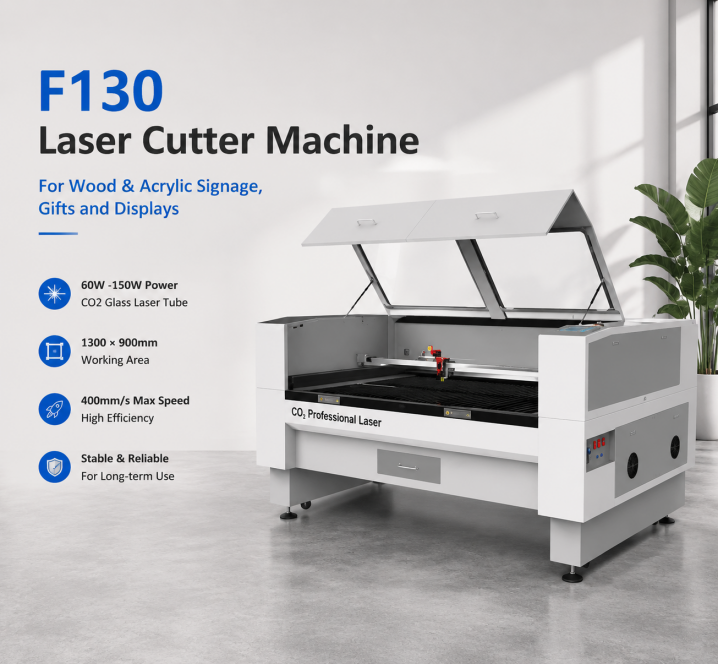
For many small manufacturers and growing workshops, an 80W CO2 laser cutter is often the stage where a laser machine moves from a hobby tool into a practical production system.
The real question is not:
“Is 80W powerful enough?”
It is:
“Does 80W match the materials, workflow, and production goals of my business?”
This guide explains where an 80W CO2 laser cutter fits, what it can process, and what to consider before investing.
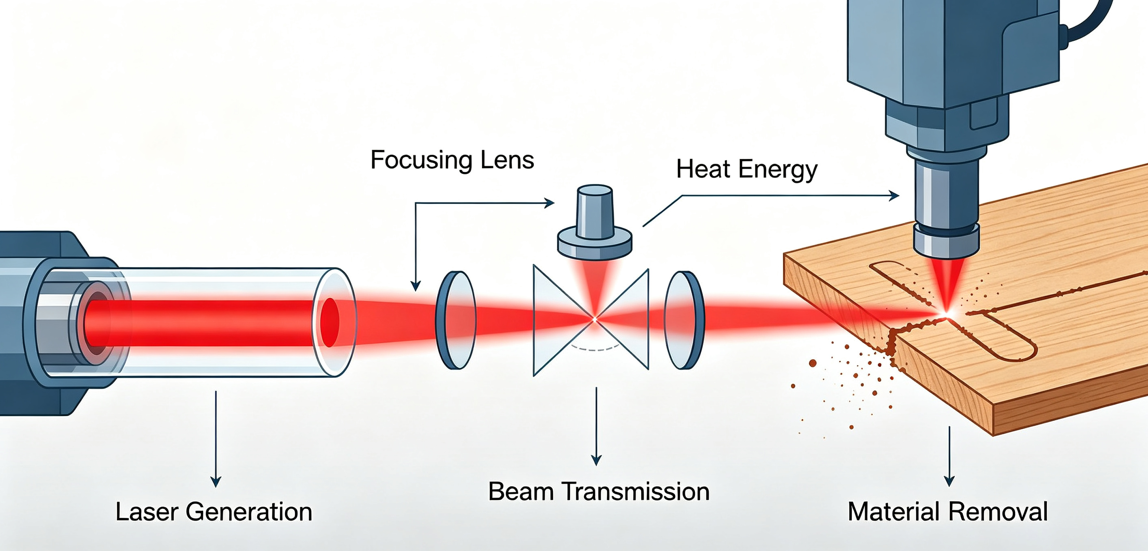
A laser cutter uses concentrated light energy to remove material instead of relying on a physical cutting tool.
The process looks simple from the outside: a laser head moves across the material and creates a finished shape.
Inside the machine, however, several steps happen:
Laser generation → Beam transmission → Focused heat → Material removal
A CO2 laser tube generates the laser beam, which travels through optical components before reaching the focusing lens.
The lens concentrates the beam into a very small point. At this point, the energy density becomes high enough to:
Because the laser does not physically touch the material, there is no blade wear and no mechanical force on the workpiece.
This allows users to process detailed designs that would be difficult to achieve with traditional cutting methods.


CO2 lasers work particularly well with many non-metal materials because these materials absorb CO2 laser energy effectively.
A CO2 laser cutter for wood and acrylic is widely used because it can create:
For metal processing, fiber lasers are usually the better choice. But for non-metal manufacturing, CO2 technology remains one of the most practical solutions.
“Can it handle my materials?”
An 80W CO2 laser cutter can process many materials used in small manufacturing and customized production.
Common applications include:
| Material | Typical Uses |
| Acrylic | Signs, displays, decorations |
| Wood | Crafts, furniture parts, panels |
| Leather | Bags, accessories, custom products |
| Fabric | Textile patterns, layered cutting |
| Rubber | Seals and industrial components |
| Paper | Packaging and creative products |
Two materials with the same thickness may require completely different settings because of:
This is why experienced users evaluate the complete application rather than choosing a machine only by laser power.
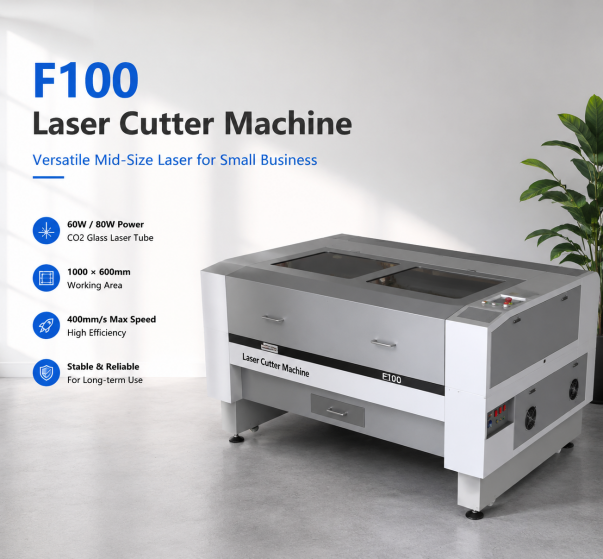
Many buyers search for 80W CO2 laser cutting thickness because they want a clear answer before purchasing.
The reality is that there is no universal maximum thickness.
The result depends on:
For most workshops producing customized products, an 80W system offers enough flexibility without moving into a larger industrial investment category.
A 50W machine may handle basic engraving and light cutting, while a 100W or higher system is usually aimed at heavier production. Between these two options, an 80W system offers additional cutting capability without significantly increasing machine size, operating requirements, or investment.
This makes it a common choice for:
A workshop may begin with engraving wooden gifts or acrylic signs. Later, customers may request thicker materials, larger orders, or faster delivery times.
At this stage, the limitations of lower-power machines become more noticeable.
Compared with 50W systems, an 80W CO2 laser cutter offers:
| Comparison | 50W CO2 Laser Cutter | 80W CO2 Laser Cutter |
| Engraving detail | Excellent | Excellent |
| Cutting speed | Suitable for lighter jobs | Faster for thicker materials |
| Material flexibility | Limited with thicker sheets | Wider application range |
| Production growth | Better for small orders | Better for growing businesses |
For users who expect their production needs to grow, choosing higher power from the beginning can reduce the need for an early machine upgrade.
A higher-power CO2 laser cutter can improve cutting speed when processing thicker materials or larger production batches. However, more power does not always mean better value.
Moving from 80W to 100W+ usually means higher investment, more installation space, and greater requirements for cooling and exhaust systems.
“Will the extra power improve my daily production?”
For many businesses, an 80W laser cutting machine for small workshop applications offers a practical balance between cutting capability and operating cost.
For businesses handling repeated production tasks, several functions can significantly reduce preparation time and material waste.
A CCD camera positioning system allows the machine to recognize registration marks on the material and automatically adjust the cutting path.
This is useful for applications such as:
Instead of manually matching the design with the material, operators can complete positioning faster and with fewer alignment errors.
For businesses producing customized products, this can make a noticeable difference during daily production.
The cutting table affects both material stability and finished quality.
Honeycomb Table
A honeycomb table provides more support for flexible materials.
It is commonly used for:
Advantages:
Knife Strip Table
A knife strip table uses metal strips to support rigid sheet materials.
It is often preferred for:
Advantages:
Software has a direct impact on daily efficiency.
LightBurn and RDWorks allow users to:
This is especially valuable for small businesses where operators often handle design, production, and quality control at the same time.
Buying a laser cutter is usually a long-term investment. After the machine is installed, many users start asking the same questions:
How often should I clean it? Will the laser power drop over time? How can I make the tube last longer?
CO2 laser machines do not require complicated maintenance routines, but regular checks are important for stable performance. Most performance issues come from small details that are easy to overlook, such as dirty optics or unstable cooling.
With a simple maintenance routine, an 80 watt co2 laser cutter can keep producing consistent cutting and engraving results for years.
The optical system is where the laser energy travels before reaching the material.
During cutting and engraving, smoke and residue can gradually collect on:
When these parts become dirty, the laser beam may lose efficiency. Users may notice:
Regular cleaning and beam alignment checks are simple steps that help maintain stable performance.
For workshops running daily orders, spending a few minutes on optical maintenance can prevent much bigger problems later.
The CO2 glass laser tube is one of the most important components in the machine.
Unlike some solid-state lasers, CO2 tubes require a stable cooling environment during operation. If the water temperature becomes too high, laser output may become unstable, which can shorten tube life.
Good cooling habits include:
The actual lifespan of a CO2 laser tube depends on how the machine is used. A machine running a few hours per week and one working every day in production will naturally have different maintenance requirements.If you are new to CO2 laser machines, check out this tutorial video to learn the basic steps, from CO2 laser tube installation to replacing a glass laser tube.
A specification sheet can tell you the laser power, working area, and machine features.
But it cannot always tell you how your material will actually perform.
Different materials can behave differently:
MimoWork provides material testing support to help customers evaluate:
This allows buyers to make decisions based on real results instead of assumptions.
An 80W CO2 laser cutter can process many non-metal materials, including acrylic, wood, leather, fabric, rubber, and paper.
The lifespan of a CO2 laser tube depends on operating conditions.
Factors such as working hours, power settings, cooling performance, and maintenance habits all affect tube life.
Keeping the cooling system stable and avoiding unnecessary operation at maximum power can help extend service life.
For many small businesses, an 80W CO2 laser cutter offers a good balance between capability and investment.
It can handle common products such as acrylic signs, wooden decorations, leather goods, and customized items.
However, users producing very thick materials or high-volume industrial parts may need a higher-power solution.
Choosing the wrong configuration can lead to slower production, unnecessary costs, or limitations as your business grows.
That is why MimoWork helps customers evaluate their applications before making a decision.
Send us your material type, thickness requirements, or product samples, and our laser specialists can help you:
Ready to see what an 80W CO2 laser cutter can do for your business? Contact MimoWork today and get a personalized laser cutting evaluation.
News | Aug-7-2026