Blog
In a field that evolves daily, staying ahead means staying informed.
Explore in-depth articles designed to help you solve complex challenges,
maximize your machine’s ROI.
Stay ahead in a competitive market.


In a field that evolves daily, staying ahead means staying informed.
Explore in-depth articles designed to help you solve complex challenges,
maximize your machine’s ROI.
Stay ahead in a competitive market.
News | Oct-5-2026
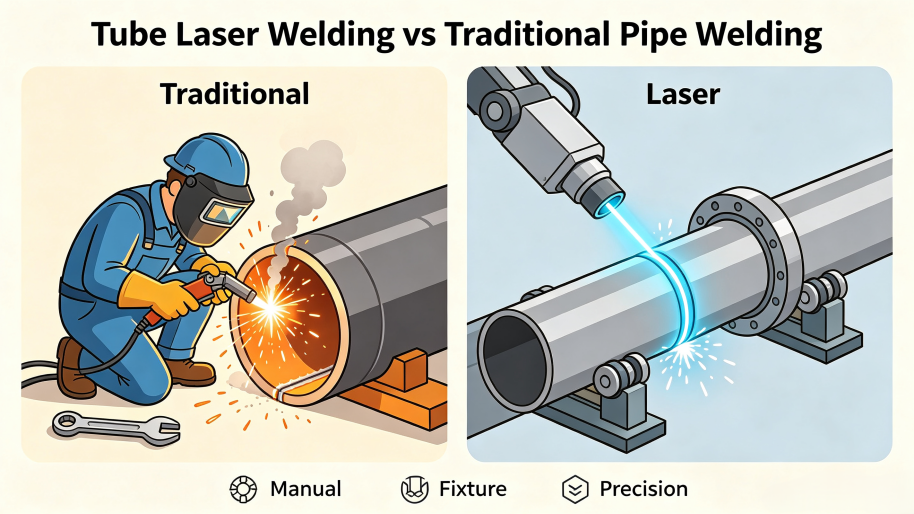
Quick Answer: Tube laser welding can provide high process precision, concentrated heat input, repeatability, and strong automation potential, while traditional pipe welding methods such as TIG and MIG remain useful where joint gaps, field conditions, repair work, and manual adaptability are important. For production environments with repeated tube assemblies, the most meaningful comparison is not welding speed alone but total cycle time, preparation, finishing, rework, and consistency.
Tube and pipe products are used across furniture, automotive components, machinery, frames, fluid systems, architectural structures, and industrial equipment.
The welding process can determine more than the appearance of the joint.
It can affect dimensional accuracy, distortion, post-weld finishing, production speed, labor requirements, and repeatability.
That is why manufacturers considering tube laser welding should evaluate Laser Welding Machines as part of the entire workflow and compare their performance with existing pipe welding methods.
Tube and pipe introduce geometry.
A flat sheet presents a relatively accessible surface. A tube can require welding around curved profiles, corners, intersections, or complex assemblies.
This creates challenges for beam or torch access.
Fixture design also becomes important.
If every tube must be manually positioned and held, a theoretically fast welding process may still produce a slow overall cycle.
For this reason, the efficiency of tube welding depends heavily on how the welding system interacts with material handling and fixturing.
| Factor | Tube laser welding | TIG/MIG pipe welding |
| Heat concentration | High | Lower than laser in many setups |
| Distortion control | Strong potential | More heat management required |
| Repeatability | High with automation | Depends on operator/process automation |
| Welding speed potential | High | Varies |
| Complex geometry | Strong when properly configured | Highly flexible manually |
| Joint-gap tolerance | Often more demanding | Generally more forgiving |
| Automation | Excellent potential | Also possible |
| Setup complexity | Higher initial integration | Often simpler |
| Post-weld finishing | Potentially reduced | May require grinding/finishing |
| Best fit | Repetitive precision production | Flexible fabrication and varied work |
Manufacturers often define efficiency as welding speed.
That is too narrow.
Imagine a tube assembly that takes three minutes to weld but ten minutes to grind and clean.
Another process might require four minutes of welding but only one minute of finishing.
The second process can be faster at the finished-part level.
This is why a production comparison should measure:
Loading + fixturing + welding + repositioning + inspection + finishing + unloading.
Only then can the real cycle time be understood.
A concentrated laser beam can deliver energy into a relatively small region.
This can reduce the amount of surrounding material exposed to high temperatures compared with some conventional welding approaches.
For tube assemblies, that can be valuable because distortion can affect the overall geometry of the finished structure.
A small dimensional change at one joint can become much more noticeable when several tubes are assembled together.
Less distortion can therefore mean less correction work.
However, this advantage depends on correct process development. Laser welding is not automatically low-distortion simply because the heat source is a laser.
Tube laser welding can be highly precise, but precision in the welding process makes precision in the components more important.
If tube ends are inconsistent or gaps vary significantly, the process may become less stable.
Traditional manual welding can sometimes compensate for these variations through operator technique and filler material.
A laser process may require more consistent upstream cutting, bending, and fixturing.
This is why a manufacturer considering tube laser welding should evaluate the complete production chain.
If the existing tube preparation process produces inconsistent geometry, that problem may need to be solved before welding automation can deliver its expected benefits.
The commercial value of tube laser welding often becomes more visible in repetitive production.
Consider a manufacturer producing the same frame hundreds of times.
A repeatable automated welding process can reduce dependence on individual operator technique.
Fixtures can position the components consistently, while CNC or robotic movement can follow predefined welding paths.
This does not mean manual welding is obsolete.
Manual processes remain valuable for prototypes, repairs, low-volume jobs, and products with constantly changing geometries.
The question is whether the production volume justifies automation.
Tube welding often requires welding around corners, intersections, and curved surfaces.
The welding head needs appropriate access to the joint.
Machine configuration therefore matters.
A system designed for flat-sheet work may not be the right solution for complex tube assemblies.
Buyers should evaluate the actual part geometry rather than relying on a general claim that the machine can weld tubes.
The test should include the most difficult joint in the product range.
A visually attractive weld is important, particularly for consumer products and architectural components.
But quality should also include:
A process that produces beautiful welds but requires substantial manual correction may not be efficient for production.
Traditional pipe welding has a major advantage: flexibility.
An experienced TIG or MIG welder can respond to changes in joint geometry, gaps, fit-up, and unusual repairs.
This is difficult to replicate with a highly automated process without additional programming and setup.
Traditional welding can therefore remain attractive for job shops where every order is different.
For low-volume production, the time required to program and fixture an automated laser process may outweigh the benefits of automation.
The case becomes stronger when production has:
consistent tube dimensions,
repeatable joint geometry,
high order volume,
strict appearance requirements,
significant finishing labor,
or a need to reduce operator-to-operator variation.
In those circumstances, the business can spread the initial investment across a larger number of parts.
| Measurement | What to record |
| Cycle time | Complete finished-part time |
| Setup time | Time before welding begins |
| Fixture time | Loading and positioning |
| Welding time | Actual arc or laser-on time |
| Finishing | Grinding, polishing, cleaning |
| Rework | Defects and correction time |
| Labor | Operators required |
| Consumables | Wire, gas, nozzles, etc. |
| Yield | Acceptable parts / total parts |
| Maintenance | Scheduled and unscheduled downtime |
This approach prevents the common mistake of comparing only laser-on time with arc-on time.
Related Guide:How to Laser Weld Cast Iron: Methods, Settings and Tips
It can be significantly faster for suitable repetitive production, but the complete production cycle matters more than welding speed alone. Setup, fixture loading, and finishing can change the result.
Yes, with an appropriately configured system and workholding strategy. The exact capability depends on tube dimensions, joint geometry, laser source, motion system, and welding head.
It can be attractive because concentrated heat input can help control the thermal footprint, but parameters must be developed specifically for the material and thickness.
Generally, consistent fit-up is important. A laser process may have less tolerance for large or inconsistent gaps than manual welding techniques.
Yes. MIG can remain highly practical for structural tube assemblies, general fabrication, and applications where deposition rate and flexibility are important.
Use representative production parts rather than simple coupons. Include the actual tube material, thickness, joint geometry, fixture design, cosmetic requirements, and required finishing.
Tube laser welding and traditional pipe welding solve many of the same manufacturing problems, but they approach them differently.
Laser welding becomes particularly interesting when production demands repeatability, controlled heat input, automation, and reduced finishing. TIG and MIG remain valuable when flexibility, variable joint conditions, repairability, and manual adaptation are more important.
The most reliable purchasing decision comes from comparing complete production cycles rather than advertised welding speeds.
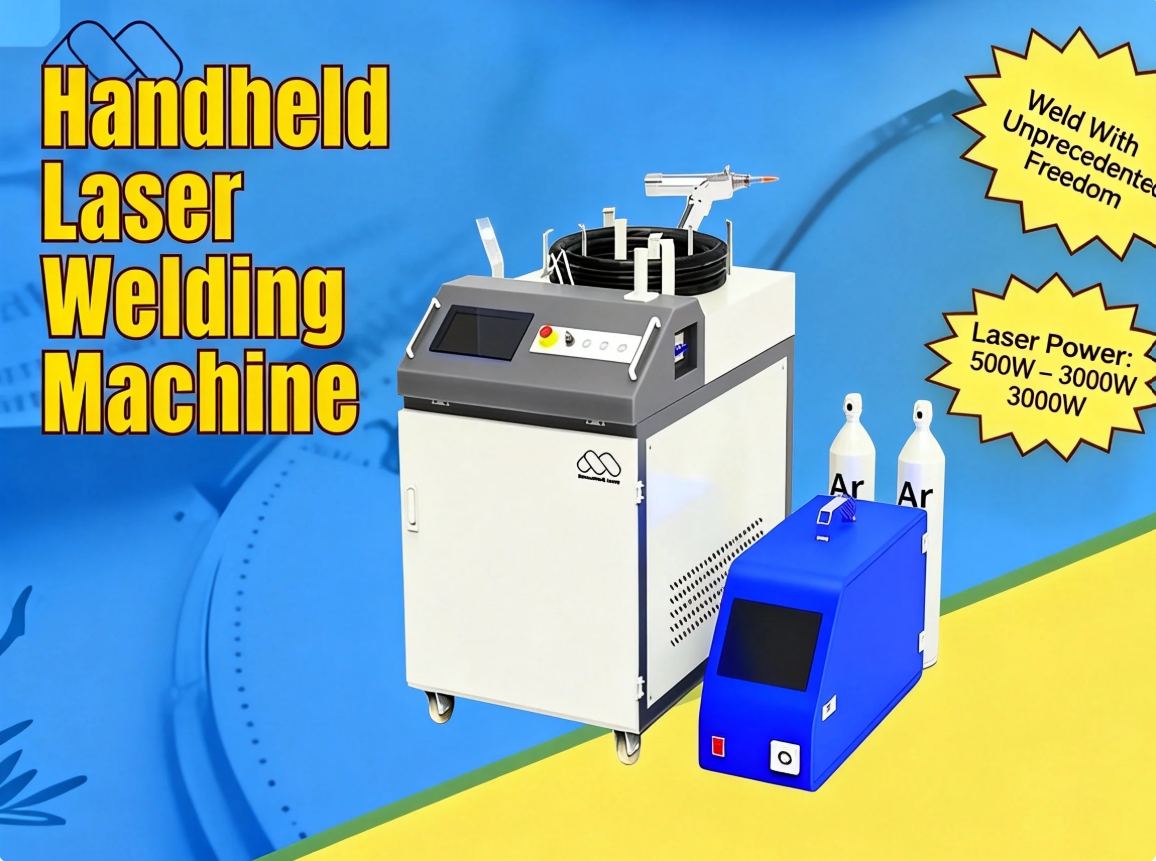
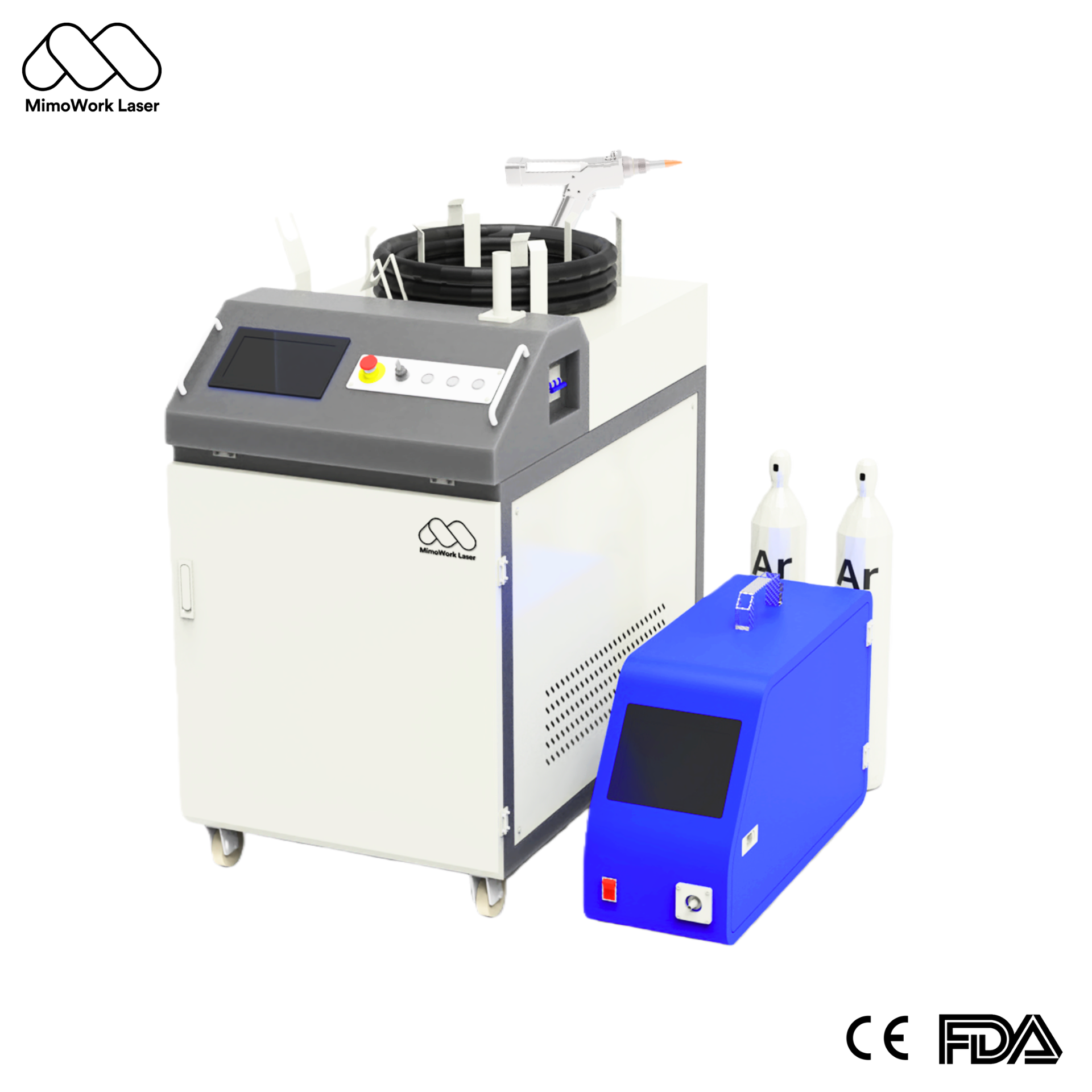
For manufacturers evaluating laser-based production, MimoWork provides laser welding solutions designed for different industrial welding requirements. Its laser welding systems can be considered alongside factors such as material, tube geometry, production volume, joint requirements, and the level of automation needed. Reviewing these factors before selecting equipment can help manufacturers determine whether tube laser welding is a practical fit for their production workflow.

News | Sep-25-2026
News | Sep-18-2026

News | Aug-7-2026