Blog
In a field that evolves daily, staying ahead means staying informed.
Explore in-depth articles designed to help you solve complex challenges,
maximize your machine’s ROI.
Stay ahead in a competitive market.


In a field that evolves daily, staying ahead means staying informed.
Explore in-depth articles designed to help you solve complex challenges,
maximize your machine’s ROI.
Stay ahead in a competitive market.
News | Sep-18-2026
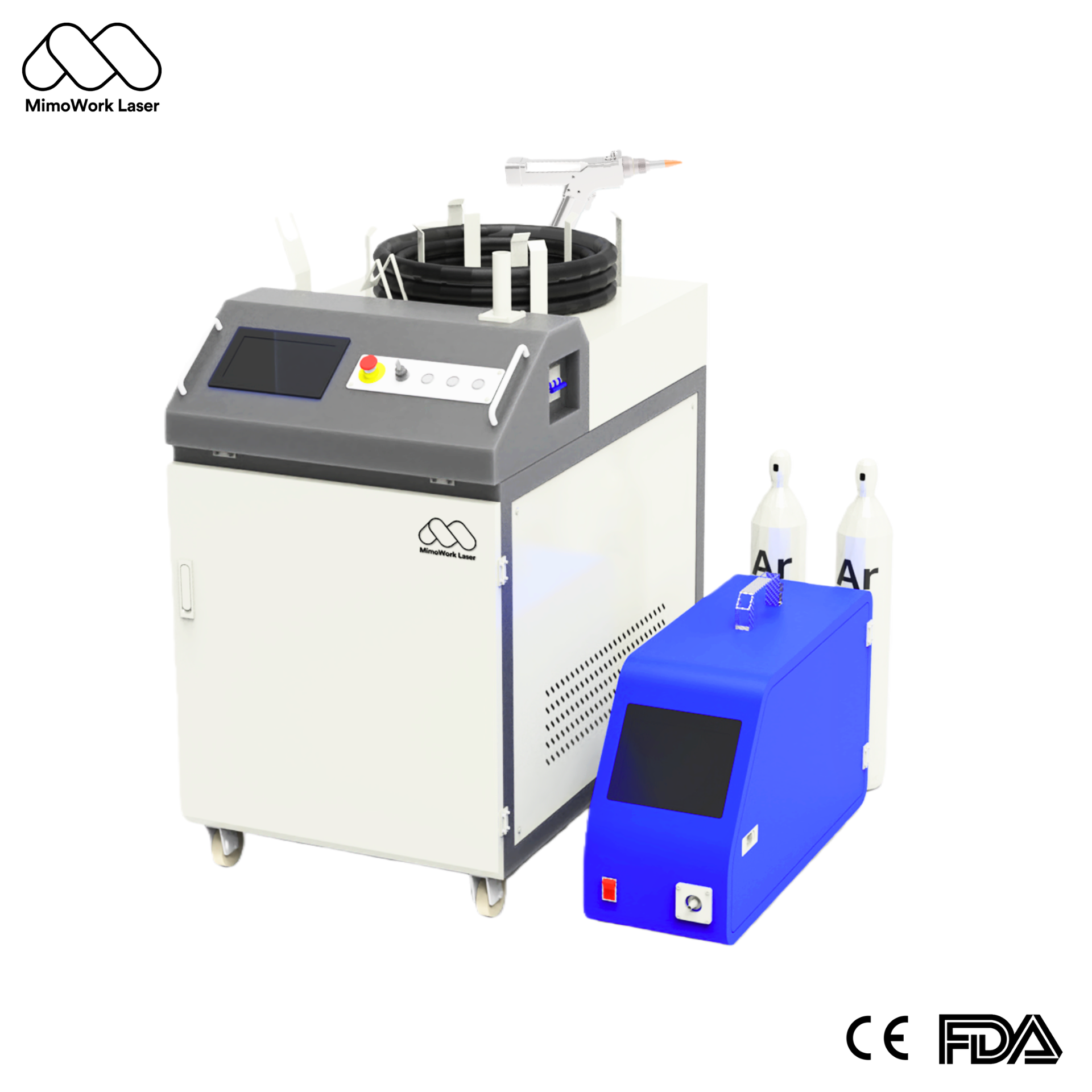
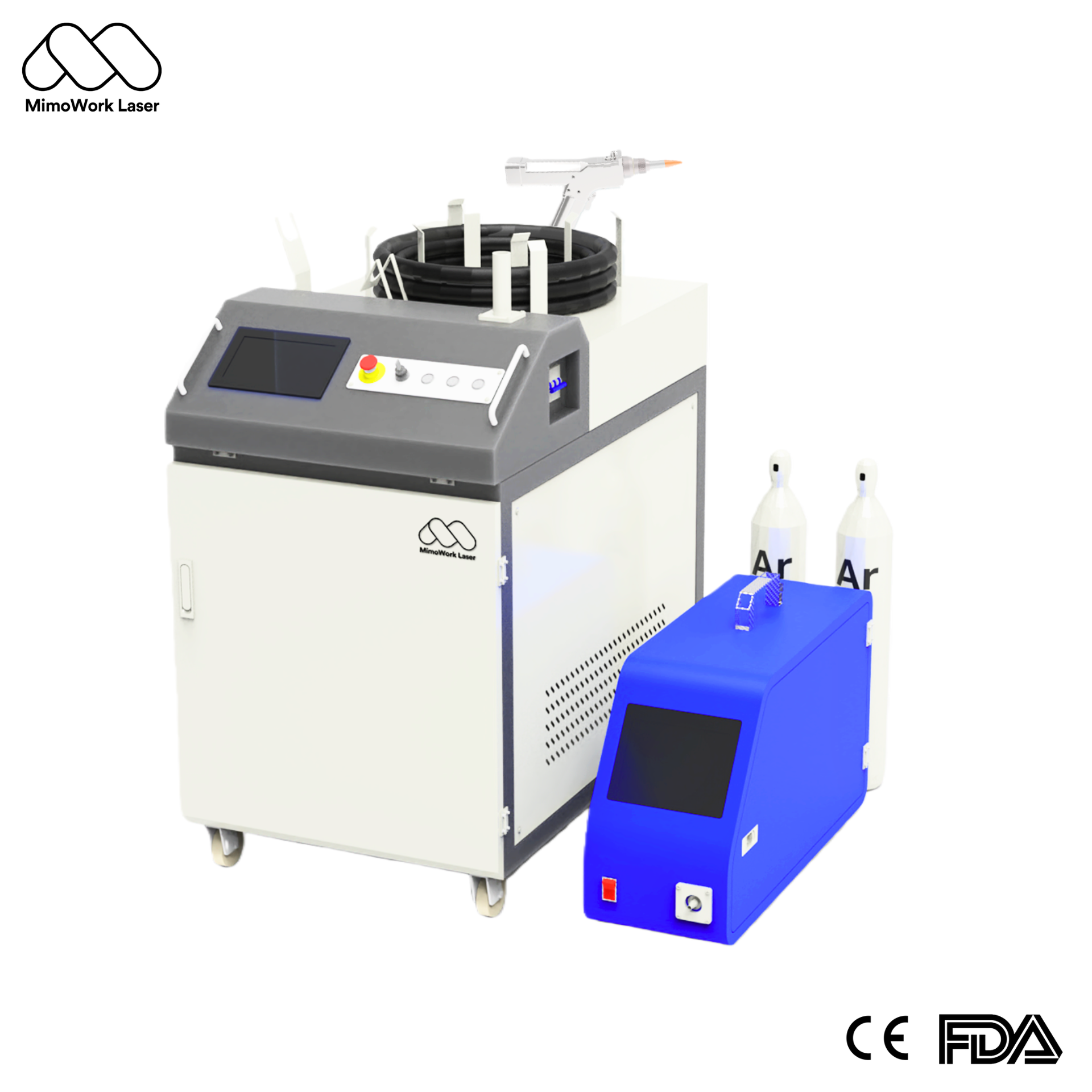
If you are comparing a Laser Welding Machine for flexible metal fabrication, repair, or workshop production, the handheld fiber laser welder is one of the most practical configurations to understand first. Unlike a fixed automated welding cell, it puts the laser welding head directly in the operator’s hands, making it possible to work around large, irregular, or difficult-to-move components.
But what actually happens when the laser hits the metal?
The answer goes deeper than “the laser melts the material.” A handheld fiber laser welder combines laser generation, optical focusing, heat transfer, shielding gas and controlled movement to create a stable weld pool.
A handheld fiber laser welder uses a fiber laser source to generate a concentrated beam of light and deliver it through an optical fiber to a handheld welding gun.
MimoWork’s current Handheld Laser Welding Machine uses a continuous/modulated fiber laser configuration with 1000–1500W power, water cooling and a 1064nm wavelength.
The welding gun provides the final optical focusing and gives the operator direct control over the position and movement of the laser.
A wire feeder can also be integrated when the joint requires additional filler material.
The key difference from an automated welding system is not simply size. It is how the welding path is controlled.
Instead of programming every movement in advance, the operator guides the welding head along the joint.
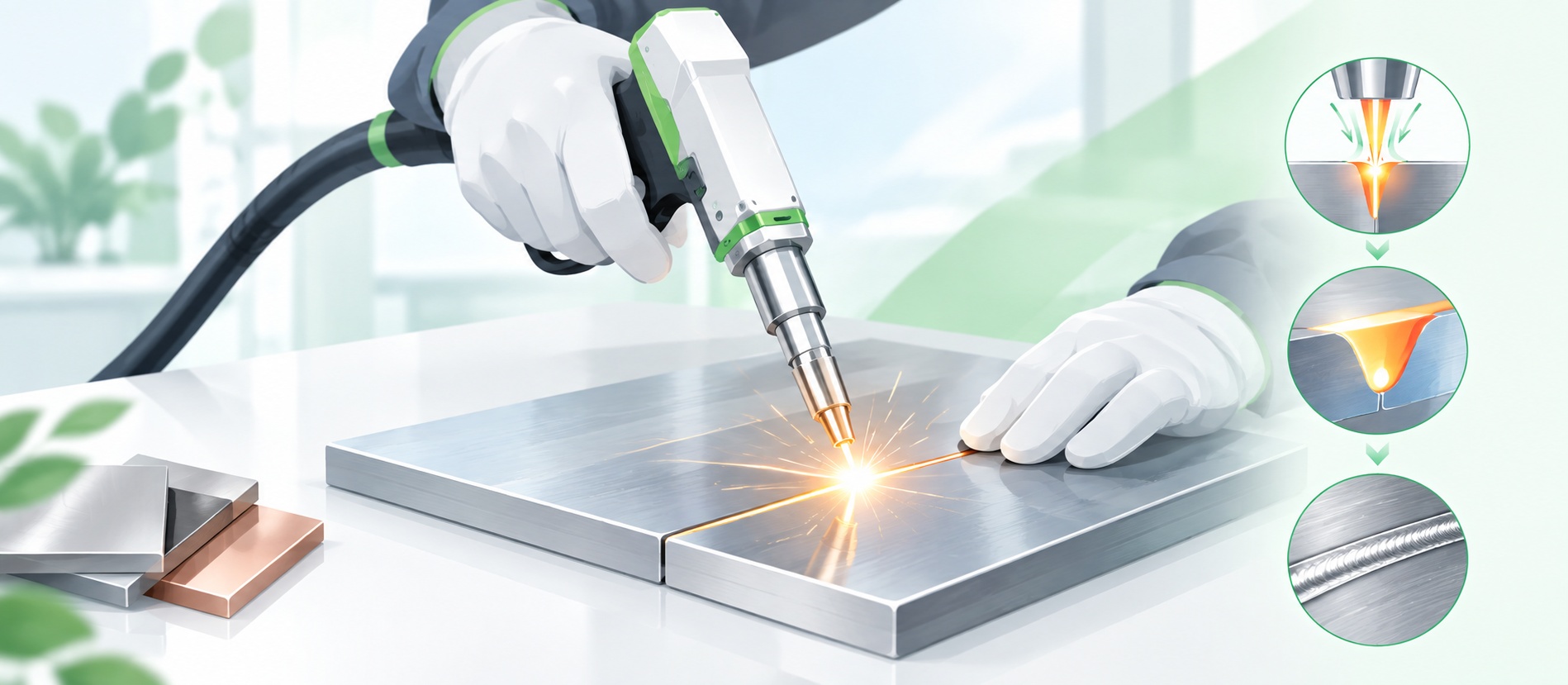
The process starts at the laser source.
A fiber laser generates a high-quality laser beam and transmits it through an optical fiber. The beam is then directed through the welding head and focused onto a small area of the metal surface.
Because the energy is concentrated into a relatively small spot, the surface temperature can rise rapidly.
Once the material reaches its melting point, a molten pool forms.
For deeper welding, sufficiently high energy density can create a keyhole. The laser energy enters deeper into the material through this narrow cavity while molten metal flows around it.
As the welding gun moves forward, the molten metal behind the laser cools and solidifies, creating the welded joint.
The process therefore involves three things happening continuously:
energy delivery → controlled melting → solidification
The quality of the final weld depends on keeping these three stages stable.
Traditional welding equipment delivers energy through an electrical arc or another physical process.
Fiber laser welding takes a different route.
The laser is generated separately from the welding point and delivered through an optical fiber. This makes it possible to place a relatively compact welding head at the workpiece while keeping the main laser source and cooling system elsewhere.
For handheld welding, that separation is extremely useful.
An operator can reach the side of a cabinet, move around a vehicle component or repair a large structure without repositioning the entire workpiece.
That is one reason handheld fiber laser welding has become particularly interesting for fabrication and repair applications.
The weld pool is where most of the important work happens.
The laser supplies energy to the joint, causing the metal to melt. At the same time, molten metal moves because of temperature gradients, surface tension and other fluid-flow effects.
If the energy input is too low, penetration may be insufficient.
If the energy input is too high, the weld pool can become unstable, leading to excessive penetration, spatter or burn-through on thinner materials.
This is why increasing laser power is not automatically the solution to a welding problem.
A stable process requires the relationship between power, speed, focus and material thickness to be controlled.
One useful feature of fiber laser welding systems is the ability to control how laser energy is delivered.
Continuous-wave operation provides a steady energy input and is useful when consistent heat delivery and deeper penetration are required.
Modulated operation changes the energy delivery over time. This can help control heat input in applications where continuous high energy could damage a thin edge or sensitive area.
The important point is that these modes are not simply “strong” versus “weak.”
They are different ways of managing heat.
Imagine heating a large section of a metal sheet with a broad heat source.
A large area expands and contracts as it heats and cools. That movement can create distortion.
Laser welding concentrates energy closer to the joint. When the process is correctly configured, less surrounding material is exposed to unnecessary heat.
This does not mean laser welding produces zero distortion.
The final result still depends on material thickness, joint design, welding speed, power and heat accumulation.
But the highly localized energy input is one of the main reasons laser welding is attractive for applications where dimensional accuracy matters.
A laser can melt metal very quickly, but the molten weld pool still interacts with the surrounding atmosphere.
Shielding gas is used to protect the welding area and reduce oxidation and contamination.
Argon is commonly used in laser welding applications, although the appropriate gas and flow conditions depend on the material and welding process.
If shielding is inadequate, the weld surface can discolor or oxidize, and weld quality can be affected.
This is especially important when appearance matters, such as stainless steel fabrication or visible metal components.
No.
Whether filler wire is required depends on the joint.
If two workpieces fit closely together, autogenous laser welding may be possible, meaning the base material itself forms the weld.
When a joint contains a larger gap or requires additional material to achieve the desired bead profile, filler wire becomes useful.
MimoWork’s handheld system includes an integrated wire feeder option for applications where gap filling or additional weld material is required.
This makes the machine more flexible across different joint conditions.
Handheld fiber laser welding is commonly used for metals including stainless steel, carbon steel, aluminum and copper alloys.
However, the fact that a material can absorb laser energy does not automatically mean every grade and thickness will produce the same result.
Aluminum, for example, has high thermal conductivity and behaves differently from stainless steel.
Copper is also challenging because of its high thermal conductivity and optical characteristics.
Galvanized materials introduce another issue because the zinc coating can affect the welding process.
The safest approach is to test the actual material and thickness rather than relying only on a general material list.
There is no single parameter combination that works for every job.
A practical setup usually considers:
| Parameter | What It Influences |
| Laser power | Available heat input and penetration |
| Welding speed | Energy delivered per unit length |
| Focus position | Energy density and penetration |
| Beam movement | Weld width and heat distribution |
| Shielding gas | Oxidation and weld protection |
| Wire feeding | Gap filling and weld profile |
| Laser mode | Heat input behavior |
The most common mistake is changing several variables simultaneously.
If the weld is too shallow, for example, changing power, speed and focus at the same time makes it difficult to understand what actually solved the problem.
A controlled test approach is much more useful: change one major variable, observe the weld, and then adjust the next.
TIG remains valuable for many applications, particularly where precise manual arc control and established procedures are important.
Handheld laser welding takes a different approach.
The laser provides a highly concentrated heat source, while the operator controls the welding direction through the handheld gun.
For suitable applications, this can reduce heat spread and post-weld finishing.
The decision should therefore be based on the actual workpiece rather than the assumption that one process is always superior.
For a workshop handling varied sheet metal, stainless steel fabrication, repairs and jobs where finishing time matters, the flexibility of a handheld laser system can be particularly useful.
The strongest case for handheld laser welding usually appears when flexibility matters.
Consider a workshop where one job involves a stainless-steel enclosure, the next involves an aluminum component, and another requires repair on a large structure.
A fixed automated system would require more fixtures and setup changes.
A handheld welder can move between jobs much more naturally.
It is also useful when the workpiece is too large or awkward to move.
In these situations, the value of the machine is not only welding speed. It is the ability to bring the welding process to the workpiece.
It generates a laser beam from a fiber laser source, delivers the beam through an optical fiber and focuses it through a handheld welding head. The concentrated energy melts the joint and creates a weld as the operator moves the gun along the seam.
Yes, aluminum can be processed with fiber laser welding, but its high thermal conductivity requires appropriate power, speed, focus and heat management. Actual material and thickness should be tested before production.
In most metal welding applications, shielding gas is used to protect the molten weld pool from atmospheric contamination and oxidation. Gas selection and flow should be determined according to the material and process.
Not always. Closely fitted joints may be welded without filler material, while larger gaps or specific bead requirements may require wire feeding.
Modern systems can simplify operation through adjustable controls and preset parameters, but laser welding still requires training in machine operation, material behavior and laser safety. Operators should follow the manufacturer’s safety procedures.
A handheld fiber laser welder works by concentrating laser energy into a tightly controlled area, creating a localized molten pool that solidifies into the finished joint.
Its real advantage is not simply the laser itself. It is the combination of concentrated heat, fiber delivery, flexible movement, controlled parameters and optional wire feeding.
For workshops that handle varied metal fabrication and repair work, this combination can make a Laser Welding Machine much more flexible than a fixed welding process.
The right way to select one is to start with the material, thickness and joint—not the wattage printed on the machine.
News | Sep-4-2026
News | Aug-19-2026
News | Aug-6-2026